
图像

AeroGenie — 您的智能副驾驶。

问任何问题。分析一切。立即行动。

热门趋势

Categories

Iranian Inventor Develops Propeller-Free Propulsion System for Flying Taxis
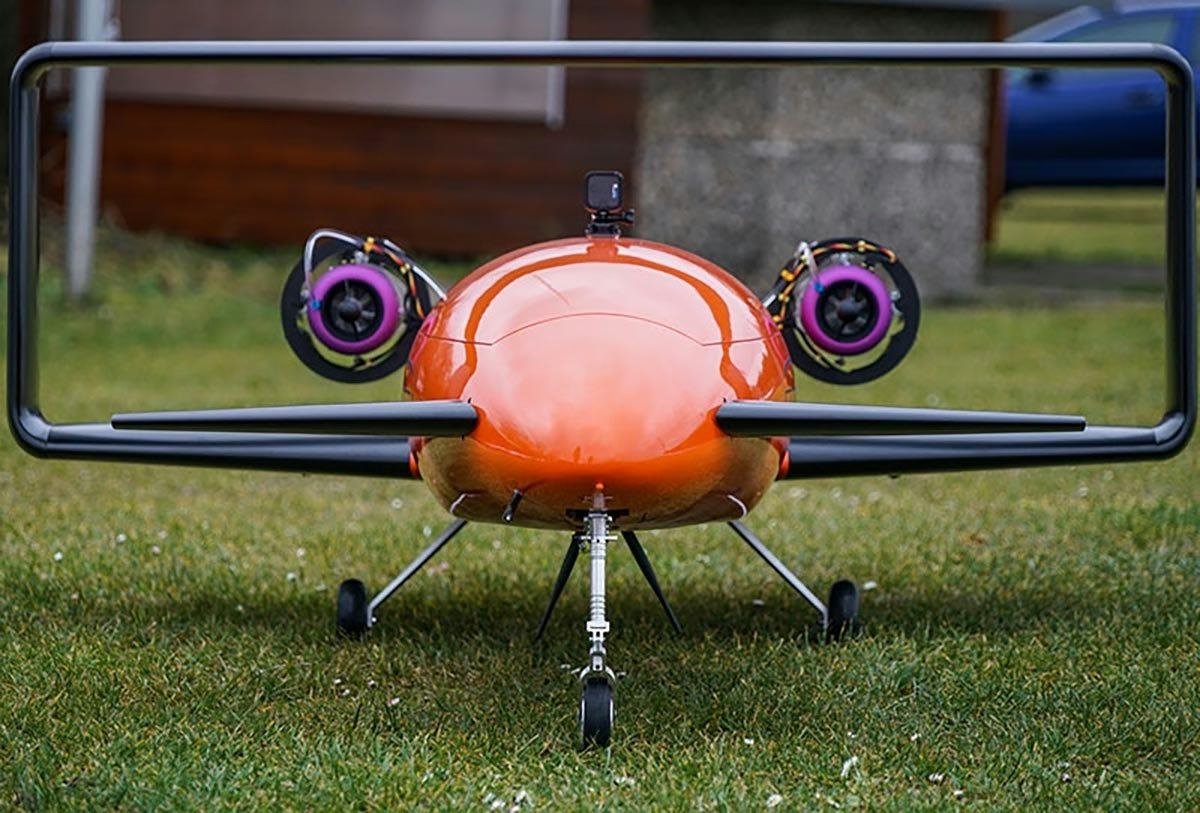
October 14, 2025By ePlane AI
Iranian Inventor Develops Propeller-Free Propulsion System for Flying Taxis
0
0
Urban Air Mobility
Propeller-Free Propulsion
Flying Taxi Technology

Iranian Inventor Develops Propeller-Free Propulsion System for Flying Taxis

A Novel Approach to Urban Air Mobility

Mohsen Bahmani, an Iranian-born mechanical engineer and seasoned inventor, has introduced an innovative propulsion system that could transform the future landscape of urban air transportation. Departing from the conventional reliance on propellers or jet engines, Bahmani’s design operates without either, instead utilizing the principles of Newton’s third law of motion, which states that every action has an equal and opposite reaction. This fundamental concept underpins the system’s unique method of generating lift and thrust.

Bahmani’s inventive career began at the age of 17 with the creation of floating shoes inspired by hovercraft technology, enabling users to walk on water. This invention earned him international recognition, including awards at invention fairs in Moscow, Romania, and Geneva, where he secured second place among more than 1,200 competitors. The success of this early innovation also led to a lucrative agreement with an Italian company, which acquired the rights for several million euros. Following his studies at Karaj Azad University in Tehran and the Karlsruhe Institute of Technology in Germany, Bahmani has now focused his expertise on developing what he terms the “reaction propulsion system.”

The Mechanics and Potential of the Reaction Propulsion System

Bahmani’s propulsion system functions by accelerating weighted blocks along a curved track, using the resulting centrifugal force to generate lift. This mechanism eliminates the need for noisy and polluting propellers or jet engines, offering a quieter, cleaner, and more efficient alternative. Such attributes are particularly advantageous for flying cars and drones intended to operate within densely populated urban areas, where noise pollution and environmental impact are critical concerns.

In an interview with bne IntelliNews, Bahmani emphasized the forward-looking nature of his work, stating, “Our team wants to develop technologies that not only work today but actively shape the future. Our goal is to redefine movement: quiet, sustainable, autonomous.” This vision aligns with the growing global interest in electric vertical takeoff and landing (eVTOL) vehicles, which promise to revolutionize urban transportation.

Challenges and Industry Context

Despite its innovative design and potential benefits, Bahmani’s propulsion system faces considerable hurdles before it can be commercialized. The regulatory landscape for new aviation technologies is complex and demanding, requiring extensive technical validation to ensure safety and operational efficiency. Moreover, the eVTOL market is highly competitive, with established companies such as Archer Aviation, Joby Aviation, and EHang investing heavily in their own propulsion technologies and vehicle designs.

Industry experts acknowledge the novelty of Bahmani’s approach but remain cautious, noting that widespread acceptance will depend on demonstrable advantages over existing systems. Should the reaction propulsion system prove viable, it could attract significant interest from investors and industry players alike. Established eVTOL manufacturers might explore partnerships or integration opportunities, while competitors could accelerate their own innovation efforts to maintain market leadership.

As Bahmani continues to refine his invention, the aviation and technology sectors watch closely to determine whether this propeller-free propulsion system will emerge as a foundational technology for next-generation urban air mobility or remain an ambitious experiment in the evolving quest to redefine flight.

Comments

  • N

    Nancy Holloway

    As an independent observer, reviewing this article alongside the videos, technical documents, and patent filings available on Mr. Mohsen Bahmani’s website ( www.mohsenbahmani.com ) has been truly impressive. What stands out in this project is not only the unconventional concept of a propeller-free propulsion system, but also the practical demonstrations shown in the videos. This level of creativity, engineering precision, and willingness to rethink fundamental principles of motion presents a fresh and exciting outlook for the future of propulsion technologies. If this approach continues through the industrial development process, it has the potential to become one of the most innovative breakthroughs across multiple mobility platforms. This work is both inspiring and a strong indication of what the future of air and ground transportation may look like.

  • A

    Alex

    A truly impressive innovation! Iranian inventor Mohsen Bahmani is showcasing how the future of flying taxis could look with his propeller-free propulsion system. His concept relies purely on reaction force instead of propellers or jet engines — quiet, clean, and forward-thinking. Known for his creativity since a young age, Bahmani is now presenting a technology that could reshape urban air mobility. If this system proves successful, it may open completely new opportunities for sustainable and modern flight. He also has an interesting website: www.mohsenbahmani.com A great vision and an exciting contribution to the future of transportation!

  • M

    Marcos Flores

    Dear Mr. Mohsen Bahmani, I sincerely congratulate you on this remarkable and inspiring achievement. The publication of your propeller-free propulsion system has received widespread attention, and it truly shows that the world is moving in the right direction. As an aerospace engineer with many years of experience in this field, I was extremely delighted and encouraged when I read the news of your success. I visited your personal website with great interest, watched the videos, and reviewed the documents. It became clear to me that this project is built on real, precise, and forward-thinking engineering. Your innovative system has the potential to open a new chapter in the future of aerial mobility—a quieter, cleaner, and more intelligent path forward. I sincerely hope your achievements continue to grow and that we will soon see this technology become one of the foundational pillars of next-generation aviation. For those who wish to learn more about you and this groundbreaking invention, they can visit your personal website at MohsenBahmani.com. Wishing you and your team continued success. You have made us proud.”

  • S

    Sylvia Hoffmann

    Sorry its actually www.mohsenbahmani.com and Not what i previously.

  • S

    Sylvia Hoffmann

    This invention is real. You can also find out more about it on Instagram or on TV, for example on SWR or BBC, or simply at www.Mohsenbachmani.de. This engineer is real, and so is his invention. Anyone who is seriously interested is welcome to contact me with questions about this invention and about Mr. Mohsen Bachmani, engineer and inventor. My email address is infofuersyl@gmail.com. I will then contact you as soon as possible. Thank you very much for your kind attention and interest.

  • S

    Seyed Ehsan

    As an Engenner first i thought thats Sci-Fic, but as i studied the Project i understand how naive and Simple and initiativ the idea is . hope to hear from it soon

  • J

    Jack Russell

    I wonder where he hides the battery in his perpetual motion machine. But seriously if this becomes possible it's the answer to the age old problem of flying cars that parts don't fly off of killing the pilot or bystanders

  • F

    Fernando

    I had the thought of a fish ignoring the media it finds itself in. Why not utilize the wind?

  • C

    Chastoms

    There is no independent, peer-reviewed evidence to suggest that Iranian inventor Mohsen Bahmani has created a revolutionary propulsion system. Despite patent filings and press releases, the core physics concept he describes appears highly questionable, raising strong concerns that this is a hoax or a misrepresentation of a much less significant technology. Questionable claims Bahmani's claims echo those of other unproven "free energy" or perpetual motion machines that have failed scientific scrutiny. Vague description of physics: Bahmani claims his "reaction propulsion system" uses the "centrifugal force" of "weighted blocks" accelerating on a track to generate lift. While he insists the device follows Newton's Third Law, this description resembles perpetual motion concepts that have been repeatedly debunked. Real-world perpetual motion machines, which claim to create unlimited energy from a hidden source, do not work due to the fundamental laws of thermodynamics. A history of flashy, unproven ideas: Bahmani's website lists other inventions, including "floating shoes" that he claims allow a person to walk on water. This, along with his high-profile collaboration with luxury car brand Mansory, suggests a pattern of generating media buzz for novel but unproven concepts, rather than verifiable scientific breakthroughs. Red flags from "free energy" scams: His claims share several characteristics with documented energy scams, including promoting the technology for personal profit and alleging to have found a better or cleaner alternative to standard, proven technology.

More news
Laila Odiņa Reappointed to Lead Riga International Airport Amid Sector Growth

Laila Odiņa Reappointed to Lead Riga International Airport Amid Sector Growth

Laila Odiņa Reappointed to Lead Riga International Airport Amid Sector Growth Riga International Airport has confirmed the reappointment of Laila Odiņa as Chairperson of the Board for a further five-year term, commencing on April 16, 2026. This decision reflects a strategic commitment to stable leadership as the airport navigates a period of significant growth and transformation within the aviation sector. Leadership and Strategic Vision As Latvia’s busiest airport and a critical gateway connecting the Baltic states to Europe and beyond, Riga International Airport has experienced notable progress under Odiņa’s stewardship since 2020. Her tenure has been marked by substantial advancements in infrastructure, service quality, and sustainability initiatives. The Supervisory Board’s decision to extend her mandate underscores confidence in her capacity to steer the airport through a rapidly evolving industry landscape characterized by recovery efforts and intensifying competition. Odiņa has emphasized aligning the airport’s long-term strategy with the interests of key stakeholders, including airline partners, passengers, and the local community. She has been a strong advocate for sustainability and innovation, spearheading projects that enhance passenger experience while promoting environmental responsibility in accordance with international standards. Challenges and Future Prospects Looking forward, Riga International Airport faces a complex mix of opportunities and challenges. As passenger traffic continues its recovery trajectory, managing infrastructure expansion will be essential to prevent overburdening existing facilities—a challenge common to airports worldwide. The airport’s ambitious development plans, notably the construction of a new passenger terminal and the creation of RIX Airport City, aim to increase capacity and strengthen its attractiveness to airlines and travelers alike. These initiatives are central to Riga’s broader vision of establishing itself as a leading travel hub in the Baltic region. The competitive environment is intensifying, with neighboring airports such as Vilnius International Airport and Tallinn Airport also investing in service and infrastructure enhancements. In response, Odiņa has prioritized revising the airport’s tariff policy and introducing new airline incentive programs designed to increase passenger volumes and sustain Riga’s competitive position. Market responses to these measures have been favorable, with expectations that expanded route networks and upgraded facilities will draw more travelers. Nonetheless, the global challenge of infrastructure limitations highlights the ongoing need for strategic investment and modernization at Riga International Airport. Odiņa’s reappointment ensures continuity in leadership as the airport pursues sustainable growth, operational excellence, and innovation, maintaining its status as a premier international hub in the Baltic region.
US Army Advances Black Hawk Engine Upgrade

US Army Advances Black Hawk Engine Upgrade

US Army Advances Black Hawk Engine Upgrade Continued Development of the T901 Engine The US Army is pressing ahead with the upgrade of the Sikorsky UH-60M Black Hawk helicopter by advancing the development of the GE Aerospace T901 Improved Turbine Engine (ITE). This move comes despite earlier indications in 2025 that the program might be discontinued due to budgetary constraints and a realignment of Army aviation priorities. At the previous year’s Army Aviation Association of America (Quad A) conference, senior military leaders announced the suspension of several procurement initiatives, including the T901, leaving the program’s future uncertain. General James Mingus, then-vice chief of staff, confirmed that while procurement was paused, testing would continue until allocated funds were depleted. Contrary to these earlier signals, GE Aerospace reaffirmed on April 15 that the T901 program remains active, with ongoing flight and factory testing. Thomas Champion, GE’s T901 executive program director, reported that the engine has logged 2,300 hours of ground runtime and completed multiple test flights. Speaking at this year’s Quad A conference in Nashville, Tennessee, Champion stated, “We’ve got quite a bit of hours under our belt and have demonstrated all the key performance parameters and basically validated the performance of the engine.” Testing and Performance Milestones To date, GE has delivered six T901 engines to the Army for flight testing, with additional units currently in assembly. Sikorsky initiated hover and horizontal flight tests of a T901-equipped UH-60M in May 2025 at its West Palm Beach, Florida development center. Initially conducted by Sikorsky pilots, these test flights have since transitioned to active-duty Army pilots who are now expanding the engine’s flight envelope. The T901 engine is engineered to provide a 50% increase in power, enhanced fuel efficiency, and improved durability compared to the existing GE T700 engines. Champion indicated that GE aims to complete all necessary testing and evaluation within the next 12 to 18 months. Following this phase, the Army will determine whether to proceed with low-rate initial production, known as Milestone C. Program Outlook and Strategic Considerations Despite earlier uncertainty, Champion emphasized that the program was never cancelled and remains ongoing, a message consistently communicated to GE’s T901 suppliers throughout 2025. In response to the previous doubts, GE engaged directly with Army leadership, including Secretary Dan Driscoll, to advocate for the program’s continuation. The Army continues to express interest in advancing the Black Hawk re-engining effort, though a definitive path forward has yet to be established. Challenges remain in ensuring the new engine’s compatibility with existing helicopter systems, managing fiscal limitations, and resolving technical issues that may arise during the upgrade process. The introduction of the MV-75, a new platform intended to replace or supplement the Black Hawk, further complicates the Army’s evaluation of its future aviation requirements. The progress of the T901 program is being closely monitored by defense analysts and industry stakeholders. Competitors are likely to respond by promoting advancements in their own helicopter propulsion technologies. As the Army weighs its options, the outcome of the T901 initiative will significantly influence the future composition and capabilities of its medium-lift helicopter fleet.
Airbus and Virgin Atlantic Collaborate to Cut Food Waste Using AI

Airbus and Virgin Atlantic Collaborate to Cut Food Waste Using AI

Airbus and Virgin Atlantic Collaborate to Cut Food Waste Using AI Airbus and Virgin Atlantic have announced a strategic partnership to address the persistent issue of food waste on long-haul flights through the development of an artificial intelligence (AI) tool named ‘Smart Catering.’ This initiative aims to significantly reduce preventable food and beverage waste, a challenge that has long affected both operational efficiency and environmental sustainability within the aviation sector. Tackling Food Waste with Smart Catering Food waste in airlines is a considerable problem, with estimates indicating that between 18% and 20% of meals and drinks served remain untouched. This not only inflates operational costs but also contributes to environmental degradation, conflicting with global sustainability goals such as the United Nations’ 2030 Agenda for Sustainable Development. With the worldwide economic impact of food waste projected to reach $3.4 trillion by 2030, the need for innovative and effective solutions is increasingly urgent. The Smart Catering system integrates AI software into the existing digital devices used by cabin crew, such as tablets and mobile phones. Utilizing the device’s camera, the AI analyzes meal trays as they are removed from catering trolleys during service. This data is then transmitted to an onboard inventory platform, which updates real-time consumption figures and monitors remaining stock levels for both food and beverages. Beyond inventory tracking, the application provides cabin crew with immediate access to detailed information on stock availability, galley locations, and passenger dietary requirements, including allergy and nutritional data. This real-time insight is designed to enhance service efficiency and ensure that passenger needs are met with greater precision. Once fully implemented, Smart Catering will incorporate a ‘ground cloud’ platform, enabling airlines to analyze consumption data at the route level. This capability will allow carriers to better align food provisioning with actual passenger demand, thereby reducing overstocking and minimizing waste based on historical consumption trends. Implications and Industry Response The collaboration between Airbus and Virgin Atlantic arrives amid growing emphasis on sustainability within the airline industry. The adoption of AI-driven waste management solutions is expected to be positively received by environmental advocates and may establish a new benchmark for industry practices. However, the deployment of such technology presents challenges, including ensuring the AI’s accuracy in waste identification and its seamless integration into existing operational workflows. Additionally, there may be resistance from staff accustomed to traditional waste management methods, necessitating comprehensive training and change management efforts. Market reactions are anticipated to be varied. While proponents of sustainability are likely to endorse the initiative, some stakeholders in traditional airline food services may express skepticism regarding the technology’s efficacy and its impact on established procedures. Competitors may respond by developing comparable AI tools or exploring alternative strategies to reduce waste, aiming to maintain their competitive positioning. Future Prospects As the aviation industry confronts increasing pressure to enhance sustainability, initiatives such as Smart Catering represent a forward-looking approach to reducing the environmental footprint of air travel. By leveraging AI to optimize food provisioning and minimize waste, Airbus and Virgin Atlantic are positioning themselves at the forefront of an industry-wide transformation. This shift holds the potential for substantial financial savings and environmental benefits, particularly as the global cost of food waste continues to escalate.
Russia Cuts Commercial Aircraft Delivery Targets Amid Sanctions and Conflict

Russia Cuts Commercial Aircraft Delivery Targets Amid Sanctions and Conflict

Russia Cuts Commercial Aircraft Delivery Targets Amid Sanctions and Conflict Russia has announced a substantial reduction and delay in its commercial aircraft production targets, underscoring the mounting difficulties confronting its aviation industry amid Western sanctions and the ongoing conflict in Ukraine. The United Aircraft Corporation (UAC) now aims to deliver 570 domestically produced commercial aircraft by 2035, a decrease of 36 aircraft and a five-year extension from the original 2030 deadline. This revision marks a significant departure from the initial 2022 plan, which targeted 606 aircraft by 2030, itself a reduction from over 1,000 aircraft originally planned for delivery within that period. Revised Production Plans and Delivery Schedule The updated production plan includes 90 Russified MC-21 aircraft for Aeroflot, supplementing the 18 already contracted, alongside 100 modernized Tu-214s for S7 Airlines and 20 Il-114-300s for Aurora. Notably, the previous intention to produce 14 widebody Il-96-300s has been abandoned. The first delivery batch is expected to consist of 18 MC-21s, 42 SJ-100s, 11 Tu-214s, and three Il-114-300s, with Aeroflot scheduled to receive its MC-21s between 2026 and 2027. UAC also plans to deliver at least 100 import-substituted SJ-100s in the coming years, as older Superjets—originally built with now-sanctioned Western components—are gradually phased out. Russia’s commercial fleet is at a critical juncture, with many Soviet-era aircraft approaching the end of their operational lifespan and requiring urgent replacement. To address this gap, the Ural Civil Aviation Plant (UCAP) is developing new models, including the nine-seat Baikal, the 44-seat Ladoga, and the 15-19-seat Osvey. Challenges in Domestic Aircraft Production Despite these efforts, producing fully Russian-made aircraft remains a formidable challenge. Prior to the conflict, models such as the MC-21 and Superjet depended on 60 to 80 percent imported Western components, including engines. Even the Soviet-era Tu-214 incorporated approximately 13 percent Western parts. The domestically re-engineered MC-21 is heavier, has a reduced range, and its Russian engines are less powerful, less fuel-efficient, and more costly to operate and maintain. These technical difficulties are compounded by competition for limited industrial resources between the commercial aviation sector and the military, as the war in Ukraine continues to demand significant capacity. Market and Geopolitical Implications Broader market dynamics further complicate Russia’s aviation outlook. A potential slowdown in travel demand could alleviate aircraft shortages but may also prompt airlines to reduce capacity, resulting in decreased maintenance, repair, and overhaul (MRO) expenditures and accelerated aircraft retirements. The insurance sector is responding with policy cancellations and rising premiums, adding another layer of complexity. On the global stage, geopolitical tensions are reshaping the competitive environment. Persistent friction between the United States and China threatens Boeing’s delivery schedules and order books in the Asia-Pacific region, potentially altering market opportunities and challenges for all major aircraft manufacturers. As Russia navigates these multifaceted pressures, its capacity to modernize and sustain its commercial aviation sector remains uncertain, with sanctions, resource constraints, and shifting global dynamics all exerting significant influence.
China Airlines A350 Grounded in Melbourne After Cabin Door Damage

China Airlines A350 Grounded in Melbourne After Cabin Door Damage

China Airlines A350 Grounded in Melbourne Following Cabin Door Damage Incident Overview A China Airlines Airbus A350-900, registered B-18902 and operating flight CI57 from Taipei, has been grounded in Melbourne after sustaining significant damage to its forward passenger door during a ground-handling incident. The aircraft arrived at Melbourne Airport on April 14, where the event occurred while the plane was still connected to the jet bridge. Reports indicate that the aircraft unexpectedly rolled backward, causing the forward left (L1) door to be partially torn from its hinges. This resulted in substantial damage to both the door and the aerobridge. Fortunately, all passengers and crew had disembarked prior to the incident, and no injuries were reported. Technical and Safety Implications Preliminary investigations suggest that the aircraft’s unintended movement while docked placed considerable stress on the door assembly and adjacent fuselage. The jet bridge remained stationary as the aircraft shifted, leading to the door being pulled out of alignment and damaged at the hinge points. Given that passenger doors are critical components of the aircraft’s pressurized structure, the damage is classified as serious. Extensive inspections and certified repairs will be required before the aircraft can be cleared to return to service. Australia’s aviation safety authority has initiated a formal investigation focusing on ground-handling procedures, equipment use, and potential human error. Early indications point to the possibility that wheel chocks were not properly positioned in front of and behind the aircraft’s tires, which may have allowed the aircraft to roll backward while the forward door was still open and engaged with the jet bridge. Operational and Industry Impact The affected A350 remains out of service in Melbourne pending repairs and safety clearance. The temporary loss of this widebody aircraft is expected to have a limited but notable impact on China Airlines’ long-haul operations, particularly on routes connecting Asia with Australia and other international destinations. The Airbus A350-900 is a key asset in the airline’s long-haul fleet, supporting premium international routes across Europe, North America, and Oceania. This incident occurs amid China Airlines’ ongoing fleet adjustments, including a recent reduction in Airbus orders. It may prompt increased scrutiny of the airline’s maintenance and ground-handling protocols from both regulators and the market. Aviation authorities are likely to intensify oversight, while the event could affect passenger confidence in the short term. Competitor airlines may seize the opportunity to highlight their own safety and maintenance standards to reassure travelers and strengthen their market position. As the investigation proceeds, the primary focus remains on determining the root causes and ensuring that effective safety measures are implemented to prevent similar incidents in the future.
U.S. Defense Supply Chains Respond to Increased Demand for NSN-Certified Aircraft Parts

U.S. Defense Supply Chains Respond to Increased Demand for NSN-Certified Aircraft Parts

U.S. Defense Supply Chains Respond to Increased Demand for NSN-Certified Aircraft Parts The U.S. defense sector is experiencing a significant surge in demand for National Stock Number (NSN)-certified aircraft components, prompting a transformation in supply chain operations. These standardized and traceable parts are vital to ensuring that military aircraft systems adhere to stringent quality and performance standards. As global geopolitical tensions intensify and operational readiness becomes paramount, the reliance on NSN-certified components has become increasingly critical. The Importance of NSN-Certified Components in Defense Aviation NSN-certified parts differ fundamentally from ordinary components, as they are specifically approved for defense and aerospace applications, guaranteeing reliability and compliance with rigorous standards. In the aviation domain, where even minor component failures can have severe consequences, the use of verified parts is indispensable. The expansion of defense budgets and modernization initiatives has further amplified the demand for these certified components, particularly as aging aircraft fleets require more frequent maintenance to sustain mission readiness. Challenges Facing Supply Chains Amid Rising Demand The escalating need for NSN-certified parts is placing considerable strain on traditional supply chains. Industry analyses reveal that the rapid growth of the space sector is exacerbating these pressures, with demand outstripping supplier capacity. Reports from the Aerospace Industries Association and PwC indicate that supply chains are increasingly stretched, while findings from RELEX show that 89% of manufacturers are adversely affected by tariffs and evolving trade policies. These dynamics have resulted in extended lead times and more inflexible supply commitments, complicating efforts to maintain consistent availability of critical components. Military space programs, in particular, face additional challenges due to hidden supplier constraints and limited transparency in supply chain data, as highlighted by SpaceNews. This opacity underscores the urgent need for enhanced collaboration between defense agencies and industry partners to improve supply chain visibility and risk management. Modernization Efforts and Strategic Adaptations In response to these challenges, U.S. defense supply chains are adopting modernized procurement strategies. There is a discernible shift toward diversified sourcing to reduce reliance on single suppliers and mitigate the risk of delays. The integration of digital platforms and advanced search tools has enabled procurement teams to more efficiently identify and acquire certified components, thereby streamlining operations and reducing downtime. Strengthening supplier networks has also become a strategic priority. Defense organizations are cultivating closer partnerships with manufacturers and distributors known for delivering high-quality, certified parts consistently. Supplier evaluations now place greater emphasis on certification status, delivery reliability, and traceability, ensuring that only the most dependable partners are incorporated into the supply chain. Technological Investments and Inventory Management Leading industry players, including Boeing Global Services, are investing in artificial intelligence and sophisticated inventory management systems to alleviate ongoing supply chain constraints. The application of predictive analytics and data-driven demand forecasting is fostering a more proactive approach, enabling supply chains to anticipate requirements rather than merely respond to shortages. Nonetheless, experts caution that a full return to pre-pandemic supply chain performance levels is unlikely within this decade, reflecting the persistent nature of these challenges. Outlook for Defense Supply Chains As the U.S. defense sector continues to grapple with rising demand for NSN-certified aircraft parts, supply chains are evolving through diversification, technological innovation, and enhanced collaboration with industry partners. Despite enduring obstacles such as supplier capacity limitations and global trade uncertainties, these adaptive measures are essential to sustaining the readiness and reliability of the nation’s military aviation capabilities.
Drone Inspection Company Donecle Raises €10 Million to Expand

Drone Inspection Company Donecle Raises €10 Million to Expand

Donecle Secures €10 Million to Accelerate Global Expansion of AI-Driven Drone Inspections Automated aircraft inspection startup Donecle has successfully raised €10 million in a new funding round aimed at accelerating its international growth and advancing its AI-powered drone technologies for aircraft maintenance. The investment round was co-led by IRDI Capital Investissement and SWEN Capital Partners, with additional support from GSO Innovation and ARIS Occitanie. Expanding Operations and Technological Innovation Headquartered in Toulouse, Donecle plans to leverage the fresh capital to strengthen its presence across Europe and the United States. The company intends to scale its operations, pursue strategic partnerships, and explore potential acquisitions to broaden its market reach. Since its founding in 2015, Donecle has developed a patented solution that integrates autonomous drones, high-resolution imaging, and sophisticated artificial intelligence to automate aircraft inspections—a process that remains predominantly manual within the aviation industry. Donecle’s technology enables inspections to be completed up to ten times faster than traditional methods, while simultaneously improving safety, efficiency, reliability, and traceability. Its client portfolio spans commercial, business, and military aviation sectors, including prominent names such as United Airlines, LATAM, DHL, Viva, Lufthansa, the French Air Force, and the Royal Air Force. The company currently operates over 40 drones across 15 countries and offers the only inspection solution certified by Airbus, Boeing, the European Union Aviation Safety Agency (EASA), and the US Federal Aviation Administration (FAA). In addition to hardware advancements, Donecle is developing a software platform designed to convert inspection data into actionable insights. This platform will integrate with maintenance, repair, and overhaul (MRO) systems, supporting long-term monitoring and enabling predictive maintenance capabilities for its customers. Challenges and Market Dynamics Despite its rapid growth and technological leadership, Donecle faces several challenges as it scales. Regulatory compliance remains a key hurdle, with ongoing collaboration required with EASA and other authorities to navigate differing jurisdictional requirements. The drone inspection market is becoming increasingly competitive, with established players intensifying efforts to differentiate their offerings and enhance technological capabilities. To maintain its market-leading position, Donecle must continue investing in the development and scaling of its AI technology. Market response to Donecle’s progress has been positive, with growing interest from airlines and MRO companies seeking to digitalize and streamline maintenance operations. This momentum is expected to prompt competitors to accelerate their own innovation initiatives. Currently employing 35 staff members in France, Donecle plans to expand its workforce by approximately 10 employees in the coming months, with a continued focus on AI development. Matthieu Claybrough, co-founder and CEO of Donecle, stated, “This new round of funding will give us the resources to scale up internationally and further confirm our market-leading position by developing our technology and use of artificial intelligence.” Benjamin Lillo, investment director at IRDI Capital Investissement, remarked, “We are convinced that the digitalisation of maintenance operations has become essential in a context where skilled labour is becoming increasingly scarce. Donecle provides a concrete solution by combining the digitalisation of inspections with structured data management.” Jason Bigeard, investment director at SWEN Capital Partners, added, “Donecle is at a pivotal moment in its development, with a patented, proven technology which is poised for rapid international expansion.”
Ramco Advances Digitalization of Korean Air Engine Maintenance

Ramco Advances Digitalization of Korean Air Engine Maintenance

Ramco Advances Digitalization of Korean Air Engine Maintenance Transforming Maintenance Operations through Digital Integration Ramco Systems has successfully implemented its Aviation Suite at Korean Air’s engine maintenance centre, marking a pivotal advancement in the airline’s ongoing digital transformation. As South Korea’s flag carrier and largest airline, Korean Air aims to leverage this platform to streamline its complex maintenance operations, enhance productivity, and support the expansion of its engine maintenance capabilities with a scalable and future-ready solution. The Ramco Aviation Suite integrates multiple critical functions, including engine maintenance, finance, customer support, and billing, facilitating seamless collaboration across departments. It also interfaces with both internal and external systems, notably Korean Air’s automated storage and retrieval system, to improve warehouse management efficiency. By employing industry-standard technologies, the suite ensures interoperability and scalability, connecting the airline with customers and suppliers throughout the aviation ecosystem. Enhancing Efficiency and Data-Driven Decision Making A standout feature of the suite is its capacity to provide real-time intelligence on engine maintenance operations. Korean Air now benefits from data-driven insights into capacity versus production throughput, cost and revenue metrics, and overall profit and loss performance. This analytical capability is expected to enable more informed decision-making and optimize resource allocation across maintenance activities. In a significant move towards paperless operations, over 400 mechanics and engineers at Korean Air have adopted Ramco’s Mechanic Anywhere mobile application to perform maintenance tasks digitally. This transition eliminates manual bottlenecks, reduces queue times, and streamlines workflows, resulting in faster turnaround times and improved operational efficiency. Industry Challenges and Future Outlook The digitalization of engine maintenance at Korean Air occurs amid broader industry challenges. The rising cost of living in the region has intensified competition for skilled technicians, making talent retention a persistent concern for major airlines. Additionally, ongoing issues with material availability continue to affect turnaround times and operational reliability within the engine maintenance sector. Korean Air’s adoption of advanced digital solutions is likely to prompt competitors to accelerate their own digital transformation efforts to maintain a competitive edge. Industry analysts anticipate growing demand for sophisticated maintenance platforms as airlines seek to optimize engine performance and lifecycle management. Recent discussions around vertical integration in engine platforms suggest a potential shift in how airlines and maintenance providers approach engine support services in the future. Looking ahead, Ramco’s Aviation Suite will serve as the core digital platform for operations at Korean Air’s new engine maintenance cluster, scheduled to open in 2027 as Asia’s largest engine MRO hub. This initiative positions Korean Air at the forefront of digital innovation in aviation maintenance, highlighting the evolving landscape and competitive pressures within the sector.
ALOFT Introduces Modular Retrofit for 737 Cabin

ALOFT Introduces Modular Retrofit for 737 Cabin

ALOFT Launches Modular Retrofit Solution for Boeing 737 Cabins ALOFT AeroArchitects has introduced a Supplemental Type Certificate (STC) for a modular, multi-aircraft cabin interior retrofit specifically designed for the Boeing 737 series. This certification aims to streamline and modernize cabin upgrades across airline fleets by establishing a repeatable and scalable pathway for interior enhancements. The retrofit incorporates a variety of technologies sourced from multiple aerospace suppliers, including the first aviation-grade smart outlet from Spectrum Networks to be installed and certified on the 737 platform. This milestone builds on ALOFT’s prior integration of Spectrum Networks lighting solutions in aircraft modifications. The MOSAIC Concept and Its Implications At the core of this retrofit is ALOFT’s MOSAIC concept, a modular and certifiable approach to cabin interiors intended to reduce lead times and simplify the traditionally complex certification process. Colby Hall, Managing Director of Emerging Technology and Innovation at ALOFT, emphasized that the STC reflects the company’s commitment to certifying scalable, multi-vendor cabin retrofit solutions. These solutions are designed to ensure the best-fit supplier for each application and enable efficient deployment across fleets. By applying the MOSAIC framework, operators gain greater predictability and flexibility when implementing cabin upgrades. Despite the promise of increased adaptability and a streamlined modernization process, the modular retrofit approach presents certain challenges. Retrofitting existing aircraft remains a costly endeavor, and the modular design necessitates strong supplier relationships to ensure component compatibility. Some airlines may express reservations regarding potential increases in maintenance and operational complexity, factors that could influence the rate of adoption. Market responses are expected to vary, with some carriers valuing the flexibility and customization options, while others may be deterred by the additional costs and logistical demands. Industry Impact and Competitive Landscape ALOFT’s introduction of the Spectrum smart outlet further broadens its portfolio of certification-ready interior solutions, underscoring the company’s dedication to delivering adaptable and future-proof cabin technologies. As the aviation industry continues to seek efficient methods to enhance onboard comfort and operational flexibility, ALOFT’s modular retrofit has the potential to establish a new standard—contingent on airlines’ willingness to manage the associated costs and complexities. Competitors are likely to observe ALOFT’s progress closely. Delta Air Lines, for instance, is already advancing its own cabin retrofit initiatives and may evaluate the MOSAIC offering as part of its fleet modernization strategy. Additionally, other carriers could be encouraged to explore similar modular upgrades, particularly if the design proves to improve crew efficiency and passenger experience in a measurable way.
IATA: Adapting Ground Operations in an Era of AI

IATA: Adapting Ground Operations in an Era of AI

IATA: Adapting Ground Operations in an Era of AI Navigating Increasing Complexity in Ground Operations The aviation industry’s ground operations are confronting unprecedented challenges as rising passenger volumes, constrained infrastructure, workforce shortages, safety concerns, and commercial pressures converge. In response, artificial intelligence (AI) and digital transformation present promising tools to address these issues, provided they are implemented thoughtfully and through collaborative efforts. The International Air Transport Association (IATA) is addressing these themes at this year’s Ground Handling Conference (IGHC), hosted by EgyptAir in Cairo from 19 to 21 May. Under the banner “Adapting Ground Operations in an Era of AI,” the conference convenes airlines, ground handlers, airports, regulators, and technology providers to explore practical solutions tailored to the current operational landscape. Embracing Technology Amidst Operational Challenges The conference agenda centers on the immediate pressures faced by ground operators, highlighting how AI, data analytics, and automation can enhance safety, strengthen operational resilience, and simplify complex processes. Yet, the transition to AI-driven operations is not without significant challenges. Jie Zheng of TUI Group emphasizes that dismantling long-established procedures and cultivating a culture receptive to digital innovation remain formidable barriers. Moreover, skepticism persists within the industry regarding AI’s capacity to fully automate ground operations, underscoring the continued necessity for human judgment and expertise. IGHC also places considerable focus on the human elements critical to operational performance, including fatigue management, workload distribution, decision-making processes, and the evolving skill sets required in a digitally enhanced environment. As airlines grapple with increasingly volatile conditions—ranging from high-risk operational settings to fluctuating fuel supplies—the imperative for agile planning, enhanced coordination, and robust contingency frameworks grows ever more pressing. Collaboration and Regulatory Developments A recurring theme throughout the conference is the importance of collaboration. Greater alignment between airlines and ground handlers, facilitated by improved data sharing, standardized operating procedures, and unified performance objectives, is seen as essential to driving meaningful operational improvements. This collaborative approach gains further urgency in light of impending regulatory changes, such as the European Union’s Ground Handling Regulation, which aims to harmonize industry practices across borders. Operational priorities under discussion include improving baggage handling performance through enhanced data exchange and addressing safety risks associated with undeclared lithium batteries and the management of mobility aids. As industry players increasingly adopt AI to boost efficiency, they must also navigate the complexities of implementation and develop metrics to assess AI’s impact across various business units. Keynote speakers representing diverse sectors of the aviation industry will provide insights on strategic priorities, including digitalization, capacity constraints, and workforce transformation. These sessions are designed not only to inform but also to challenge prevailing assumptions and inspire innovative approaches. Cairo’s strategic position as a major hub linking Africa, the Middle East, and beyond offers an apt setting for these global discussions. As ground operations evolve rapidly, the decisions made today regarding technology adoption, workforce development, and collaborative frameworks will be pivotal in shaping the industry’s capacity to meet future demands.
line









