
将人工智能洞察转化为可执行行动

热门趋势
Categories
Korean Air to Build New MRO Facility at Seoul Incheon Airport
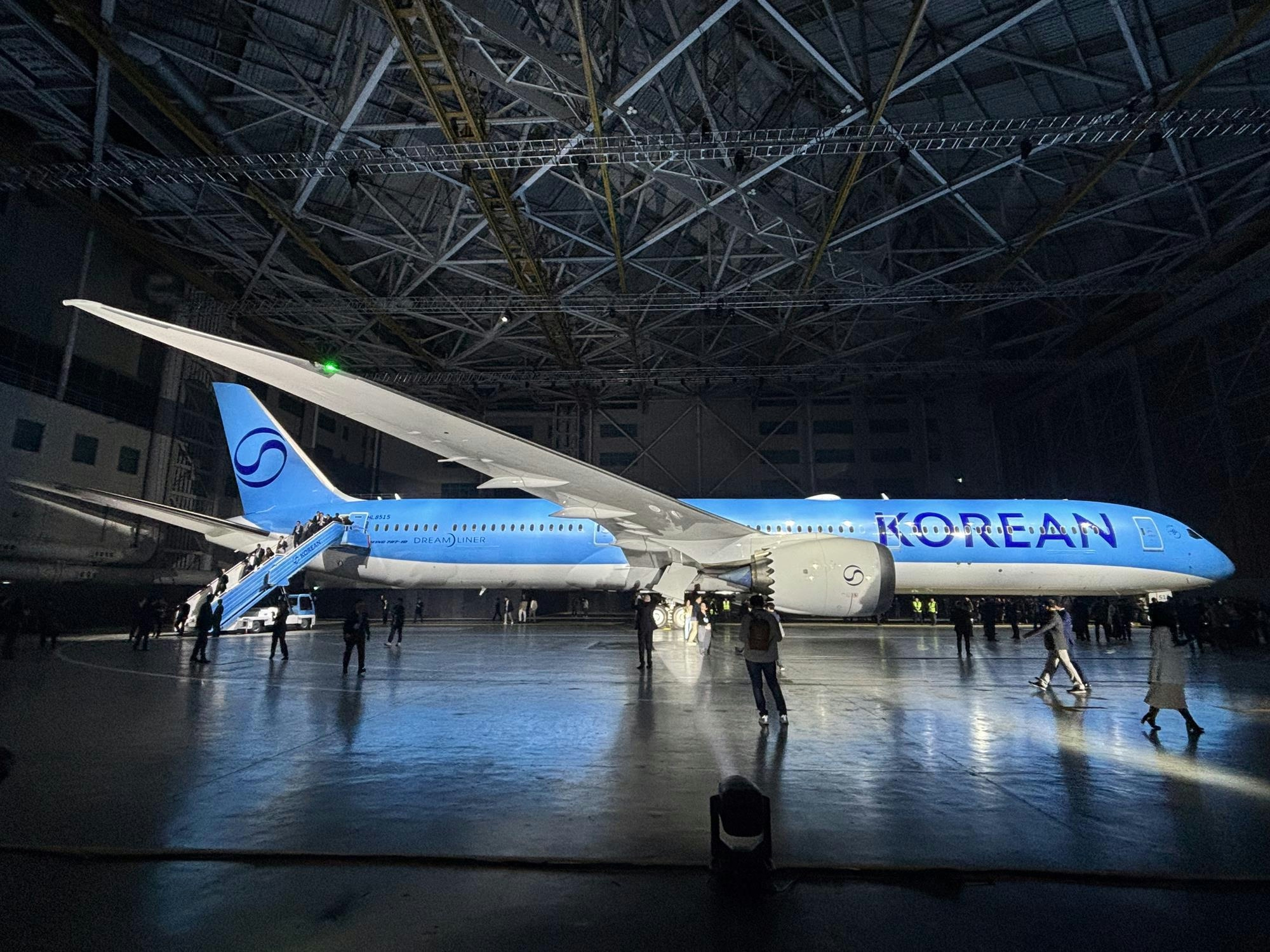
Korean Air to Establish Advanced MRO Facility at Seoul Incheon Airport
Korean Air has unveiled plans to construct a state-of-the-art airframe maintenance, repair, and overhaul (MRO) hangar at Seoul’s Incheon International Airport, with operations slated to commence in 2029. This initiative represents a joint investment of KRW 176 billion (approximately $119.5 million) between Korean Air and Incheon International Airport Corporation, aimed at enhancing the airline’s maintenance capabilities and solidifying its position within the global aviation market.
Facility Specifications and Strategic Objectives
The new facility, encompassing 69,299 square meters (745,928 square feet), will be situated within Incheon Airport’s High Tech Aviation Complex. Construction is scheduled to begin in 2027, following an agreement formalized on November 24. Designed to accommodate simultaneous servicing of two widebody and one narrowbody aircraft, the hangar will provide comprehensive airframe inspections, component checks, as well as heavy maintenance and modification services.
Korean Air emphasizes that this project will significantly bolster its world-class maintenance expertise and operational capacity, particularly in the wake of its recent launch as an integrated carrier. The expanded infrastructure is expected to elevate Korean Air’s status as a premier global MRO hub, thereby enhancing South Korea’s competitiveness in the aviation maintenance sector.
Challenges and Industry Implications
Despite the promising outlook, the project faces notable challenges, including the substantial construction costs and the complexity of integrating the new facility with existing maintenance operations without disrupting ongoing services. Industry analysts acknowledge that while the investment underscores Korean Air’s commitment to expanding its MRO infrastructure, it also necessitates careful management to maintain operational continuity during the transition period.
Market response to the announcement has been predominantly positive, with expectations that the increased maintenance capacity will improve Korean Air’s operational efficiency and global standing. This development may also intensify competition within the sector, as evidenced by recent moves from other major carriers. For instance, Emirates has announced plans to build a new maintenance facility dedicated to Rolls-Royce Trent 900 engines, signaling a broader trend of escalating investment in MRO capabilities.
Broader Expansion Strategy
The new airframe MRO facility forms part of Korean Air’s wider strategy to expand its maintenance footprint. Alongside this project, the airline is advancing the development of an engine MRO facility on Yeongjong Island, near Incheon, as well as an urban air mobility research and development center in Bucheon. These initiatives reflect Korean Air’s commitment to innovation and long-term growth across both traditional aviation maintenance and emerging sectors within the industry.

Etihad Airways Suspends Airbus A380 Flights on Key Route

Aditya Birla Group Seeks Approval for Aircraft Leasing in GIFT City

Qatar Airways Highlights Innovation and Connectivity at Arabian Travel Market 2026

Hong Kong's Five-Year Plan Includes Andrew Fan's Aircraft Parts Processing Hub Proposal

ACIA Aero Leasing Delivers ATR72-600 to Air Nostrum

RTX Appoints Jill Albertelli as Head of Pratt & Whitney

TAT Technologies Joins Beyond Aero Hydrogen Aircraft Program

AURAK Study Highlights Barriers to Air Taxi Adoption in Emerging Economies

Xiamen Air Selects Altitude for 787 Maintenance at Heathrow

Etihad and Swissport Extend Global Partnership
