
将人工智能洞察转化为可执行行动

热门趋势
Categories
Lufthansa Technik Optimistic About Growth of Philippine MRO Sector
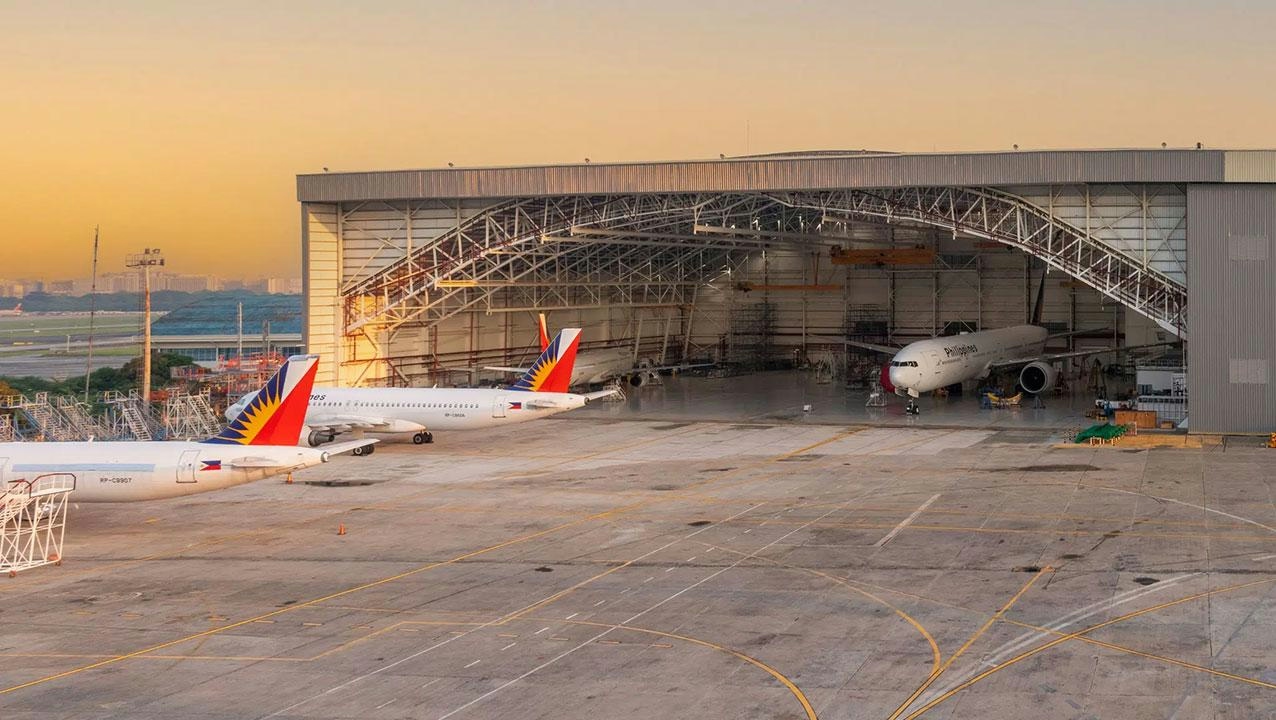
Lufthansa Technik Optimistic About Growth of Philippine MRO Sector
Expansion Plans and Strategic Focus
Lufthansa Technik Philippines (LTP) has expressed strong confidence in the growth potential of the country’s maintenance, repair, and overhaul (MRO) industry as it advances plans to expand its operations at Clark International Airport while maintaining a long-term presence in Manila. Holger Beck, President and CEO of LTP, emphasized the company’s commitment to contributing to the development of the Philippine MRO sector, describing the country as a neutral and strategic location for their operations.
Recently, LTP formalized its expansion through a lease agreement with the Bases Conversion and Development Authority (BCDA) and Luzon International Premiere Airport Development Corp. (LIPAD), which manages Clark International Airport. The agreement covers a 157,000-square-meter site intended to accommodate future engine support and repair facilities. Noel F. Manankil, CEO of LIPAD, highlighted that this investment reflects the confidence of global aviation leaders in Clark’s potential as a growing aviation and logistics hub in Central Luzon.
Despite this expansion, Beck clarified that LTP’s operational focus remains concentrated on Manila and Clark, with no immediate plans to establish additional maintenance hubs elsewhere in the Philippines. He noted the complexities involved in setting up new hubs, including logistical considerations and supply chain management, affirming that Manila and Clark currently represent the most viable locations for their activities. The new Clark facility is expected to be operational by early 2028, with construction and setup projected to take between 18 and 24 months.
Industry Challenges and Competitive Landscape
While optimistic about growth, LTP acknowledges the challenges facing the Philippine MRO sector. Industry analyses, such as those by consulting firm Oliver Wyman, point to persistent labor and material shortages, rising operational costs, and concerns over overall market performance. These factors pose potential risks to both LTP’s expansion plans and the broader competitiveness of the sector. Additionally, regional competitors may respond by expanding their own maintenance capacities or capitalizing on geopolitical tensions and tariff fluctuations, which have been identified as disruptive influences within the industry.
Beck emphasized that LTP’s primary competition is regional rather than domestic, underscoring the Philippines’ competitive advantage in attracting skilled and motivated personnel willing to work in the aviation maintenance industry. This regional focus shapes LTP’s strategic positioning as it seeks to leverage the country’s talent pool and infrastructure.
Corporate Structure and Regulatory Environment
Lufthansa Technik Philippines operates as a joint venture between Germany-based Lufthansa Technik AG and MacroAsia Corporation, a listed aviation services provider under the Lucio Tan Group. The company’s competitive edge is further supported by its recent diversification into defense-related activities and securing regulatory approvals for cabin modifications on the Airbus A320ceo family.
In May, MacroAsia announced that Lufthansa Technik had signed a lease contract with New NAIA Infra Corp. (NNIC), the new operator of Ninoy Aquino International Airport (NAIA). Since NNIC assumed operations in September 2024, it has implemented increased airport fees, including higher monthly lease charges, under a revised administrative order linked to its concession agreement. LTP continues to operate within the NAIA complex through a sublease agreement with MacroAsia Properties Development Corporation.
As Lufthansa Technik Philippines advances its expansion initiatives, the company remains dedicated to fostering the growth of the Philippine MRO industry while navigating the evolving challenges and competitive dynamics of the regional aviation sector.

Etihad and Swissport Extend Global Partnership

Sepehran Airlines B737 Returns to Mashhad After Tyre and Engine Issues

Etihad Deploys Widebody Fleet to Meet Strong Demand

Korean Air Finalizes $36.2 Billion Deal with Boeing

Australia’s RFDS Queensland Section Orders Six King Air 260Cs

Korean Air Finalizes Order for 103 Boeing Jets and Engines

Embraer E195-E2 Features Distinctive Engine Placement Among Regional Jets

What Passengers Can Expect on Boeing’s New 777X Jet

How Ethiopian Airlines Became Africa’s Leading Carrier Amid Gulf Competition

Joby Aviation Extends Autonomous Flight Capabilities with Cross-Country Tour
