
图像

AeroGenie — 您的智能副驾驶。

问任何问题。分析一切。立即行动。

热门趋势

Categories

MRO Outlook: A Quick-Turn Perspective
March 30, 2026By ePlane AI
MRO Outlook: A Quick-Turn Perspective
0
0
MRO Market Trends
CFM56-7B Engine
Aircraft Maintenance

MRO Outlook: A Quick-Turn Perspective

Rising Passenger Demand and Its Impact on Maintenance

Global passenger traffic continues to grow robustly, with the International Air Transport Association (IATA) reporting a 5.3% year-on-year increase and consistently high load factors. While this surge signals positive momentum for airlines, it simultaneously intensifies operational pressures across fleets, maintenance, repair, and overhaul (MRO) providers, and the broader aviation supply chain. Delays in the delivery of new-generation aircraft and engines have compelled airlines to extend the service life of older aircraft beyond initial plans. This divergence between fleet renewal schedules and actual deliveries has emerged as a defining challenge in the current market environment.

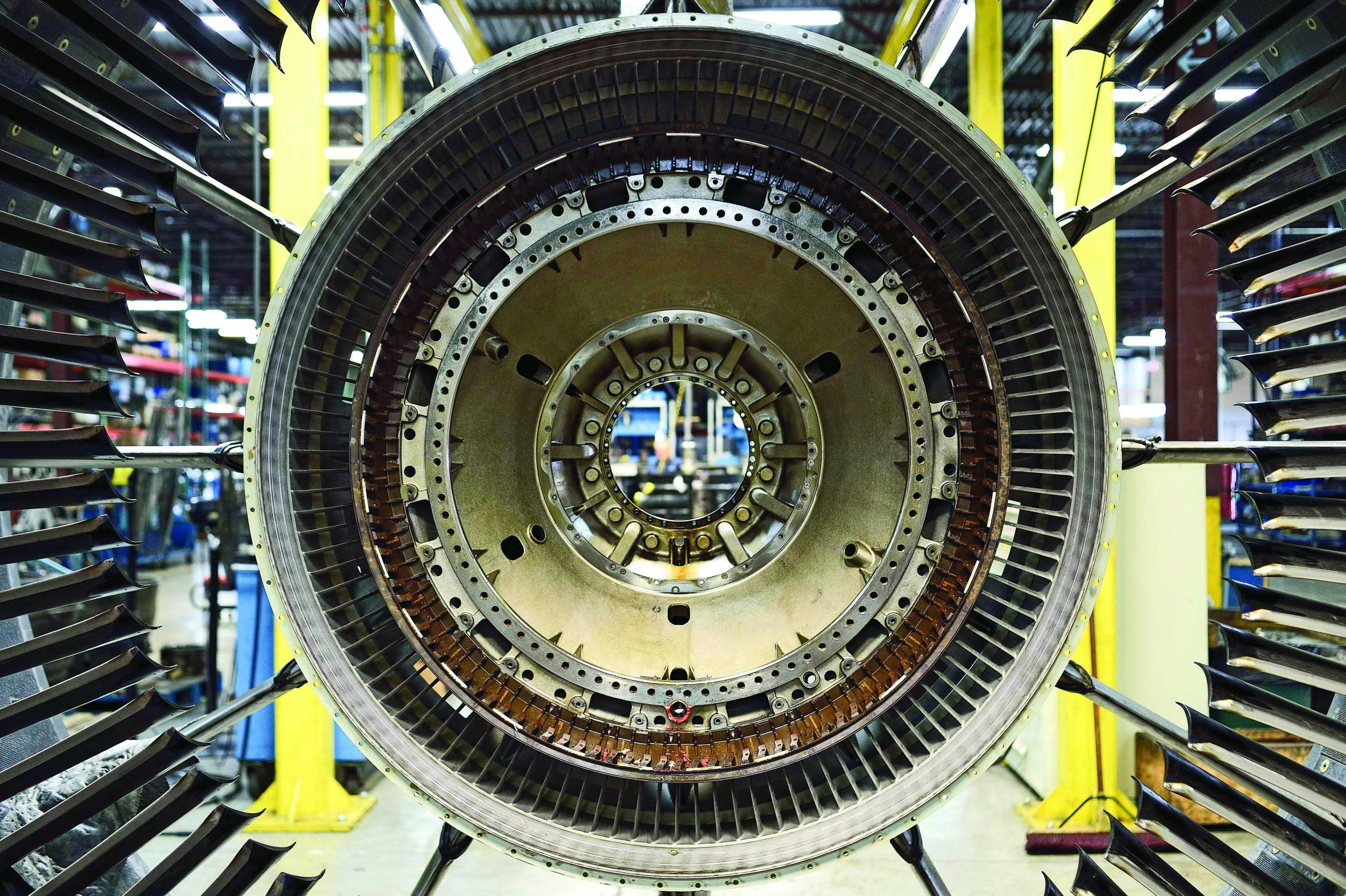
The extended reliance on aging aircraft carries significant financial and operational consequences. Maintenance activities escalate in frequency and complexity, parts consumption rises, and workscopes expand, resulting in longer turnaround times and increased maintenance expenditures. Engines such as the CFM56-7B exemplify this pressure point, with full shop visits costing between $5 million and $7 million, and limited performance restorations approaching $3.5 million. For airlines already heavily investing in new aircraft acquisitions or leases, justifying the expense of multiple shop visits on older engines becomes increasingly difficult.

Collaborative Ecosystem and Evolving Maintenance Strategies

The strain of these challenges extends beyond airline operators to encompass lessors, original equipment manufacturers (OEMs), MRO providers, and suppliers, all of whom are interconnected in the shared objective of ensuring safe, reliable, and cost-effective passenger transport. When any segment of this ecosystem experiences stress, the repercussions ripple throughout the entire system, necessitating close collaboration among all stakeholders.

In response, airlines and lessors are reevaluating their engine maintenance strategies, adopting more progressive and flexible approaches to navigate the current cycle. Rather than defaulting to comprehensive shop visits, many are embracing targeted solutions such as module swaps, particularly for modular engines like the CFM56. Given that different engine modules have varying life limits, selective replacement often proves more practical and cost-effective than full overhauls. Operators increasingly replace life-limited parts (LLP)-expired modules with green-time units to maintain engines on wing while awaiting new aircraft or engine deliveries. These “quick turn” or “hospital shop” visits concentrate on essential maintenance tasks, treating the engine as a continued-time asset to maximize remaining value with minimal cost and downtime.

Smaller, agile MRO providers are especially well-positioned to deliver these targeted workscopes efficiently, without the overhead associated with full overhaul programs. Consequently, quick-turn shop visits—referred to by AerFin as engine MRO Lite—and module swap strategies are gaining significant traction across the market.

Market Challenges and Future Outlook

This strategic shift toward quick-turn maintenance introduces new challenges. As more operators adopt these solutions, concerns arise regarding the availability of green-time modules necessary to meet growing demand. The engine aftermarket, particularly for CFM56 engines, is experiencing bottlenecks in both testing capacity and material supply. Lengthy on-wing testing or repairs conducted at third-party facilities can result in waiting periods of four to six months. Simultaneously, some MROs are reallocating resources toward newer engine models such as the CFM Leap, which itself faces limited availability of used serviceable material and extended turnaround times ranging from seven to ten months.

These evolving dynamics are driving increased demand for rapid hospital repairs and modular replacements, while compelling MRO shops to prioritize maintenance of newer engine types. As the market continues to adapt, the ability to balance immediate, cost-effective maintenance solutions with long-term fleet renewal strategies will be critical for all participants within the aviation maintenance ecosystem.

More news
Noida International Airport Boosts Regional Aviation, Galgotias University Develops Skilled Workforce

Noida International Airport Boosts Regional Aviation, Galgotias University Develops Skilled Workforce

Noida International Airport Catalyzes Regional Aviation Growth The inauguration of Noida International Airport represents a significant advancement in India’s infrastructure, positioning the National Capital Region (NCR) as an emerging global hub for aviation, logistics, and tourism. As one of Asia’s largest forthcoming airports, it is poised to unlock extensive opportunities across airline operations, cargo management, hospitality, and travel services. The airport’s recent approval for an aerodrome license, coupled with plans to establish a dedicated Maintenance, Repair, and Overhaul (MRO) facility, is expected to strengthen regional aviation capabilities and promote greater self-reliance in aircraft maintenance. This strategic development is likely to attract MRO activities from other regions, intensify competition among existing airports, and stimulate increased investment in aviation infrastructure and services throughout Uttar Pradesh. In response, competing airports may pursue strategic expansions and diversify their workforce to sustain their market positions, thereby fostering a more dynamic and competitive aviation ecosystem in the region. Galgotias University: Nurturing a Skilled Workforce for Aviation and Logistics Central to this evolving landscape is Galgotias University’s School of Aviation, Logistics and Tourism Management (SALTM), which is playing a crucial role in cultivating the skilled professionals necessary to support the sector’s rapid growth. With the expansion of airport infrastructure and allied industries, the demand for trained personnel in aviation operations, supply chain management, and travel services is expected to rise sharply. Galgotias University has proactively tailored its academic programs to align with industry requirements, offering skill-based training in collaboration with organizations such as the Aerospace and Aviation Sector Skill Council (AASSC) and the Logistics Sector Skill Council under the National Skill Development Corporation (NSDC). This approach ensures that students graduate industry-ready, equipped with expertise in global distribution systems like Amadeus and practical, role-specific competencies. The university’s strong integration with industry is evident in its robust placement record. Over 30 leading companies recruited students from the 2025–26 batch across aviation, logistics, and tourism sectors. In aviation, graduates have secured positions with major service providers including Air India, Qatar Airways, SpiceJet, IndiGo, AISATS, and Bird Group, undertaking roles in airport operations, customer service, security, and crew management at key hubs such as IGI Delhi, Ahmedabad, and Noida International Airport. In the logistics and supply chain domain, firms such as UltraTech, Tata 1mg, Welspun GCC, Del Monte Foods, Store My Goods, ShipX Cargo Logistics, V2 Retail, and SSDN Technologies have employed graduates in field operations, warehouse management, logistics execution, and export documentation across Delhi NCR and other industrial regions. The tourism and travel management sector has also seen strong engagement from companies including EaseMyTrip, Cordelia Cruise, IndiGo, ABEC Exhibitions & Conferences, and Kinexin Convention Management, with students assuming roles in holiday sales, cabin crew, exhibition management, and experience operations. The university’s proximity to Noida International Airport provides students with direct exposure to a vibrant aviation and logistics environment, enhancing opportunities for internships, live projects, and industry immersion. This close connection not only improves employability outcomes but also supports the local economy by attracting talent and meeting the workforce needs of businesses reliant on skilled professionals. Capt. Vaibhav Goutham Suresh, Director of SALTM at Galgotias University, highlighted the significance of this development, stating, “The rapid growth of the sector and the monumental scale of Noida International Airport present unparalleled opportunities for our students and the region. We are committed to developing professionals who will drive innovation and growth across aviation, logistics, and tourism.”
Turkish Airlines Enhances Inflight Wi-Fi Service

Turkish Airlines Enhances Inflight Wi-Fi Service

Turkish Airlines Enhances Inflight Wi-Fi Service Long-haul travelers increasingly depend on inflight Wi-Fi to stay connected for work, entertainment, and communication with family. In response to these growing demands, Turkish Airlines is implementing substantial upgrades to its onboard internet service, aiming to provide faster and more reliable connectivity across its fleet. Partnership and Technological Advancements The airline has partnered with technology provider Anuvu to enhance Wi-Fi capabilities on over 100 narrowbody aircraft. Central to this initiative is Anuvu’s Dedicated Space technology, which leverages artificial intelligence to manage network usage dynamically in real time. Unlike traditional systems that allocate fixed bandwidth, this AI-driven approach adjusts bandwidth according to passenger demand, minimizing slowdowns during peak usage periods. Passengers can expect significant improvements, including up to nine times higher data throughput, upload speeds that are four times faster, and latency reduced by approximately 25 percent. These enhancements align with evolving global inflight connectivity standards, ensuring Turkish Airlines remains competitive in delivering a seamless digital experience. The upgrades will enable smoother browsing, uninterrupted streaming, and more reliable communication throughout flights. Implementation and Challenges The rollout is currently underway, with the upgraded system installed on 65 aircraft. Turkish Airlines plans to complete the installation across all selected aircraft by April 2026. This phased approach allows the airline to monitor system performance, implement necessary adjustments, and maintain consistent service quality. However, the process of upgrading inflight Wi-Fi presents several challenges. Turkish Airlines must navigate the significant costs and technical complexities involved in integrating advanced satellite networks. Ensuring reliable connectivity across diverse global routes adds further difficulty. Moreover, as airlines worldwide intensify efforts to enhance their inflight offerings, Turkish Airlines faces increasing competition. Rival carriers may accelerate their own Wi-Fi upgrades or introduce new premium services to attract tech-savvy travelers, potentially shifting the competitive focus to other aspects of the passenger experience. Market Response and Strategic Implications Despite these challenges, the market response to improved inflight connectivity has been largely positive. Business travelers particularly value the ability to work without interruption, while leisure travelers and families benefit from continuous entertainment and communication options. Enhanced Wi-Fi is becoming a critical differentiator in airline service quality. Turkish Airlines’ commitment to upgrading its inflight Wi-Fi forms part of a broader strategy to meet rising passenger expectations and maintain its competitive edge. Alongside connectivity improvements, the airline continues to invest in overall service quality, providing customer support to assist travelers throughout their journey. As the rollout progresses, passengers flying on upgraded aircraft will experience a marked improvement in their onboard digital experience, reinforcing Turkish Airlines’ position as a leader in inflight connectivity.
United Airlines Plans Significant Expansion Over Next Two Years

United Airlines Plans Significant Expansion Over Next Two Years

United Airlines Unveils Ambitious Expansion Amid Industry Challenges United Airlines has announced a transformative phase in its United Next strategy, outlining plans for a substantial expansion that will significantly reshape its fleet, onboard experience, and route network over the next two years. The airline anticipates taking delivery of more than 250 new aircraft by April 2028, marking an unprecedented scale of growth for any U.S. carrier within such a condensed timeframe. This expansion represents more than incremental growth; it signals a fundamental shift in United’s competitive approach. The airline is placing greater emphasis on premium seating, introducing advanced long-range narrowbody jets, and revamping its regional fleet by moving away from traditional 50-seat aircraft. These developments are poised to redefine United’s identity for both domestic and international travelers. Despite these ambitious plans, United faces significant industry headwinds. Rising fuel costs, exacerbated by ongoing conflict in the Middle East, have compelled the airline to reduce capacity by 5% to mitigate escalating expenses. Should high fuel prices persist, United could incur up to $11 billion in additional annual costs. Nevertheless, the airline remains optimistic, citing strong travel demand and proceeding with its record fleet upgrade. Competitors are expected to respond by adjusting their capacity and pricing strategies to balance fuel costs while maintaining service competitiveness. Key Components of United’s Expansion Coastliner: A New Domestic Flagship At the heart of United’s expansion is the introduction of the Airbus A321neo Coastliner, a specialized subfleet designed for transcontinental routes connecting Los Angeles, San Francisco, and Newark. The Coastliner features a completely redesigned interior, including 20 all-aisle access lie-flat seats in United Polaris. Passengers will also benefit from premium amenities such as Saks Fifth Avenue bedding, Perricone MD skincare products, and access to Polaris lounges—marking the first time United’s full Polaris experience will be available on domestic flights. The aircraft will sport a bespoke livery and include an onboard snack bar, enhancing both its visual appeal and passenger experience. United plans to have 40 Coastliners in service by early 2028, with the first entering the schedule this summer. Given the high volume of daily travelers between these hubs, the Coastliner is positioned to become a flagship symbol of United’s premium ambitions. A321XLR: Expanding International Reach United’s strategy to expand its long-range narrowbody fleet will be furthered by the introduction of 28 Airbus A321XLR aircraft by 2028. These jets will replace aging Boeing 757s on routes to smaller European and South American cities and enable service to new destinations previously beyond reach. The A321XLR will offer 32 premium seats—16 more than the 757s they replace—and introduce a new Polaris suite featuring privacy doors, 4K screens, and Bluetooth connectivity. The aircraft will debut with a “Born to Explore” decal, underscoring its role in extending United’s international footprint. Reinventing the Regional Fleet United is also undertaking a comprehensive overhaul of its regional fleet, moving away from traditional 50-seat jets in favor of more modern and comfortable aircraft. This transition is part of a broader strategy to enhance the passenger experience and better align regional operations with United’s premium brand identity. As United navigates rising operational costs and intensifying competitive pressures, its bold expansion plan underscores a steadfast commitment to premium service and network growth, setting the stage for a new era in U.S. aviation.
Amanda Hartwig Appointed Strategic Sales Manager at C&L Aerospace

Amanda Hartwig Appointed Strategic Sales Manager at C&L Aerospace

Amanda Hartwig Appointed Strategic Sales Manager at C&L Aerospace C&L Aerospace, a subsidiary of the C&L Aviation Group, has announced the promotion of Amanda Hartwig to the position of Strategic Sales Manager. In this capacity, Hartwig will be responsible for managing key strategic accounts, with a particular emphasis on the regional and business jet markets. Her role will involve close collaboration with Maintenance, Repair, and Overhaul (MRO) providers as well as Original Equipment Manufacturers (OEMs) to reinforce partnerships and support sustained growth for the company. Industry Expertise and Leadership Martin Cooper, Senior Vice-President of Sales at C&L Aerospace, praised Hartwig’s extensive qualifications, noting her broad industry experience and sales acumen within the regional airline sector. Cooper emphasized that her background in business development and sales leadership combines valuable airline expertise with strategic insight, positioning her to drive continued growth for the company. Hartwig’s appointment comes amid a period of intensified competition within the aerospace industry. Companies such as Acrisure and ParaZero are actively expanding their market presence, heightening competitive pressures. This evolving landscape presents both challenges and opportunities, requiring Hartwig to navigate increased market demands and respond effectively to competitor strategies, including aggressive marketing initiatives and new strategic alliances. The recent wave of high-profile executive appointments across the sector further reflects the dynamic and rapidly changing nature of the market. Career and Industry Contributions Since joining C&L Aerospace, Hartwig has been instrumental in broadening the company’s customer base in regional markets. Her leadership, innovative approach, and deep industry knowledge have significantly contributed to sales growth and the strengthening of customer relationships. With over 17 years of experience in aviation, Hartwig began her career in the government sector at Rockwell Collins before transitioning to sales and business development roles at Regional One and AIRCO, where she focused on commercial and regional markets. Beyond her responsibilities at C&L Aerospace, Hartwig also serves as Vice Chairman of the Air Carriers Purchasing Conference (ACPC), underscoring her ongoing commitment to advancing the aerospace industry. As she assumes her new role, Hartwig will play a central part in C&L Aerospace’s strategy to maintain and expand its market share in an increasingly competitive and evolving aerospace environment.
Finnair to Lease ATR and Embraer Aircraft for Norra Operations

Finnair to Lease ATR and Embraer Aircraft for Norra Operations

Finnair to Lease ATR and Embraer Aircraft for Norra Operations Finnair has entered into letters of intent to lease two Embraer E190-E1 and two ATR 72-600 aircraft, aiming to enhance the regional fleet operated by its partner airline, Norra. These aircraft are expected to be integrated into Norra’s operations by summer and early autumn 2026, marking a significant expansion of the regional carrier’s fleet as Finnair seeks to reinforce its presence in key European markets. Expansion of Norra’s Fleet and Strategic Objectives Currently, Norra operates a fleet comprising twelve Embraer E190-E1 and twelve ATR 72-500 aircraft on behalf of Finnair. With the planned additions, the number of jets operated by Norra will increase to eighteen. This expansion aligns with Finnair’s strategy to improve schedule reliability and enhance fleet flexibility. Christine Rovelli, Finnair’s Chief Revenue Officer, emphasized the importance of a robust regional network in growing the airline’s reach from its core markets. She noted that the new aircraft would contribute to strengthening schedule dependability and provide greater flexibility in fleet deployment. The timing of this fleet augmentation coincides with Finnair’s preparations for the summer 2026 season, during which the airline plans to serve over 90 European destinations, including the launch of 12 new routes. This expansion underscores Finnair’s commitment to broadening its regional connectivity and market footprint. Operational and Market Considerations While the leasing of additional ATR and Embraer aircraft presents clear growth opportunities, it also introduces potential operational challenges. Integrating new aircraft types into Norra’s existing fleet may result in transitional disruptions. Furthermore, the expansion occurs amid intensified competition from other regional carriers, which could prompt rivals to revise their fleet strategies in response. Financially, industry analysts are monitoring the implications of Finnair’s decision to lease rather than purchase these aircraft. Leasing offers operational flexibility but may affect the airline’s long-term cost structure. This move forms part of a wider fleet optimization strategy, which includes the introduction of new Embraer E2 jets and the continued use of older Airbus A320 models. Through this diversified approach, Finnair aims to balance efficiency and capacity across its regional and narrowbody operations. As Finnair advances its regional network expansion and fleet modernization, it navigates a complex landscape of growth prospects and operational challenges within the competitive European aviation sector.
Engine Fire on Delta A330 Scatters Debris Over São Paulo Airport After Takeoff

Engine Fire on Delta A330 Scatters Debris Over São Paulo Airport After Takeoff

Engine Fire Forces Delta A330 to Return to São Paulo Airport, Scattering Debris and Igniting Brush Fire A Delta Air Lines Airbus A330-300 operating flight DL104 from São Paulo/Guarulhos International Airport (GRU) to Atlanta was compelled to return to the airport shortly after takeoff on Sunday night due to a severe engine failure accompanied by fire. The incident resulted in debris falling onto the airport grounds, which ignited a brush fire near the runway and temporarily disrupted operations at Brazil’s busiest international gateway. Incident Details and Immediate Response Flight tracking data indicates that Delta flight DL104, a routine overnight service to Atlanta, departed GRU at 11:49 pm. Within minutes of departure, the aircraft experienced a failure in its left engine. Air traffic controllers promptly alerted the flight crew, warning them of fire on the wing. The crew halted their ascent at 4,500 feet and executed an expedited return, safely landing back at São Paulo at 11:59 pm, just ten minutes after takeoff. Complicating the emergency response was ongoing maintenance work that had closed one of the airport’s two runways, leaving only a single strip operational. Consequently, all other flights were temporarily suspended to prioritize the safe return of the Delta aircraft. The debris from the engine fire caused a grass fire adjacent to the runway, which was swiftly addressed by airport rescue and firefighting teams. A Delta spokesperson confirmed the sequence of events, stating, “Delta flight 104 from São Paulo to Atlanta returned to the airport soon after takeoff Sunday evening, following a mechanical issue with the aircraft’s left engine. The Airbus A330-300 landed safely and was met by ARFF [Aircraft Rescue and Firefighting]. Customers, including 272 passengers and 14 crew members, were transported by bus to the terminal.” Passenger Accounts and Ongoing Investigations Passengers described the event as harrowing. Desmond Spencer, a passenger aboard the flight, recounted on social media that the engine caught fire immediately after rotation, accompanied by loud bangs and visible flames. He noted heightened anxiety among passengers, particularly those seated at the rear with a clear view of the unfolding emergency. Despite the distress, all passengers and crew disembarked without injury. The incident has prompted immediate investigations by aviation authorities aiming to determine the root cause of the engine failure and fire. Industry experts anticipate that such a high-profile safety event will lead to increased regulatory scrutiny, potential rises in insurance premiums, and operational challenges for Delta. The airline may also experience a temporary decline in its stock value as investors respond to safety concerns. Competitors are closely observing the situation, with some expected to highlight their own safety records and maintenance protocols in response. Airlines often leverage such incidents to reassure passengers and stakeholders by emphasizing advanced safety technologies and rigorous operational standards. As investigations proceed, Delta and airport authorities are focused on restoring normal operations and addressing any residual safety issues, underscoring the vital importance of robust emergency procedures in contemporary aviation.
India’s Aviation Growth Hampered by Aircraft Delivery Delays

India’s Aviation Growth Hampered by Aircraft Delivery Delays

India’s Aviation Growth Hampered by Aircraft Delivery Delays Prolonged Delivery Delays Threaten Expansion India’s aviation sector, which has been experiencing rapid growth, now faces significant challenges as aircraft delivery delays extend up to 15 years. Despite Indian airlines placing orders for nearly 1,700 new planes, the expansion is being hindered by persistent backlogs. Civil Aviation Minister K. Rammohan Naidu has highlighted that these delays are largely due to ongoing global supply-chain disruptions that originated during the pandemic and continue to affect aircraft manufacturing worldwide. Recent setbacks, such as Boeing’s postponement of 737 Max deliveries caused by wiring issues, have further exacerbated the situation, demonstrating how manufacturing problems can disrupt delivery schedules and airline operations on a global scale. Financial Strain and Competitive Risks for Indian Carriers The impact of these delays extends beyond operational inconvenience, imposing substantial financial burdens on Indian airlines. To maintain service levels, carriers are compelled to keep aging aircraft in operation, resulting in increased leasing and maintenance costs. This financial strain is evident in the sector’s performance, with Indian airlines collectively reporting losses amounting to $576 million in the 2024-25 fiscal year, despite strong passenger demand. The inability to expand capacity by adding new routes or increasing flight frequencies also raises concerns about potential market share erosion, as more nimble domestic competitors and international carriers capitalize on these limitations. Government Initiatives: Balancing Imports and Domestic Production In response to the delivery bottleneck, the Indian government has adopted a dual approach. In the short term, efforts are underway to expedite aircraft imports to alleviate immediate shortages. Concurrently, there is a strategic emphasis on developing domestic manufacturing capabilities to reduce dependence on global supply chains. This includes collaborations with international aerospace firms such as Embraer and a joint venture between Hindustan Aeronautics Limited (HAL) and Russian partners aimed at producing the Sukhoi Superjet 100 within India. These initiatives are designed not only to enhance supply resilience but also to generate employment and foster long-term industry sustainability. Infrastructure Expansion Outpaces Fleet Growth While aircraft deliveries face delays, India’s airport infrastructure is expanding at a remarkable pace. The country currently operates 165 airports, with plans to add 50 more over the next five years and a target of exceeding 350 airports by 2047. Regional projects, including runway expansions like the one at Bhavnagar, are progressing steadily. However, the limited availability of new aircraft threatens to undermine the full utilization of this growing infrastructure, potentially constraining the sector’s overall capacity and efficiency. Workforce Challenges and Market Dynamics The delivery delays are also impacting the broader aviation ecosystem. Policymakers estimate that India will require approximately 30,000 new pilots in the coming years to support anticipated growth. The disparity between expanding infrastructure and constrained fleet size is affecting multiple facets of the industry, including route development, cargo operations, crew training, and commercial planning. In light of these challenges, some airlines may consider diversifying their supplier base or revising expansion strategies to adapt to the uncertain delivery timelines. Navigating a Complex Future India’s aviation industry now stands at a critical juncture. The government’s commitment to fostering domestic aircraft production marks a significant strategic shift toward self-reliance, but establishing local manufacturing capabilities will demand considerable time and investment. Meanwhile, airlines, investors, and infrastructure planners must contend with an environment where large aircraft orders do not necessarily translate into timely deliveries. The sector’s growth trajectory will increasingly depend on the ability to overcome these delivery constraints and ensure that new planes are available to meet rising demand.
Boeing Shares Show Resilience Amid Airbus Order Win

Boeing Shares Show Resilience Amid Airbus Order Win

Boeing Shares Show Resilience Amid Airbus Order Win Boeing’s stock has exhibited notable resilience despite Airbus securing a significant cargo aircraft order from Air China Cargo. The Chinese carrier’s commitment to purchase up to ten A350F freighters, valued at over $4 billion, represents a missed opportunity for Boeing. However, investors appear to be focusing on the broader operational fundamentals of the U.S. aerospace giant rather than isolated contract setbacks. Market sentiment is increasingly influenced by Boeing’s production stability, regulatory achievements, and the overall demand within the sector. Operational Progress and Sector Demand Analysts highlight that Boeing’s share performance is driven less by individual order outcomes and more by its capacity to sustain production momentum and obtain key regulatory approvals. In a duopolistic market dominated by Boeing and Airbus, airlines’ fleet decisions are strategic and long-term, often aimed at optimizing maintenance and operational efficiencies. Consequently, the loss of a single freight contract is considered relatively minor within the context of Boeing’s overall market position. Recent regulatory milestones have bolstered investor confidence. The U.S. Federal Aviation Administration (FAA) recently approved higher maximum takeoff weights for the 787-9 and 787-10 Dreamliner models, allowing for increased payload capacity or extended range. For instance, the 787-10 can now carry approximately five additional metric tons of cargo or fly roughly 400 nautical miles farther. Air New Zealand is set to be the first operator of these upgraded jets, which have been in production since December 2025. These developments have contributed to the stabilization of Boeing’s shares following a challenging start to the year. Production Acceleration and Financial Outlook Beyond regulatory progress, Boeing’s outlook is further supported by projections of positive free cash flow and the accelerated production of its 737 MAX series. These factors are viewed as critical to the company’s recovery trajectory. Nevertheless, risks remain. A recent machining error caused a temporary decline in Boeing’s stock price, and concerns persist regarding negative cash flow margins. Market reactions to Airbus’s order win have been mixed; some investors interpret Boeing’s resilience as a sign of recovery, while others remain cautious amid ongoing geopolitical tensions and rising oil prices, which could adversely affect airline profitability. Competitive Landscape and Sector Dynamics Airbus continues to report strong delivery figures, including robust totals for February, as both manufacturers compete to maintain their dominant market shares. The broader aerospace and defense sector provides a macroeconomic buffer. Bank of America strategists anticipate increased equity market volatility in the second quarter of 2026 due to inflationary pressures and higher yields. Nonetheless, the sector often benefits from long-term infrastructure programs and stable government budgets, which help mitigate short-term fluctuations in order activity. Outlook for Investors Currently trading at €165.30 after a 14% decline over the past month, Boeing shares are seeking a sustainable support level. Provided the company continues to meet certification milestones and production targets, strong global demand for new aircraft is expected to underpin its valuation. This outlook persists despite ongoing competitive challenges and macroeconomic pressures.
Delta Air Lines A330 Engine Catches Fire During Takeoff in São Paulo

Delta Air Lines A330 Engine Catches Fire During Takeoff in São Paulo

Delta Air Lines A330 Engine Catches Fire During Takeoff in São Paulo Delta Air Lines flight DL104 experienced a critical engine failure on Monday shortly after departing from São Paulo’s Guarulhos International Airport. The Airbus A330-300 suffered a catastrophic malfunction in its left engine, resulting in the ejection of burning debris and a subsequent fire in the grass adjacent to the runway. Despite the severity of the incident, the flight crew successfully executed an emergency return and landing, with no injuries reported among the 288 passengers and crew members on board. Incident Details and Initial Investigation The aircraft was powered by Pratt & Whitney PW4168A engines. Preliminary assessments suggest that the engine failure may have been caused by the ingestion of foreign objects or a bird strike, as bird activity had been reported near the airport minutes before takeoff. Brazil’s Aeronautical Accidents Investigation and Prevention Center (CENIPA) has launched a formal inquiry to determine the precise cause of the malfunction. Due to maintenance work closing runway 10R/28L, the A330 was forced to land on the same runway 10L from which it had departed just ten minutes earlier. Airport operations were temporarily disrupted while emergency teams contained the fire near the runway. Broader Context and Industry Implications This incident comes amid heightened scrutiny of aviation safety following similar engine-related emergencies involving other carriers such as Southwest Airlines and Air Canada. These events have prompted regulatory authorities to intensify oversight and have led airlines to reexamine their maintenance and safety protocols. For Delta Air Lines, the event presents immediate challenges, including the technical investigation and potential repair or replacement of the damaged engine. Additionally, the airline faces the task of managing passenger confidence and safeguarding its public reputation. Industry analysts note that such incidents can lead to a short-term decline in the airline’s stock value, while competitors like United Airlines may leverage the situation to emphasize their own safety records and attract market share. Delta Air Lines has reaffirmed its commitment to safety and pledged full cooperation with Brazilian authorities throughout the investigation. Passengers affected by flight DL104 have been accommodated on alternative flights and provided with necessary assistance following the incident.
A. Lulki Design Bureau Awaits Development of Anti-Gravity Engines for Fighters

A. Lulki Design Bureau Awaits Development of Anti-Gravity Engines for Fighters

A. Lulki Design Bureau Anticipates Breakthroughs with Anti-Gravity Engines for Fighter Aircraft The A. Lulki Design Bureau, a prominent division within the United Engine Corporation (UEC), is preparing for a transformative shift in fighter aircraft propulsion. Evgeny Marchukov, the bureau’s General Designer, emphasized that while current combat aircraft engines have service lives extending up to 50 years, the future of aviation power plants lies in fundamentally new physical principles. He envisions anti-gravity engines—operating not through conventional reactive thrust but via the interaction of fields—as the next significant advancement in aerospace technology. Marchukov drew parallels between this prospective innovation and the revolutionary insights of Einstein, underscoring the necessity of forward-looking research in engine development. “It is already necessary to look into the future and think about promising engines,” he stated, highlighting the bureau’s commitment to pioneering technologies beyond the present paradigm. Technological Achievements and Ongoing Challenges The bureau has made notable progress in propulsion technology, including the development of controlled thrust vectoring, a capability credited to domestic engineers. Despite these advances, Marchukov acknowledged persistent technical challenges, particularly in maintaining the stable operation of the low-pressure compressor and the engine as a whole. He remarked on the complexity of these tasks, noting that such engineering feats are rare even among foreign competitors. “Perhaps, therefore, I assume that our foreign colleagues do not have such pirouettes on airplanes. It’s not that simple, but we succeeded, and we will continue to develop this technology,” he explained. Currently, Russia’s most advanced fighter engine, known as “Product 30” or the “second stage” engine, exemplifies the bureau’s capabilities. This engine achieves a thrust-to-weight ratio of 1.36 and delivers 18,000 kgf in afterburner mode, setting a high benchmark for modern combat aircraft propulsion. Competitive and Collaborative Landscape Despite its ambitions, the Lulki Design Bureau faces significant competition from established aerospace firms such as Dassault, which is advancing its Vortex spaceplane project. Market responses to anti-gravity propulsion remain cautious, with some investors expressing skepticism regarding its feasibility and practical application in conventional fighter jets. Meanwhile, traditional aerospace companies continue to invest heavily in proven propulsion technologies, even as they explore emerging concepts like hypersonic engines. International collaboration further complicates the bureau’s prospects. The challenges encountered by the French-German fighter program illustrate the difficulties inherent in multinational defense projects, potentially impacting Lulki’s partnerships and funding avenues. As the aerospace sector advances, the Lulki Design Bureau’s pursuit of anti-gravity engines embodies both the ambition and uncertainty that accompany efforts to redefine the future of aviation technology.
line









