
将人工智能洞察转化为可执行行动

热门趋势
Categories
Plane Makes Emergency Landing in Brooks Range; NTSB Investigates Engine Problem
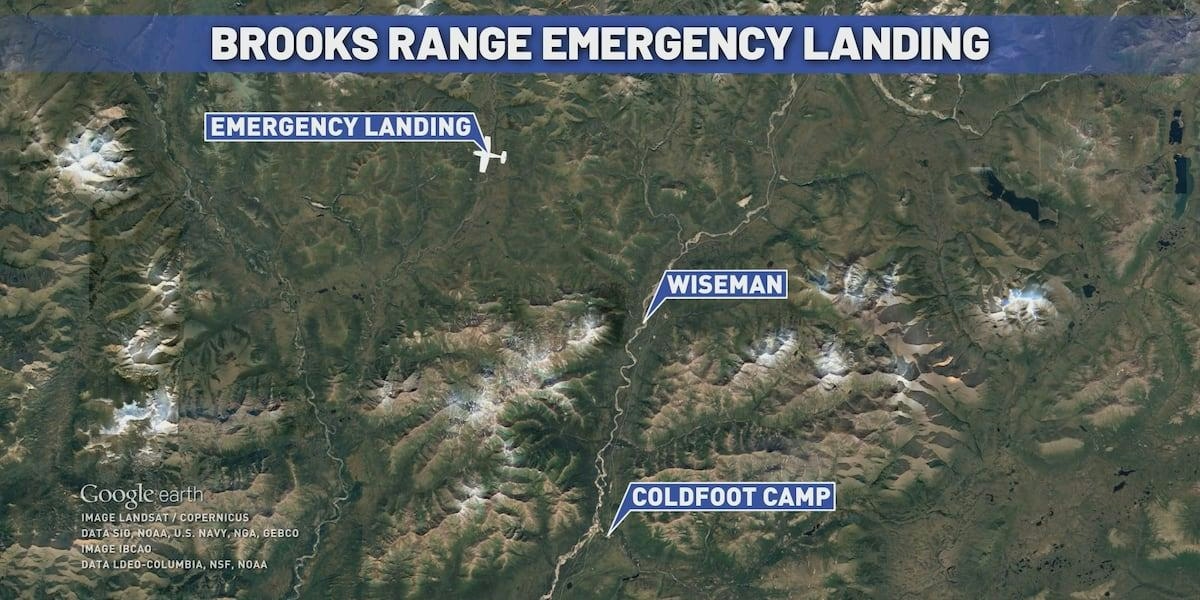
Emergency Landing in Alaska’s Brooks Range Prompts NTSB Investigation
ANCHORAGE, Alaska — A Wright Air Service Cessna Caravan carrying nine passengers made an emergency landing Monday in the remote Brooks Range shortly after departing Coldfoot, Alaska. The National Transportation Safety Board (NTSB) has launched an investigation into a possible engine malfunction, focusing on the aircraft’s engine reliability and the pilot’s handling of the emergency.
Incident Details and Rescue Operation
The commuter flight was en route to Anaktuvuk Pass when the pilot reported engine trouble within minutes of takeoff. According to Clint Johnson, chief of the NTSB’s Alaska Regional Office, the pilot attempted to return to Coldfoot but was forced to make an emergency landing northwest of the airstrip, near Gates of the Arctic National Park. Despite the challenging terrain, which included glacial runoff, gravel, and trees, the pilot successfully landed the aircraft on a flat area approximately 20 miles north-northwest of Coldfoot, near the community of Wiseman.
All nine passengers and the pilot escaped serious injury, with the pilot sustaining only a minor split lip. Two helicopters responded promptly to the distress call, transporting the group back to Coldfoot within two hours. Passenger Brett Fillipi captured footage of the incident and rescue, describing how the group had flown from Fairbanks to Coldfoot, refueled, and then encountered engine trouble shortly after departure. The crash occurred at 10:42 a.m., and the group waited about 30 minutes before being located by other aircraft. A helicopter landed on a nearby gravel bar to evacuate the passengers and pilot to safety.
Investigation and Industry Implications
Johnson noted that the pilot observed the engine surging and producing unusual “whiny or groaning” noises five to ten minutes after takeoff. Video evidence from Fillipi corroborated this account. The aircraft’s emergency locator transmitter (406 ELT) activated immediately, and the operator’s tracking system helped pinpoint the location, enabling a swift rescue.
The incident has raised concerns about the reliability of the aircraft’s engine, potentially prompting increased regulatory scrutiny from both the Federal Aviation Administration (FAA) and the NTSB. Industry experts suggest that such events could pose reputational risks for the aircraft manufacturer and operator, possibly leading to higher insurance premiums and more rigorous inspections of similar aircraft models. Competitors in the commuter aviation sector may respond by enhancing safety protocols, issuing public reassurances, or conducting preemptive fleet inspections.
The NTSB’s ongoing investigation will seek to determine the root cause of the engine failure and assess the pilot’s emergency response. The findings may influence future safety regulations and operational procedures for commuter flights operating in Alaska’s challenging environment and beyond.

Etihad and Swissport Extend Global Partnership

Sepehran Airlines B737 Returns to Mashhad After Tyre and Engine Issues

Etihad Deploys Widebody Fleet to Meet Strong Demand

Korean Air Finalizes $36.2 Billion Deal with Boeing

Australia’s RFDS Queensland Section Orders Six King Air 260Cs

Korean Air Finalizes Order for 103 Boeing Jets and Engines

Embraer E195-E2 Features Distinctive Engine Placement Among Regional Jets

What Passengers Can Expect on Boeing’s New 777X Jet

How Ethiopian Airlines Became Africa’s Leading Carrier Amid Gulf Competition

Joby Aviation Extends Autonomous Flight Capabilities with Cross-Country Tour
