
图像

将人工智能洞察转化为可执行行动

立即加入 AeroGenie 候补名单!

热门趋势

Categories

Pratt & Whitney F119 Engine Reaches One Million Flight Hours
June 30, 2026By ePlane AI
Pratt & Whitney F119 Engine Reaches One Million Flight Hours
0
0
Pratt & Whitney
F119 Engine
F-22 Raptor

Pratt & Whitney F119 Engine Surpasses One Million Flight Hours

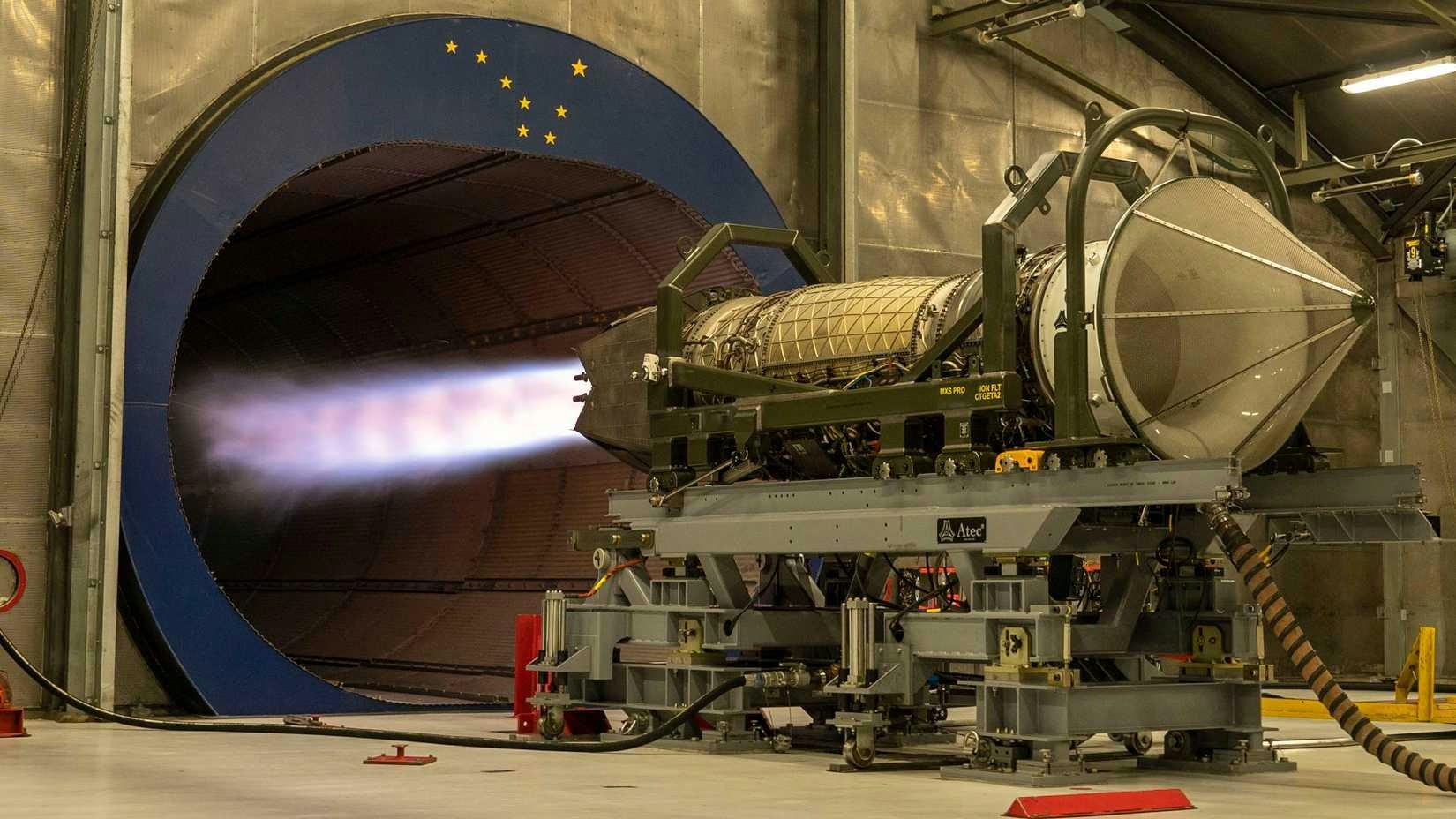
Pratt & Whitney, a subsidiary of RTX (NYSE: RTX), has announced that its F119 engine has surpassed one million flight hours powering the Lockheed Martin F-22 Raptor. This milestone highlights the engine’s pivotal role as the world’s first fifth-generation fighter engine and a fundamental component of the U.S. Air Force’s air superiority capabilities.

A Legacy of Performance and Innovation

Since its introduction over two decades ago, the F119 engine has been integral to the F-22 Raptor’s operational success. Jill Albertelli, president of Military Engines at Pratt & Whitney, emphasized the engine’s critical contribution to maintaining air dominance. She noted that the F119 continues to deliver exceptional capability, safety, and readiness, underscoring the company’s dedication to its customers.

Each F-22 Raptor is equipped with two F119 engines, which provide advanced features such as thrust vectoring, stealth technologies, and supercruise capability—enabling sustained supersonic flight without the use of afterburners. The engine’s thrust-vectoring nozzle enhances the aircraft’s speed, agility, and situational awareness. Over its service life, the F119 has established a strong reputation for reliability and performance, serving as the technological foundation for the F135 engine used in the F-35 Lightning II.

Sustaining the F-22 Fleet Amid Industry Challenges

Pratt & Whitney continues to support the global F-22 fleet through extensive sustainment programs, including depot maintenance and modernization efforts. The company employs advanced methodologies such as Model-Based Systems Engineering and Usage-Based Lifing, alongside ongoing component enhancements, to ensure the F119 remains operationally effective for years to come. Although the final F119 engine was produced in 2013, long-term sustainment remains a strategic priority as the F-22 remains a vital asset for the U.S. Air Force.

This achievement arrives amid broader challenges facing the aerospace industry. Increasing demand for advanced engines has complicated efforts to maintain reliability and meet production timelines. United Airlines CEO Scott Kirby recently identified engine availability as a significant constraint for the aviation sector over the next five years, placing additional pressure on manufacturers like Pratt & Whitney to balance new engine deliveries with sustained support. The company’s ability to uphold readiness rates will continue to attract close scrutiny.

Competitors are also intensifying their efforts in response to Pratt & Whitney’s accomplishments. General Electric is advancing hybrid-electric powertrain technologies, while Rolls-Royce is expanding its engine health monitoring systems, both aiming to capture market share and establish new standards in engine performance and reliability.

Founded in 1925, Pratt & Whitney remains a leader in aircraft propulsion, currently supporting more than 90,000 in-service engines worldwide. As the F119 engine reaches this significant milestone, the company faces the dual challenge of preserving its legacy of innovation and dependability within a rapidly evolving aerospace environment.

More news
TAP Air Portugal Marks 60 Years of Aviation and Tourism Between Brazil and Portugal

TAP Air Portugal Marks 60 Years of Aviation and Tourism Between Brazil and Portugal

TAP Air Portugal Marks 60 Years of Aviation and Tourism Between Brazil and Portugal TAP Air Portugal is commemorating six decades of continuous air connectivity between Brazil and Portugal, highlighting its essential role in promoting transatlantic travel, cultural exchange, and tourism development across the South Atlantic. Since its inaugural flights, TAP has established the Lisbon–Brazil route as one of the most strategically important long-haul networks, effectively linking Europe with Brazil’s key economic and tourism hubs. Building a Transatlantic Bridge The aviation partnership between Portugal and Brazil began during the early days of long-haul air travel. Initial TAP services involved stopovers, gradually fostering passenger confidence in intercontinental journeys. The introduction of jet aircraft in the mid-1960s marked a significant milestone, enabling direct flights and positioning Lisbon as a crucial gateway for travelers between Europe and South America. Over the years, this corridor has become central to TAP’s international identity and long-haul strategy. Brazil: A Core Market for TAP Brazil remains one of TAP’s most vital markets, with consistent year-round demand driven by leisure travelers, diaspora communities, and business ties. The airline’s network covers major Brazilian cities including São Paulo, Rio de Janeiro, Brasília, Recife, Fortaleza, and Belo Horizonte, as well as emerging secondary destinations. This extensive reach allows TAP to mitigate seasonal fluctuations and supports balanced tourism flows in both directions. Brazilian travelers also represent a significant source of outbound tourism for Portugal, contributing notably to the economies of Lisbon, Porto, and the Algarve, particularly through cultural, gastronomic, and heritage tourism. This reciprocal relationship has reinforced the corridor’s long-term stability. Lisbon: A Strategic Gateway Lisbon’s geographic position offers one of the shortest transatlantic routes to South America, enhancing operational efficiency and reducing flight durations. Serving as TAP’s primary hub, Lisbon facilitates seamless connections between Europe, Africa, and South America, strengthening Portugal’s status as a leading entry point for Brazil-bound tourism. Navigating Competitive and Economic Challenges As TAP celebrates this milestone, it confronts a rapidly evolving competitive environment. Major European carriers such as Lufthansa and Air France-KLM are competing for influence amid TAP’s ongoing privatization process. Lufthansa has recently commenced construction of a maintenance, repair, and operations (MRO) center in Portugal, signaling its commitment to the market and potentially impacting the bidding dynamics. Concurrently, Air France-KLM has secured a €1 billion credit facility to support mergers and acquisitions, including its bid for TAP. Rising fuel costs present an additional challenge. Industry experts note that while higher prices affect all airlines, they could influence the privatization process. Nevertheless, market observers remain cautiously optimistic that TAP’s robust transatlantic network and strategic positioning will continue to attract investor interest. Looking Ahead Sixty years after its inaugural flights between Brazil and Portugal, TAP Air Portugal remains a dominant force in Europe–South America air travel. Despite competitive pressures and economic challenges, the airline’s resilient network and strategic Lisbon hub ensure it continues to play a central role in transatlantic tourism and cultural exchange.
Joby Aviation and Toyota Announce Strategic Manufacturing Partnership for Air Mobility

Joby Aviation and Toyota Announce Strategic Manufacturing Partnership for Air Mobility

Joby Aviation and Toyota Announce Strategic Manufacturing Partnership for Air Mobility A New Alliance to Advance Electric Aviation Joby Aviation, Inc. (NYSE: JOBY) and Toyota Motor Corporation have formalized a strategic manufacturing partnership through a newly established joint venture, marking a significant step forward in the development of air mobility. The collaboration seeks to merge Joby’s pioneering expertise in electric vertical take-off and landing (eVTOL) aircraft with Toyota’s globally recognized production systems and operational excellence. This alliance aims to accelerate the commercial production of Joby’s eVTOL aircraft by enhancing productivity, quality, and cost efficiency, while preparing to scale manufacturing capacity in anticipation of certification and growing market demand. JoeBen Bevirt, founder and CEO of Joby Aviation, emphasized the longstanding relationship between the two companies, noting that Toyota has supported Joby for nearly a decade in building the foundation for aircraft manufacturing. He expressed confidence in their shared vision of making aerial mobility a routine aspect of daily life, underscoring the partnership’s potential to deliver on this promise. Shared Vision and Industry Context Akio Toyoda, Chairman of Toyota Motor Corporation, highlighted the company’s enduring philosophy of providing mobility for all and its evolution toward embracing air mobility as a natural extension of this mission. He described the partnership with Joby as a meaningful collaboration that aligns with Toyota’s commitment to expanding the boundaries of mobility and delivering new value to society. Toyoda framed the joint venture as a critical step toward realizing a future mobility society that integrates air transportation. The announcement comes amid a competitive and legally complex environment within the eVTOL sector. Joby is currently involved in ongoing litigation with Archer Aviation, a rival in the industry. While a federal judge recently dismissed claims brought by Archer against Joby, Joby’s own trade secret lawsuit against Archer continues to progress. These legal disputes highlight the intense competitive pressures shaping the emerging air mobility market and may influence industry dynamics and innovation trajectories. Despite these challenges, Joby and Toyota remain steadfast in their commitment to their joint vision. By leveraging their combined strengths through the joint venture, the companies aim to broaden access to air mobility and play a defining role in the future of transportation.
WFW Advises ITOCHU on Investment in Sirius Aviation Capital

WFW Advises ITOCHU on Investment in Sirius Aviation Capital

WFW Advises ITOCHU on Investment in Sirius Aviation Capital Strategic Acquisition in the Aviation Leasing Sector Watson Farley & Williams (WFW) has provided legal counsel to ITOCHU Corporation in its acquisition of shares in Sirius Aviation Capital Holdings Limited, marking a significant development in the global aviation leasing and investment landscape. This transaction highlights the increasing prevalence of cross-border mergers and acquisitions within the aviation industry and reflects the growing attractiveness of aviation leasing to international investors. ITOCHU, a prominent Japanese trading and investment firm with a well-established presence in the aviation sector, is pursuing this strategic investment to enhance its global aviation portfolio. Sirius Aviation Capital, headquartered in the Abu Dhabi Global Market (ADGM), operates as a comprehensive aircraft leasing and services platform. The company specializes in managing investments across the lifecycle of mid-life narrowbody aircraft, including acquisition, lease management, and remarketing, serving institutional investors worldwide. Navigating Complexities in a Cross-Border Transaction Advising on this cross-border deal involved addressing several challenges. The WFW team, led by Dubai Corporate Partner Alastair Holland and supported by Tokyo Partner Shusuke Fukunaga and Paralegal Saira Oshiro, managed the complexities of valuing a private aviation company such as Sirius, aligning market expectations, and ensuring post-investment liquidity. These considerations are particularly pertinent in the current market environment, where institutional investors are adopting a cautious stance. This cautiousness parallels trends observed in other high-profile sectors, including space technology, where concerns over growth projections and company valuations—exemplified by firms like SpaceX—have influenced investment approaches. The transaction occurs amid intensified competition in the business aviation sector, where market players are strategically positioning themselves to benefit from record initial public offering (IPO) activity and rising demand for business jets. ITOCHU’s investment in Sirius thus represents a calculated effort to secure a strategic position within a rapidly evolving and competitive market. Alastair Holland commented on the deal, stating, “We are delighted to have supported ITOCHU on this strategic investment in Sirius. The transaction reflects growing investor interest in the aviation leasing sector, as well as the increasing importance of cross-border partnerships in driving sector growth. It also highlights WFW’s strong M&A capability in the aviation space and our ability to deliver seamless, international legal advice.” The successful completion of this transaction not only underscores WFW’s expertise in managing complex, cross-border aviation deals but also signals sustained momentum in global aviation investment, despite ongoing market uncertainties and competitive pressures.
HAECO Appoints New Leadership for Global MRO Operations

HAECO Appoints New Leadership for Global MRO Operations

HAECO Appoints New Leadership for Global MRO Operations HAECO, a prominent provider of engineering and maintenance services, has announced a series of senior leadership appointments designed to strengthen its executive team and support sustained growth across its global maintenance, repair, and overhaul (MRO) network. These strategic changes reflect the company’s commitment to enhancing its operational capabilities amid a rapidly evolving aerospace landscape. Leadership Transitions and Executive Roles Charles de Zoete has been appointed chief financial officer, succeeding Roy Shearer, who will assume the role of CFO at Swire Properties. George Edmunds will become group director of component and engine services following the retirement of Sandra Nieuwenhuijzen. Edmunds, currently CEO of Hong Kong Aero Engine Services Limited (HAESL), will be succeeded by Peter Murton, who presently serves as CEO of HAECO Hong Kong. Additionally, Tom Bellamy, formerly chief transformation officer and director of Swire Projects at Swire Shipping, will take over as CEO of HAECO Hong Kong. Richard Sell, CEO of HAECO Group, highlighted the importance of these appointments, noting that they demonstrate the depth of talent within HAECO and the broader Swire Group. He emphasized that the new leadership team is well-positioned to capitalize on emerging opportunities as the company continues to invest in expanding its capabilities and capacity. Sell expressed gratitude to Roy Shearer and Sandra Nieuwenhuijzen for their leadership and welcomed the incoming executives, underscoring their operational expertise and customer-focused approach as vital to advancing HAECO’s momentum across its MRO network in Hong Kong, mainland China, Southeast Asia, and beyond. Experience and Industry Context The newly appointed leaders bring extensive experience from within the Swire Group and the wider aviation and logistics sectors. De Zoete joined Swire in 2010 and has held senior financial roles across Hong Kong, Singapore, Papua New Guinea, and the United States, including CFO positions at Swire Shipping and United States Cold Storage. Edmunds offers over two decades of management experience, having held leadership roles at Cathay Pacific and Cathay Cargo prior to leading HAESL. Murton, a Swire veteran since 2007, has overseen HAECO operations in mainland China, Hong Kong, and the United States. Bellamy, who joined Swire in 2008, has worked extensively across aviation, shipping, and logistics in Asia, the Middle East, and Papua New Guinea. As HAECO embarks on this new chapter, the company faces a complex and challenging global MRO environment. The leadership team will need to address ongoing supply chain disruptions exacerbated by geopolitical tensions, a challenge that has already affected Baltic MRO providers. Furthermore, HAECO’s strategic investments in China, the Asia-Pacific region, and its new joint venture in Vietnam are expected to attract heightened market scrutiny. The competitive landscape is intensifying, with rivals such as AAR Corp. expanding their MRO capabilities through acquisitions and increased hangar capacity to meet robust aerospace aftermarket demand. With these leadership changes, HAECO aims to reinforce its position in the global MRO market by leveraging the expertise of its executive team to drive growth, innovation, and operational excellence amid evolving industry challenges.
AFI KLM E&M Renews Maintenance Support Agreement with LOT

AFI KLM E&M Renews Maintenance Support Agreement with LOT

AFI KLM E&M Renews Maintenance Support Agreement with LOT Polish Airlines Air France Industries KLM Engineering & Maintenance (AFI KLM E&M) has extended and expanded its component support agreement with LOT Polish Airlines, securing coverage for the carrier’s fleet of 31 Boeing 737 MAX aircraft through 2033. This renewal reinforces a longstanding partnership and highlights LOT’s sustained confidence in AFI KLM E&M’s expertise in supporting Boeing 737NG and MAX components. Strengthening a Strategic Partnership Under the terms of the renewed agreement, AFI KLM E&M will continue to provide comprehensive component pooling, logistics, and maintenance services designed to optimize fleet availability and operational performance for LOT. Dorota Dmuchowska, Chief Operating Officer of LOT Polish Airlines, emphasized the importance of this collaboration in today’s challenging aviation environment. She noted that extending the long-term agreement with KLM allows LOT to build on a proven cooperation model, ensuring stable component support that underpins the safe, reliable, and cost-effective operation of its fleet. This partnership is viewed as a critical foundation for LOT’s ongoing growth. Navigating Industry Challenges The renewal occurs amid significant pressures facing the global maintenance, repair, and overhaul (MRO) sector. Airlines are contending with constrained MRO capacity, escalating material costs, and unpredictable turnaround times, factors that are prompting many to reevaluate their maintenance strategies. Some competitors, such as Ryanair, have responded by investing in internal maintenance capabilities or diversifying their external MRO partnerships to enhance operational control and reliability. Concurrently, the European aviation market is experiencing increased consolidation. Major groups including Lufthansa and Air France-KLM are strengthening their positions through strategic partnerships and acquisitions of stakes in smaller carriers. These developments unfold against a backdrop of rising operating costs, geopolitical uncertainties, and the industry’s ongoing transition toward sustainable aviation fuels. Within this complex and evolving landscape, the renewed agreement between AFI KLM E&M and LOT Polish Airlines represents a strategic commitment to maintaining stable, cost-effective, and reliable maintenance support. Both companies intend to leverage their collaboration to address current industry challenges and support LOT’s pursuit of operational excellence and growth.
Airbus Helicopters Secures Order for H135 HEMS in Nigeria

Airbus Helicopters Secures Order for H135 HEMS in Nigeria

Airbus Helicopters Secures Order for H135 HEMS in Nigeria Airbus Helicopters has formalized an agreement with Kasi Healthcare for the acquisition of up to two H135 helicopters configured specifically for emergency medical services (HEMS). Announced at the third Nigeria Airlift 2026 Forum, this deal marks a significant milestone as Kasi Healthcare becomes the first operator in Nigeria to procure the HEMS-configured Airbus H135. The helicopter is purpose-built for emergency response, patient transfers, and other critical medical missions, representing a major advancement in the country’s emergency medical services. Expanding Nigeria’s Emergency Medical Aviation Capabilities The partnership between Airbus Helicopters and Kasi Healthcare extends well beyond the delivery of aircraft. Airbus will provide extensive support aimed at developing Nigeria’s emergency medical aviation sector. This includes comprehensive training programs for pilots and HEMS crews, instruction for aircraft engineers, maintenance support infrastructure, and operational assistance. These initiatives are designed to ensure that Nigeria’s EMS operations adhere to international standards of safety, reliability, and technical proficiency. Challenges and Competitive Landscape Despite the promising outlook, Airbus faces several challenges in fulfilling this agreement. Navigating Nigeria’s complex regulatory framework will be crucial to secure the necessary certifications and facilitate smooth helicopter operations. Additionally, global supply chain disruptions pose a risk to the timely delivery of the aircraft, a concern that has affected aerospace manufacturers worldwide. Adapting the H135 to Nigeria’s specific operational environment—considering factors such as climate, infrastructure, and logistical constraints—will also be essential for the successful deployment of the helicopters. The growing interest in aeromedical solutions within the Nigerian market is expected to intensify competition. Other major helicopter manufacturers, including Bell and Sikorsky, are likely to respond by promoting their own EMS-capable models and launching targeted marketing efforts to capture market share. This competitive dynamic may drive further innovation and investment in Nigeria’s emergency aviation sector. The agreement between Airbus Helicopters and Kasi Healthcare thus represents a significant step forward for Nigeria’s healthcare infrastructure. By integrating advanced aircraft with comprehensive training and support, the partnership aims to enhance the country’s capacity to respond effectively to medical emergencies and improve patient outcomes nationwide.
SAS Orders Airbus Widebody Aircraft in $10 Billion Deal

SAS Orders Airbus Widebody Aircraft in $10 Billion Deal

SAS Commits to $10 Billion Airbus Widebody Aircraft Order Scandinavian airline SAS has announced plans to acquire up to 40 widebody aircraft from Airbus, marking the largest investment in the company’s history. Valued at over $10 billion based on list prices, the agreement represents a pivotal moment for SAS as it continues its recovery following Chapter 11 bankruptcy proceedings two years ago. The airline, partially owned by Air France-KLM, endured significant financial difficulties and a steep decline in passenger numbers during the Covid-19 pandemic. Strategic Fleet Renewal with Airbus Sources close to the negotiations indicate that the forthcoming deal will comprise a combination of Airbus A330neo and A350 models. The agreement, expected to be finalized in the coming weeks, follows extensive deliberations with both Airbus and Boeing. SAS ultimately chose Airbus, a decision driven by the desire to maintain fleet commonality and improve cost efficiency across its operations. In an official statement, SAS described the order as “the highest-value aircraft order ever placed by SAS.” The airline emphasized that this investment will underpin the expansion of its long-haul network, enhancing its capacity to connect Scandinavia with key international destinations over the coming decades. Industry Implications and Market Context Industry analysts have responded positively to the announcement, viewing it as a significant victory for Airbus amid fierce competition among leading aircraft manufacturers. SAS’s decision aligns with a broader industry trend, as major carriers such as American Airlines evaluate widebody aircraft acquisitions to remain competitive with rivals like Delta Air Lines and United Airlines, both of which have recently secured substantial orders for long-haul jets. This move reflects a wider shift within the aviation sector, where airlines are investing heavily in modern widebody fleets to expand international routes and boost operational efficiency. For SAS, the new aircraft are expected to be central to its long-term strategy, reinforcing its position in the global market and addressing the rising demand for intercontinental travel.
France Advances Europe’s Aviation Sector with €1 Billion EIB-Airbus Deal

France Advances Europe’s Aviation Sector with €1 Billion EIB-Airbus Deal

France Advances Europe’s Aviation Sector with €1 Billion EIB-Airbus Deal France is spearheading a transformative initiative in Europe’s aviation industry through a landmark €1 billion agreement between the European Investment Bank (EIB) and Airbus. This strategic partnership aims to accelerate innovation, stimulate airline growth, and enhance the continent’s competitiveness on the global stage. Alongside Germany and Spain, France is positioned at the forefront of advanced aerospace research and the development of next-generation aircraft, with significant implications for international travel. Driving Innovation and Efficiency Across Europe The EIB-Airbus collaboration focuses on improving efficiency through cutting-edge aircraft design, fuel optimization, and the integration of digital aviation technologies. These advancements are expected to reduce operating costs for airlines by enhancing fuel consumption, minimizing maintenance requirements, and increasing aircraft reliability. For passengers, this translates into more frequent flights, competitive ticket pricing, and an overall improved travel experience, particularly on European and intercontinental routes. France, as a central innovation hub within the Airbus network, will play a pivotal role in incorporating these technologies into future commercial fleets. The anticipated efficiency gains are set to alleviate operational pressures for both long-haul and short-haul carriers, thereby supporting tourism and facilitating stronger travel flows across key destinations. Germany is emerging as a vital center for the development of integrated aviation systems and digital aircraft technologies. These innovations aim to optimize flight operations, improve route efficiency, and reduce aircraft turnaround times. Airlines stand to benefit from more predictable scheduling and higher aircraft utilization rates, which will contribute to more reliable travel networks and bolster tourism markets. Passengers can expect enhanced onboard comfort and improved flight reliability, reinforcing Europe’s status as a global aviation leader. Spain’s role as a critical manufacturing and production hub complements these efforts. Increased production efficiency and system integration are projected to accelerate aircraft delivery timelines, enabling airlines to modernize their fleets more rapidly and replace older models with more efficient aircraft. This modernization supports cost reduction and operational flexibility for carriers worldwide. Challenges Amidst a Competitive and Evolving Landscape Despite the promise of the EIB-Airbus initiative, Europe’s aviation sector faces significant challenges. Rising operating costs, geopolitical uncertainties, and the urgent imperative to address sustainability place considerable pressure on the industry. The competitive environment is intensifying, exemplified by Air France-KLM’s recent securing of a €1 billion credit facility aimed at mergers and acquisitions, including bids for TAP Air Portugal and an increased stake in SAS. These developments signal ongoing consolidation and heightened rivalry within the European market. Moreover, the drive to develop new propulsion technologies for decarbonizing aviation presents both opportunities and obstacles. Scaling these innovations remains complex, as European companies often encounter more stringent regulatory and financial barriers compared to their counterparts in China and the United States. Nonetheless, the EIB-Airbus agreement represents a significant milestone in reshaping the future of Europe’s aviation sector. By fostering innovation, supporting fleet modernization, and enhancing airline connectivity, France, together with Germany and Spain, is helping to redefine the continent’s role in the global travel industry.
SAS Orders Up to 40 Airbus A330 Aircraft

SAS Orders Up to 40 Airbus A330 Aircraft

SAS Commits to Up to 40 Airbus A330 Aircraft in Largest Fleet Investment Scandinavian Airlines (SAS) is poised to undertake the most significant investment in its history by finalizing an agreement to acquire up to 40 Airbus A330 widebody aircraft. The order encompasses both the new A330-900 model from the A330neo series and additional A330-300s from the earlier A330ceo series, reflecting SAS’s strategic focus on expanding its long-haul network while modernizing its fleet. Strategic Fleet Expansion and Modernization At a press conference held in Copenhagen, SAS confirmed its intention to add as many as 40 widebody twinjets from Airbus. The deal, valued at over $10 billion based on list prices, is anticipated to be finalized in the coming weeks, according to reports from Bloomberg News and Aviation Week. Industry standards suggest that SAS will benefit from substantial discounts due to the volume of the purchase. This order marks a pivotal moment for SAS, which selected Airbus after extensive discussions with Boeing. The decision underscores the airline’s commitment to maintaining fleet commonality and operational cost efficiency by building upon its existing A330 operations. Currently, SAS operates eight A330-300 aircraft with an average age approaching 15 years, making the acquisition of additional A330-300s a logical step for near-term capacity growth. The introduction of the A330-900, which shares approximately 95% of its airframe components with the older models, is expected to facilitate seamless integration and operational efficiency. SAS’s Chief Executive Officer, Anko van der Werff, highlighted the broader regional significance of the investment, stating, “In a world where investment, talent, and opportunity move across borders, well-connected regions are best positioned to succeed. By investing in our future and strengthening our ability to connect Scandinavia with the world, we are ensuring continued growth. The world needs more Scandinavia.” Broader Context and Market Implications This announcement follows SAS’s recent efforts to renew its short-haul fleet, including last year’s order for Embraer E195-E2 regional jets and ongoing upgrades to its Airbus A320neo fleet. The latest commitment signals the airline’s ambitions to expand its long-haul services, enhancing connectivity between Scandinavia and key international destinations. The market has responded positively to SAS’s decision, representing a significant win for Airbus. The manufacturer recently secured 207 orders for A320neo-family jets in May alone, pushing total A320-family orders beyond 20,000. While reactions from competitors remain uncertain, SAS’s move may further shift the widebody market share in Airbus’s favor, potentially challenging Boeing’s position in this segment. With a typical three-class seating capacity ranging from 250 to 290 passengers and a range of approximately 6,350 nautical miles (11,750 kilometers), the A330 family aligns well with SAS’s network requirements. The airline’s existing familiarity with the aircraft type is expected to ensure a smooth transition as it prepares for both immediate and future growth.
Qatar Airways Signs Lease Agreement for A350-1000 Aircraft

Qatar Airways Signs Lease Agreement for A350-1000 Aircraft

Qatar Airways Expands Fleet with Lease Agreement for Airbus A350-1000 Aircraft BOC Aviation Limited has finalized a sale-and-leaseback agreement with Qatar Airways for three Airbus A350-1000 aircraft, marking a notable expansion in their enduring partnership. These aircraft, equipped with Rolls-Royce Trent XWB-97 engines, have been delivered to the Doha-based carrier under long-term operating leases, reinforcing Qatar Airways’ commitment to enhancing its fleet capabilities. Steven Townend, Chief Executive Officer and Managing Director of BOC Aviation, expressed satisfaction with the transaction, highlighting the company’s strategic liquidity management earlier in the year to support high-quality deals. He emphasized the significance of deploying capital in support of one of BOC Aviation’s largest and most valued customers, underscoring the strength of their longstanding relationship. Strategic Implications and Industry Context The introduction of the A350-1000s is expected to significantly enhance Qatar Airways’ ultra-long-haul operations. The aircraft’s design prioritizes extended range while maintaining fuel efficiency and passenger comfort, aligning with the airline’s ambitions to expand its global reach. However, the lease agreement arrives amid ongoing industry scrutiny regarding the durability of the Rolls-Royce Trent XWB-97 engines in the harsh Gulf operating environment. Emirates, a key regional competitor, has publicly voiced concerns about the engine’s performance under such conditions, raising potential operational challenges that Qatar Airways may need to address. This development also intensifies competition on ultra-long-haul routes, with Airbus positioning the A350-1000ULR variant as a formidable contender in this lucrative market segment. Industry analysts note that other major carriers, including Singapore Airlines, are currently evaluating options between the Boeing 777X and the Airbus A350-1000 for future fleet expansions. These decisions are poised to influence manufacturer strategies and reshape the competitive dynamics within the long-haul aviation sector. As Qatar Airways integrates the new A350-1000 aircraft into its operations, both the airline and its partners will be closely monitoring performance metrics and market reactions, reflecting the evolving landscape of international long-haul travel.
line









