
将人工智能洞察转化为可执行行动

热门趋势
Categories
Projected Hourly Pay for U.S. Major Airline Captains in 2026
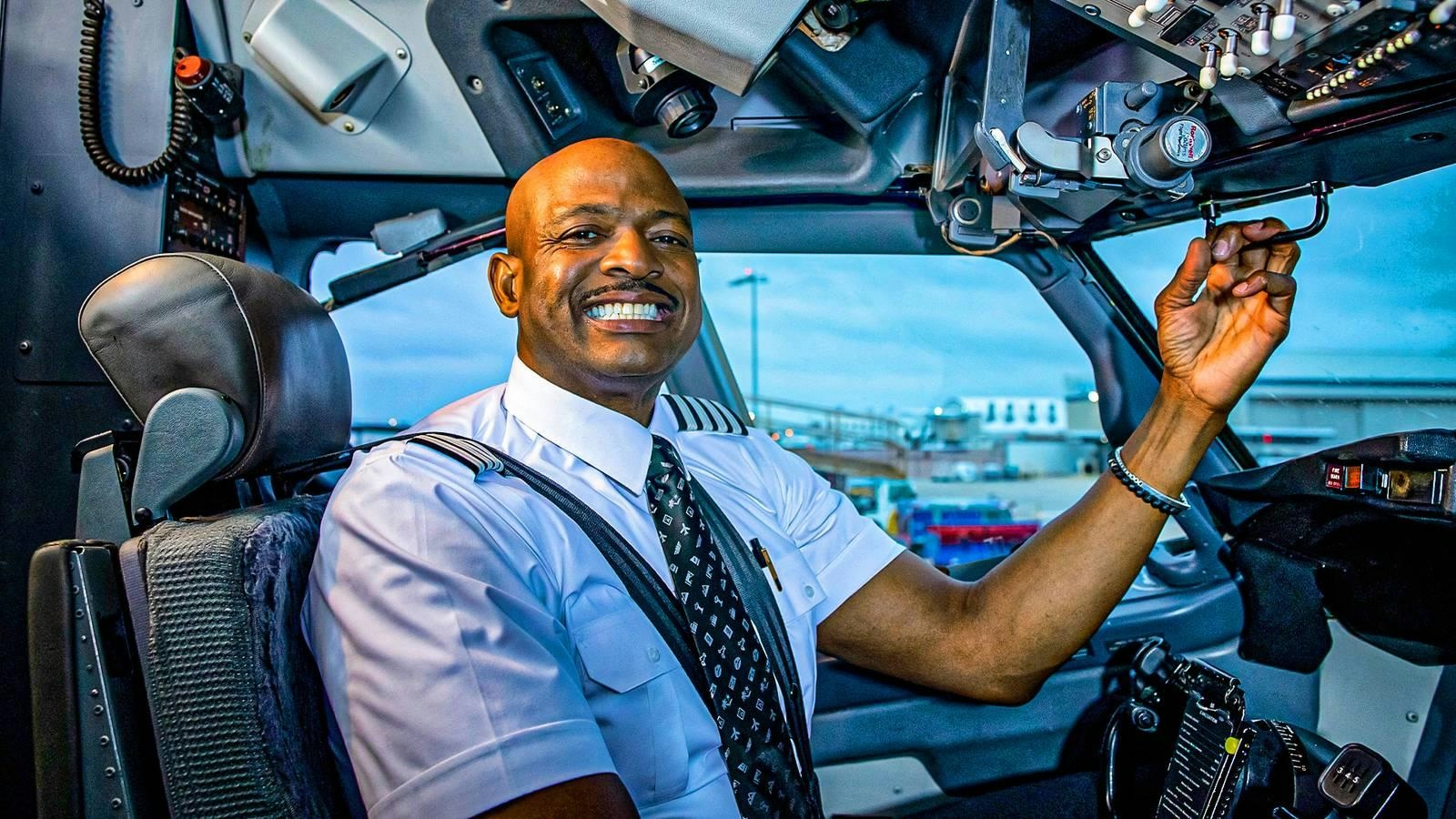
Projected Hourly Pay for U.S. Major Airline Captains in 2026
U.S. commercial airline pilots continue to rank among the highest-paid professionals globally, with the Bureau of Labor Statistics reporting an average salary near $200,000 in 2024. However, this average conceals substantial disparities between entry-level first officers and veteran captains, particularly within the nation’s largest carriers. Captains at major U.S. airlines—widely regarded as the apex of the profession—command some of the industry’s most lucrative compensation packages.
Defining Major Airlines and Pay Structures
The classification of a “major airline” in the United States is complex. The Department of Transportation currently recognizes 17 major carriers following the recent collapse of Spirit Airlines. Industry focus often centers on the “Big Three” carriers—United, Delta, and American—or the “Big Four” when Southwest Airlines is included. Alaska Airlines, especially after acquiring Hawaiian Airlines, is increasingly considered a fifth major player in this group.
Delta Air Lines, the world’s most valuable publicly traded airline with a market capitalization approaching $48 billion, operates a mainline fleet of approximately 1,000 aircraft, including a significant number of widebody jets. Delta’s pay scale, similar to other major carriers, is structured around experience and aircraft type, with the highest salaries awarded to captains flying widebody aircraft. Industry sources project that a first-year first officer at Delta in 2026 will earn around $117,735. Captains with six years of experience are expected to make approximately $334,178, while senior captains with 12 years of tenure could see earnings near $349,540. These figures align with recent estimates, though actual compensation may be 10 to 30 percent higher when factoring in bonuses and allowances.
United Airlines, which operates the world’s largest mainline fleet of about 1,107 aircraft and holds the second-largest widebody fleet globally, remains a top destination for experienced captains. United’s compensation packages are similarly competitive, reflecting the airline’s scale and operational complexity.
Industry Challenges and Future Outlook
Looking toward 2026, several factors are anticipated to influence pilot compensation and airline strategies. Rising jet fuel costs are exerting pressure on airline profitability, potentially leading to fare increases and operational adjustments. Concurrently, the industry is moving toward a more professionalized workforce. Major carriers such as Delta are reducing part-time employment, a shift that may increase fixed labor costs and reduce operational flexibility during economic downturns.
The competitive landscape is also undergoing significant change. United Airlines is reportedly exploring a potential mega-merger with American Airlines, a move that would face intense antitrust scrutiny and present substantial operational integration challenges. Such consolidation could further impact pilot pay scales and employment conditions across the industry.
While captains at major U.S. airlines are projected to maintain some of the highest salaries in aviation by 2026, their compensation will be shaped by broader economic pressures, evolving labor practices, and potential industry consolidation. As airlines adapt to rising costs and a changing workforce, pilot pay and career trajectories will continue to reflect the dynamic nature of the sector.

Etihad Airways Suspends Airbus A380 Flights on Key Route

Aditya Birla Group Seeks Approval for Aircraft Leasing in GIFT City

Qatar Airways Highlights Innovation and Connectivity at Arabian Travel Market 2026

Hong Kong's Five-Year Plan Includes Andrew Fan's Aircraft Parts Processing Hub Proposal

ACIA Aero Leasing Delivers ATR72-600 to Air Nostrum

RTX Appoints Jill Albertelli as Head of Pratt & Whitney

TAT Technologies Joins Beyond Aero Hydrogen Aircraft Program

AURAK Study Highlights Barriers to Air Taxi Adoption in Emerging Economies

Xiamen Air Selects Altitude for 787 Maintenance at Heathrow

Etihad and Swissport Extend Global Partnership
