
将人工智能洞察转化为可执行行动

热门趋势
Categories
Southwest Airlines Adapts Operations for the AI Era
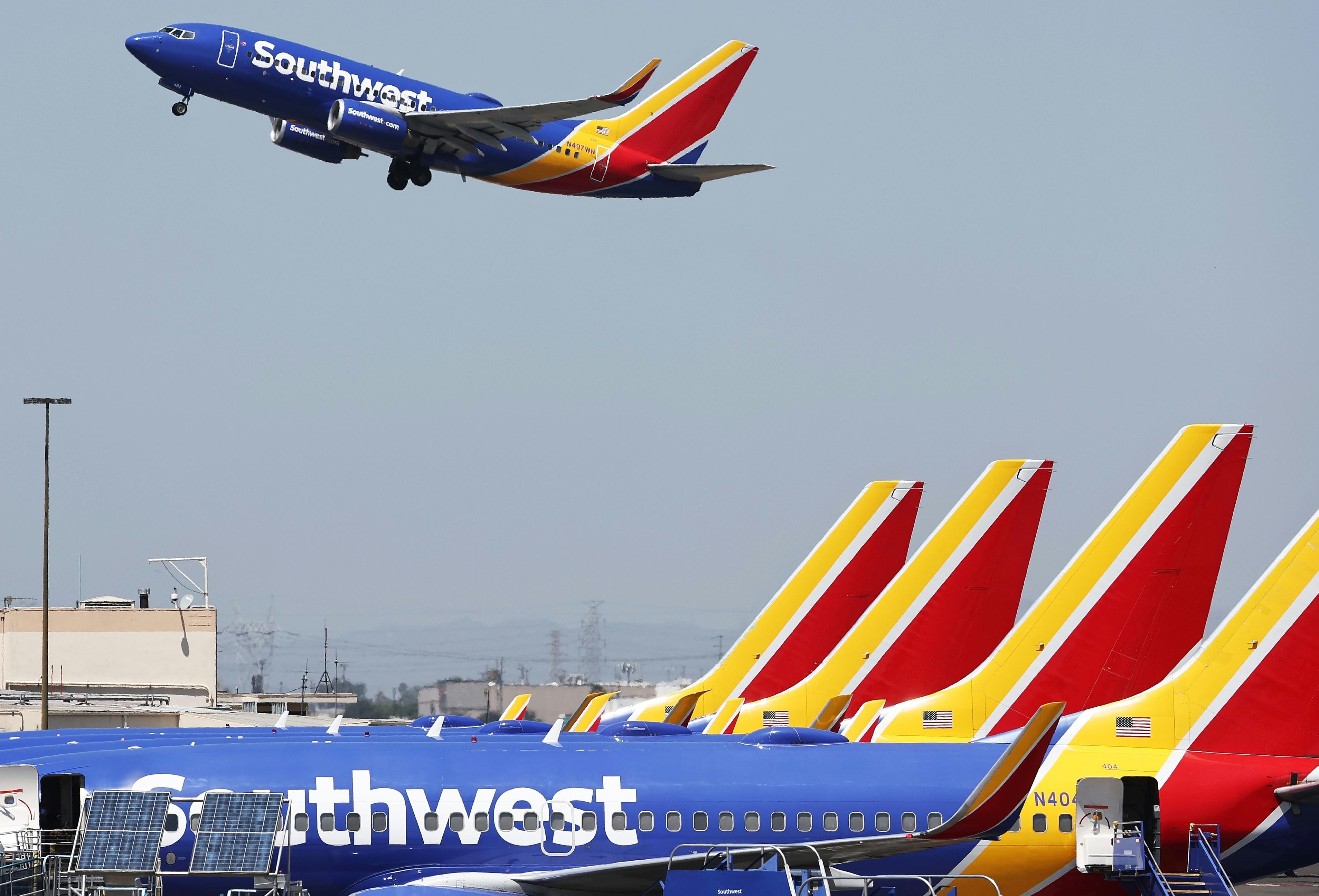
Southwest Airlines Adapts Operations for the AI Era
Southwest Airlines, traditionally known for its open seating policy, low fares, and customer-centric approach, is undergoing a profound transformation as the airline industry embraces artificial intelligence. This shift is driven by the need to enhance competitiveness and operational resilience in an increasingly complex environment.
Modernizing Through Data and Technology
The impetus for Southwest’s modernization accelerated following a severe winter storm in December 2022, which exposed critical weaknesses in the airline’s crew scheduling systems and led to widespread flight cancellations. Lauren Woods, who assumed the role of Executive Vice President and Chief Information Officer in early 2023, identified this crisis as a pivotal moment. She emphasized the imperative to prevent similar disruptions in the future by fostering a closer integration between technology and operational processes.
Under Woods’s leadership, Southwest has undertaken a comprehensive overhaul of its technology infrastructure. The airline transitioned from traditional on-premises data warehouses to a cloud-based platform, creating what it terms an “AI common platform.” This new system consolidates data from three interconnected networks—customer, crew, and aircraft—into a real-time framework that provides operations teams with unprecedented situational awareness.
On the operational front, Southwest now leverages sensor data from ground equipment such as tugs and de-icing vehicles to monitor aircraft readiness, adopting a model akin to a professional pit crew. Predictive analytics, informed by historical performance data, enable the airline to anticipate delays at specific airports and proactively allocate staff and resources to mitigate disruptions.
Transforming the Customer Experience
One of the most notable changes at Southwest is the transition from its longstanding open seating policy to assigned seating. This shift necessitated a complete redesign of the airline’s reservation systems. Woods described the process as akin to a “lung and heart transplant” for the commercial side of the business. The rollout was carefully managed through incremental phases, incorporating customer simulations, focus groups, and live data analysis to ensure a smooth transition, culminating in a full implementation in January.
In addition to seating changes, Southwest introduced new offerings such as Getaways by Southwest and restructured its fare categories. These initiatives required significant technological enhancements but were designed to be gradually integrated into the customer experience.
Industry-Wide AI Integration and Challenges
Southwest’s adoption of AI technologies occurs amid broader industry efforts to harness advanced analytics and automation. At the recent Skift Data + AI Summit, experts underscored the operational and organizational challenges airlines face in embedding AI across functions including pricing, customer service, and flight management. While AI holds promise for improving efficiency and reducing costs, concerns persist regarding transparency and fairness, particularly in dynamic pricing algorithms.
The airline’s recent interline partnership with Singapore Airlines is expected to influence its AI strategy further, offering opportunities for enhanced data sharing and operational collaboration. Meanwhile, industry leaders such as United Airlines CEO Scott Kirby have indicated a strategic pivot away from consolidation toward individualized airline approaches, highlighting the necessity of tailored AI adoption strategies.
Prioritizing Security in the Digital Transformation
Throughout this period of rapid change, security remains a foundational priority for Southwest. Woods emphasized that robust security and data governance are essential prerequisites for embracing AI and digital innovation, likening it to the height requirement for a ride—non-negotiable and fundamental.
By investing strategically in technology, data integration, and security, Southwest Airlines aims not only to recover from past operational setbacks but also to establish itself as a leader in the evolving landscape of AI-driven aviation.
Why Airlines Rely on Boeing to Update 787 Software
New US Reactor Technology Aims to Cut Aviation Fuel Emissions by 95%
Volkswagen Exits China’s Air Taxi Market as U.S. Develops $8.3 Million Test Facility
Growth in Aviation Spurs Demand for Mechanical Components
FAA Approves Nationwide Drone Delivery Despite Opposition from 16 State Attorneys General
Airbus sharply increases profit as Boeing narrows loss amid higher deliveries
Why the World's Fastest Commercial Aircraft Lacks Winglets
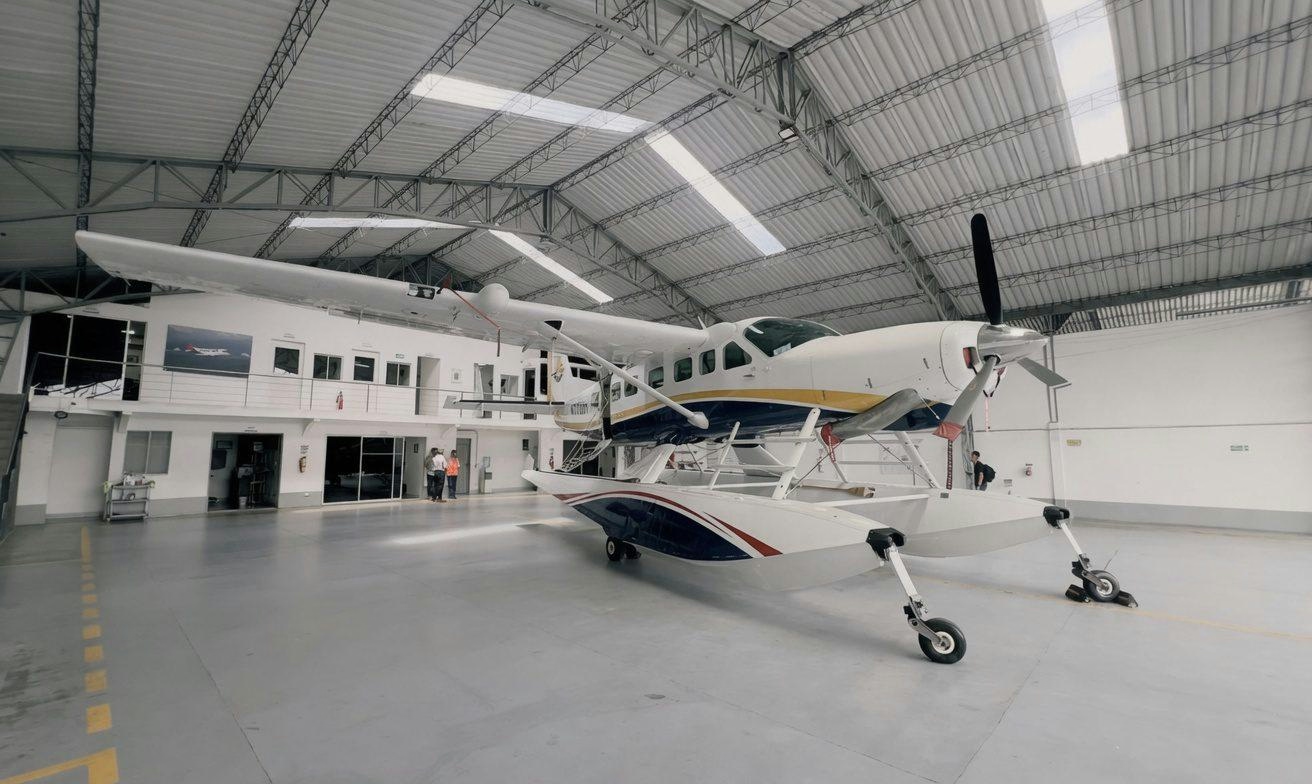
ALMA Air Granted Provisional Permit for Colombia’s First Amphibious Airline Operations
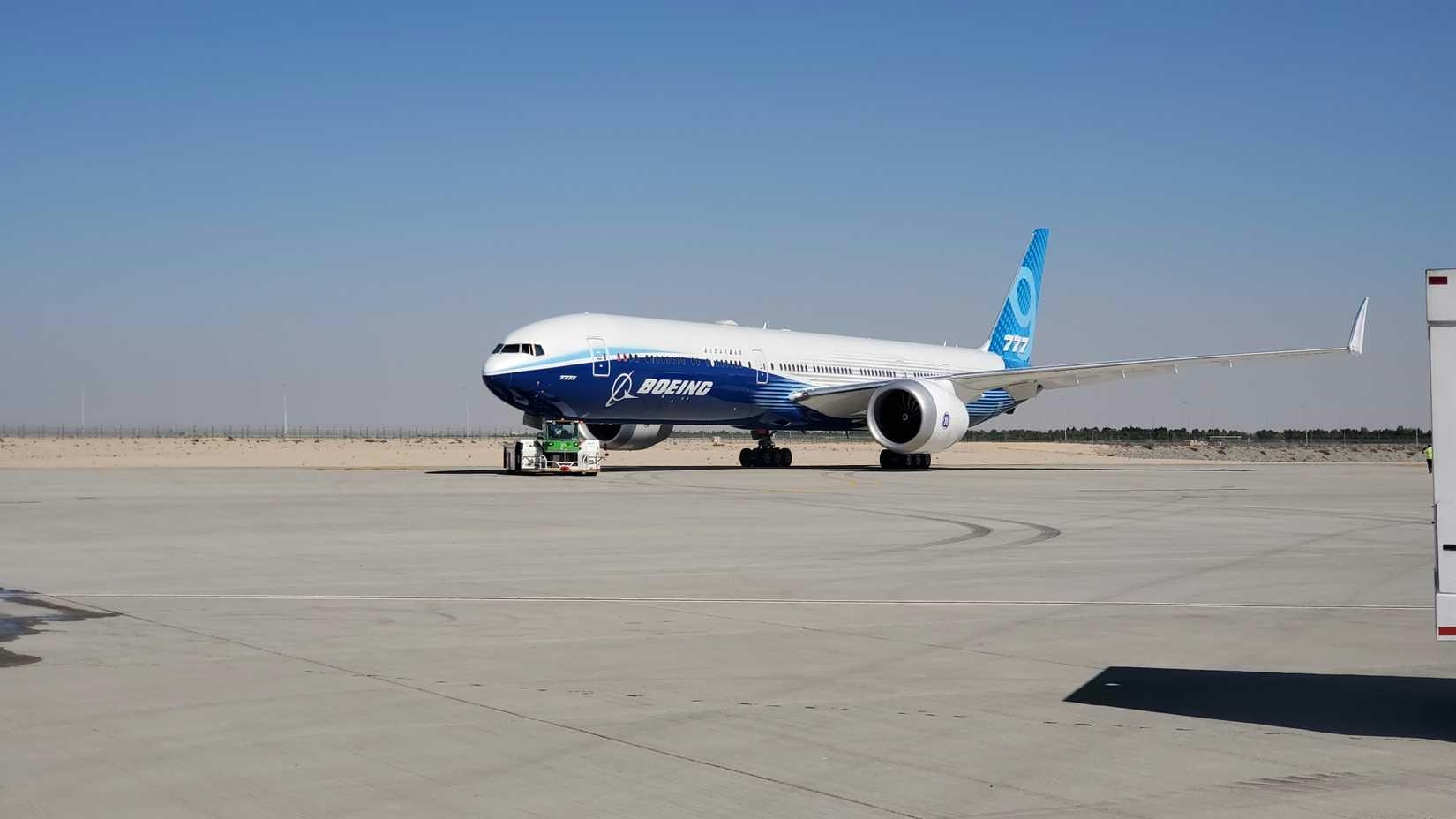
United Airlines Declines to Purchase Former Emirates 777X Aircraft
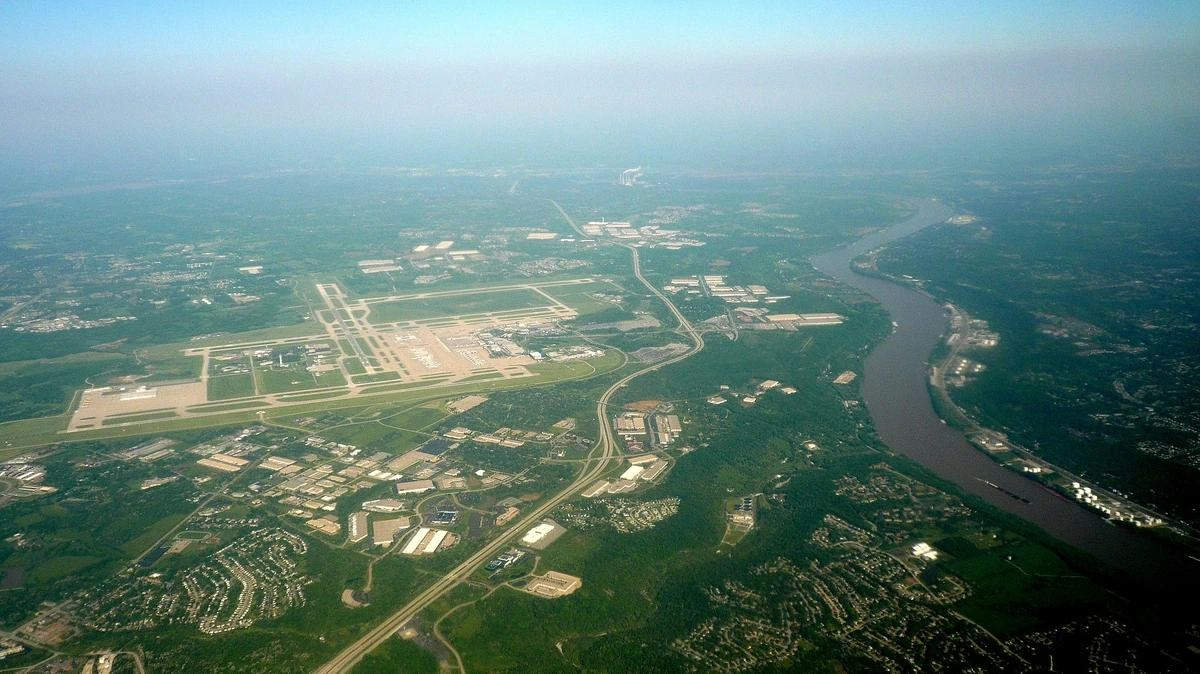
Cincinnati Airport Announces New Transatlantic Partnership for Innovation
