
图像

将人工智能洞察转化为可执行行动

立即加入 AeroGenie 候补名单!

热门趋势

Categories

Spirit Airlines’ Assets and Potential Buyers Amid Financial Struggles
May 2, 2026By ePlane AI
Spirit Airlines’ Assets and Potential Buyers Amid Financial Struggles
0
0
Spirit Airlines
Airline Bankruptcy
Airport Slot Acquisition

Spirit Airlines’ Shutdown Sparks Interest in Its Assets

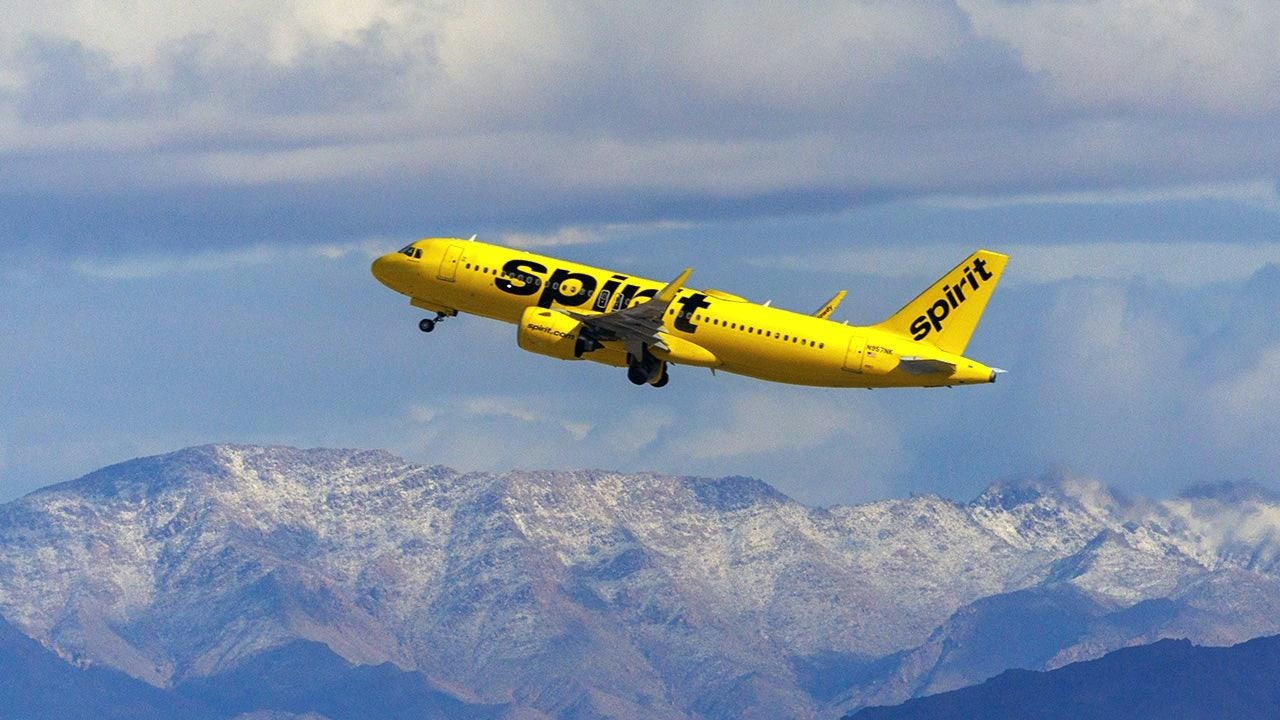
Spirit Airlines announced early Saturday that it will cease operations in 2026, following the failure of government bailout negotiations and persistent financial difficulties. The low-cost carrier’s impending exit has ignited a competitive rush among major airlines to acquire its valuable assets, which are now being liquidated as part of bankruptcy proceedings.

A liquidation analysis submitted to the U.S. bankruptcy court in April places the value of Spirit’s aircraft and engines at approximately $1.3 billion. The airline’s inventory of aircraft parts is estimated at $167 million, while its highly sought-after slots at New York’s LaGuardia Airport are valued at around $86.7 million. Additional assets, including buildings, land, and equipment, are appraised at roughly $154 million.

Potential Buyers and Market Implications

Leading U.S. carriers such as American Airlines, Frontier, JetBlue, and United Airlines are considered the most likely bidders, particularly for Spirit’s airport slots at LaGuardia and Fort Lauderdale. These slots are prized for their scarcity and strategic importance in key markets, making them a focal point of intense competition among airlines aiming to expand their market presence following Spirit’s departure.

In response to the shutdown, rival airlines have moved swiftly to capture Spirit’s market share by launching new routes and increasing capacity on existing ones to attract displaced passengers. The collapse of Spirit Airlines has also reignited broader discussions about the necessity of government support for the airline industry, underscoring the ongoing financial challenges faced by U.S. carriers.

As the bankruptcy proceedings continue, the disposition of Spirit’s assets is expected to significantly influence the competitive dynamics within the domestic airline sector.
More news
Embraer Delivers 2,000th E-Jet as Airbus A220 Seeks Market Share
Embraer Delivers 2,000th E-Jet as Airbus A220 Seeks Market Share

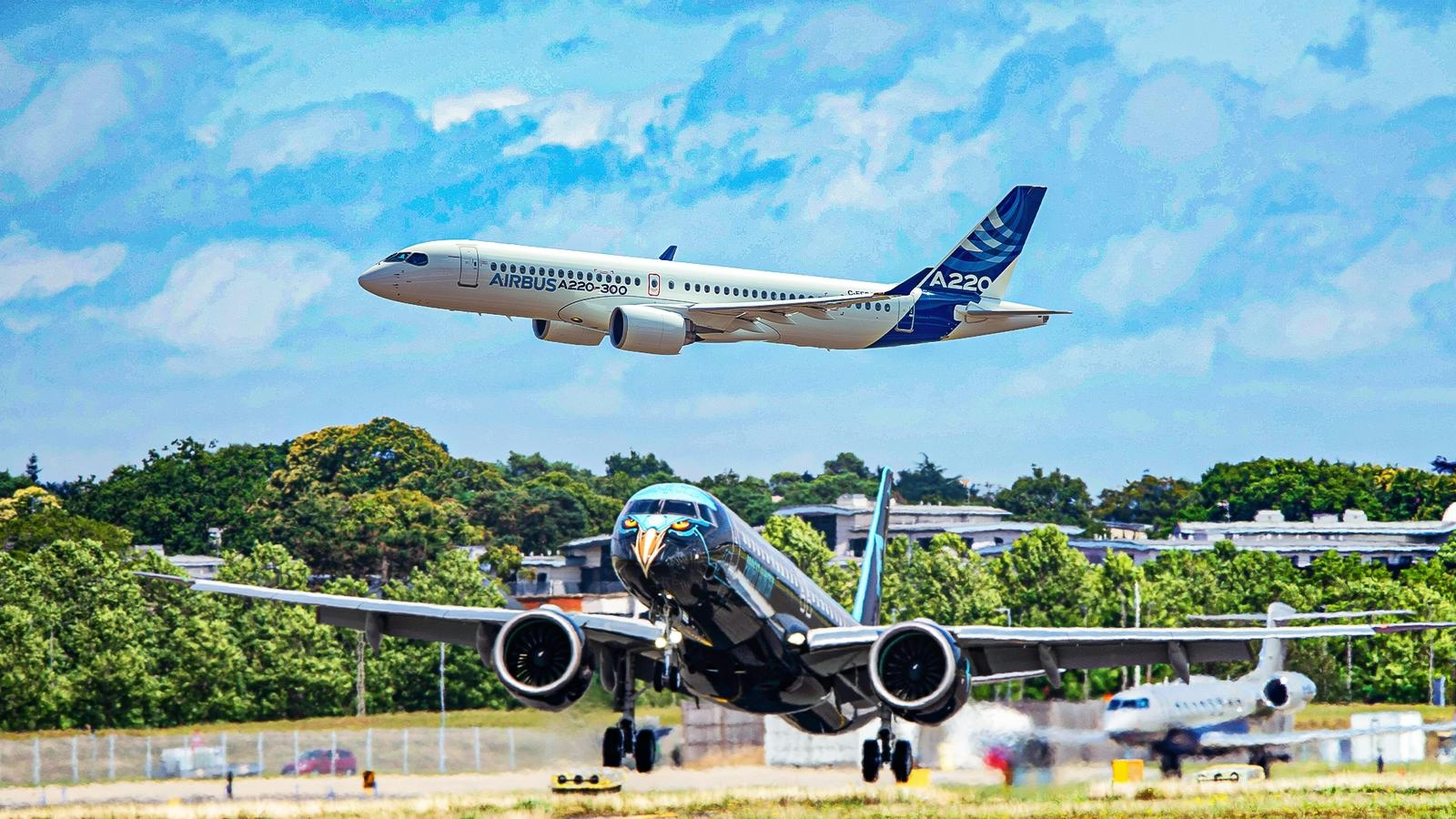
Embraer Reaches Milestone with 2,000th E-Jet Delivery Amid Airbus A220 Market Push In the global commercial aircraft industry, the longstanding rivalry between Airbus and Boeing often dominates headlines, particularly in the narrowbody and widebody sectors. Yet, a significant contest has quietly unfolded in the smaller aircraft segment, where Embraer has established a formidable presence with its E-Jet family. This month, Embraer celebrated a major achievement with the delivery of its 2,000th E-Jet, underscoring its leadership in the regional jet market and its transformative impact on regional aviation. The Evolution and Impact of the E-Jet Family Introduced in the mid-2000s, Embraer’s E-Jets filled a critical niche between traditional regional jets and larger narrowbody aircraft. The family quickly gained global recognition, now operating with over 90 airlines across more than 60 countries. The latest delivery, a state-of-the-art E195-E2 to Brazilian carrier Azul Linhas Aéreas, exemplifies Embraer’s commitment to innovation. This model incorporates advanced technology, enhanced fuel efficiency, and a spacious cabin design, reflecting the company’s focus on operational performance and passenger comfort. Embraer’s path to this milestone began in the 1990s, when the company identified the limitations of its ERJ145, a 50-seat regional jet. As airline demand shifted toward larger aircraft, Embraer recognized the need to expand beyond the ERJ platform. The turning point came in 1997 when American Airlines solicited proposals for both 50-seat and 70-seat regional jets. While Embraer secured the 50-seat order, Bombardier won the larger segment with its CRJ700, revealing a gap in Embraer’s product lineup. Initially contemplating an extended version of the ERJ145, Embraer ultimately chose a clean-sheet design by 1999. This decision enabled the development of a wider fuselage with four-abreast seating and the flexibility to create multiple variants. The E-Jet family was officially launched at the 1999 Paris Air Show with the E170 and E190 models, targeting the 70- to 100-seat market. The E170 entered service in 2004 with LOT Polish Airlines, quickly followed by other variants that solidified Embraer’s position in regional aviation. Competition Intensifies with Airbus A220 The competitive landscape evolved further when Bombardier introduced the CSeries, later rebranded as the Airbus A220, directly challenging Embraer’s larger E-Jets. The A220, featuring a clean-sheet design and modern technology, represents Airbus’s strategic entry into the regional jet market. Despite its advanced features, the A220 faces challenges in gaining market share against Embraer’s well-established and widely adopted E-Jet platform. Market response to Embraer’s 2,000th E-Jet delivery has been notably positive, reflecting strong confidence in the company’s product range and strategic direction. As Airbus continues to promote the A220, Embraer’s proven track record and ongoing innovation remain central to its leadership in regional aviation.
iniBuilds Releases Second In-Depth A380 Video
iniBuilds Releases Second In-Depth A380 Video

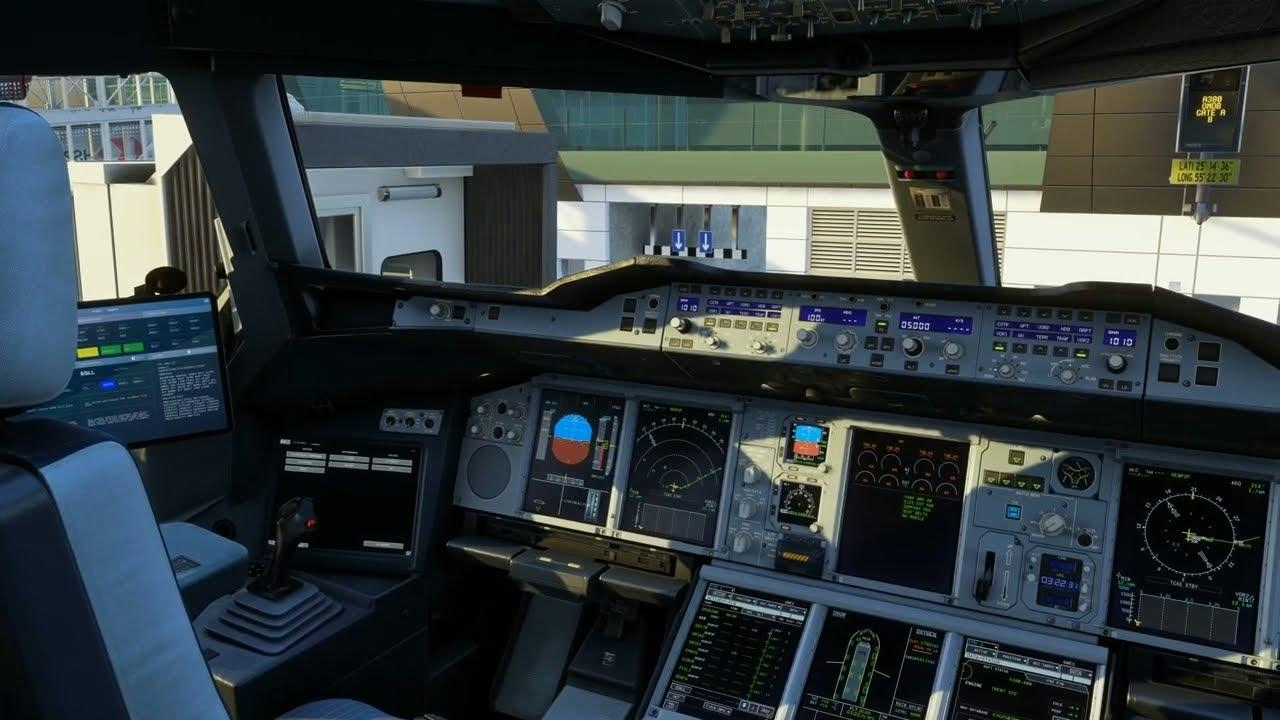
iniBuilds Unveils Second Detailed A380 Video Ahead of Launch iniBuilds has released its second comprehensive video previewing the forthcoming A380 airliner add-on, this time highlighting the Rolls-Royce engine variant. This new installment follows an earlier feature that showcased the Engine Alliance-powered model. The developer has confirmed that the highly anticipated A380 will officially launch tomorrow, September 15, on the in-sim Marketplace for Microsoft Flight Simulator 2024. In-Depth Look at the Rolls-Royce Variant The latest video presents a positioning flight from Cardiff Airport in Wales to London Heathrow, offering an extensive examination of the aircraft’s systems and features. Viewers are guided through detailed cabin walkthroughs, refuelling procedures, and the aircraft’s onboard software. Particular attention is given to the Electronic Centralized Aircraft Monitor (ECAM) and failure simulation systems, designed to deliver an authentic and immersive experience for aviation enthusiasts. The initial video focusing on the Engine Alliance variant remains accessible for those interested in comparing the two engine options. Market Challenges and Industry Context As iniBuilds prepares for the A380’s release, the company faces a competitive and demanding simulation market. Maintaining rigorous production standards is essential, especially as rival developers continue to introduce increasingly sophisticated aircraft models. The launch is expected to attract close scrutiny from the flight simulation community, with inevitable comparisons to official Airbus and Boeing simulation products. Competitors may respond by enhancing their own offerings or intensifying marketing efforts to distinguish their aircraft simulations. Furthermore, the broader aviation industry context could influence demand for the A380 add-on. Airlines such as Qantas are accelerating the retirement of their A380 fleets, potentially affecting interest in detailed simulations of the aircraft as its real-world presence diminishes. Despite these challenges, iniBuilds’ dedication to delivering a high-fidelity A380 experience has generated considerable anticipation. The release tomorrow will offer the community an opportunity to assess the product’s depth and realism amid the evolving market for advanced airliner simulations.
Ryanair and Alaska Airlines Apply AI to Operational Decision-Making

Ryanair and Alaska Airlines Apply AI to Operational Decision-Making

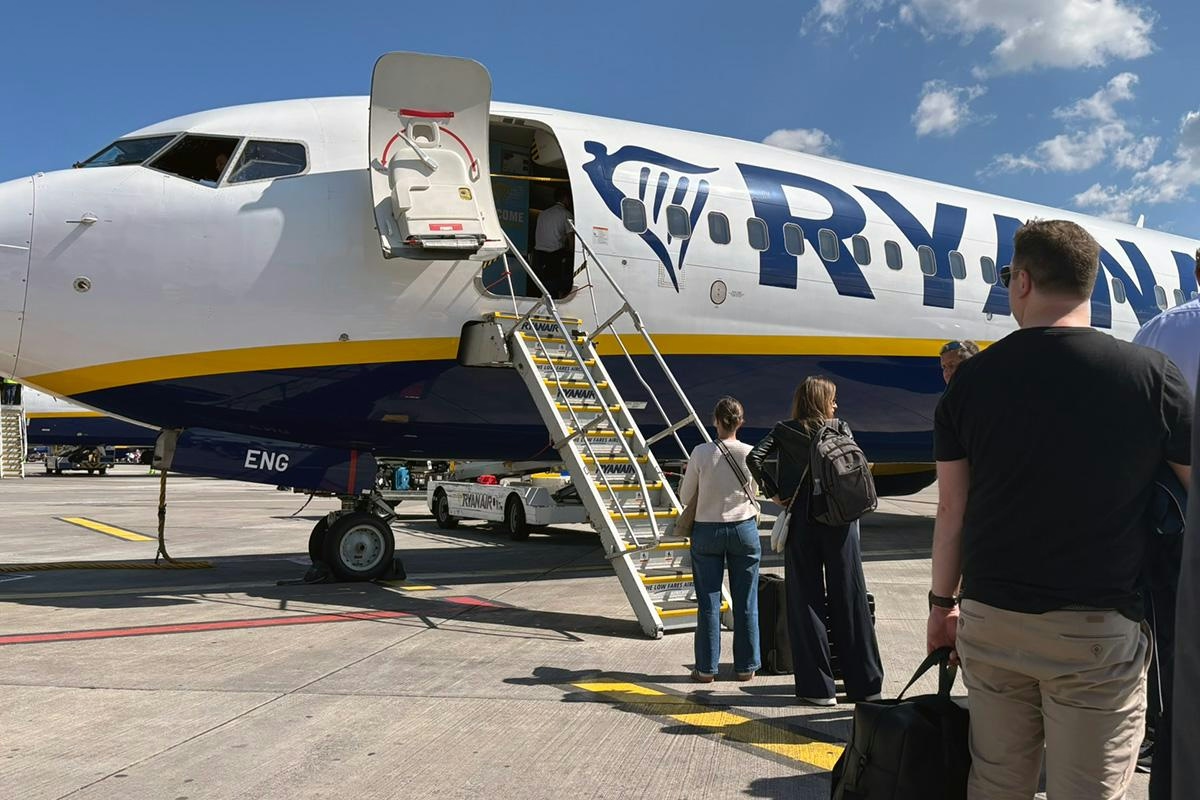
Ryanair and Alaska Airlines Embrace AI for Operational Decision-Making The aviation industry has traditionally employed artificial intelligence as a predictive tool, with human operators retaining ultimate control over decisions. For instance, Cathay Pacific’s collaboration with Google uses AI to identify potential contrail formation, yet dispatchers continue to review and adjust flight routes before pilots receive them. This human-in-the-loop model has long been the standard approach. However, two prominent carriers, Ryanair and Alaska Airlines, are now entrusting AI systems with direct operational decisions, marking a significant shift in industry practice. Ryanair’s Integration of AI in Crew Scheduling In August 2026, Ryanair entered a five-year partnership with Google Cloud, deploying Google Workspace alongside Gemini Enterprise, Google’s agentic AI platform, across its workforce of approximately 35,000 employees. This initiative supports Ryanair’s ambitious target of transporting 300 million passengers annually by 2034. The most notable application of this technology is in crew logistics, where Gemini Enterprise automates the complex task of aligning crew availability with dynamic schedules and operational demands—a process that was previously managed manually. Ryanair’s CEO, Eddie Wilson, emphasized the critical role of this partnership in sustaining the airline’s rapid expansion. Maureen Costello, Google’s Vice President for the UK, Ireland, and Sub-Saharan Africa, highlighted the potential for the collaboration to reduce operational costs while enabling secure scaling. Despite these advancements, Ryanair’s official communications clarify that AI’s current scope is focused on crew logistics and workflow automation. Claims regarding AI’s involvement in fleet operations or maintenance decisions remain unsubstantiated in primary sources, with maintenance cited only as a disruption factor to which the system must adapt, rather than a direct AI responsibility. Alaska Airlines Automates Overbooking Management Alaska Airlines has adopted a more narrowly focused but impactful AI application by automating decisions related to passenger rebooking and compensation on oversold flights. The airline implemented Volantio’s Re-Commerce platform, replacing a manual and rigid volunteer solicitation process that lacked comprehensive visibility into alternative flight options. This automation has yielded measurable benefits. Volunteer rates for relinquishing seats on overbooked flights have doubled, allowing Alaska Airlines to overbook with greater confidence while minimizing the costly inefficiency of empty seats. Former Vice President of Pricing and Revenue Management Kevin Ger acknowledged that overbooking and involuntary denied boardings had long posed challenges. Chief Financial Officer Shane Tackett estimated the financial impact of these improvements at over $20 million annually, excluding additional savings from reduced denied boardings and decreased manual workload for gate staff. Challenges and Industry Implications The delegation of operational decisions to AI systems introduces a range of challenges. Both Ryanair and Alaska Airlines have invested heavily in technology and expertise to support these initiatives, and they may face resistance from employees accustomed to conventional procedures. Furthermore, the increased reliance on automated systems heightens concerns regarding data privacy and security, as sensitive information is processed and transmitted more extensively. Reactions from the market and passengers have been mixed, with some expressing skepticism about AI’s capacity to enhance operational efficiency. Competitors may respond by adopting similar AI technologies or by leveraging existing strengths to maintain differentiation. Recent incidents, such as the midair loss of a door plug on an Alaska Airlines Boeing 737 Max 9, underscore the critical importance of rigorous testing and oversight in AI-driven decision-making to uphold safety and reliability standards. Distinct Risk Profiles: Prediction Versus Decision The risk profile associated with AI-driven decisions differs fundamentally from that of AI-powered predictions. In systems like Cathay Pacific’s contrail avoidance, human operators serve as the final checkpoint before action is taken. Conversely, in Alaska Airlines’ automated overbooking system, decisions regarding passenger rebooking and compensation are executed without human intervention, elevating the stakes for accuracy, transparency, and oversight. As airlines increasingly rely on AI for core operational choices, ensuring these qualities will be essential to maintaining trust and operational integrity.
Digital Payments, AI, and Aviation Strengthen Philippines-India Relations
Digital Payments, AI, and Aviation Strengthen Philippines-India Relations

Digital Payments, AI, and Aviation Strengthen Philippines-India Relations Expanding Economic Cooperation in Key Sectors Digital payments, artificial intelligence (AI), telecommunications, and aviation have become focal points for enhanced business collaboration between the Philippines and India. This development was underscored during President Ferdinand R. Marcos Jr.’s engagements with Indian companies in New Delhi on the sidelines of the 18th BRICS Summit. The discussions culminated in commitments from Indian firms already operating in the Philippines to expand their investments, reflecting growing confidence in the bilateral economic relationship. India is increasingly recognized as a crucial technology and business partner for the Philippines, as both nations pursue ambitious digital transformation agendas. President Marcos held talks with executives from NPCI International Limited to advance cooperation in digital payments, including exploring a partnership with LandBank to implement a payment system modeled on India’s Unified Payments Interface (UPI). Trade and Industry Secretary Maria Cristina Roque highlighted the potential benefits of such a system, particularly for overseas Filipino workers, small and medium enterprises, and government transactions. The initiative aims to improve interoperability of QR-based payments and facilitate faster cross-border financial flows. Opportunities and Challenges in Digital and AI Integration While the push toward digital payments and AI integration presents significant opportunities, it also introduces notable challenges. Regulatory complexities, technological integration issues, and the imperative to reskill the workforce remain pressing concerns. The Philippines’ involvement in the Pax Silica initiative seeks to strengthen its AI supply chain capabilities but raises important questions regarding technological control and dependence on foreign industries. The country’s national AI strategy, which aspires to increase AI data center capacity thirtyfold and establish the Philippines as a regional AI hub, faces hurdles related to infrastructure development and workforce preparedness. Aviation Infrastructure and Strategic Partnerships In the aviation sector, President Marcos met with representatives from GMR Group and Cavitex Holdings Inc. to discuss the Sangley Point International Airport project. Secretary Roque emphasized the critical need for new airport infrastructure to support anticipated growth in air travel, tourism, and trade. The proposed Sangley Point airport is envisioned as a multi-runway facility designed to alleviate congestion at Ninoy Aquino International Airport, enhance regional logistics, and accommodate increasing passenger and aircraft traffic. Nonetheless, collaboration in aviation may encounter regulatory and operational challenges, including the maintenance of safety standards and the navigation of complex geopolitical considerations. Industry Engagement and Investment Prospects During an Executive Roundtable Discussion, President Marcos engaged with leaders from Cognizant, VVDN Technologies, Hinduja Group, and HCLTech. These companies expressed strong intentions to expand their operations in digitalization, AI, telecommunications, and other technology-driven sectors. Secretary Roque noted that their positive experiences in the Philippines, combined with the country’s skilled workforce and expanding digital economy, position the nation as an attractive destination for further investment. Navigating Regional Competition and Sovereignty Concerns Despite the optimistic outlook, market responses to these initiatives may vary. While increased foreign investment is anticipated, concerns persist regarding economic dependency and technological sovereignty. Additionally, regional competitors such as Indonesia are advancing their AI and digital infrastructure, which could influence the Philippines’ strategic positioning within Southeast Asia. As the Philippines and India deepen their cooperation across digital payments, AI, and aviation, the partnership’s trajectory will be shaped by a complex interplay of opportunities and challenges.
PlaneSense Suspends PC-12 Jet Card Sales
PlaneSense Suspends PC-12 Jet Card Sales

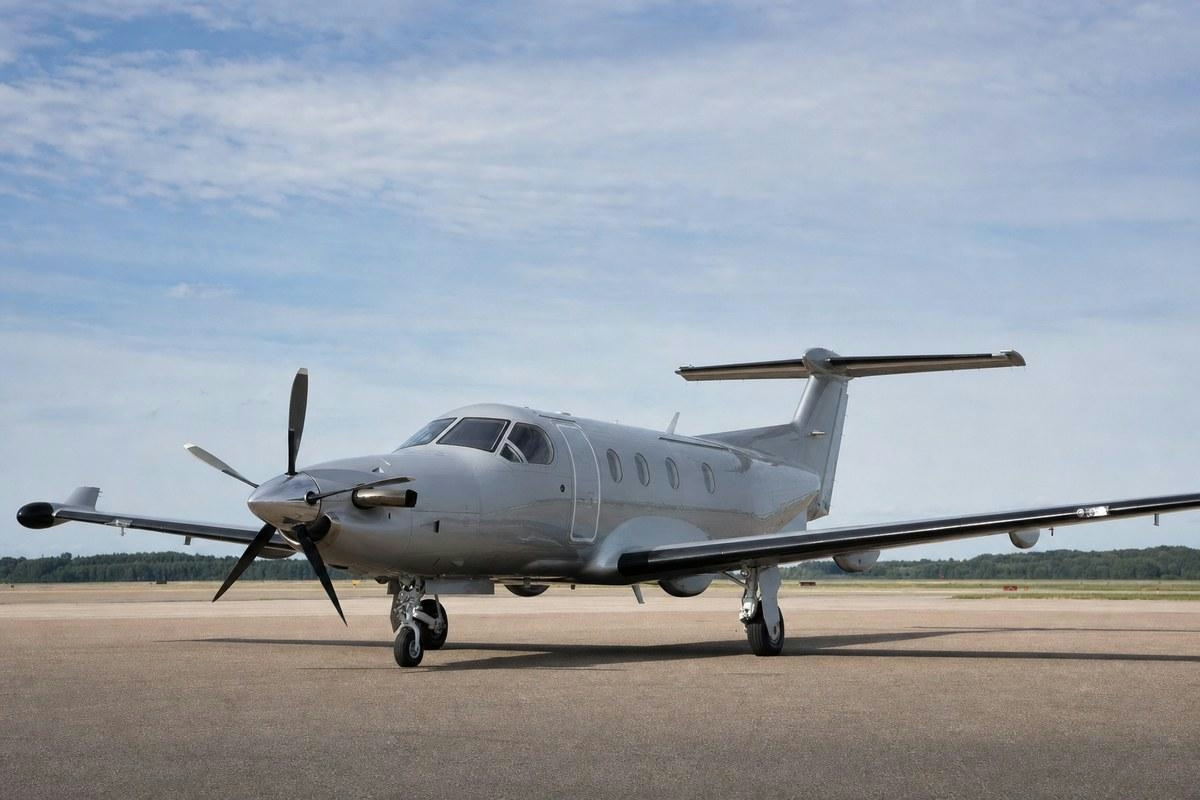
PlaneSense Suspends PC-12 Jet Card Sales Amid Capacity Constraints PlaneSense, the Portsmouth-based private aviation company, has announced a temporary suspension of sales for its PC-12 jet card program, known as CobaltPass. This decision comes in response to heightened demand and limitations in fleet capacity, with the company emphasizing the need to maintain operational reliability and service quality for its existing clientele. A company spokesperson explained that availability is carefully managed in alignment with fleet capacity and customer demand to prevent any negative impact on operations or the consistent service standards PlaneSense clients expect. The spokesperson added that while availability may fluctuate, CobaltPass inventory remains directly linked to fleet expansion, with additional inventory anticipated to be released in the coming months. Continued Offerings and Market Implications Although sales of the PC-12 jet cards are on hold, PlaneSense will continue to offer CobaltPass on its Pilatus PC-24 jets. The company currently operates a fleet comprising forty-nine PC-12 turboprops alongside twenty PC-24 jets. This suspension occurs amid intensifying competition within the private aviation market. Competitors such as BlackJet, which offers flexible jet card programs featuring fixed hourly rates and non-expiring hours, stand to benefit from PlaneSense’s temporary withdrawal. Industry analysts suggest that travelers seeking predictable and flexible alternatives to aircraft ownership or individual charter bookings may increasingly turn to such competitors, potentially driving demand for their services. As PlaneSense navigates its fleet growth and plans future inventory releases, the broader private aviation sector is expected to witness ongoing innovation and heightened competition among jet card providers striving to meet evolving customer expectations.
How AI Could Transform Bird-Strike Prevention for Business Aviation
How AI Could Transform Bird-Strike Prevention for Business Aviation

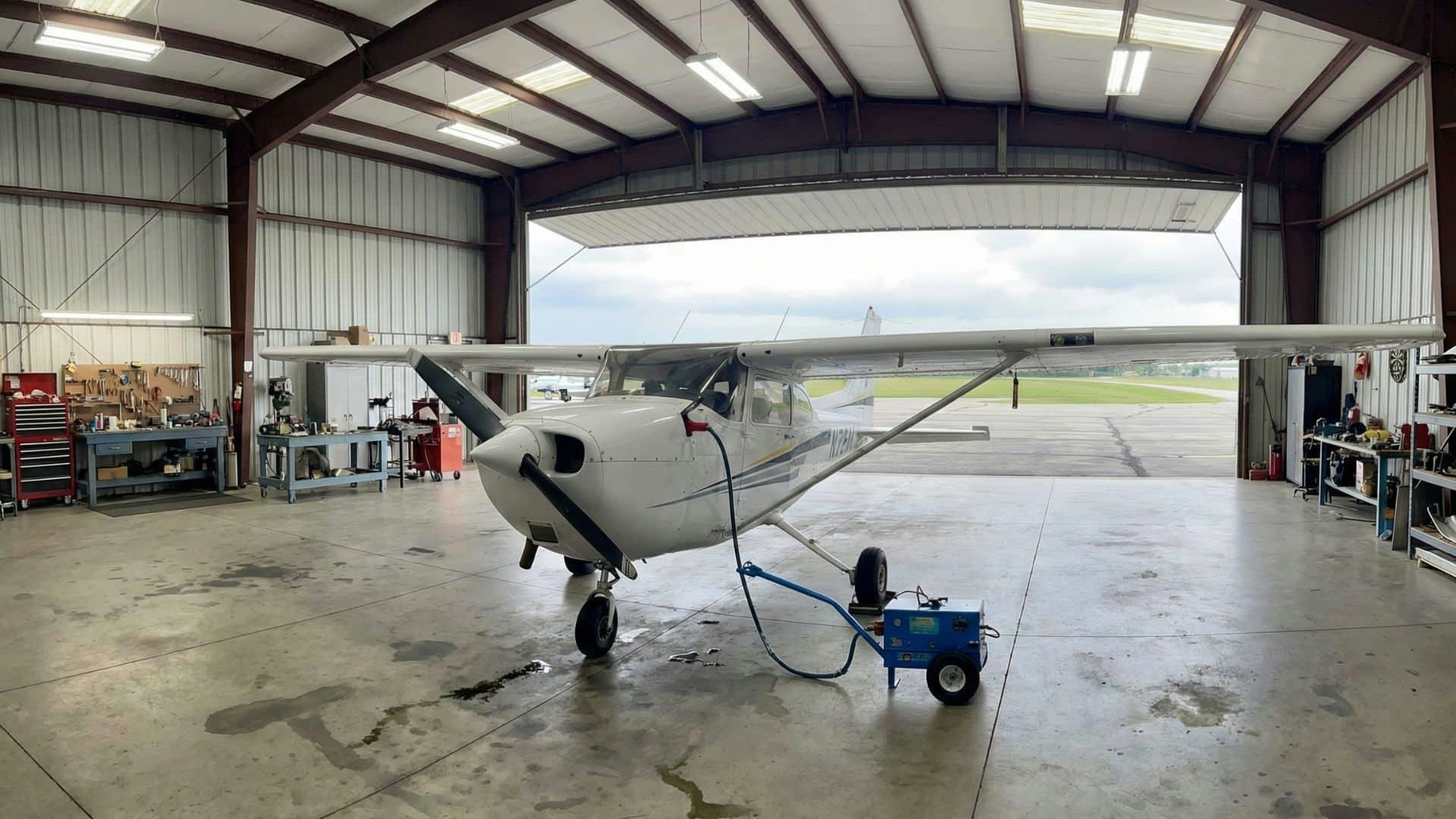
How AI Could Transform Bird-Strike Prevention for Business Aviation For decades, business aviation has depended on vigilance, wildlife management, and pilot reports to mitigate the risks posed by bird strikes. These incidents remain among the most unpredictable hazards in aviation, particularly affecting helicopters, turboprops, and business jets operating at airports worldwide. Recent data from the National Business Aviation Association (NBAA) underscores the significance of this threat: bird strikes accounted for 18% of 66 reported incidents and accidents between April and June of this year, making them the most common event type in the study. Advancements in Detection and Prediction Traditional wildlife management programs have gradually evolved, but the emergence of artificial intelligence (AI) offers new possibilities for enhancing operational awareness. AI technologies can detect and predict bird activity with greater precision, potentially providing earlier warnings before flight operations are compromised. Kevin Singh, an instructor pilot for Bombardier’s Global Vision program and president of Icarus Jet, emphasizes the persistent need for vigilance, especially during critical phases such as takeoff and landing. He notes that while bird strikes are often considered low-probability events, their consequences demand constant attention. Singh points out that current reporting methods, such as Notices to Airmen (NOTAMs), have seen little innovation in terms of real-time bird detection. Although technological efforts to deter birds from airport environments have advanced, Singh remains cautious about AI’s practical application. He questions how AI-generated data could be effectively integrated into the flight deck, stating, “Unless there is a way to see a flock of birds displayed in real time on the flight deck, I am not sure how AI will come into play here.” Addressing this challenge, developers of next-generation wildlife detection systems are focusing on delivering actionable intelligence to airport operators. Cristobal Esteban, founder of Aerial Guard—a real-time wildlife monitoring platform powered by Cambrian Intelligence—explains that AI is designed to complement, not replace, existing wildlife management practices. He highlights the particular benefits for smaller airports, which often lack dedicated personnel and resources for wildlife control. “AI can provide continuous monitoring and help airport teams focus their time and attention on the moments and areas where the risk is greatest,” Esteban said. Challenges and Industry Response Despite its promise, integrating AI into bird-strike prevention presents several challenges. Effective deployment requires extensive data collection and rigorous analysis to ensure the accuracy and reliability of AI algorithms. Moreover, incorporating new technology into established aviation systems can be complex, and operators may initially express skepticism due to concerns about costs and potential operational disruptions. Regulatory approval and compliance with stringent aviation safety standards will also be essential for widespread adoption. Market reactions to AI-driven bird-strike prevention are expected to be mixed. Some operators may hesitate, wary of the investment and complexity involved, while others could view AI as a competitive advantage and move swiftly to adopt or collaborate with AI developers. In response, competitors may enhance their own bird-strike prevention measures or form strategic alliances to keep pace with technological advancements. Ultimately, for AI to have a meaningful impact, it must align with the operational realities faced by pilots. While AI can predict migration patterns and alert crews to potential risks, the final responsibility often rests with pilots to detect and avoid hazards in real time. As these technologies continue to evolve, there is hope that AI will become an indispensable tool, enabling business aviation to stay one step ahead of one of its most persistent threats.
American Airlines and Boeing Complete First 737 MAX Landing Gear Swap

American Airlines and Boeing Complete First 737 MAX Landing Gear Swap

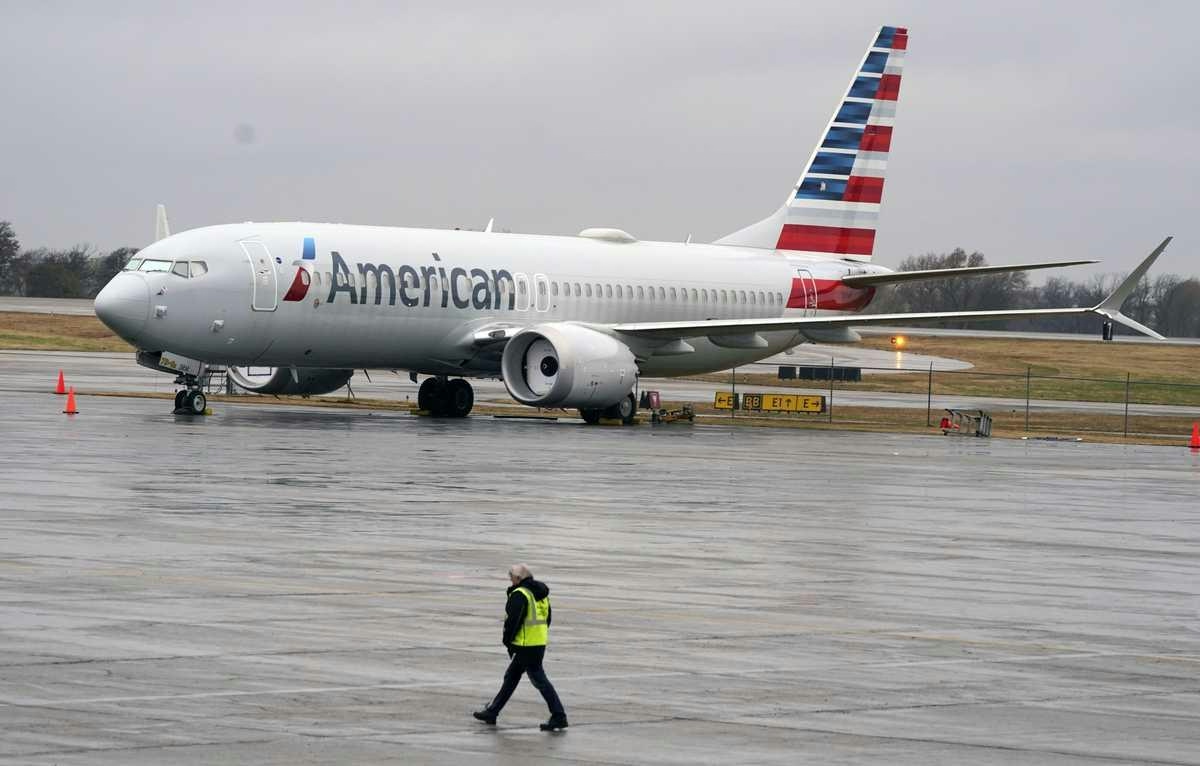
American Airlines and Boeing Complete First 737 MAX Landing Gear Swap Boeing and American Airlines have successfully completed the first-ever landing gear exchange on a Boeing 737 MAX, marking a pivotal advancement as Boeing extends its established Landing Gear Exchange Program to its latest narrowbody aircraft. Previously available for the 737, 747, 777, and 787 families, the program provides airlines with ready-to-install main and nose landing gear sets, accompanied by installation kits that enable airline mechanics to perform the swap independently. The used landing gear is subsequently returned to Boeing for a comprehensive overhaul at one of its maintenance, repair, and overhaul (MRO) facilities. Enhancing Operational Efficiency and Cost Management For American Airlines, this exchange translated into receiving a fully serviced 737 MAX landing gear set, significantly reducing aircraft downtime and eliminating the necessity to maintain costly spare parts inventories or conduct in-house overhauls. Boeing emphasized that this end-to-end process—where the manufacturer oversees the technical refurbishment and the airline manages installation—delivers predictable, safe, and cost-effective outcomes. Additionally, airlines can reserve forward-exchange slots, enhancing fleet planning and operational predictability compared to ordering new landing gear components. William Ampofo, senior vice president of Parts & Distribution and Supply Chain at Boeing Global Services, remarked, “This milestone reinforces what our customers have known for years: Boeing’s Landing Gear Exchange capability delivers predictable, safe and cost-effective outcomes.” Boeing intends to apply this approach consistently across the 737 MAX fleet and is actively pursuing additional airline partners to participate in the program. Program Expansion and Industry Implications The landing gear exchange process has already demonstrated success on other Boeing models, particularly the 787-8. Earlier this year, Boeing completed its 100th landing gear exchange for the 787-8, with plans to extend the program to the 787-9. As the first 737 MAX aircraft, delivered in May 2017, approach the typical 10-12 year maintenance “sweet spot” for landing gear overhauls, demand for such exchanges is anticipated to increase. Of the approximately 730 787-9s currently in service, nearly half are at least eight years old, with significant numbers operated by carriers in the Asia-Pacific, European, and North American regions. This global distribution highlights the importance of Boeing’s collaboration with MRO partners worldwide. Despite the operational advantages, both American Airlines and Boeing face challenges following this inaugural 737 MAX landing gear swap. Ensuring the ongoing reliability and safety of the modified aircraft remains paramount, particularly as public perception and customer confidence continue to recover from previous groundings. Regulatory scrutiny from aviation authorities is expected to intensify, while market observers, including investors and analysts, are likely to monitor closely for any financial or operational impacts. Competitors may respond by expanding their own fleets or renegotiating compensation terms related to grounded aircraft. Recent industry data indicates that airlines are cautiously optimistic about the resolution of grounding issues, suggesting a potential shift in market dynamics as the 737 MAX returns to broader service. As Boeing expands its Landing Gear Exchange Program, both the company and its airline partners will need to navigate operational, regulatory, and market challenges to fully capitalize on the benefits of this streamlined maintenance strategy.
Vietjet and Thales sign major MRO and AI deals in Paris
Vietjet and Thales sign major MRO and AI deals in Paris

Vietjet and Thales Sign Landmark MRO and AI Agreements in Paris Vietjet and French technology leader Thales have formalized a series of significant cooperation agreements encompassing aircraft maintenance, digital aviation, artificial intelligence, and cybersecurity. The deals were signed on September 13, 2026, at the Élysee Palace in Paris, in the presence of Vietnamese General Secretary and President To Lam and French President Emmanuel Macron, alongside senior officials and business representatives from both countries. Strategic Maintenance Partnership Central to the agreements is a strategic Repair-By-The-Hour (RBTH) contract, under which Thales will provide comprehensive component maintenance services for Vietjet’s Airbus fleet. This includes the A320, A321, A321neo, A321XLR, A330, and A330neo models. The partnership aims to enhance technical reliability and fleet availability while optimizing operational costs and efficiency. Despite the potential benefits, establishing advanced maintenance, repair, and operations (MRO) capabilities involves considerable challenges. High costs and operational complexities are intensified by a competitive market environment. Market concentration and pressures on AI firms to go public may contribute to market deflation. Furthermore, as engine-related MRO events are projected to outpace airframe MRO in Europe, competitors may respond by strengthening their own partnerships or developing in-house MRO solutions, adding further complexity to the sector. Expanding into Digital Aviation and Artificial Intelligence In addition to maintenance services, Vietjet and Thales signed a Memorandum of Understanding (MoU) to collaborate on digital aviation, avionics, cybersecurity, and AI-driven airline operations. The MoU will focus on exploring secure cloud solutions, predictive analytics, and decision-support technologies designed to enhance operational resilience and efficiency. Nguyen Thanh Son, CEO of Vietjet, emphasized that the partnership will not only improve the reliability and safety of Vietjet’s fleet but also open new avenues in digital technology, artificial intelligence, and cybersecurity. He highlighted the opportunity to connect French technological expertise with Vietnam’s dynamic aviation sector, fostering stronger trade, investment, and people-to-people ties. Pascale Sourisse, CEO of Thales International, expressed pride in Vietjet’s continued trust, noting Thales’s 30-year presence in Vietnam. She reaffirmed Thales’s commitment to supporting Vietjet’s next phase of growth through innovation and operational excellence. Broader Industry Implications These agreements represent a new chapter in the Vietjet-Thales partnership and underscore the broader significance of technology and industrial cooperation between Vietnam and France under their Comprehensive Strategic Partnership. Vietjet, operating a modern fleet and expanding its international network, views these deals as part of its ongoing investment in technology, infrastructure, and aviation talent as it grows across the Asia Pacific region and into Europe. Market reactions to the agreements are expected to be mixed, with investors closely monitoring capital flows and policy shifts amid potential volatility in AI-driven growth. Workforce pressures and the rapid adoption of AI technologies will also play a critical role in shaping the competitive landscape, as airlines and technology providers adapt to evolving industry demands.
Etihad CEO Cites Aircraft Capacity as Limiting Factor Amid Growth in China and Africa

Etihad CEO Cites Aircraft Capacity as Limiting Factor Amid Growth in China and Africa

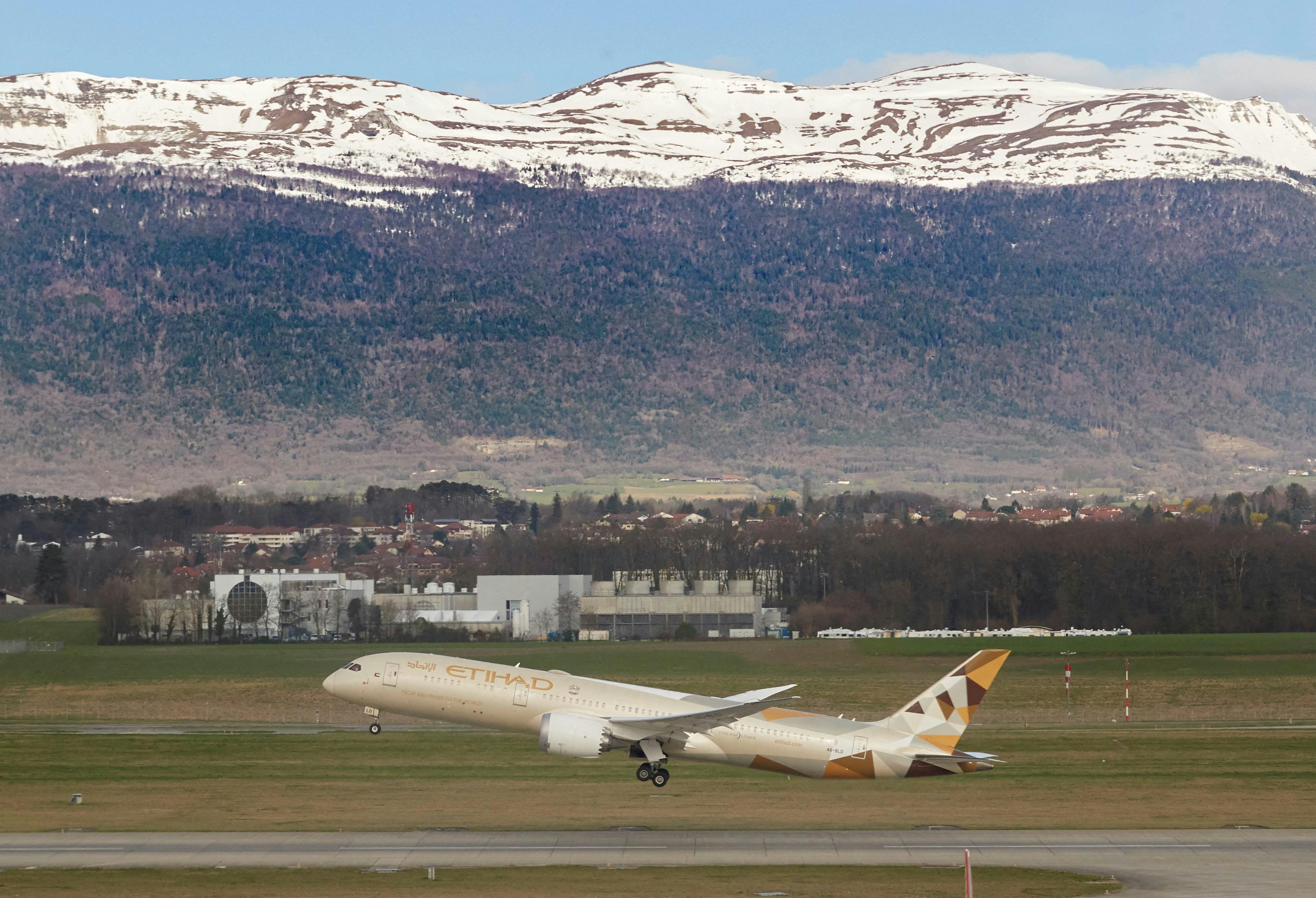
Etihad Airways Targets Growth in China and Africa Amid Aircraft Capacity Constraints Etihad Airways is preparing for a significant expansion of its global network, with China and Africa identified as the airline’s most promising markets for growth in the coming year. However, the pace of this expansion is currently constrained by a shortage of widebody aircraft, according to CEO Antonoaldo Neves. In an exclusive interview following the launch of Etihad’s new “Beyond Borders” cabin and service experience, Neves highlighted aircraft availability as the airline’s primary medium-term limitation. “We could have had 15 more widebodies today,” he remarked, emphasizing that the lack of additional aircraft is the main factor restricting the airline’s growth potential. “In the mid-term, aircraft is the constraint,” he added. Strategic Expansion Amid Regional Challenges Despite these limitations, Etihad remains committed to its ambitious growth strategy. Over the past three years, the airline has doubled its seat capacity and intends to continue increasing this figure as it seeks to transform Abu Dhabi into a major global connecting hub. “My job is to add seats,” Neves stated, underscoring the company’s focus on scaling up operations to meet rising demand. This expansion is unfolding amid ongoing regional disruptions, including the conflict in Iran, which has elevated operational costs and introduced logistical complexities. Nevertheless, Etihad is determined to maintain its trajectory, aiming to achieve break-even for the year while continuing to invest in new aircraft and route development. Focus on Africa and China as Growth Engines Looking ahead, Etihad’s growth strategy will concentrate on Africa and China, regions that Neves describes as offering substantial opportunities. The airline plans to leverage Abu Dhabi’s strategic geographic position to connect more passengers globally and capitalize on increasing demand in these markets. While the availability of widebody aircraft remains the critical factor limiting the speed of expansion, Etihad’s leadership expresses confidence that ongoing investment and a clear focus on capacity growth will enable the airline to strengthen its standing as a leading global carrier.
Artificial Intelligence Enters the Cockpit

Artificial Intelligence Enters the Cockpit

Artificial Intelligence Enters the Cockpit Advancements and Industry Developments Initial assumptions suggested that artificial intelligence (AI) technology was still distant from practical application in general aviation (GA) cockpits. While AI tools such as ChatGPT are widely accessible, the aviation sector has been cautiously evaluating how close companies are to delivering AI-driven solutions directly to pilots. A detailed examination reveals that over a dozen companies are actively developing products that either utilize AI programming or gather data for AI-powered processing, aiming to integrate these innovations into cockpit software. Although some initiatives focus on transport category and military aircraft, notable progress is being made in general aviation, with certain AI solutions already entering the market. Regulatory and Market Challenges The journey toward widespread AI adoption in cockpits is complex and fraught with challenges. AI is rapidly becoming one of the most heavily regulated industries, and aviation’s stringent oversight adds another layer of scrutiny. Regulatory authorities are rigorously evaluating the safety and reliability of AI systems before granting certification for flight operations. Industry experts caution that underestimated costs, particularly related to AI token usage, could trigger a near-term market correction, potentially slowing the pace of innovation. Market responses to AI’s integration into aviation are mixed. Some investors express optimism, anticipating improvements in efficiency and safety, while others remain cautious, weighing the potential risks alongside the benefits. This divergence has intensified focus on capital flows and policy developments as stakeholders attempt to navigate a swiftly evolving environment. Safety, Workforce, and Operational Considerations Competitors within the industry are adopting varied strategies, yet there is a growing consensus on the necessity of robust safety protocols. High-profile warnings from researchers have highlighted the risks of insufficiently managed AI systems, prompting calls for enhanced safeguards and regulatory oversight. Concurrently, the aviation sector continues to confront persistent workforce challenges, including labor shortages and cybersecurity vulnerabilities. These issues remain critical even as AI adoption accelerates in related fields such as government contracting and architecture and engineering firms. The integration of AI into aviation underscores the intricate balance required between human expertise and digital innovation. As AI technology approaches operational readiness for cockpit use, the industry faces a pivotal moment. The potential for smarter, safer, and more efficient flight operations is tangible, yet achieving this future depends on carefully addressing regulatory, financial, and operational hurdles. The coming years will be decisive in determining whether AI becomes a trusted co-pilot or remains constrained by the challenges ahead.
line