
将人工智能洞察转化为可执行行动

热门趋势
Categories
Stagnation in Aircraft Innovation Challenges Aviation Industry
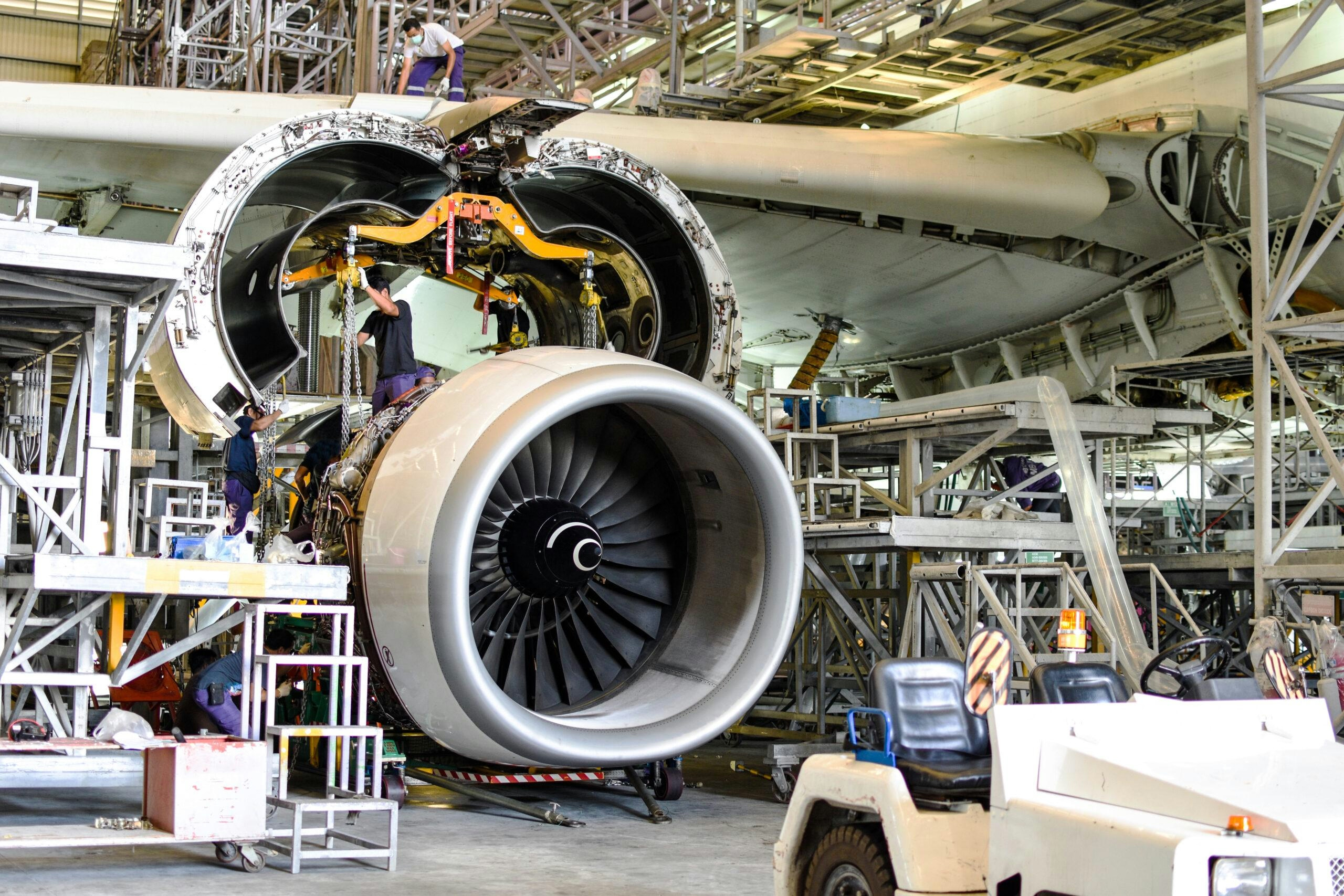
Stagnation in Aircraft Innovation Challenges Aviation Industry
Decarbonisation and the Role of Aircraft Technology
The aviation industry’s path to decarbonisation demands a comprehensive, sector-wide strategy that addresses the persistent growth of air travel while prioritising genuinely sustainable aviation fuels (SAFs). Although advancements in aircraft technology are essential for reducing emissions, the responsibility for progress has predominantly rested with airlines and energy providers. Aircraft manufacturers, by contrast, have faced limited pressure to innovate. Despite public commitments to support the green transition, most new aircraft models introduced by leading manufacturers are essentially re-engined versions of existing designs rather than pioneering technological breakthroughs.
Innovation Slowdown Among Leading Manufacturers
The world’s foremost original equipment manufacturers (OEMs), Airbus and Boeing, have experienced significant delays or suspensions in their most ambitious projects, reflecting a marked decline in technological innovation over the past decade. This trend is expected to continue, with no major new aircraft models anticipated from either company within the next ten years. At a critical juncture when the industry urgently requires enhanced efficiency and reduced emissions, these setbacks are hindering progress toward a sustainable aviation future.
Broader Industry Challenges Amid Innovation Stagnation
The consequences of this slowdown extend beyond environmental concerns, as the aviation sector grapples with intensifying competition and geopolitical instability. Airlines face difficulties in anticipating market fluctuations and safeguarding profit margins. The International Air Transport Association (IATA) projects a net profit of $14 billion for European airlines in 2026, yet this forecast remains clouded by uncertainty. Business aviation leaders anticipate a turbulent year, particularly in Latin America and the Caribbean, while Korean Air has highlighted escalating competition and geopolitical risks. In the charter sector, rising taxation is identified as a significant cost pressure by ACC Aviation. Nonetheless, the U.S. charter market is expected to expand, supported by major events and a shift toward more cost-conscious corporate travel.
Barriers to Radical Innovation and Policy Implications
Two primary factors underlie the stagnation in aircraft innovation: insufficient market competition and the absence of effective policies compelling manufacturers to pursue radical technological advancements. Without stronger incentives, the potential for aircraft technology to substantially reduce emissions and energy consumption by 2050 remains constrained.
Modelling indicates that under an ambitious yet feasible innovation scenario, European aviation could improve efficiency by up to 13% by 2050, equating to renewable electricity savings sufficient to power 27 million heat pumps. Achieving this would necessitate the development and widespread adoption of cleaner, more advanced technologies, including zero-emission aircraft. Should manufacturers accelerate their efforts further, efficiency gains could reach 17%, significantly contributing to the European Union’s aviation climate objectives.
To realise the full decarbonisation potential of aircraft technology, robust policy measures are urgently required to stimulate the radical innovation the sector demands. Absent decisive action, the aviation industry risks falling short of both its environmental commitments and economic goals amid an increasingly competitive and volatile global environment.

Etihad Airways Suspends Airbus A380 Flights on Key Route

Aditya Birla Group Seeks Approval for Aircraft Leasing in GIFT City

Qatar Airways Highlights Innovation and Connectivity at Arabian Travel Market 2026

Hong Kong's Five-Year Plan Includes Andrew Fan's Aircraft Parts Processing Hub Proposal

ACIA Aero Leasing Delivers ATR72-600 to Air Nostrum

RTX Appoints Jill Albertelli as Head of Pratt & Whitney

TAT Technologies Joins Beyond Aero Hydrogen Aircraft Program

AURAK Study Highlights Barriers to Air Taxi Adoption in Emerging Economies

Xiamen Air Selects Altitude for 787 Maintenance at Heathrow

Etihad and Swissport Extend Global Partnership
