
将人工智能洞察转化为可执行行动

热门趋势
Categories
The Consequences of a Fighter Jet Engine Failure
The Consequences of a Fighter Jet Engine Failure
Every fighter pilot trains extensively for the possibility of an engine failure, yet few ever hope to confront it in flight. The sudden loss of a jet engine while traveling at speeds exceeding 500 knots and altitudes around 30,000 feet represents one of the most critical emergencies in aviation. Whether caused by a thunderous compressor stall, a silent flameout, or a catastrophic uncontained failure, such incidents demand immediate and precise action. Unlike commercial airliners, which typically have multiple engines and access to long runways, many fighter jets operate with a single engine over hostile terrain, at extreme altitudes, and far from safe landing options. When that sole engine fails, the aircraft’s glide rate of approximately 3,000 feet per minute leaves pilots with less than ten minutes to descend from combat altitude to the ground.
Understanding Engine Failures in Fighter Jets
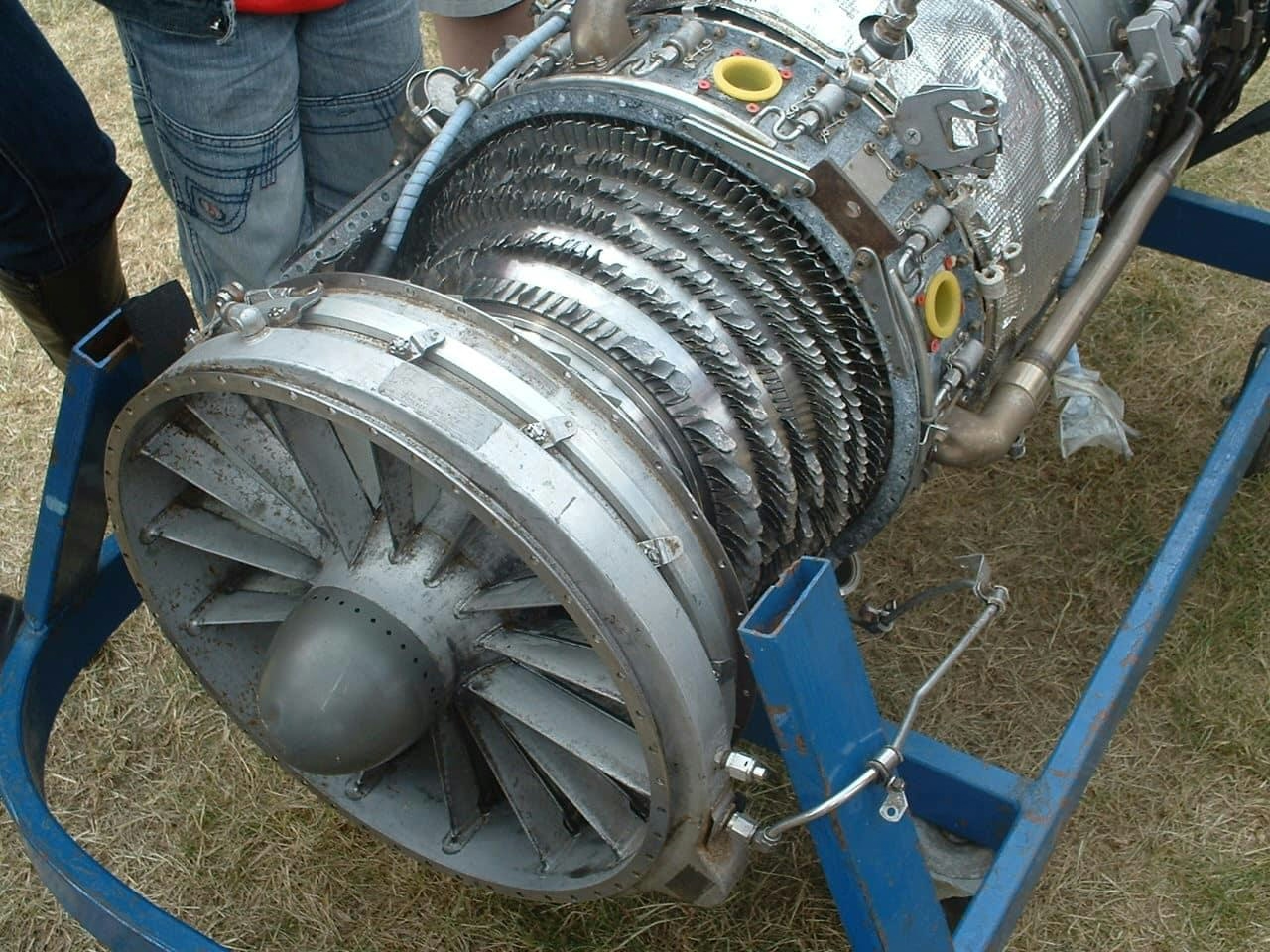
Jet engines function by compressing incoming air, mixing it with fuel, igniting the mixture, and expelling exhaust gases at high velocity. The compressor section, consisting of rapidly spinning fan blades, must maintain a delicate balance of airflow, blade angle, and pressure. Disruption of this balance can cause airflow to momentarily reverse, resulting in a loud bang often described by pilots as resembling a shotgun blast or truck backfire. This phenomenon, known as a compressor stall, can be triggered by rapid throttle changes, extreme angles of attack, ingestion of foreign objects, or engine wear. While a single compressor stall is often recoverable through throttle adjustments and flight parameter changes, repeated stalls or more severe failures can lead to complete engine flameout or catastrophic mechanical breakdown.
A flameout occurs when combustion ceases entirely, causing the engine to windmill without producing thrust. More severe still is an uncontained failure, where internal components such as fan blades or turbine discs breach the engine casing, posing grave risks to the aircraft and pilot. The Pratt & Whitney F100-PW-220 afterburning turbofan, which powers both the F-15 and F-16 fighters, exemplifies the complexity and critical nature of these engines. When failure occurs at altitude, pilots have only seconds to diagnose the problem and respond appropriately.
Operational Challenges and Industry Implications
The reliability of fighter jet engines extends beyond pilot safety, influencing military readiness and defense procurement strategies. Recent developments in Europe’s Future Combat Air System (FCAS) project illustrate these challenges. Industrial disputes between Dassault Aviation and Airbus Defence & Space have led to the termination of the original program, prompting Airbus to propose a two-fighter solution in an effort to resolve the impasse. Such setbacks risk delaying the deployment of next-generation combat aircraft and intensify scrutiny on engine performance and dependability.
Operational readiness remains a pressing concern for many air forces. The F-35 Lightning II, a key asset for numerous militaries worldwide, has experienced a decline in its fully mission-capable rate to just 25 percent. Persistent issues including software delays, parts shortages, and corrosion continue to hamper efforts to maintain this advanced fighter fleet at optimal levels.
In the demanding environment of high-performance military aviation, a single engine failure transcends a mere technical malfunction. It becomes a rigorous test of pilot skill, engineering resilience, and the broader defense ecosystem’s capacity to adapt and respond effectively under pressure.

Etihad Airways Suspends Airbus A380 Flights on Key Route

Aditya Birla Group Seeks Approval for Aircraft Leasing in GIFT City

Qatar Airways Highlights Innovation and Connectivity at Arabian Travel Market 2026

Hong Kong's Five-Year Plan Includes Andrew Fan's Aircraft Parts Processing Hub Proposal

ACIA Aero Leasing Delivers ATR72-600 to Air Nostrum

RTX Appoints Jill Albertelli as Head of Pratt & Whitney

TAT Technologies Joins Beyond Aero Hydrogen Aircraft Program

AURAK Study Highlights Barriers to Air Taxi Adoption in Emerging Economies

Xiamen Air Selects Altitude for 787 Maintenance at Heathrow

Etihad and Swissport Extend Global Partnership
