
将人工智能洞察转化为可执行行动

热门趋势
Categories
The Development of the Jet Engine in America
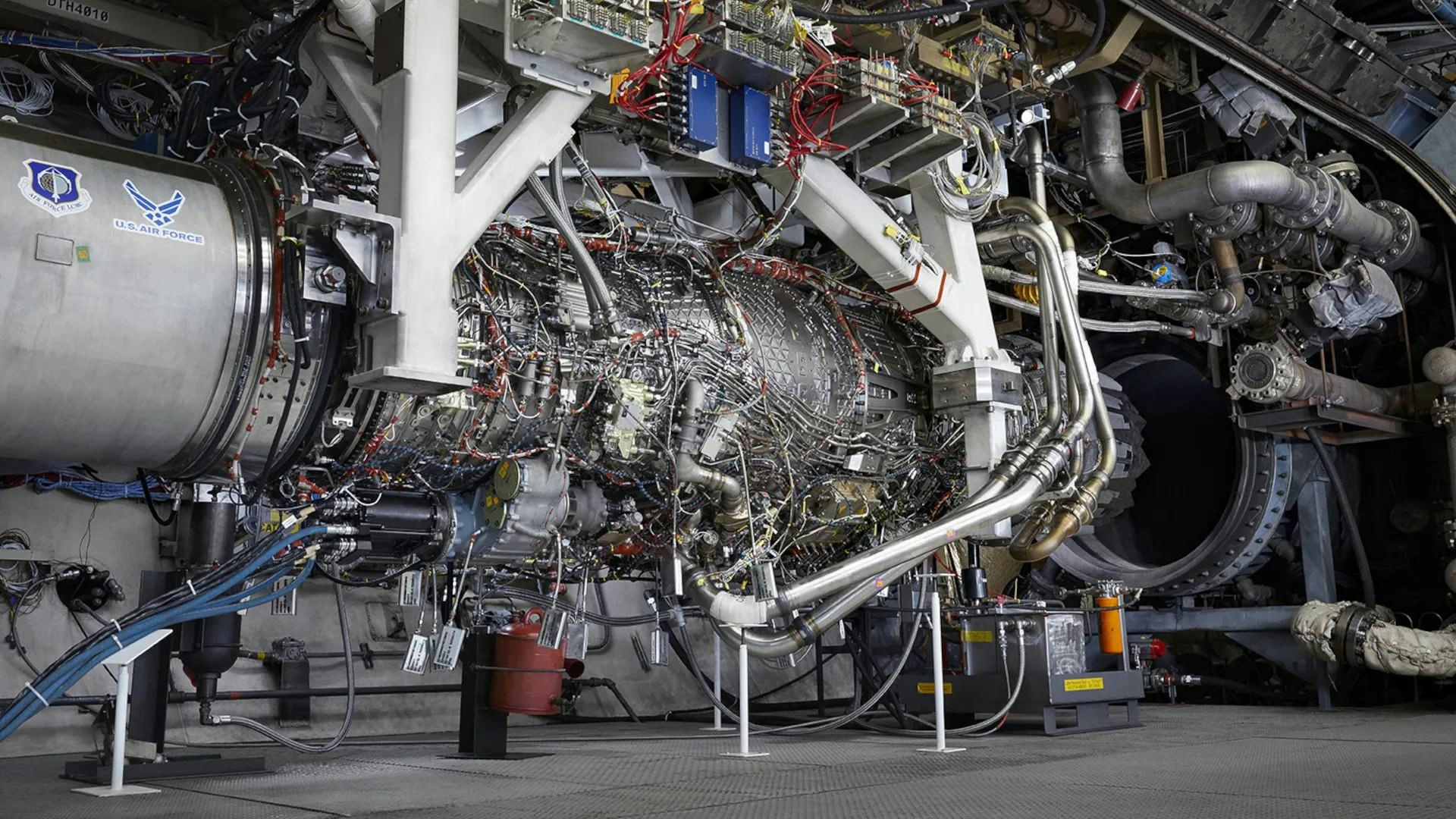
The Development of the Jet Engine in America
Early Vision and Innovation
Sir Frank Whittle, a pioneering Royal Air Force officer, envisioned a transformative future for aviation, one in which aircraft would fly higher, faster, and more safely than those powered by conventional piston engines and propellers. His groundbreaking ideas emerged in the late 1920s, culminating in a graduation thesis that emphasized the necessity for aircraft to achieve altitudes and speeds beyond the capabilities of existing technology. In 1930, Whittle secured a patent for his initial jet engine design. However, the economic hardships of the Great Depression and the political uncertainties preceding World War II hindered early support for his concept. Despite these challenges, Whittle’s design remained technically sound and continued to evolve.
Although a French inventor had previously filed a patent for a jet engine, the technology was not yet practical. Concurrently, German engineers were developing their own prototypes during the 1930s. Whittle, after gaining admission to Cambridge University, persisted in refining his engine despite financial difficulties. By 1939, as Europe approached war, British military leaders began to recognize the potential of his work, particularly in light of Germany’s rapid advancements in military technology.
Transatlantic Collaboration and Wartime Advancements
A pivotal moment occurred in October 1941, just two months before the attack on Pearl Harbor, when British officials discreetly introduced Whittle’s jet engine to American military representatives at a Boston airport. This event marked the beginning of significant U.S. involvement in jet engine development. American engineers, both civilian and military, swiftly engaged in refining the technology. During World War II, jet engines revolutionized aviation by enabling aircraft to reach unprecedented altitudes and speeds, fundamentally altering the nature of aerial combat and military strategy.
Challenges and Industry Evolution
The journey toward widespread adoption of jet engines in the United States was not without obstacles. Development efforts were periodically disrupted by fluctuations in government funding and shifting defense budget priorities, often influenced by broader economic instability and changes in legislation and regulation. The global economy also played a critical role; for instance, geopolitical tensions such as the Iran war impacted demand within the civil aviation engine market.
As competition intensified within the aviation sector, companies adapted by revising their strategies, implementing cost-reduction measures, and embracing new technologies to maintain their competitive edge. Firms like Jet Aviation exemplified this drive for innovation by incorporating drones for aircraft inspections, reflecting the industry’s ongoing commitment to technological advancement.
The development of the jet engine in America thus stands as a testament to international collaboration, technological perseverance, and adaptability amid evolving economic and political conditions. Beyond its transformative impact on military aviation during World War II, the jet engine laid the groundwork for the modern era of commercial flight, fundamentally reshaping global transportation of people and goods.

Etihad Airways Suspends Airbus A380 Flights on Key Route

Aditya Birla Group Seeks Approval for Aircraft Leasing in GIFT City

Qatar Airways Highlights Innovation and Connectivity at Arabian Travel Market 2026

Hong Kong's Five-Year Plan Includes Andrew Fan's Aircraft Parts Processing Hub Proposal

ACIA Aero Leasing Delivers ATR72-600 to Air Nostrum

RTX Appoints Jill Albertelli as Head of Pratt & Whitney

TAT Technologies Joins Beyond Aero Hydrogen Aircraft Program

AURAK Study Highlights Barriers to Air Taxi Adoption in Emerging Economies

Xiamen Air Selects Altitude for 787 Maintenance at Heathrow

Etihad and Swissport Extend Global Partnership
