
将人工智能洞察转化为可执行行动

热门趋势
Categories
The Importance of Supervising Apprentices in Aircraft Maintenance
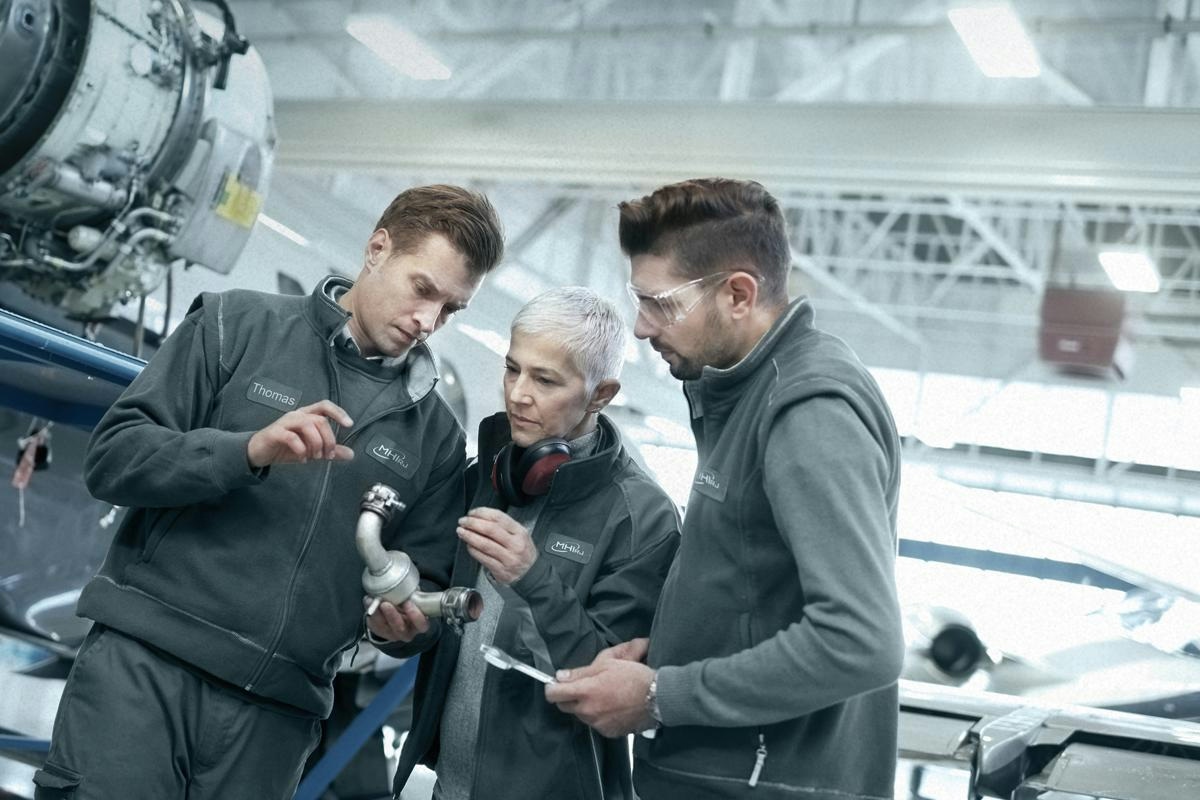
The Importance of Supervising Apprentices in Aircraft Maintenance
Addressing the Talent Shortage in Aerospace
Supervising apprentices in aircraft maintenance has become increasingly vital amid a growing talent shortage in the aerospace sector. This challenge is particularly pronounced in business aviation, where the demand for skilled technicians significantly exceeds the available supply. In response, companies are intensifying their focus on training programs and forging partnerships with educational institutions to cultivate a new generation of qualified professionals capable of sustaining industry standards.
The Critical Role of Supervision in Safety and Skill Development
With over 45 years of experience in aircraft maintenance, I have observed the profound impact that inadequate supervision can have on safety and operational integrity. A notable example involved an apprentice who, without sufficient guidance, bent a torque wrench while attempting to torque the mast nut on a Bell 206 helicopter. This incident highlighted how a lack of proper oversight can lead to potentially hazardous errors. Apprentices require supervision calibrated to their level of experience and competence to prevent such risks and ensure quality workmanship.
The disparity in knowledge and skill between licensed aircraft maintenance engineers (AMEs) or airframe and powerplant mechanics (A&Ps) and apprentices can be substantial. While some apprentices rapidly develop proficiency, others need close monitoring to maintain safety and quality standards. Despite the pressures of production deadlines, it is crucial that experienced staff resist the temptation to bypass training opportunities in favor of expediency. Recognizing that every expert begins as a novice underscores the importance of investing time in effective supervision, which ultimately benefits individuals, teams, companies, and the broader industry.
Legal and Operational Imperatives for Supervision
Effective supervision is not merely a best practice; it is a legal obligation in many jurisdictions. For instance, Canadian WorkSafe regulations assign supervisors the responsibility for worker safety through directing work, providing instruction, and identifying hazards. Supervisors must ensure worker competency, enforce safety procedures including the use of personal protective equipment (PPE), educate workers about potential risks, and collaborate with health and safety committees.
These responsibilities have gained heightened significance in today’s market, where oversaturation in Europe’s aircraft, crew, maintenance, and insurance sectors has intensified the demand for rigorous operational standards. Industry competitors are responding by investing in innovative training solutions and strengthening collaborations with educational institutions to develop a workforce equipped to meet evolving challenges.
To assist supervisors in fulfilling this critical role, I have developed a checklist designed to guarantee that every task assignment is accompanied by the appropriate level of information and oversight. This framework benefits not only apprentices but all personnel, particularly when experience levels vary, ensuring clarity and safety across operations.
Ultimately, the duty to nurture and supervise apprentices lies with all AMEs and A&Ps. By dedicating the necessary time and attention to developing new talent, the aerospace industry can safeguard the safety, integrity, and future viability of its operations.

Etihad Airways Suspends Airbus A380 Flights on Key Route

Aditya Birla Group Seeks Approval for Aircraft Leasing in GIFT City

Qatar Airways Highlights Innovation and Connectivity at Arabian Travel Market 2026

Hong Kong's Five-Year Plan Includes Andrew Fan's Aircraft Parts Processing Hub Proposal

ACIA Aero Leasing Delivers ATR72-600 to Air Nostrum

RTX Appoints Jill Albertelli as Head of Pratt & Whitney

TAT Technologies Joins Beyond Aero Hydrogen Aircraft Program

AURAK Study Highlights Barriers to Air Taxi Adoption in Emerging Economies

Xiamen Air Selects Altitude for 787 Maintenance at Heathrow

Etihad and Swissport Extend Global Partnership
