
将人工智能洞察转化为可执行行动

热门趋势
Categories
Turkish Airlines invests $2.3bn to expand Istanbul Airport hub
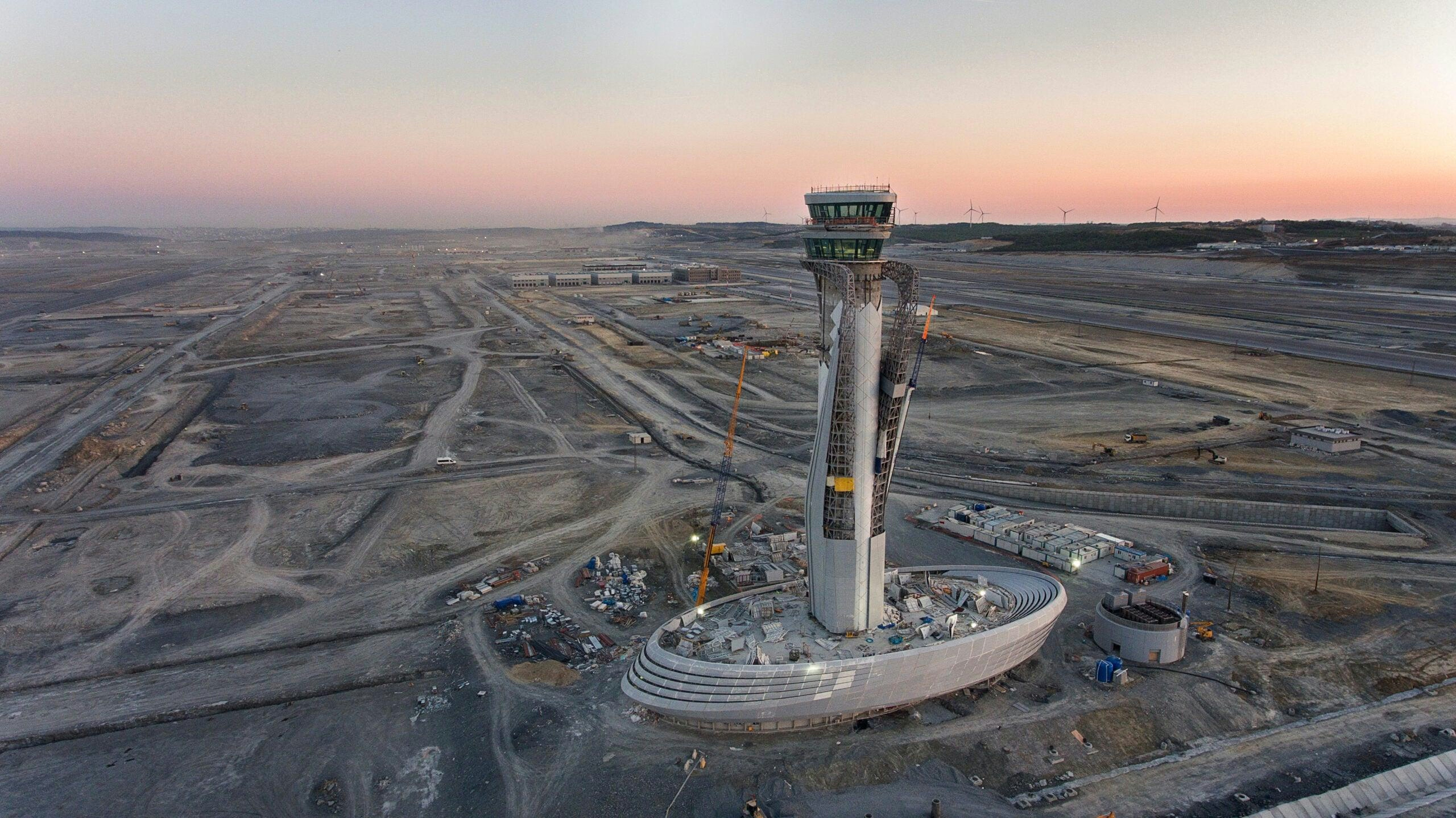
Turkish Airlines Commits $2.3 Billion to Expand Istanbul Airport Hub
Turkish Airlines has announced a comprehensive infrastructure investment program valued at over TRY100 billion (approximately $2.3 billion), aimed at transforming Istanbul Airport into a leading global aviation hub. This ambitious initiative forms a central part of the airline’s long-term “Vision 2033” strategy, marking a significant milestone as the carrier approaches its centenary. The program encompasses eight major projects designed to enhance cargo capacity, maintenance and technical services, catering operations, and digital infrastructure.
Expansion of Cargo and Maintenance Capabilities
A cornerstone of the investment is the substantial expansion of Turkish Airlines’ cargo operations. The second phase of the SmartIST cargo terminal at Istanbul Airport will more than double its annual handling capacity, increasing from 2.2 million tonnes to 4.5 million tonnes. Upon completion, expected in stages through 2027 and 2028, this facility will rank among the world’s largest air cargo hubs, significantly strengthening the airline’s freight capabilities.
In parallel, a considerable portion of the funding is allocated to technical services through Turkish Technic, the airline’s maintenance unit. A new engine maintenance center, slated for completion in 2027, will specialize in servicing Rolls-Royce Trent XWB-84 and -97 engines used on Airbus A350 aircraft, as well as Trent 7000 engines for the A330neo. This facility is anticipated to become one of Europe’s largest new-generation engine maintenance, repair, and overhaul (MRO) centers. Additionally, new aircraft maintenance hangars scheduled for delivery by 2026 will increase heavy maintenance capacity by approximately 20%, enabling Turkish Technic to service up to 12 aircraft simultaneously.
Enhancing Support Infrastructure and Digital Resilience
The investment program also targets support infrastructure critical to the airline’s operations. A new main catering facility, expected to be operational between 2027 and 2028, will have the capacity to prepare meals for over 500,000 passengers daily, positioning it among the largest inflight catering operations globally. Responding to the rapid growth in cross-border e-commerce, Turkish Airlines plans to open a dedicated e-commerce logistics complex in 2026. This facility will support the Widect platform, enhancing integrated door-to-door freight services and reinforcing the airline’s role in global trade networks.
Beyond physical infrastructure, the program includes the establishment of a new data center designed to enhance operational continuity and digital resilience. This center will support flight operations, maintenance planning, and commercial systems with improved security and data management capabilities. Furthermore, a new flight training center is planned, with its initial phase expected to be operational by 2026–2027, underscoring the airline’s commitment to workforce development and operational excellence.
Industry Context and Competitive Challenges
Turkish Airlines’ $2.3 billion investment underscores its ambition to consolidate its leadership position in the region’s aviation sector. However, the expansion faces potential challenges, including the need for regulatory approvals, rising operational costs, and intensifying competition from regional carriers. Notably, competitors are already taking strategic steps to maintain market share, such as a forthcoming partnership between a rival airline and Southwest Airlines for transatlantic services, scheduled to commence in January 2026.
The timing of Turkish Airlines’ expansion aligns with optimistic forecasts for the global airline industry, which is projected to achieve record profits in 2026. Middle Eastern carriers, including Turkish Airlines, are expected to be among the most profitable in this period. As the airline advances its Vision 2033 strategy, its substantial investment in Istanbul Airport is set to reinforce its status as a pivotal player in international aviation, even as the competitive and regulatory environment continues to evolve.

Etihad Airways Suspends Airbus A380 Flights on Key Route

Aditya Birla Group Seeks Approval for Aircraft Leasing in GIFT City

Qatar Airways Highlights Innovation and Connectivity at Arabian Travel Market 2026

Hong Kong's Five-Year Plan Includes Andrew Fan's Aircraft Parts Processing Hub Proposal

ACIA Aero Leasing Delivers ATR72-600 to Air Nostrum

RTX Appoints Jill Albertelli as Head of Pratt & Whitney

TAT Technologies Joins Beyond Aero Hydrogen Aircraft Program

AURAK Study Highlights Barriers to Air Taxi Adoption in Emerging Economies

Xiamen Air Selects Altitude for 787 Maintenance at Heathrow

Etihad and Swissport Extend Global Partnership
