
将人工智能洞察转化为可执行行动

热门趋势
Categories
Two Decades On, the Airbus A380 Continues to Influence Airport Design
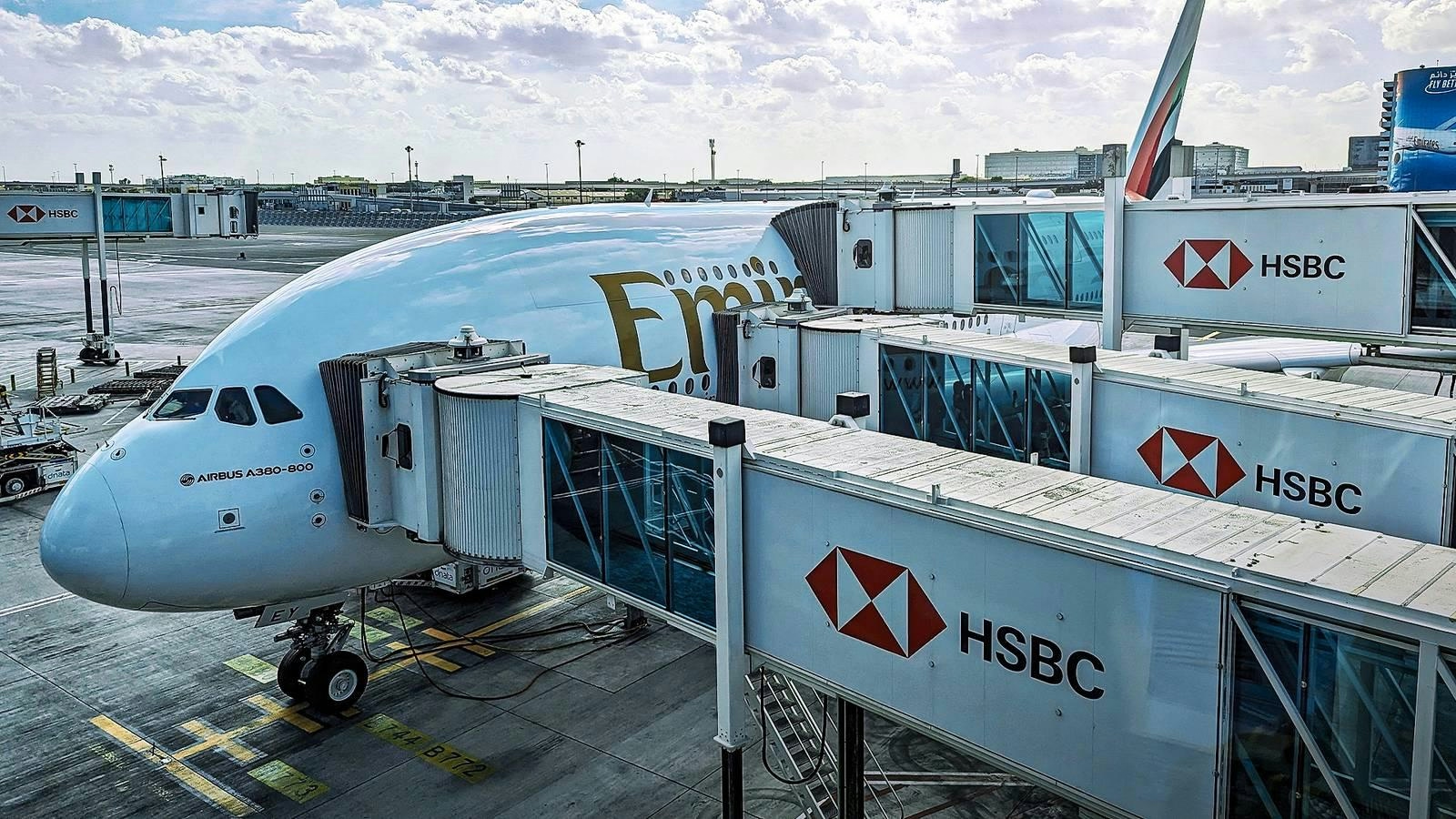
Two Decades On, the Airbus A380 Continues to Influence Airport Design
The Airbus A380, the largest passenger aircraft ever constructed, has had a profound and enduring impact on airport infrastructure around the globe. Its unprecedented size necessitated extensive redesigns at major airports in the United States, Europe, and Australia during its introduction in the late 2000s and early 2010s. Although initial enthusiasm for the A380 was considerable, demand eventually waned as airlines adjusted their strategies and the aircraft struggled to meet commercial expectations. The onset of the COVID-19 pandemic appeared to hasten the decline of the double-decker giant, with many carriers grounding their fleets.
Resurgence and Operational Adaptations
In recent years, however, the A380 has experienced a notable resurgence. Several airlines have reintroduced the aircraft into service, often deploying it on new or seasonal routes. In 2025, Lufthansa garnered attention by inaugurating nonstop A380 flights from Munich to Denver International Airport (DEN), marking the first scheduled A380 service to Denver—18 years after the aircraft’s debut. This route is planned to operate seasonally, with intentions to resume in 2026.
Denver International Airport’s preparedness for the A380 is particularly significant. Designed with future expansion in mind, the airport already possessed runways sufficiently long to accommodate the superjumbo, along with two Code F gates (A37W and A41W) capable of handling the aircraft’s 262-foot wingspan. The primary upgrade required was the installation of new pushback bars, a relatively modest investment compared to the extensive modifications undertaken by more constrained airports.
Challenges Amid Geopolitical and Operational Shifts
Despite its continued presence, the A380’s operational future faces considerable challenges shaped by global events and evolving airline strategies. The ongoing conflict in the Middle East has caused substantial disruptions, with carriers such as Emirates and British Airways suspending flights and rerouting aircraft, directly affecting A380 operations. Airspace closures and incidents like the Iranian drone strike on Dubai airport have further complicated the operational environment, underscoring the vulnerabilities of large aircraft and the airports that accommodate them.
These geopolitical tensions have compelled airports to adapt not only to the physical demands of the A380 but also to rapidly evolving security and operational requirements. Lufthansa’s recent decision to retire its A380 fleet and repurpose the aircraft as parts donors highlights the uncertain future of the type, even as some airlines continue to rely on its capacity for high-demand routes.
Airports that invested in A380-compatible infrastructure continue to benefit as the aircraft remains active on select routes. The A380’s legacy is evident in the design of modern airports, which must now balance flexibility, security, and capacity in an increasingly volatile global landscape. Two decades after its first flight, the Airbus A380 continues to shape airport planning and operations worldwide.

Etihad Airways Suspends Airbus A380 Flights on Key Route

Aditya Birla Group Seeks Approval for Aircraft Leasing in GIFT City

Qatar Airways Highlights Innovation and Connectivity at Arabian Travel Market 2026

Hong Kong's Five-Year Plan Includes Andrew Fan's Aircraft Parts Processing Hub Proposal

ACIA Aero Leasing Delivers ATR72-600 to Air Nostrum

RTX Appoints Jill Albertelli as Head of Pratt & Whitney

TAT Technologies Joins Beyond Aero Hydrogen Aircraft Program

AURAK Study Highlights Barriers to Air Taxi Adoption in Emerging Economies

Xiamen Air Selects Altitude for 787 Maintenance at Heathrow

Etihad and Swissport Extend Global Partnership
