
将人工智能洞察转化为可执行行动

热门趋势
Categories
UEC-Saturn Develops Method to Prevent Aircraft Engine Damage
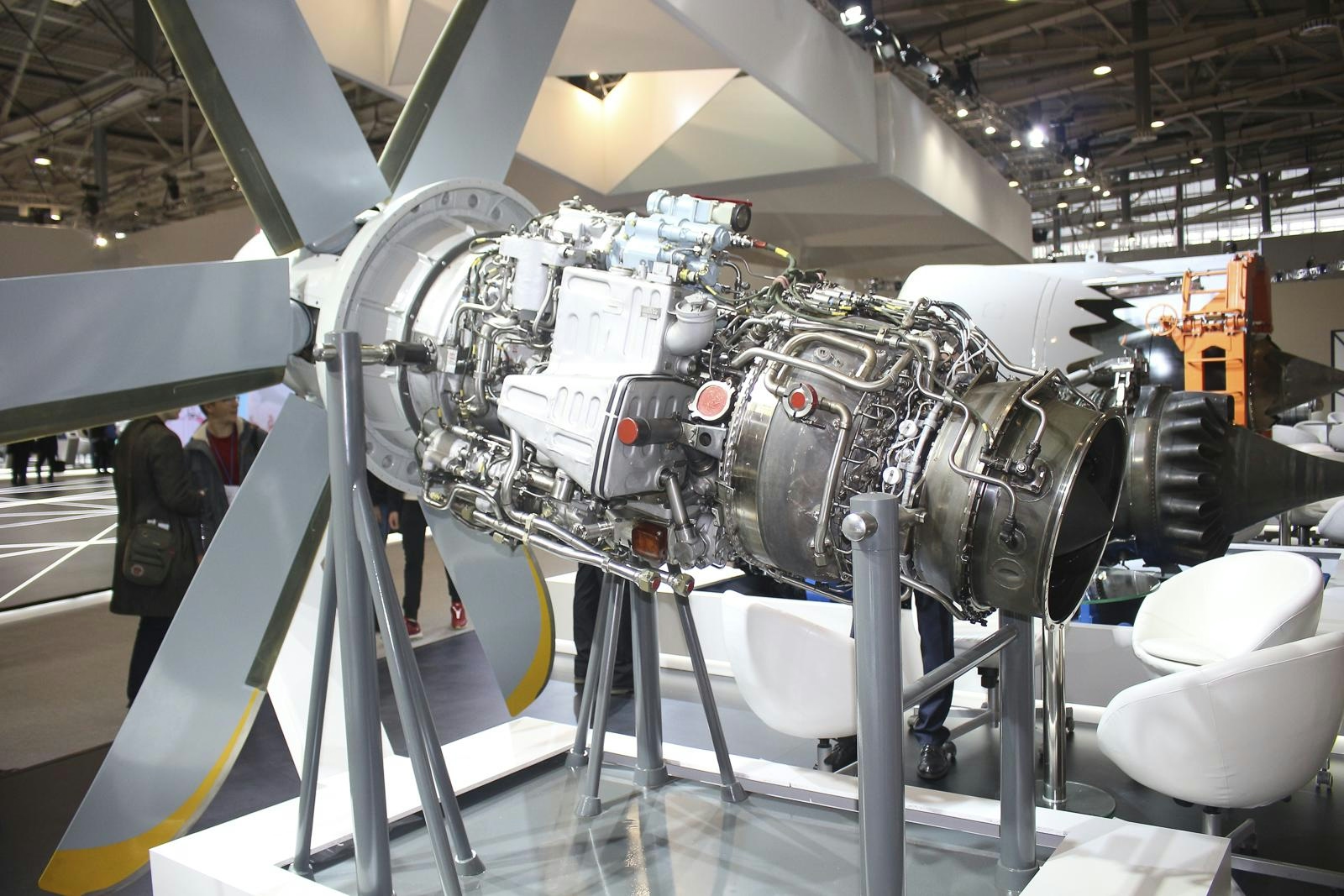
UEC-Saturn Develops Method to Prevent Aircraft Engine Damage
Innovative Safety Device Targets Turbine Overspeed
Engineers at UEC-Saturn, a prominent aerospace enterprise based in Rybinsk, have introduced a novel device designed to safeguard gas turbine engines by cutting off the fuel supply before a hazardous turbine overspeed occurs. This proactive mechanism aims to prevent catastrophic engine failures during emergencies, where rapid intervention is crucial.
The newly developed protection system, officially registered in the FIPS database in March 2026, addresses a critical vulnerability in gas turbine engines: shaft breakage. In such scenarios, the compressor loses its power source, causing the turbine to accelerate uncontrollably and potentially destroy the engine within seconds. Unlike conventional safety systems that activate only after overspeed has begun, UEC-Saturn’s device intervenes earlier by detecting displacement of the compressor rotor.
Mechanism and Integration
The device functions by monitoring the position of the compressor rotor. When displacement occurs, the rotor disk makes contact with an integrated current conductor, breaking the electrical circuit. This action immediately triggers a command to shut off the fuel supply, halting the engine before it enters an emergency mode. Furthermore, the system introduces a mechanical braking effect through increased friction between the displaced rotor and the stator, which helps reduce the turbine’s rotational speed.
A significant advantage of this method is its compatibility with existing gas turbine engines. UEC-Saturn highlights that the device can be incorporated without extensive redesigns, offering a practical upgrade path for current engine installations.
Challenges and Industry Implications
Despite its potential, the widespread adoption of this technology faces several hurdles. Regulatory approval will be essential, as aviation authorities must certify the new safety mechanism. Additionally, integrating the device into established engine maintenance protocols will require careful coordination to ensure reliability and compliance. Industry stakeholders will closely evaluate the device’s effectiveness under real-world operating conditions and its cost-efficiency relative to existing protection methods.
Market response is anticipated to be favorable, particularly among airlines seeking to enhance safety while reducing maintenance expenses. The introduction of this technology may also prompt competitors to accelerate the development of similar or improved engine protection systems, thereby intensifying innovation within the sector.
Context Within UEC-Saturn’s Portfolio
UEC-Saturn operates as a key enterprise within the United Engine Corporation (UEC) and is known for producing the PD-8 aircraft engine, which powers the domestically developed "Superjet." In December 2025, the PD-8 successfully passed rigorous fan blade failure tests, confirming the robustness of its housing and underscoring UEC-Saturn’s commitment to safety and reliability.
As the aviation industry continues to emphasize operational safety and cost-effectiveness, UEC-Saturn’s new engine protection method represents a noteworthy advancement. Its ultimate impact will depend on regulatory acceptance, successful integration, and demonstrated performance in operational environments.

Etihad Airways Suspends Airbus A380 Flights on Key Route

Aditya Birla Group Seeks Approval for Aircraft Leasing in GIFT City

Qatar Airways Highlights Innovation and Connectivity at Arabian Travel Market 2026

Hong Kong's Five-Year Plan Includes Andrew Fan's Aircraft Parts Processing Hub Proposal

ACIA Aero Leasing Delivers ATR72-600 to Air Nostrum

RTX Appoints Jill Albertelli as Head of Pratt & Whitney

TAT Technologies Joins Beyond Aero Hydrogen Aircraft Program

AURAK Study Highlights Barriers to Air Taxi Adoption in Emerging Economies

Xiamen Air Selects Altitude for 787 Maintenance at Heathrow

Etihad and Swissport Extend Global Partnership
