
将人工智能洞察转化为可执行行动

热门趋势
Categories
Uganda-Boeing Agreement Sparks Competition for Dreamliner Engines
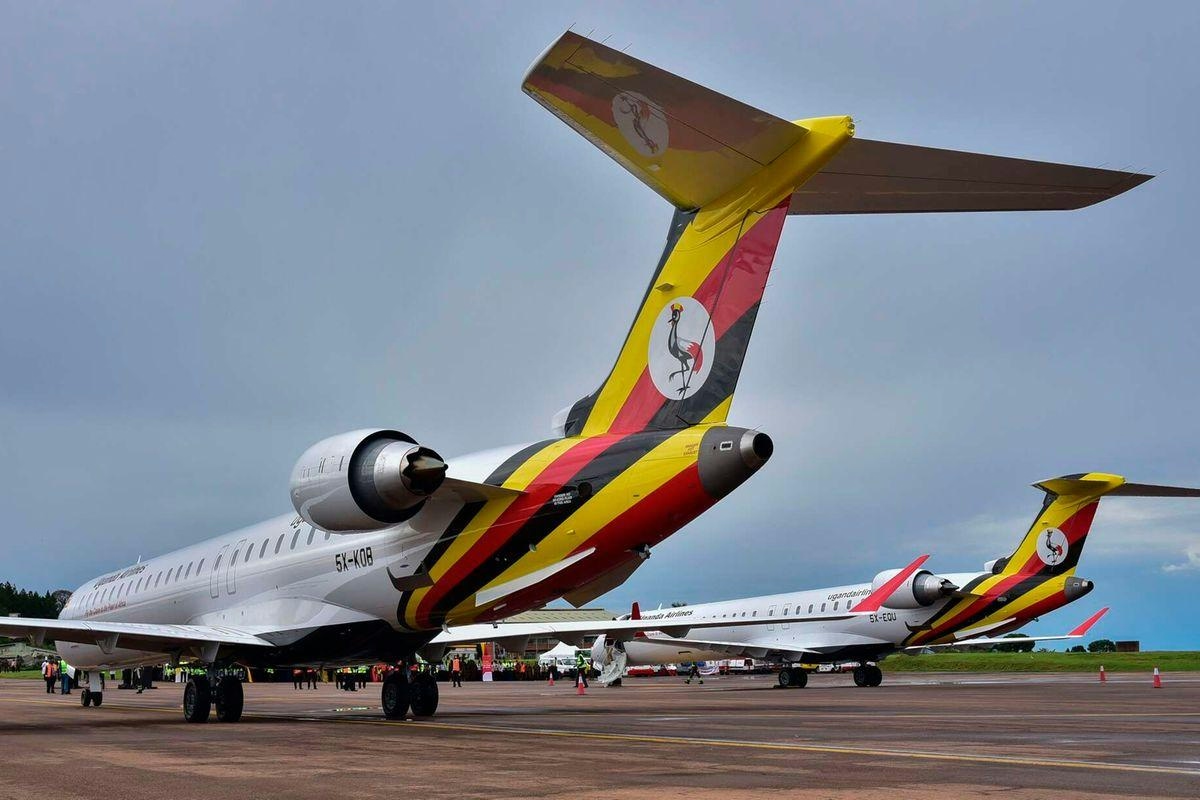
Uganda-Boeing Agreement Sparks Competition for Dreamliner Engines
A Landmark Deal for Uganda Airlines
Uganda Airlines has taken a decisive step in its fleet expansion strategy by committing to a significant order of Boeing aircraft, resolving longstanding questions about the national carrier’s future direction. Announced on June 10, the agreement encompasses ten aircraft: four Boeing 787 Dreamliners, four Boeing 737 MAX 8s, and two converted cargo freighters—a Boeing 767 freighter and a Boeing 737 Boeing Converted Freighter (BCF). Valued at approximately Ush3.7 trillion ($984 million), this deal represents one of the largest aviation investments in Uganda’s history and marks a clear pivot toward Boeing after an extended competition with Airbus.
Government officials confirmed that an initial deposit of Ush460 billion ($122 million) was scheduled for release on June 11, converting the commitment into a firm order and enabling Boeing to commence production planning. Deliveries are expected to begin in 2027 with the cargo freighters, while the new passenger aircraft are slated for arrival around 2031. To manage capacity in the interim, Boeing has committed to supporting Uganda Airlines with leasing arrangements.
This order is a notable victory for Boeing in the African aviation market, particularly as Uganda Airlines currently operates Airbus A330-800neos on its long-haul routes to London, Mumbai, and Dubai. Industry analysts had anticipated that Airbus would leverage this existing relationship to secure future fleet growth. However, Uganda Airlines ultimately selected the Boeing 787 Dreamliner, viewing it as a more suitable long-term solution for its intercontinental expansion ambitions.
The Engine Supplier Contest
While Boeing has secured the airframe order, the choice of engine supplier for the Dreamliners remains undecided, setting the stage for a competitive battle between General Electric Aerospace and Rolls-Royce. The Boeing 787 is distinctive among widebody aircraft in allowing airlines to choose between two competing engine models: the GE GEnx-1B and the Rolls-Royce Trent 1000.
This decision carries heightened significance amid recent industry concerns over engine supply shortages. United Airlines CEO Scott Kirby has publicly criticized aircraft manufacturers for their reliance on single engine suppliers, citing global shortages that have disrupted airline operations. Uganda Airlines’ engine selection will be critical in avoiding similar operational challenges and ensuring reliability.
Rolls-Royce, the incumbent supplier powering Uganda Airlines’ Airbus A330neo fleet with its Trent 7000 engines, faces scrutiny from airline executives who have expressed dissatisfaction with the Trent 7000’s limited time-on-wing and higher maintenance requirements. These issues have contributed to growing interest in the Dreamliner platform and the GE GEnx engine, which is widely regarded for its reliability and longer maintenance intervals.
Broader Market Implications
The Uganda-Boeing agreement unfolds against a backdrop of shifting dynamics in the global aviation market, including major recent deals such as the U.S.-China aircraft agreement, which may intensify competition among engine suppliers. As Uganda Airlines embarks on this next phase of growth, the outcome of the Dreamliner engine selection will not only influence the carrier’s operational future but could also have broader implications for Boeing and the leading engine manufacturers competing for market share.

Etihad Airways Suspends Airbus A380 Flights on Key Route

Aditya Birla Group Seeks Approval for Aircraft Leasing in GIFT City

Qatar Airways Highlights Innovation and Connectivity at Arabian Travel Market 2026

Hong Kong's Five-Year Plan Includes Andrew Fan's Aircraft Parts Processing Hub Proposal

ACIA Aero Leasing Delivers ATR72-600 to Air Nostrum

RTX Appoints Jill Albertelli as Head of Pratt & Whitney

TAT Technologies Joins Beyond Aero Hydrogen Aircraft Program

AURAK Study Highlights Barriers to Air Taxi Adoption in Emerging Economies

Xiamen Air Selects Altitude for 787 Maintenance at Heathrow

Etihad and Swissport Extend Global Partnership
