
图像

将人工智能洞察转化为可执行行动

立即加入 AeroGenie 候补名单!

热门趋势

Categories

UK Military Explores Electric Flying Taxi with 2029 Launch Target
July 21, 2026By ePlane AI
UK Military Explores Electric Flying Taxi with 2029 Launch Target
0
0
Vertical Aerospace
Electric VTOL
Military Urban Air Mobility

UK Military Explores Electric Flying Taxi with 2029 Launch Target

Vertical Aerospace Advances eVTOL Technology Amid Government Support

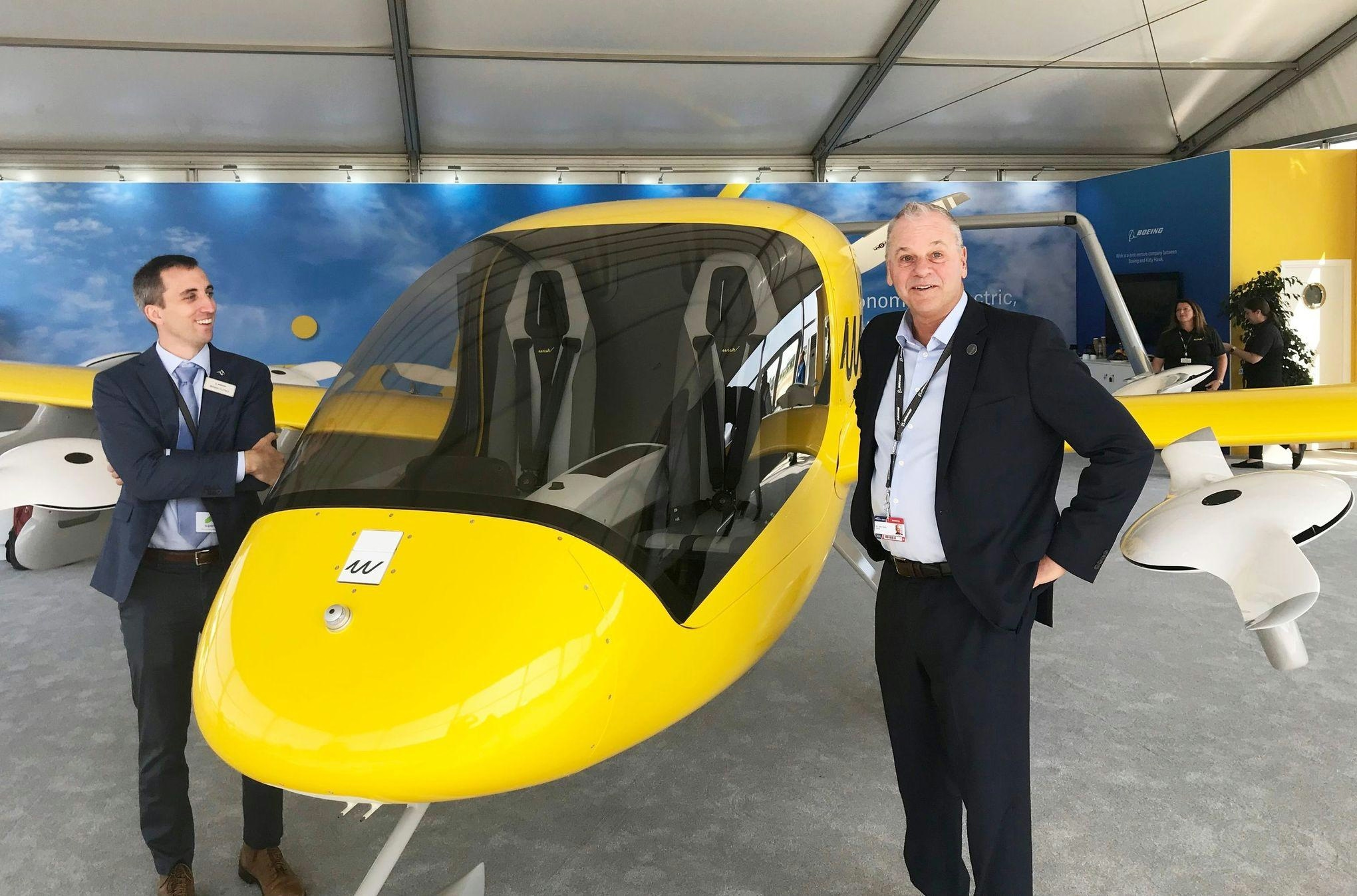
British aerospace startup Vertical Aerospace has disclosed that the UK government is considering acquiring a military variant of its electric flying taxi, as the company intensifies efforts to obtain regulatory approval for commercial passenger operations. The announcement coincided with the unveiling of Vertical’s prototype at the Farnborough International Airshow, located west of London, where the company also secured an additional £10 million government grant. This latest funding brings the total UK state investment in Vertical Aerospace to £48 million.

Vertical’s aircraft belongs to a new generation of electric vertical takeoff and landing (eVTOL) vehicles designed to revolutionize urban transportation. These aircraft offer quieter landings compared to traditional helicopters and produce zero direct emissions, making them appealing for both civilian and military use. On Monday, Vertical’s Valo model successfully completed its first public demonstration, transitioning from winged flight to vertical hover and executing a smooth landing on the Farnborough runway.

Challenges and Competition in the eVTOL Sector

Despite the promising technology, the eVTOL industry faces considerable challenges. Numerous companies have struggled to bring passenger flights to market, with several collapsing following the post-pandemic investment downturn. Vertical Aerospace itself narrowly avoided insolvency in 2024, a crisis that precipitated the departure of founder Stephen Fitzpatrick and the company’s acquisition by US distressed debt investor Jason Mudrick. Currently, Vertical is navigating the complex certification process with the UK Civil Aviation Authority, targeting a commercial launch by 2029, a timeline that has been pushed back from earlier projections.

The competitive landscape is intense. US-based Joby Aviation, which recently conducted public test flights between New York’s JFK airport and Manhattan, stands as a prominent rival. Other key players include Eve, supported by Brazilian jet manufacturer Embraer; Archer Aviation, developing its Thunder hybrid eVTOL in partnership with defense firm Anduril; and several emerging Chinese startups. The industry is also closely monitoring the US Federal Aviation Administration’s pilot program, which involves Joby and Electra, as it gathers operational data to shape future regulatory frameworks.

Military Interest and Technological Innovations

The UK military’s interest in eVTOL technology reflects a broader global trend among armed forces seeking innovative mobility solutions. Vertical Aerospace is developing a hybrid version of its aircraft that combines electric motors with a gas turbine engine to extend range and enable faster refueling. According to Vertical CEO Stuart Simpson, this hybrid system “leverages the commercial airframe, but with a different powertrain, which the military are very interested in.” The hybrid configuration could facilitate silent takeoffs and landings while offering a cruising range of up to 1,000 miles.

Nonetheless, safety and regulatory concerns persist. The sector has come under scrutiny following a lawsuit against Boeing-owned Wisk Aero, which alleges that software testing was curtailed to meet stringent deadlines. Furthermore, the widespread deployment of eVTOLs will necessitate the development of new infrastructure for takeoff and landing sites beyond existing airports, posing logistical challenges for both civilian and military operators.

As Vertical Aerospace and its competitors advance toward certification, the future of the eVTOL industry hinges on overcoming significant technical, regulatory, and operational obstacles. The UK government’s engagement signals growing momentum, yet the broad adoption of electric flying taxis remains several years away.

More news
Farnborough News Summary, July 21, 2026

Farnborough News Summary, July 21, 2026

Farnborough News Summary, July 21, 2026 Milestone in Hybrid Electric Flight GE Aerospace has achieved a landmark in aviation by successfully completing the first hybrid electric flight above 30,000 feet, a cruising altitude typical for commercial passenger aircraft. This accomplishment, realized in collaboration with NASA, BETA Technologies, and Boeing, underscores the potential of more electric aircraft engine systems to shape the future of flight. The test campaign included a hybrid electric operation lasting over two hours, setting a new industry standard for endurance. The record-setting flights utilized a modified Saab 340B as part of NASA’s Electrified Powertrain Flight Demonstration (EPFD) project. The aircraft’s right nacelle was inverted and specially ventilated to accommodate GE Aerospace’s fully integrated megawatt-class, multi-kilovolt hybrid electric propulsion system. This advanced system incorporates GE-developed motor/generators, power converters, controllers, Avio Aero gearboxes, Dowty propellers, Unison heat exchangers, and a CT7 engine. BAE Systems supplied the batteries, while Boeing subsidiary Aurora Flight Sciences provided the complete nacelle, highlighting a complex collaboration across multiple aerospace leaders. Strategic Partnerships and Sustainability Initiatives In a separate announcement, GE Aerospace revealed a five-year agreement with the Air France KLM Group—including Air France, Hop!, and Transavia France—to deploy its Fuel Insight analytics solution across the entire group. Already in use by KLM, KLC, Martinair, and Transavia Holland, Fuel Insight will support enhanced fuel optimization, sustainability reporting, and foster greater internal collaboration and best-practice sharing within the group. Meanwhile, Air Canada and Airbus unveiled plans to establish a Sustainability Co-Investment Platform aimed at accelerating the development of a commercial-scale Sustainable Aviation Fuel (SAF) industry in Canada. The initiative, which plans to invest up to CAD 13.7 million (approximately US$10 million), is contingent on supportive public policy and seeks to advance a Canadian SAF project toward a final investment decision. Both companies emphasized the critical role of industry-government collaboration to ensure domestic SAF production, price competitiveness, and the affordability of air travel. This effort aligns with ongoing advocacy through the Canadian Sustainable Aviation Fuel Coalition (C-SAF). Industry Trends and Market Dynamics The Farnborough Airshow also highlighted broader industry trends, particularly the growing market interest in emerging technologies such as electric vertical takeoff and landing vehicles (eVTOLs) and drones. This shift in focus may redirect investment away from traditional aerospace sectors, intensifying competition among established suppliers. New entrants like Phinia, which is expanding into the European market with precision laser machining technology, face significant challenges from entrenched aerospace giants. Despite these obstacles, Phinia’s market entry was met with positive reception, prompting major players including Airbus and Boeing to sharpen their innovation and market positioning strategies. Both Airbus and Boeing secured substantial orders during the event, underscoring the dynamic and competitive nature of the aerospace sector. As the industry continues to evolve, the Farnborough Airshow served as a platform not only for showcasing technological breakthroughs and sustainability initiatives but also for revealing the shifting priorities and competitive pressures that will shape the future of aerospace.
AIP Capital and Bridgepoint Order Eleven CFM LEAP-1B Engines to Expand Portfolio

AIP Capital and Bridgepoint Order Eleven CFM LEAP-1B Engines to Expand Portfolio

AIP Capital and Bridgepoint Expand Portfolio with Eleven CFM LEAP-1B Engine Order AIP Capital and Bridgepoint have formalized an agreement to acquire eleven CFM LEAP-1B spare engines from CFM International, significantly enhancing their joint venture’s commercial aircraft engine portfolio, which now exceeds a valuation of $1 billion. Scheduled for delivery between 2027 and 2029, these engines will be leased to airlines, maintenance, repair and overhaul (MRO) providers, and other aviation operators. This leasing model enables operators to access additional engine capacity without the financial burden of outright ownership, thereby supporting fleet availability during routine maintenance or unforeseen repairs. Strengthening a Strategic Partnership Amid Industry Challenges This latest order builds upon the partnership initiated in 2024, when AIP Capital and Bridgepoint jointly acquired an initial batch of LEAP-1B engines from CFM International. By expanding their holdings in next-generation aviation assets, the firms aim to diversify across engine types, customer bases, and lease durations. This strategic positioning is intended to meet a broad spectrum of airline and maintenance requirements, reinforcing the joint venture’s role in the evolving aviation market. The order arrives at a time when the aviation industry continues to grapple with supply chain disruptions stemming from the COVID-19 pandemic. These ongoing challenges have the potential to affect delivery schedules and operational planning. Market responses to the acquisition have been mixed; while some investors regard the deal as a calculated expansion, others express concern over heightened competition among engine manufacturers. In reaction, competitors may intensify efforts to enhance their engine offerings or secure additional orders to maintain market share. CFM International’s Technological Edge and Industry Impact CFM International, a 50-50 joint venture between GE Aerospace and Safran Aircraft Engines, recently achieved certification for durability kits designed for LEAP-1B engines. This advancement is expected to provide a competitive edge by improving engine reliability and maintenance efficiency. The LEAP engine family is widely recognized for its blend of reliability, performance, and fuel efficiency—qualities that are increasingly critical as the aviation sector intensifies efforts to reduce its environmental footprint. AIP Capital’s investment aligns with its focus on asset-based finance, particularly in aviation and equipment financing. The firm and its affiliates currently manage approximately $7.1 billion in assets on behalf of a global investor base. Bridgepoint, operating through a diverse investment platform that includes private equity, infrastructure, credit, secondaries, and private wealth, manages around $98 billion in assets across Europe, North America, and Asia. Since 2008, Bridgepoint Credit has invested more than €22 billion across over 350 companies. This engine partnership offers both firms enhanced exposure to aviation assets supported by sustained long-term demand for commercial fleet operations and maintenance. Perspectives from Industry Leaders Mathew Adamo, Managing Partner at AIP Capital, emphasized the significance of the order, stating, “This order reflects another milestone in both our partnership and strategy with CFM. We are excited to continue expanding upon our successful relationship with CFM and recognize the reliability, fuel efficiency, and performance of the LEAP engine family.” Rohit Dhote, Partner and Co-Head of Credit Opportunities at Bridgepoint, added, “We are excited to acquire these engines in partnership with AIP and CFM. CFM has continued to distinguish itself with these in-demand, state-of-the-art engines.” Gaël Méheust, President and CEO of CFM International, remarked, “We are proud to further expand our relationship with AIP Capital and Bridgepoint. This agreement bolsters our shared mission to reduce aviation’s environmental impact while providing industry-leading reliability and exceptional service and support.”
Airlines Obtain OEM-Approved LEAP Engine Repairs in Asia

Airlines Obtain OEM-Approved LEAP Engine Repairs in Asia

Airlines Secure OEM-Approved LEAP Engine Repairs in Asia HAECO, a prominent global Maintenance, Repair and Overhaul (MRO) provider, has entered into a strategic partnership with Woodward (NASDAQ: WWD), a leading aerospace and industrial controls company, to support the worldwide fleet of CFM International LEAP engines. Announced on July 21, 2026, this long-term agreement designates HAECO as an Elite Licensed Repair Service Facility (LRSF), authorizing it to deliver comprehensive MRO services for Woodward’s fuel control, engine actuation, and air management systems across the LEAP-1A, LEAP-1B, and LEAP-1C engine variants. Expanding OEM-Aligned Support in Asia-Pacific Through this collaboration, HAECO becomes part of Woodward’s Elite LRSF network, significantly enhancing OEM-approved component repair capabilities within the Asia-Pacific region and mainland China. This development positions HAECO as a critical support hub, providing localized repair services closer to operators in one of the fastest-growing aviation markets globally. The partnership addresses the increasing demand among Asian airlines for OEM-certified repairs, which are essential to maintaining operational reliability and maximizing fleet availability. Despite the growing market confidence in the LEAP engine, demonstrated by substantial orders from carriers such as BOC Aviation and IndiGo, operators continue to face challenges. These include securing upgraded durability kits, navigating complex supply chain logistics, and managing cost pressures amid rising demand. The agreement with Woodward enables HAECO to meet these challenges by offering timely, high-quality repair solutions aligned with OEM standards. Competitive Dynamics and Strategic Positioning The MRO sector supporting LEAP engines is witnessing intensified competition as providers expand their capabilities to accommodate the surging demand. Safran recently inaugurated a new engine maintenance facility in Mexico, while ST Engineering is aggressively expanding its MRO footprint. These moves highlight the competitive environment in which HAECO and Woodward’s partnership seeks to deliver superior service and turnaround times. For HAECO, the Elite LRSF designation not only consolidates its reputation as a trusted global MRO provider but also enhances its technical expertise and lifecycle support capabilities. Leveraging its established operations in Hong Kong and Xiamen, HAECO is well-positioned to support airline customers across the region with OEM-authorized repairs. George Edmunds, Group Director of Component and Engine Services at HAECO, described the agreement as a “significant milestone” in the company’s expansion into LEAP engine component support. He emphasized that being selected as one of Woodward’s Elite Licensed Repair Service Facilities strengthens HAECO’s role as a leading support hub in Asia-Pacific and mainland China, while also enabling it to serve airline customers worldwide. John DiSilvestro, Vice President of Sales, Marketing and Service at Woodward, noted that the agreement expands Woodward’s global support network and enhances the availability of reliable, high-quality repair solutions for its components on CFM International LEAP engines. As the global LEAP engine fleet continues to grow rapidly, the partnership between HAECO and Woodward is poised to play a crucial role in delivering consistent, OEM-approved maintenance solutions to airlines throughout Asia and beyond.
Lufthansa Technik Expands Maintenance Partnership with Cebu Pacific

Lufthansa Technik Expands Maintenance Partnership with Cebu Pacific

Lufthansa Technik Strengthens Maintenance Partnership with Cebu Pacific Cebu Pacific has extended its collaboration with Lufthansa Technik (LHT) through a new three-year agreement, under which the German maintenance provider will undertake 18 additional shop visits for CFM56-5B engines powering the airline’s Airbus A320ceo fleet. This contract represents the conclusion of Cebu Pacific’s maintenance, repair, and overhaul (MRO) tender for its legacy narrow-body engines, coinciding with the Philippine carrier’s accelerated transition to the Airbus A320neo family equipped with next-generation engines. Maintenance Operations and Strategic Implications The engines covered by the agreement will be serviced at Lufthansa Technik’s facilities in Hamburg, Germany, and Dublin, Ireland. The scope of work encompasses routine repairs as well as comprehensive overhauls, with the first engine scheduled to arrive at the Dublin site by the end of the month. Dennis Kohr, Senior Vice President of Corporate Sales Asia-Pacific at Lufthansa Technik, highlighted that this marks the third engine maintenance contract between the two companies, reflecting a well-established partnership within the Asia-Pacific region. This expanded collaboration presents operational challenges for Lufthansa Technik, which must scale up its capacity to manage the increased workload from Cebu Pacific. Servicing engines from Southeast Asia at European facilities introduces logistical complexities, including transportation and turnaround times, which industry analysts are monitoring closely. Maintaining Lufthansa Technik’s reputation for quality and reliability amid these demands will be critical. Competitive Landscape and Future Considerations The agreement unfolds within a competitive MRO environment, where regional providers such as Singapore Airlines Engineering Company may vie for business from Cebu Pacific and other carriers in Southeast Asia. As Cebu Pacific continues its fleet modernization, plans to introduce Starlink onboard connectivity by 2027 could further influence maintenance requirements. Lufthansa Technik may need to adapt its service strategies to accommodate new in-flight technologies, ensuring seamless integration with evolving aircraft systems. As Cebu Pacific advances its fleet renewal and digital transformation initiatives, the reinforced partnership with Lufthansa Technik is poised to play a central role in supporting the airline’s operational reliability and growth objectives.
BOC Aviation Orders 220 Engines Powered by GTF Technology

BOC Aviation Orders 220 Engines Powered by GTF Technology

BOC Aviation Places Landmark Order for 220 GTF Engines BOC Aviation has announced its largest-ever engine order with Pratt & Whitney, selecting up to 220 geared turbofan (GTF) engines to power as many as 110 Airbus A320neo-family aircraft. This agreement extends the lessor’s 29-year partnership with Pratt & Whitney, a subsidiary of RTX, and marks a significant expansion of BOC Aviation’s narrow-body aircraft portfolio. Rick Deurloo, President of Commercial Engines at Pratt & Whitney, highlighted that the order reflects BOC Aviation’s sustained confidence in the GTF engine, emphasizing its superior fuel efficiency and the strength of the companies’ longstanding collaboration. Steven Townend, Chief Executive and Managing Director of BOC Aviation, described the deal as the largest the company has ever placed with Pratt & Whitney. He underscored the critical role of the GTF engine in supporting the lessor’s fleet growth, noting that its reduced fuel consumption will enhance the operational efficiency of BOC Aviation’s future aircraft. Strategic Expansion Amid Industry Trends This announcement follows closely on the heels of BOC Aviation’s record-setting order for 300 CFM International Leap engines, which includes 200 Leap-1A engines for Airbus A320neo-family aircraft and 100 Leap-1B engines for Boeing 737 Max-family jets. Together, these transactions represent the largest engine deals in the company’s history and underscore its commitment to equipping its fleet with fuel-efficient, technologically advanced propulsion systems. Market response to these orders has been broadly positive, reinforcing BOC Aviation’s strategic focus on next-generation engine technologies. By investing in both Pratt & Whitney’s GTF and CFM International’s Leap engines, the company aligns itself with a wider industry movement aimed at improving fuel efficiency and reducing operating costs. Industry analysts suggest that such substantial commitments may encourage competitors to pursue similar agreements to secure access to cutting-edge engine technologies, especially as CFM International continues to address durability challenges through ongoing enhancements to the Leap engine family. Through these expanded partnerships with leading engine manufacturers, BOC Aviation is positioning itself to meet the growing demand for modern, efficient narrow-body aircraft while advancing its long-term fleet growth and sustainability objectives.
FAA Advances Next-Generation Aviation Technologies

FAA Advances Next-Generation Aviation Technologies

FAA Advances Next-Generation Aviation Technologies The U.S. Federal Aviation Administration (FAA) is intensifying efforts to modernize the nation’s airspace by integrating emerging aviation technologies such as air taxis, supersonic aircraft, and expanded drone operations. At the Farnborough Airshow, FAA Deputy Administrator Chris Rocheleau emphasized the agency’s dedication to fostering innovation through the development of updated and forward-looking regulatory frameworks. Pilot Programs and Regulatory Innovation Central to the FAA’s modernization strategy is a pilot program focused on electric vertical takeoff and landing (eVTOL) aircraft. This initiative aims to facilitate the safe entry of air taxi companies into national airspace by leveraging data collected from eight partner companies operating across 26 states. The FAA’s approach draws parallels to the regulatory models that supported the emergence of self-driving cars, anticipating a growing urban demand for rapid, on-demand transportation solutions. By carefully managing the integration of these new technologies, the agency seeks to ensure both safety and efficiency in the evolving aviation landscape. Challenges and Market Dynamics The transition to next-generation aviation technologies presents considerable challenges. Integrating novel systems with existing infrastructure requires sophisticated solutions to maintain seamless operations. The FAA must also confront potential cybersecurity risks associated with increasingly interconnected and advanced aviation systems. Furthermore, the shift demands comprehensive retraining and support for pilots and air traffic controllers adapting to new technologies and operational procedures. This modernization effort is simultaneously reshaping the competitive landscape. Increased investment and strategic partnerships are emerging, exemplified by the collaboration between Airbus and Lockheed Martin to develop artificial intelligence-enabled aviation solutions. Industry competitors are responding with their own innovations, including Garmin’s G2000 Prime avionics suite and Iridium’s GNSS anti-jamming and spoofing chips. Additionally, companies such as Air Space Technologies are securing contracts to supply critical air traffic control technologies, highlighting the growing momentum toward modernization. Supersonic Flight and Regulatory Updates In parallel with these initiatives, the FAA is preparing to revise regulations governing supersonic flights, which have been prohibited over land since 1973. The agency intends to establish new acceptable noise standards by mid-2027, potentially enabling the resurgence of commercial supersonic travel. Following the establishment of these standards, certification processes for supersonic aircraft are expected to commence. As the FAA advances these efforts, it remains committed to balancing innovation with safety and operational efficiency, aiming to position the United States at the forefront of next-generation aviation technologies.
Turkish Technic Expands Maintenance Partnership with GE Aerospace

Turkish Technic Expands Maintenance Partnership with GE Aerospace

Turkish Technic Expands Maintenance Partnership with GE Aerospace Turkish Technic has solidified its presence in the global maintenance, repair, and overhaul (MRO) market by entering into a five-year service and licence agreement with GE Aerospace. This expanded partnership authorises Turkish Technic to provide original equipment manufacturer (OEM)-approved maintenance services for Data Link Control and Display Units (DCDUs), significantly enhancing its avionics support capabilities. These services will be offered to both domestic and international airline customers from Turkish Technic’s facilities in Istanbul. Strengthening Avionics Maintenance Capabilities Under the terms of the agreement, GE Aerospace will supply Turkish Technic with dedicated test equipment, OEM parts, technical data, and engineering support. This collaboration enables Turkish Technic to perform maintenance on cockpit data-link communication systems in strict accordance with manufacturer standards. Yasin Birinci, Chief Technical Officer of Turkish Technic, highlighted that the partnership will not only improve the company’s electronics maintenance capabilities but also increase service availability for airline operators. This, in turn, is expected to reduce aircraft downtime and enhance overall fleet performance. Navigating a Competitive MRO Landscape The expansion of this partnership occurs amid intensifying competition within the aviation MRO sector. Competitors such as MTU are aggressively targeting the CFM International engine aftermarket, leveraging extensive portfolios and technical expertise to capture greater market share. This competitive environment presents challenges for both Turkish Technic and GE Aerospace as they strive to secure and expand their customer base. Despite these pressures, GE Aerospace has maintained strong financial performance, reporting robust earnings in the second quarter of 2024 alongside growing demand for jet engines and defense systems. The company’s stock has shown resilience despite investor caution surrounding the evolving market dynamics. The collaboration with Turkish Technic positions both companies to effectively respond to the increasing complexity of the global MRO market and shifting industry trends. By broadening its authorised maintenance services, Turkish Technic aims to reinforce its status as a key player in aviation services. Meanwhile, GE Aerospace continues to leverage strategic partnerships to sustain its leadership within the aerospace sector.
Turkish Airlines Explores Acquisitions in Asia and Latin America

Turkish Airlines Explores Acquisitions in Asia and Latin America

Turkish Airlines Pursues Strategic Acquisitions in Asia and Latin America Turkish Airlines is actively seeking acquisition opportunities in Asia and Latin America as part of its broader strategy to expand its global aviation presence. Chairman Murat Seker revealed in an interview with Bloomberg TV that the airline is targeting these regions to strengthen its international footprint amid ambitious growth plans. This strategic direction follows Turkish Airlines’ agreement last August to acquire a minority stake in Spanish carrier Air Europa. The investment, valued at €300 million ($342.7 million), will secure Turkish Airlines a 25% to 27% share in Air Europa once finalized. This move is expected to enhance the airline’s connectivity in Latin America and the Iberian Peninsula, leveraging Air Europa’s extensive route network to complement Turkish Airlines’ existing operations. The carrier already maintains a 50% stake in SunExpress, a leisure airline joint venture with Germany’s Lufthansa established in 1989. Diversification Beyond Passenger Airlines In addition to expanding its passenger airline portfolio, Turkish Airlines is exploring investments in cargo operators and companies specializing in maintenance, repair, and overhaul (MRO) services. The airline has been actively growing its maintenance capabilities through Turkish Technic, which joined Rolls-Royce’s global MRO network in May 2025. Furthermore, Turkish Airlines is developing a $300 million engine maintenance facility at Istanbul Airport, scheduled to open in 2027. This center will service advanced engine models such as the Trent XWB-84, Trent XWB-97, and Trent 7000, with an annual capacity of 200 shop visits, catering to both Turkish Airlines and third-party clients. Earlier this year, the airline initiated a ₺100 billion ($2.1 billion) expansion program at Istanbul Airport. This project includes the second phase of the SmartIST cargo hub, additional maintenance hangars, and the new engine maintenance center, underscoring Turkish Airlines’ commitment to enhancing its operational infrastructure. Challenges Amid Expansion and Market Dynamics Despite these ambitious plans, Turkish Airlines faces considerable challenges. Acquisitions in Asia and Latin America will require navigating complex regulatory frameworks, managing integration costs, and contending with intensified competition. Investor sentiment has been mixed, with some expressing concerns about the financial risks associated with rapid expansion. Competitors may respond aggressively through pricing strategies or by forging new alliances to counter Turkish Airlines’ growing influence. The airline’s operational environment is further complicated by geopolitical tensions in the Gulf region, which have driven up oil prices and could impact operational costs and profitability across the aviation sector. Operational Performance and Fleet Renewal Turkish Airlines experienced a temporary increase in passenger demand during the Iran conflict, as airspace closures and traveler apprehensions redirected traffic toward the carrier. However, this surge was short-lived as regional operations stabilized and airspace restrictions were lifted. Passenger traffic figures showed variability in recent months, with 7.2 million passengers in March (a 16% year-on-year increase), 7.2 million in April (a 2.9% decline), 7.9 million in May (a 3.7% rise), and 8.1 million in June (a 1.6% decrease). Overall, the airline transported 44.5 million passengers in the first half of the year, marking a 5.5% increase compared to the same period last year. Concurrently, Turkish Airlines is advancing one of the industry’s largest fleet renewal and expansion initiatives. The airline is in the final stages of negotiating an order for 150 Boeing 737 MAX aircraft, comprising 100 firm orders and 50 purchase options. Discussions are currently focused on engine supplier CFM International, following the conclusion of commercial terms with Boeing.
Unison and Lufthansa Technik Sign 15-Year Maintenance Agreement for CFM LEAP Engines

Unison and Lufthansa Technik Sign 15-Year Maintenance Agreement for CFM LEAP Engines

Unison and Lufthansa Technik Forge 15-Year Maintenance Partnership for CFM LEAP Engines Unison, a GE Aerospace subsidiary specializing in advanced aerospace systems and components, has formalized a 15-year maintenance agreement with Lufthansa Technik, a prominent independent provider of maintenance, repair, and overhaul (MRO) services. Announced at the Farnborough Airshow in the United Kingdom, the partnership is designed to enhance aftermarket support for fleets powered by CFM LEAP engines across Europe. Exclusive MRO Services for LEAP Ignition Systems Under the terms of the agreement, Lufthansa Technik will serve as the exclusive Unison-authorized provider of MRO services for the ignition systems of CFM International’s LEAP-1A, LEAP-1B, and LEAP-1C engines within the European region. The scope of services includes maintenance of critical ignition system components such as exciters and leads, which will be performed at Lufthansa Technik’s facilities in Hamburg. Unison will supply genuine original equipment manufacturer (OEM) parts and technical data, while Lufthansa Technik will be authorized to manage warranties for all serviced components. This collaboration significantly expands Unison’s aftermarket support network, offering operators of LEAP-powered aircraft in Europe a dedicated OEM-authorized option for ignition system maintenance. Despite the partnership, both companies will continue to operate independently and compete globally for repair and overhaul contracts. Kranthi Tata, President and CEO of Unison, emphasized the strategic importance of the agreement, stating, “This agreement underscores our commitment to strengthening the aftermarket network our customers depend on for reliability, responsiveness, and long-term fleet support. By working with Lufthansa Technik, we are enhancing the regional MRO network for LEAP ignition systems and expanding service capabilities for operators in Europe.” Henning Linnekogel, Senior Director of OEM Partner Management at Lufthansa Technik, highlighted the company’s expertise, noting, “With more than 50 years of experience in aircraft ignition systems across all major platforms, we are proud to partner with Unison. Our repair development skills and passion for parts make us the perfect match for Unison’s product line.” Industry Challenges and Competitive Dynamics The agreement arrives amid ongoing challenges within the aviation industry. Airlines continue to grapple with elevated costs stemming from engine shortages and prolonged turnaround times, issues recently underscored by IATA Director General Willie Walsh. Persistent supply chain disruptions and concerns over engine reliability have heightened pressure on MRO providers to deliver timely and effective support. The competitive environment further complicates the landscape. MTU Aero Engines, a significant player in the CFM engine aftermarket with an extensive portfolio of manufacturer authorizations, is expected to intensify efforts to capture market share. MTU’s established expertise with GE Aerospace products may prompt heightened competition, compelling Unison and Lufthansa Technik to demonstrate superior service quality and reliability. Both companies stress that this partnership forms part of a broader strategic initiative to meet evolving market demands. Unison aims to expand its aftermarket presence, while Lufthansa Technik seeks to broaden its MRO offerings for emerging engine types. By leveraging their combined technical expertise and global networks, the collaboration is positioned to provide comprehensive support throughout the lifecycle of in-service LEAP fleets. Company Profiles Unison, a GE Aerospace company, is a global supplier of advanced gas turbine engine components and electrical and mechanical systems, serving the aviation, space, and defense sectors worldwide. Lufthansa Technik Group is a leading provider of technical aircraft services, employing over 23,000 personnel globally. Its portfolio encompasses maintenance, repair, overhaul, modification, and digital fleet support for commercial, VIP, and special mission aircraft.
SmartKargo and Sun Phu Quoc Airways Partner to Digitize Cargo Operations

SmartKargo and Sun Phu Quoc Airways Partner to Digitize Cargo Operations

SmartKargo and Sun Phu Quoc Airways Partner to Digitize Cargo Operations CAMBRIDGE, Mass., July 21, 2026 — SmartKargo, a leading provider of cloud-native air cargo management solutions, has entered into a strategic partnership with Sun Phu Quoc Airways, Vietnam’s premium full-service airline developed by Sun Group. This collaboration will see Sun Phu Quoc Airways implement the SmartKargo platform to establish a modern, scalable, and fully digitized cargo business, marking a significant milestone in the airline’s commercial growth strategy. Advancing Cargo Operations Through Digital Innovation Sun Phu Quoc Airways aims to position cargo as a central pillar of its expansion by leveraging SmartKargo’s unified cloud architecture. The airline intends to enhance operational efficiency and competitiveness as it broadens its international network and reinforces Phu Quoc’s role as a regional aviation gateway. The planned introduction of Airbus A330 wide-body aircraft in September 2026 will substantially increase the airline’s belly cargo capacity, underscoring the timely need for a robust cargo management system. Vietnam’s air cargo sector is experiencing rapid growth, driven by a booming export economy, surging e-commerce, and the country’s emergence as a manufacturing and logistics hub in Southeast Asia. By adopting SmartKargo’s platform from the outset, Sun Phu Quoc Airways is strategically positioned to capitalize on these trends with agility and operational precision. Challenges and Industry Implications Despite the promising outlook, the partnership faces notable challenges. Integrating digital cargo operations within a fragmented global logistics ecosystem will require meticulous coordination and data alignment. Overcoming issues related to data distrust and managing the complexities of specialized cargo, such as chemicals, will be critical to the initiative’s success. Market analysts observe that initial reactions may be cautious due to volatility in the air cargo sector; however, successful implementation and stabilization could stimulate broader industry interest in digitalized cargo solutions. Competitors are expected to accelerate enhancements to their own digital platforms and logistics capabilities in response, aiming to maintain their market positions. Truong Ngo Quoc, Chief Information Officer at Sun Phu Quoc Airways, emphasized the airline’s commitment to technology-led growth, stating, “We are building our cargo business to be technology-led, commercially agile, and ready to scale. After a rigorous evaluation, SmartKargo emerged as the partner best suited to support our growth ambitions. Their platform provides the digital infrastructure we need to compete regionally and globally, and we look forward to setting a new standard for cargo excellence in Vietnam’s aviation market.” Olivier Houri, Chief Revenue Officer at SmartKargo, highlighted the strategic importance of the partnership, saying, “Southeast Asia is one of the world’s most dynamic air cargo markets, with Vietnam at its core. We are proud to support Sun Phu Quoc Airways as they pursue an ambitious vision for their cargo operations. This partnership reflects our shared commitment to digital transformation and operational excellence in air freight.” As Sun Phu Quoc Airways embarks on this digital transformation journey, its collaboration with SmartKargo is poised to play a pivotal role in shaping the airline’s cargo operations and advancing Vietnam’s position within the global air cargo industry.
line









