
图像

将人工智能洞察转化为可执行行动

立即加入 AeroGenie 候补名单!

热门趋势

Categories

Volaris Delays Fleet Expansion Pending Availability of GTF Advantage Engines
April 30, 2026By ePlane AI
Volaris Delays Fleet Expansion Pending Availability of GTF Advantage Engines
0
0
Volaris
GTF Advantage Engines
Airbus A320neo

Volaris Delays Fleet Expansion Pending Availability of GTF Advantage Engines

Strategic Shift in Fleet Management

Mexican low-cost carrier Volaris has announced a significant revision to its fleet expansion plans, driven by ongoing groundings of Airbus A320neo-family aircraft and escalating fuel costs. The airline is adopting a more streamlined and efficient fleet strategy by deferring new Airbus deliveries into the next decade. This approach aims to reduce lease liabilities and enhance operational efficiency amid current market challenges.

During the company’s April 28 earnings call, CEO Enrique Beltranena outlined the planned fleet adjustments. He stated that the contractual fleet size is expected to decrease from 155 aircraft in December 2025 to approximately 137 by the end of 2027. However, the productive, revenue-generating fleet will grow to around 125 aircraft, up from 112 at the close of 2025. Beltranena highlighted that this transition is designed to unlock significant efficiency gains for the airline.

In practical terms, Volaris has already sold four Airbus aircraft scheduled for delivery to a lessor and postponed the arrival of seven aircraft originally slated for 2027, along with three more planned for 2028. These deliveries have been rescheduled for 2030 or later. The airline projects that this fleet reduction initiative will reduce total lease liabilities by $360 million and yield approximately $50 million in annual savings.

Impact of GTF Advantage Engine Availability

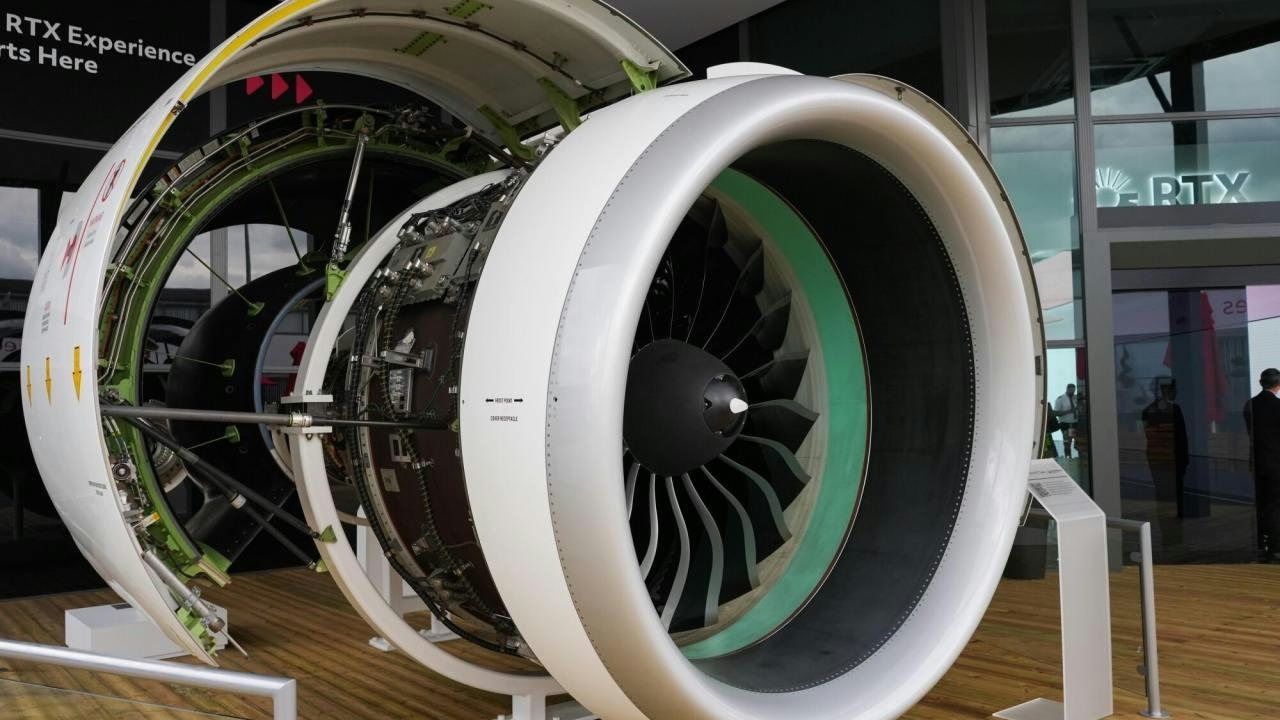
A critical factor influencing Volaris’s decision is the delayed availability of Pratt & Whitney’s GTF Advantage engines, which are integral to the airline’s A320neo-family jets. Although these engines have received certification from both the Federal Aviation Administration and the European Union Aviation Safety Agency, Pratt & Whitney continues to grapple with production challenges and ongoing quality inspections following a manufacturing issue identified in July 2023. Consequently, Volaris has paused incremental aircraft investments until the new engines become available.

Beltranena emphasized the importance of this development, noting, “Most 2027 and 2028 deliveries have been rescheduled, and no incremental aircraft investments will be made until the GTF Advantage engines enter service. Ultimately, the most powerful value-creation lever over the next several years is restoring fleet productivity and reducing aircraft ownership costs.”

The forthcoming GTF Advantage engines are expected to incorporate more durable components, including double-walled structures and advanced cooling systems designed to mitigate wear caused by high operating temperatures. Pratt & Whitney plans to gradually ramp up deliveries, aiming to supply only Advantage turbofans by 2028.

Operational Challenges and Future Outlook

The grounding of A320neo-family jets has had a pronounced impact on Volaris, which began the year with 41 grounded aircraft out of a total fleet of 155. By the end of the first quarter, this number had decreased to 32, aided by increased maintenance capacity and accelerated production of critical engine components. Parent company RTX reports a 15% reduction in grounded jets across the industry.

Volaris’s leadership anticipates that returning more A320neo-family jets to service will enhance fleet efficiency and help mitigate the effects of rising fuel prices. Beltranena noted that shifting every 10 aircraft from older A320ceo models to A320neos generates approximately $2 million in monthly fuel savings at current price levels.

Looking ahead, Volaris expects that by year-end, 70% of its operating fleet will consist of newer, more fuel-efficient Airbus narrowbodies. The airline’s decision to delay fleet growth until the GTF Advantage engines become widely available reflects broader industry concerns regarding engine reliability, maintenance costs, and the necessity for operational resilience amid ongoing supply chain disruptions.

More news
Why AI Trustworthiness Depends on Its Surrounding Systems

Why AI Trustworthiness Depends on Its Surrounding Systems

Why AI Trustworthiness Depends on Its Surrounding Systems Artificial intelligence is becoming an essential component of aviation’s operational framework, particularly across the Asia-Pacific region. AI technologies are already enhancing aircraft sequencing, predictive maintenance, situational awareness, and the management of increasingly complex air traffic systems. As AI integration deepens, the critical question shifts from the sophistication of AI itself to whether it can be trusted in environments where safety, security, and operational continuity are paramount. This distinction is especially important in aviation, where technology is evaluated through a lens far more stringent than in most other industries. Unlike consumer AI applications, which can tolerate occasional errors, mission-critical aviation systems demand predictable and reliable performance. When AI supports pilots, air traffic controllers, and airport operators, trust is not merely desirable—it is an operational imperative. Trust in AI: A Systems Challenge Current discussions about AI often focus on model performance metrics such as scale, reasoning capabilities, and benchmark achievements. However, in aviation, technical excellence alone does not suffice. Airlines, airports, and air navigation service providers prioritize how AI behaves under adverse conditions—when weather deteriorates, communications falter, sensor inputs fluctuate, or rapid decisions are required. The deployment of AI in aviation necessitates systems that are not only accurate but also predictable and resilient. Trustworthiness must be engineered into the entire operational ecosystem, not just the AI model. AI systems in aviation do not function in isolation; they interact continuously with radar and sensor data, avionics, communication networks, cybersecurity frameworks, air traffic management platforms, and, critically, the human operators responsible for decision-making. The reliability of the overall system depends on the seamless integration and robust performance of these interconnected elements in real-world scenarios. Emerging Challenges: Security, Integration, and Accountability The pursuit of trustworthy AI introduces complex challenges, particularly as AI systems become integrated with existing Public Key Infrastructure (PKI) and as the adoption of agentic AI accelerates. The advent of post-quantum cryptography (PQC) is prompting a reassessment of cryptographic standards to ensure security against emerging quantum threats. These developments are driving demand for more resilient security architectures and heightened scrutiny of AI deployment within critical infrastructure. In response, industry competitors are developing advanced tools and frameworks to enhance PKI management, while international organizations such as the International Telecommunication Union (ITU) have established focus groups dedicated to ensuring the trustworthiness and accountability of agentic AI systems. These efforts highlight that building trusted AI is fundamentally a systems engineering challenge. It extends beyond improving model accuracy to encompass trusted data sources, resilient communications, secure architectures, rigorous validation processes, and meaningful human oversight. Singapore’s Role in Shaping Trusted AI Singapore is emerging as a leader in defining trusted AI for operational environments. Earlier this year, the government designated aviation as one of its National AI Missions, recognising that challenges in aircraft sequencing, air traffic management, and airport operations offer valuable testbeds for AI innovation. With the expansion of Changi Airport through Terminal 5 and increasing passenger volumes, the emphasis is not only on capacity growth but also on maintaining safe, resilient, and efficient automated operations. Singapore’s integrated aviation ecosystem—comprising regulators, airlines, airport operators, air navigation service providers, and technology firms—creates a unique collaborative environment for developing and testing new approaches to AI trustworthiness. Ultimately, the question in aviation is not whether an AI model alone can be trusted, but whether the entire operational system remains trustworthy once AI is incorporated. Trust in aviation is engineered into the system as a whole, ensuring safety, security, and continuity amid rapid technological advancement.
Qatar Airways Uses Retired Widebodies to Replace Grounded Airbus A350s

Qatar Airways Uses Retired Widebodies to Replace Grounded Airbus A350s

Qatar Airways Reactivates Retired Widebodies Amid Airbus A350 Grounding Qatar Airways has confronted a significant operational challenge following the grounding of a substantial portion of its Airbus A350 fleet. The Doha-based carrier, which operates a hub-and-spoke model centered on Hamad International Airport, was compelled to reactivate several retired and stored widebody aircraft to mitigate the sudden capacity shortfall. This move underscores the airline’s strategic adaptability amid an unprecedented regulatory and technical crisis. The A350 Grounding and Its Impact The crisis originated in mid-2021 when Qatari aviation authorities detected accelerated paint cracking and peeling on the composite fuselages of the airline’s A350 aircraft. Subsequent inspections revealed exposed expanded copper foil, a critical anti-static mesh, raising serious airworthiness concerns, particularly given the region’s extreme temperature fluctuations. As a result, the Qatari Civil Aviation Authority mandated the immediate withdrawal of 13 A350s, a number that eventually increased to 29 grounded aircraft. This abrupt loss of nearly 30 frontline widebodies severely disrupted Qatar Airways’ extensive network, which connects major global markets including North America, Europe, East Asia, and Australasia. The grounding threatened both passenger services and the airline’s substantial belly-freight operations, forcing reductions or cancellations of daily widebody frequencies. Narrowbody aircraft such as the Airbus A320 family were unable to compensate due to their limited range, cargo capacity, and premium seating configurations. Furthermore, the global backlog of new widebody deliveries precluded the immediate introduction of replacement aircraft. Strategic Redeployment of Legacy Aircraft In response, Qatar Airways reactivated legacy Airbus A330s and, notably, returned the Airbus A380 superjumbo to service in December 2021. The A380, previously retired and considered a financial liability during the pandemic, was reinstated as a critical asset to address the capacity gap. While this strategy provided a necessary stopgap, operating older, less fuel-efficient aircraft inevitably increased maintenance costs and reduced operational efficiency compared to newer models. This reliance on legacy widebodies comes at a time when competitors are aggressively modernizing their fleets. Brazilian carrier Gol plans to double its widebody capacity with new Airbus A330-900s, Riyadh Air is expanding with Boeing 787 Dreamliners and Airbus A350-1000s, and Scandinavian Airlines (SAS) has ordered 18 A330neos as part of a broader fleet renewal strategy. These developments are poised to intensify competition on key international routes, exerting pricing pressure and challenging Qatar Airways’ market position. Qatar Airways’ swift redeployment of retired widebodies highlights its operational resilience. However, as the aviation industry increasingly prioritizes fuel efficiency and innovation, the carrier’s dependence on older aircraft may represent a temporary measure in a rapidly evolving market landscape.
Executive Says Flying Cars Are Nearing Reality

Executive Says Flying Cars Are Nearing Reality

Flying Cars Poised to Enter the Market Soon, Says Industry Executive A California-based company is on the verge of bringing flying electric cars to consumers, with deliveries anticipated within the next year or possibly even sooner. Jim Dukhovny, CEO and co-founder of Alef Aeronautics, disclosed that his Silicon Valley startup has engineered lightweight, versatile vehicles priced at approximately $300,000 each. Innovative Design and Operational Details Dukhovny described the vehicle as functioning like a conventional car when on the road, featuring a largely mesh body designed to cover its propellers. Unlike traditional automobiles, the car is powered by four small engines mounted on the wheels rather than a single engine. He emphasized the safety of the design, asserting that it is “safer than any traditional aircraft, and it’s safer than any traditional car—mathematically,” during an interview on “Jesse Weber Live.” However, Dukhovny clarified that these vehicles will not be able to take off from congested traffic areas at will. Instead, they must launch from designated “safe areas,” such as the side of highways. The concept involves flying over traffic and then landing in another safe zone before rejoining the road to continue driving. The Growing Race for Urban Air Mobility Alef Aeronautics is entering a competitive and rapidly evolving market, where companies like Joby Aviation, Archer Aviation, and China’s Xpeng are all striving to capture a share of the anticipated urban air mobility sector. Investor sentiment has been largely optimistic, with many forecasting swift expansion once regulatory and infrastructure challenges are addressed. Despite the enthusiasm, significant obstacles remain. Securing regulatory approval from the Federal Aviation Administration (FAA) is a critical barrier, alongside the need to develop infrastructure for takeoff and landing beyond traditional airports. The industry is marked by both competition and collaboration; for instance, Archer Aviation has been involved in legal disputes while also partnering with defense technology firm Anduril Industries. Other players are advancing as well. Beta Technologies recently completed test flights under a U.S. government pilot program and aims to obtain FAA certification for its electric vertical takeoff and landing (eVTOL) aircraft by 2028. As these developments unfold, industry leaders like Dukhovny remain confident that the era of flying cars transitioning from science fiction to everyday reality is approaching rapidly.
United Airlines’ Lie-Flat Boeing 757 Dominated Premium Transcontinental Routes and Its Upcoming Replacement

United Airlines’ Lie-Flat Boeing 757 Dominated Premium Transcontinental Routes and Its Upcoming Replacement

United Airlines’ Lie-Flat Boeing 757: A Premium Transcontinental Icon Nears Retirement For nearly two decades, United Airlines’ Boeing 757-200 fleet has occupied a distinctive position in American aviation. Originally engineered as a versatile narrowbody aircraft for medium and long-haul routes, United transformed a significant portion of its 757s into a specialized platform for premium transcontinental service. Equipped with lie-flat business class seats, these aircraft delivered a level of comfort typically associated with widebody jets, while preserving the efficiency and operational flexibility inherent to a single-aisle design. United’s premium-configured 757s became emblematic of its most prestigious domestic routes, particularly those connecting Newark Liberty International Airport (EWR) with Los Angeles (LAX) and San Francisco (SFO). These flights catered primarily to business travelers who valued overnight comfort, direct schedules, and amenities comparable to international business class. Beyond domestic service, the same aircraft frequently operated transatlantic flights to thinner European markets where deploying larger jets would be economically challenging. This adaptability enabled United to optimize aircraft utilization while maintaining a consistent premium product across diverse markets. Origins and Configuration of the Premium 757 Fleet The inception of United’s premium 757 operation dates back to the early 2000s, when airlines began to recognize the distinct demands of the New York–California corridor. This route attracted a high concentration of corporate executives, financial professionals, and travelers from the entertainment and technology sectors—passengers with expectations for international-grade amenities. In response, United configured approximately 40 Boeing 757-200s with fully lie-flat business class seating, international-style dining, dedicated cabin crews, expanded in-flight entertainment, and enhanced airport services. Despite the aircraft’s relatively narrow fuselage, this configuration consistently garnered strong praise from business travelers. The premium cabin layout on these 757s featured 16 Polaris lie-flat business seats, complemented by 42 Economy Plus seats and 118 standard economy seats. This arrangement balanced comfort and capacity, enabling United to serve both premium and economy passengers effectively on high-demand transcontinental routes. Transition to a New Generation of Aircraft The era of United’s lie-flat 757s is now approaching its conclusion. Most of these aircraft are between 25 and 28 years old, ranking among the oldest in United’s frontline fleet. Rather than extending their operational lifespan, United is transitioning to a new generation of Airbus A321 family aircraft, including the long-range A321XLR. These newer jets promise enhanced fuel efficiency, improved passenger comfort, and significantly upgraded premium cabins. Notably, the A321XLRs will introduce an enhanced Economy Plus section featuring additional personal space, a built-in shared table, and the elimination of the middle seat to increase passenger comfort. This fleet renewal coincides with evolving competitive dynamics within the industry. Delta Air Lines, for instance, has introduced “basic business” fares that exclude lounge access and seat selection, reflecting a broader shift in premium product offerings. Similarly, other carriers are adjusting their fleets in response to economic pressures; Icelandair plans to retire its Boeing 757s earlier than anticipated due to rising fuel costs. As United phases out its iconic 757s, the airline closes a significant chapter in narrowbody aviation history while ushering in a new era of premium transcontinental travel. This transition highlights both the sustained demand for high-end domestic service and the relentless pace of innovation shaping the airline industry.
Virtual Fly Simulators Introduces SOLO PRO DA42 Multi-Engine Trainer

Virtual Fly Simulators Introduces SOLO PRO DA42 Multi-Engine Trainer

Virtual Fly Simulators Unveils SOLO PRO DA42 Multi-Engine Trainer **July 29, 2026 – Global** — Virtual Fly Simulators has introduced the SOLO PRO DA42, a single-seat flight training device designed to replicate the Diamond DA42 Twin Star aircraft. This new simulator aims to meet the increasing demand for advanced and cost-effective pilot training solutions amid ongoing pilot shortages and evolving regulatory standards worldwide. Advanced Features and Realism The SOLO PRO DA42 is developed on Virtual Fly’s established SOLO PRO platform and incorporates a 225-degree horizontal visual system composed of three 55-inch 4K displays. The cockpit faithfully reproduces the DA42’s layout, featuring a simulated Garmin G1000 NXi avionics suite, GFC 700 autopilot, MD302 standby instrument, retractable landing gear controls, and a centrally positioned control stick. The simulator accurately models the operation of the DA42’s twin Austro AE300 engines, including independent FADEC-controlled power levers and automatic constant-speed propeller management. Notably, it omits separate propeller and mixture controls, consistent with the real aircraft’s design. Powered by X-Plane 12, the device integrates the FS-FlightControl instructor station, which allows instructors to adjust position, weather, and time settings, as well as initiate engine-out scenarios and simulate failures in the engine control unit (ECU), landing gear, and avionics systems. The initial configuration includes an adjustable single pilot seat, Virtual Fly RUDDO+ pedals, a 36-month warranty, and an optional enclosed cabin. Certification and Market Position Virtual Fly is actively pursuing FAA Advanced Aviation Training Device (AATD) qualification for the SOLO PRO DA42. Certification will depend on the FAA’s evaluation of the final configuration and the issuance of a Letter of Authorization. The company’s recent delivery of three SOLO PRO SEMINOLE AATDs to Infinity Flight Group in June 2026 expanded the US flight school’s Virtual Fly fleet to 15 units, underscoring growing adoption in the market. Despite its sophisticated capabilities, the SOLO PRO DA42 faces several industry challenges. Limited access to proprietary flight and avionics data from original equipment manufacturers (OEMs) may affect simulation fidelity. Furthermore, as training systems become increasingly networked, cybersecurity risks must be carefully managed to safeguard sensitive data and maintain operational integrity. The integration of new simulation platforms with existing legacy infrastructure also presents ongoing challenges for both training providers and manufacturers. Industry Outlook The market response to the SOLO PRO DA42 is anticipated to be favorable, as flight schools and training organizations seek safer and more efficient alternatives to traditional in-aircraft training. The persistent pilot shortage, coupled with heightened regulatory emphasis on recurrent checks and emergency procedures, is expected to drive demand for such advanced training devices. Established competitors may accelerate efforts to integrate hardware, training content, and analytics to sustain their market positions, while new entrants could face difficulties gaining traction in this competitive and rapidly evolving sector. About Virtual Fly Simulators Virtual Fly Simulators, a division of the AircatGlobal aeronautical group, is a Spanish manufacturer specializing in professional flight simulators, aviation training devices, flight controls, and avionics hardware. The company’s European headquarters and research and development operations are located in Sant Vicenç de Castellet, Spain.
5 Airlines Where Premium Economy Is The Smarter Buy Than Business Class In 2026

5 Airlines Where Premium Economy Is The Smarter Buy Than Business Class In 2026

Airlines Where Premium Economy Outshines Business Class in 2026 Choosing between premium economy and business class remains a complex decision influenced by individual preferences, budget constraints, flight duration, and timing. The value of each cabin class varies depending on factors such as route, aircraft type, and fluctuating fare structures. While lie-flat business class seats are often indispensable on overnight flights, their advantage diminishes on shorter or daytime journeys. In 2026, certain airlines have positioned premium economy as a notably advantageous option compared to business class, reflecting shifting market dynamics and evolving passenger priorities. Rising fuel prices, capacity limitations, and delays in aircraft deliveries have collectively driven up fares across premium cabins. Concurrently, increasing labor costs have compelled airlines to reassess their pricing and marketing strategies for premium products. This has led some carriers to narrow the gap between premium economy and business class in both quality and price, prompting travelers to reconsider the relative benefits of enhanced premium economy amenities versus traditional business class comforts. Airlines, in turn, are adapting by investing more in premium economy cabins or refining their business class offerings to maintain competitiveness. It is noteworthy that U.S. carriers do not feature prominently in this context, as their premium economy products are typically structured and priced differently from those of Asian and European airlines. The following analysis highlights five airlines where premium economy frequently represents the smarter purchase, based on Skytrax rankings, average price ratios, and overall value. EVA Air: The Pioneer of Premium Economy Taiwan’s EVA Air is widely recognized as the originator of the modern premium economy concept, having introduced its Evergreen Deluxe Class in 1992. This dedicated cabin was among the first to offer wider seats, increased legroom, upgraded meal service, and enhanced onboard attention, setting a benchmark for the industry. Currently, EVA Air’s premium economy ranks fifth globally according to Skytrax, trailing only Virgin Atlantic, Japan Airlines, Emirates, and Singapore Airlines. On its Boeing 787-9 aircraft, the airline configures 28 premium economy seats in a 2-3-2 layout, featuring a generous 42-inch seat pitch and an eight-inch cradle recline. Although EVA Air’s business class holds a respectable 12th place worldwide, the difference in comfort and service between the two cabins is relatively modest. Crucially, the price premium for business class is typically three to four times that of premium economy, rendering the latter a compelling value proposition for discerning travelers. Emirates: A Strategic Embrace of Premium Economy Emirates, the world’s most profitable airline in 2025, only introduced a full premium economy product in 2022. Renowned for its luxury orientation and extensive widebody fleet, Emirates initially hesitated to launch premium economy, concerned it might erode business class sales and dilute its premium brand image. However, evolving market conditions—including rising operational costs and changing traveler preferences—prompted the airline to adopt premium economy as a strategic offering. Today, Emirates’ premium economy ranks among the world’s best, delivering a high-quality experience at a fraction of the business class fare. This positioning makes it an attractive choice for passengers seeking a balance of comfort and value amid escalating ticket prices and industry challenges. --- As the airline industry contends with increased costs and shifting passenger expectations, premium economy is emerging as the prudent choice on select carriers. For travelers in 2026, a nuanced understanding of these developments can facilitate more comfortable and cost-effective journeys.
Boeing Completes Flight Tests for 737 MAX 7 and MAX 10, Aiming for 2027 Deliveries

Boeing Completes Flight Tests for 737 MAX 7 and MAX 10, Aiming for 2027 Deliveries

Boeing Completes Flight Tests for 737 MAX 7 and MAX 10, Targets 2027 Deliveries Amid Ongoing Challenges Boeing has announced the completion of certification flight testing for its long-delayed 737 MAX 7 and 737 MAX 10 aircraft, marking a crucial step toward Federal Aviation Administration (FAA) approval and anticipated deliveries in 2027. This update was disclosed in the company’s second quarter 2026 earnings report, confirming that both models have concluded the required flight test campaigns. Despite this progress, regulatory certification remains pending, with the timeline contingent on the FAA’s ongoing review. Final Variants Await Certification Amid Market Pressures The MAX 7 and MAX 10 represent the final two variants of Boeing’s 737 MAX family still awaiting certification after years of delays that have tested customer patience and strained Boeing’s order book. The smaller MAX 7 is designed to replace the 737-700, targeting airlines operating shorter routes with lower passenger demand. In contrast, the larger MAX 10 aims to serve high-capacity, single-aisle markets, directly competing with Airbus’s A321neo. Both models are vital for Boeing to maintain its competitiveness in the narrow-body segment, where Airbus has made significant gains amid Boeing’s setbacks. Certification flight testing for both aircraft concluded in July, completing one of the most technically demanding phases of the process. This milestone enables the FAA to commence a detailed evaluation of the data collected, including aircraft performance, systems functionality, and compliance with safety standards. Boeing continues to anticipate FAA certification in 2026, with initial deliveries planned for 2027, assuming the remaining regulatory steps proceed as scheduled. Ongoing Challenges and Market Dynamics Despite the completion of flight tests, Boeing faces several ongoing challenges. The company must safeguard its order book from further delays, which could result in compensation payments and the potential loss of customers to competitors. The market prospects for the MAX 7 and MAX 10 are closely linked to Boeing’s ability to deliver on time and address regulatory concerns, particularly the FAA-mandated fix for the engine anti-ice system. Rebuilding trust with regulators remains a priority following the multi-year crisis triggered by two fatal MAX accidents and the subsequent global grounding of the fleet. The FAA has since adopted a more rigorous approach to aircraft certification, increasing scrutiny of testing data and compliance documentation. Market reactions to Boeing’s announcement have been mixed, with some skepticism regarding the company’s capacity to meet revised delivery targets and manage associated costs. Financial pressures stemming from ongoing delays and heightened regulatory oversight continue to affect Boeing’s free cash flow, while Airbus and other manufacturers intensify efforts to capture market share in the high-capacity, fuel-efficient narrow-body segment. Beyond the 737 MAX program, Boeing reported continued progress on its widebody portfolio. The 777X program recently received FAA authorization to begin a new phase of certification flight testing, signaling incremental advances across Boeing’s commercial aircraft business. Additionally, Boeing has begun transitioning 737 production toward a rate of 47 aircraft per month and activated low-rate initial production on the new 737 North Line in July, positioning the company to support future deliveries as certification milestones are achieved. As Boeing approaches FAA certification for the MAX 7 and MAX 10, its ability to navigate regulatory, financial, and competitive pressures will be critical to restoring confidence among customers and stakeholders.
Why the McDonnell Douglas MD-80 Outlasted Its Successor

Why the McDonnell Douglas MD-80 Outlasted Its Successor

Why the McDonnell Douglas MD-80 Outlasted Its Successor Development and Commercial Trajectories McDonnell Douglas introduced the MD-90 as a modern successor to the MD-80, outfitting it with quieter, more fuel-efficient high-bypass turbofan engines that significantly outperformed the older, noisier JT8D-200 engines used on the MD-80. Despite these technical advancements, the MD-90’s commercial success fell short of expectations. Although the MD-90 entered service in 1995, it was retired by June 2020—just nine months before the MD-80, which remained in operation until September 2019. Notably, both aircraft types were retired by the same airline, which operated the world’s largest MD-90 fleet. The stark contrast in production numbers highlights the underlying reasons for this outcome. McDonnell Douglas manufactured 1,191 MD-80s compared to only 116 MD-90s, a tenfold difference that underscores the MD-80’s enduring appeal. Intended to replace the MD-80, the MD-90 never achieved the scale necessary for widespread adoption. This disparity can be traced to a critical decision regarding engine configuration, which ultimately constrained the MD-90’s commercial viability. Design, Economics, and Industry Preferences The MD-80’s success was anchored in its robust design, operational reliability, and favorable economics. First flown in 1979 and entering commercial service in 1980, the MD-80 quickly became a staple for airlines such as American Airlines, which at its peak operated 362 of the type—approximately one-third of all MD-80s produced. The aircraft’s two-pilot cockpit configuration reduced crew costs, while its widespread adoption fostered a vast maintenance and parts network. This extensive support infrastructure steadily lowered operating expenses, making the MD-80 an attractive option for carriers worldwide. In contrast, the MD-90, despite its superior specifications on paper, failed to reach the critical fleet size required to sustain a competitive maintenance, repair, and overhaul (MRO) ecosystem. Although its IAE V2500-D5 engines were shared with the popular Airbus A320 family, the MD-90’s unique engine variant and installation limited parts commonality and support. With only 116 units produced before production ceased in 2000, the MD-90 could not generate the economies of scale that made the MD-80 so cost-effective to operate. The MD-80’s longevity also reflected broader industry trends. Airlines often favored its proven track record and operational efficiency, preferring established technology over newer, less-proven alternatives. Even as the industry shifted toward more fuel-efficient models—illustrated by United Airlines’ recent retirement of 80 older aircraft in favor of Boeing 737 Max 10s—the MD-80 remained a preferred choice for many carriers well into the 21st century. This market preference for reliability and established performance influenced competitors to enhance their own models to meet or exceed the MD-80’s standards. Ultimately, the MD-80 outlasted its successor not due to technological superiority, but because its scale, support network, and operational reliability rendered it commercially unbeatable for decades. The MD-90’s inability to achieve a comparable fleet size and support infrastructure sealed its fate, securing the MD-80’s place as one of commercial aviation’s most enduring workhorses.
Alaska Airlines Expands Freighter Fleet to Nine Boeing 737-800BCFs

Alaska Airlines Expands Freighter Fleet to Nine Boeing 737-800BCFs

Alaska Airlines Expands Freighter Fleet to Nine Boeing 737-800BCFs Alaska Airlines is set to significantly expand its dedicated cargo fleet by increasing the number of Boeing 737-800 Boeing Converted Freighter (BCF) aircraft from five to nine. This growth follows the signing of long-term lease agreements for four additional freighters, which are scheduled to enter service in the first half of 2027. The expanded operations will primarily focus on routes serving Alaska and Hawaii, with the Hawaii-based freighters operating under the Hawaiian Air Cargo livery, reflecting the airline’s deepening presence in the region. Enhancing Capacity and Connectivity The expansion is designed to improve reliability for cargo customers, enhance operational flexibility, and increase capacity for communities across Alaska and Hawaii. By adding these aircraft, Alaska Airlines aims to strengthen connections not only between these states but also with the contiguous United States and its broader global cargo network. In Hawaii, the increased freighter capacity is expected to support the growing demand for e-commerce and logistics, providing more dependable freight services to local businesses and consumers. Ian Morgan, vice president of cargo at Alaska Airlines, emphasized the strategic importance of the expansion, stating, “Supporting our communities and customers and connecting them to the world. Expanding our cargo fleet with dedicated aircraft helps us accomplish both goals, opening up new international shipping opportunities for seafood and other commodities, while making sure we can reliably ship time-sensitive goods that our communities need, such as medicine, household supplies and groceries.” Jayson Watts, chair of the Hawaii Agribusiness Development Corporation and member of the Alaska Airlines and Hawaiian Airlines community advisory board, underscored the impact on local agriculture. He noted that transportation has long been a significant challenge for Hawaii’s agricultural sector, and the additional dedicated cargo capacity offers farmers and ranchers a reliable and consistent means to bring fresh products to market. Watts described this development as a critical step toward building a stronger, more resilient food system that benefits both local agriculture and the wider community. Strategic Growth Amid Operational Challenges This fleet expansion forms a key component of Alaska Airlines’ Alaska Accelerate strategic plan, which anticipates an additional $150 million in annual profit from cargo operations. The growth coincides with the integration of cargo operations between Alaska Airlines and Hawaiian Airlines, as well as the expansion of international services from Seattle. Alaska Air Cargo remains unique among North American legacy passenger airlines in operating a dedicated cargo fleet, transporting over 370 million pounds of cargo annually to more than 100 destinations across North America, Europe, Asia, and the Pacific. Despite the promising outlook, the expansion presents operational challenges. Integrating the new freighters will require meticulous planning to manage increased maintenance and operational costs while ensuring compliance with regulatory standards. Market reactions to the announcement have been mixed, with stock movements reflecting moderate short positioning. Industry analysts anticipate that competitors may respond by expanding their own freighter fleets, potentially intensifying competition within the cargo sector. The addition of four Boeing 737-800BCFs highlights Alaska Airlines’ ongoing commitment to investing in dedicated cargo operations, supporting long-term growth and enhancing service reliability across its expanding network.
Safran Chief Calls for Holistic Approach to Airframer-Engine Business Model

Safran Chief Calls for Holistic Approach to Airframer-Engine Business Model

Safran Chief Advocates Comprehensive Overhaul of Airframer-Engine Business Model Safran CEO Olivier Andries has called for a fundamental reevaluation of the business relationship between airframers and engine suppliers, as Airbus contemplates new partnership frameworks for its forthcoming single-aisle aircraft. Speaking during Safran’s first-half financial briefing on July 28, Andries stressed that any revision must encompass both original equipment sales and the long-term aftermarket, rather than addressing these components in isolation. The Need for a Holistic Approach Andries emphasized the importance of a holistic perspective, stating, “Any potential discussion on business model has to be holistic, taking into account the [original equipment] side and the aftermarket.” Safran, which collaborates with GE Aerospace through the CFM International joint venture supplying engines to Boeing and Airbus, faces a protracted investment-return cycle. He explained that the company incurs significant costs in development, industrialization, and ramp-up phases, often delivering engines at a loss for several years before profitability emerges through maintenance and shop visits. This call for a comprehensive business model rethink coincides with Airbus’s exploration of new options for its next-generation single-aisle platform. Airbus commercial aircraft chief Lars Wagner described the program as a “once-in-a-lifetime opportunity to rebalance the business model” and to secure a share of the “three or four decades of aftermarket” revenue. Wagner highlighted that while details remain preliminary, the initiative presents a unique chance to reconsider industry roles, partnerships, and value distribution. Airbus CEO Guillaume Faury echoed these views, suggesting that the current moment offers an opportunity to “embark our engine partners on a different way of doing business” and to better capture the enduring value generated by aircraft, engines, and systems. Challenges and Industry Responses While acknowledging Airbus’s intentions, Andries cautioned that the scope of any new business model will depend heavily on the specifics of engine supply arrangements. He noted, “If we are in a single-source discussion, then topics could be on the table that would not be in a typical dual-source situation.” He further affirmed Safran’s commitment to maintaining its internal rate-of-return targets before initiating any new engine development. This push for a holistic approach emerges amid broader industry transformations. Safran’s strategy faces several challenges, including the risks associated with integrating new business areas, achieving anticipated cost savings and synergies, and ensuring that projected benefits are realized. Despite these hurdles, market response has been favorable, with Safran recently raising its full-year financial guidance, supported by strong demand for commercial aircraft engine maintenance and spare parts. Competitors are also adapting to the evolving landscape. RTX, parent company of CFM rival Pratt & Whitney, has indicated plans to reshape its own business model, with CEO Chris Calio underscoring the substantial upfront investments and narrow margins on engine deliveries. Concurrently, industry collaborations are intensifying, exemplified by partnerships such as Sikorsky and Safran Helicopter Engines exploring joint ventures in vertical lift platforms. Technological progress continues as well, with initiatives like the CFM LEAP engine and GE Aerospace’s electric flight projects advancing the sector. As the aerospace industry navigates these shifts, the future structure of airframer-engine partnerships remains a pivotal issue, with stakeholders striving to balance risk, reward, and sustainable long-term value creation.
line









