
图像

将人工智能洞察转化为可执行行动

立即加入 AeroGenie 候补名单!

热门趋势

Categories

Why Does the Boeing 757 Board Passengers from the Mid-Cabin?
June 1, 2026By ePlane AI
Why Does the Boeing 757 Board Passengers from the Mid-Cabin?
0
0
Boeing 757
Cabin Boarding Procedures
Emergency Evacuation Regulations

The Boeing 757’s Unique Mid-Cabin Boarding Process

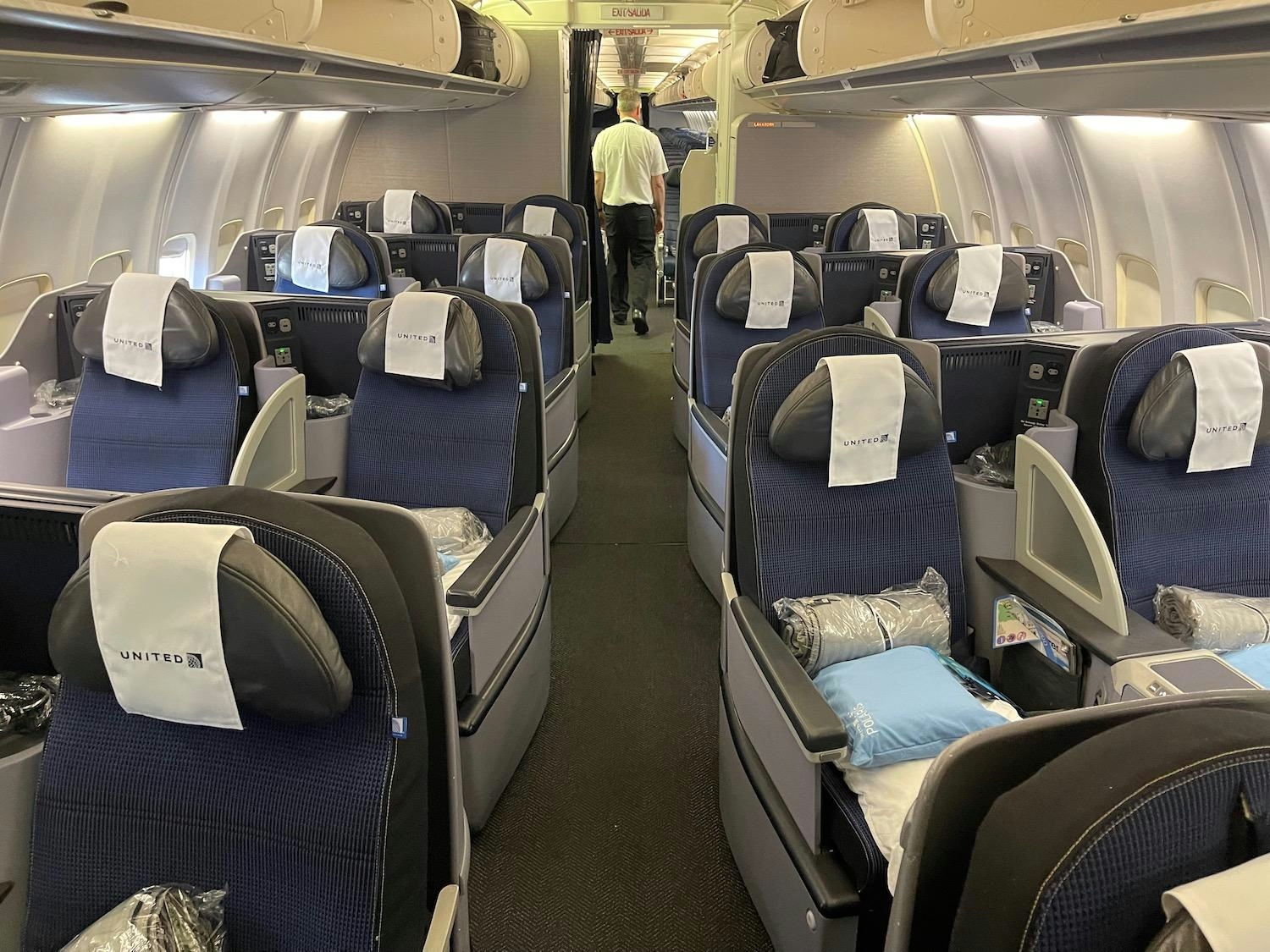
The Boeing 757 distinguishes itself among narrowbody aircraft through its unconventional boarding procedure. Unlike most single-aisle jets that board passengers exclusively through the front door, many 757 flights utilize the second door (2L), located at the midpoint of the cabin. Upon entering, first-class passengers proceed left toward the aircraft’s nose, while economy passengers move right toward the rear, effectively separating the flow of passengers during boarding.

This mid-cabin boarding arrangement was not intentionally designed to enhance passenger experience but rather emerged from the aircraft’s structural and regulatory requirements. Measuring 155 feet (47.24 meters) in length, the 757 is notably longer than comparable narrowbodies such as the Boeing 737-800 (129 feet) and the Airbus A321 (146 feet). To meet stringent FAA and EASA emergency evacuation standards—which require that all passengers be evacuated within 90 seconds—Boeing incorporated an additional set of doors forward of the wing. This design decision positioned door 2L at the natural division between premium and economy cabins, making it a practical entry point for boarding.

Boarding Practices Across Aircraft Types

Most narrowbody aircraft, including the Boeing 737 and Airbus A320 families, board passengers solely through the front door (1L). Passengers enter at the nose and proceed down a single aisle, filling the cabin sequentially from front to back. This straightforward approach aligns with the structural simplicity of these aircraft, which do not necessitate dividing boarding flows.

In contrast, widebody aircraft such as the Boeing 777 or Airbus A380 employ multiple doors and jetbridges to accommodate their larger passenger capacities, often ranging from 300 to 500 seats. Their twin-aisle configurations and wider fuselages facilitate simultaneous boarding through several entry points, expediting the process.

The 757 occupies a unique position between these categories. As a single-aisle narrowbody, it nonetheless boards through a mid-cabin door when gate infrastructure permits. This method resembles widebody boarding patterns but is primarily a consequence of regulatory compliance and aircraft design rather than a passenger-focused innovation.

Operational Implications and Industry Responses

While mid-cabin boarding offers a logical solution given the 757’s design, it introduces operational challenges. Boarding through door 2L can sometimes extend boarding times, potentially affecting on-time departures and frustrating passengers accustomed to more conventional procedures. Airlines must balance these factors carefully, and opinions on the practice vary. Some carriers embrace mid-cabin boarding as a distinctive characteristic of the 757, while others view it as misaligned with evolving passenger expectations.

In response, competitors have experimented with alternative boarding strategies, including front or rear-cabin entry, aiming to enhance efficiency and passenger satisfaction. These operational considerations are influencing broader fleet management decisions. For instance, airlines such as Icelandair are contemplating the accelerated retirement of older 757s in favor of newer, more efficient aircraft that support more conventional boarding processes.

Ultimately, the Boeing 757’s mid-cabin boarding remains a legacy of its unique design and regulatory environment, continuing to influence airline operations and fleet strategies within the competitive landscape of commercial aviation.

More news
WSU Solar Car Team Displays Student-Built Vehicles at Western Sydney International Airport

WSU Solar Car Team Displays Student-Built Vehicles at Western Sydney International Airport

WSU Solar Car Team Displays Student-Built Vehicles at Western Sydney International Airport The Western Sydney University (WSU) Solar Car Team recently showcased their innovative, student-built solar vehicles on the taxiway of Western Sydney International (Nancy-Bird Walton) Airport (WSI). This demonstration offered a compelling vision of the future of sustainable transport and regional tourism, set against the backdrop of the airport’s anticipated opening for passenger and cargo operations in late 2026. The event underscored both technological advancement and the rapid development occurring in the Western Sydney region. Partnership Advancing Skills and Regional Growth This exhibition forms part of a broader collaboration established through a Memorandum of Understanding (MoU) signed in December 2024 between WSU and WSI. The partnership is designed to enhance skills pathways, aviation opportunities, and tourism engagement by integrating student innovation with airport operations. By combining WSU’s academic expertise with WSI’s infrastructure, the MoU aims to support workforce development and position the airport as a key driver of travel, tourism, and economic growth in Western Sydney. Since the MoU’s inception, WSU students have engaged directly with airport operations through a range of initiatives. Two students completed internships focused on airport management, contributing to the airport’s operational readiness. Additionally, 28 students undertook research projects addressing real-world challenges in airport operations and aviation infrastructure planning. More than 200 participants have also completed the Introduction to Aviation Operations micro-credential, equipping a new generation of professionals to meet the demands of the region’s expanding aviation and tourism sectors. Community Engagement and Career Development The partnership between WSU and WSI extends beyond academic collaboration to emphasize community involvement and career pathway development. Approximately 200 students and alumni volunteered in a full-scale airport emergency exercise, gaining valuable practical experience. Outreach programs have connected local residents with aviation and tourism career opportunities, while immersive experiences such as flight simulators and airport activations have introduced students and visitors to potential careers in aviation. Furthermore, six employment networking events have facilitated connections between students and local aviation employers, fostering human capital development and promoting Western Sydney as a centre for education and tourism. Challenges and Industry Transformation Despite the success of the solar car demonstration, the WSU Solar Car Team continues to face challenges in securing sufficient funding and resources for vehicle development and maintenance. The broader automotive industry is also undergoing a significant transformation, with 2026 identified as a pivotal year for sustainability and innovation. This evolving landscape has generated increased interest from educational institutions and automotive companies in sustainable technologies. As a result, competitor universities are expected to intensify their own solar car initiatives, while automotive firms may increase investments in green vehicle technologies. Innovation at the Nexus of Travel and Sustainability The solar car display at Western Sydney International Airport exemplifies the intersection of student-led innovation with regional travel and tourism development. As the airport prepares to commence operations, collaborations such as this not only enhance workforce readiness but also position Western Sydney at the forefront of sustainable transport and economic progress.
Transportation Secretary Sean Duffy Pilots Electric Air Taxi

Transportation Secretary Sean Duffy Pilots Electric Air Taxi

Transportation Secretary Sean Duffy Pilots Electric Air Taxi, Marking Milestone for eVTOL Industry Historic Flight Demonstrates Federal Commitment to eVTOL Technology U.S. Transportation Secretary Sean Duffy recently made history as the first transportation secretary to pilot an electric vertical takeoff and landing (eVTOL) aircraft. The flight took place at Beta Technologies’ headquarters in Burlington, Vermont, where Duffy flew the company’s Alia model. Describing the experience as a “historic flight into the future,” Duffy emphasized the transformative potential of eVTOLs, stating that they will “fundamentally change the way people and products move.” His remarks underscore the growing federal interest in advancing electric aviation technologies. This milestone coincides with the Department of Transportation’s (DOT) preparations to broaden the integration of eVTOL aircraft into U.S. airspace. Beta Technologies is among several manufacturers participating in the Federal Aviation Administration’s (FAA) eVTOL Integration Pilot Program (eIPP), which is expected to launch as early as September. The program, set to run for at least three years across 26 states, will enable participants to operate precertified eVTOL aircraft at real airports. Collaborating closely with air traffic controllers, the initiative aims to test a variety of applications, including urban air taxi services, regional passenger transport, autonomous flight, and cargo and medical deliveries. Industry Collaboration and Technological Advancements The DOT has designated eight lead participants comprising state and local transportation departments working alongside manufacturers, operators, and infrastructure providers. Beta Technologies is actively engaged with seven of these groups. Secretary Duffy highlighted the broad range of potential uses for next-generation aircraft, from emergency organ transplants to regional air travel, signaling a future where electric flight plays a critical role in transportation. Beta plans to deploy both the Alia eVTOL, which Duffy piloted, and the CX300, a conventional takeoff and landing variant, during the eIPP. Both aircraft are fully electric, powered by Beta’s proprietary H500A engine, and designed for operational efficiency. The Alia is optimized for short-haul passenger and cargo missions, while the CX300 targets longer-range flights. Beta emphasizes the cost-effectiveness of its technology, noting that the Alia consumed only $3 worth of electricity during the demonstration flight. The company’s charging infrastructure currently spans approximately 50 sites nationwide, with plans for further expansion. Challenges and Industry Outlook Despite the progress, the electric air taxi sector faces significant obstacles. Regulatory challenges persist, particularly regarding FAA certification processes and the establishment of comprehensive charging infrastructure. Market responses remain mixed, with skepticism about the business model’s long-term viability and safety concerns related to integrating eVTOLs with traditional aircraft operations. The industry is also contending with legal disputes that could delay regulatory approvals and program implementation. Competitors in the eVTOL space are responding in diverse ways. While some companies grapple with legal issues and diminishing investor confidence, others, such as Archer Aviation, maintain optimism about regulatory support and public acceptance. The eVTOL Integration Pilot Program, initiated under the Trump administration, has provided some validation for the sector, though ongoing legal challenges continue to pose risks. Beta Technologies’ aircraft have already been tested by pilots beyond the company’s own staff. Republic Airways pilots have conducted multiple demonstration flights, including landings at Orlando International Airport and winter testing in New York and Vermont. Other industry players such as Bristow Group and Air New Zealand have evaluated Beta’s aircraft, while Surf Air Mobility plans to commence Alia passenger flights in Hawaii. Additionally, logistics companies UPS and United Therapeutics are exploring the aircraft’s potential for cargo operations. As the eVTOL industry advances amid regulatory, technical, and market challenges, Secretary Duffy’s flight represents a significant moment of federal engagement and may signal a turning point for the future of electric aviation in the United States.
Aircraft Leasing Firm Aims to Address Nigeria’s Aviation Challenges

Aircraft Leasing Firm Aims to Address Nigeria’s Aviation Challenges

Aircraft Leasing Firm Aims to Address Nigeria’s Aviation Challenges Government Initiative to Improve Aviation Sector The Federal Ministry of Aviation and Aerospace Development has expressed optimism that the establishment of a new Aircraft Leasing Firm will help mitigate longstanding challenges within Nigeria’s aviation industry, such as frequent flight cancellations, delays, and elevated airfares. Mahmud Adam Kambari, the ministry’s permanent secretary, conveyed this confidence during a meeting with members of the Abuja Transportation and Aviation Correspondents Association (ATACA) at his office in Abuja. Kambari underscored the ongoing reform efforts led by Aviation Minister Festus Keyamo, aimed at fostering innovation and operational efficiency in the sector. He explained that the forthcoming leasing company is designed to alleviate operational difficulties faced by domestic airlines, potentially lowering costs and enhancing service reliability for passengers. Challenges and Industry Response Despite the positive outlook, the initiative confronts significant obstacles. The Nigeria Aircraft Leasing Company must secure a blend of private investment and development bank financing while navigating a complex regulatory framework. Furthermore, the firm will enter a competitive market dominated by established international leasing companies, which may respond by offering more attractive rates or superior services to protect their market share. Some domestic carriers remain skeptical about the firm’s ability to deliver meaningful cost reductions, citing Nigeria’s history of high interest rates imposed by foreign capacity providers. Media Relations and Sector Transparency Kambari reaffirmed the ministry’s dedication to maintaining a strong partnership with the media, particularly with ATACA. He assured the association that his leadership would uphold the longstanding collaboration between the ministry and aviation correspondents, promising ongoing support and cooperation. He praised ATACA for its professionalism and the visibility it has brought to the ministry’s initiatives, encouraging members to sustain their unity and commitment to accurate reporting. ATACA chairman Ejike Omeje Ejike expressed gratitude for the engagement opportunity, highlighting that the association represents over 40 journalists specializing in transportation and aviation coverage. He emphasized ATACA’s role in delivering comprehensive and accurate industry news and requested ministry support for the association’s annual seminar. Ejike also advocated for the inclusion of ATACA members in both domestic and international official trips to enhance media coverage of the sector. In closing, Kambari reiterated the ministry’s commitment to transparency and collaboration, emphasizing that effective media engagement is essential to the ongoing transformation of Nigeria’s aviation industry.
Lockheed Martin Invests $6.9 Million in Canada’s Air Inuit

Lockheed Martin Invests $6.9 Million in Canada’s Air Inuit

Lockheed Martin Invests $6.9 Million in Air Inuit to Overhaul B737-800C Engines Lockheed Martin has committed CAD 9.5 million (USD 6.9 million) to overhaul the engines of Air Inuit’s Boeing 737-800(C) fleet. This investment aims to support the airline’s operations along the vital Montréal Trudeau-Kuujjuaq route, enhancing service reliability for communities in Nunavik and northern Quebec. The funding is facilitated through Canada’s Industrial and Technological Benefits (ITB) policy, underscoring the government’s commitment to strengthening regional air connectivity. Enhancing Operations in Northern Canada Air Inuit, headquartered in Kuujjuaq, operates two Boeing 737-800 aircraft configured in a combi layout, according to ch-aviation fleet data. The airline serves remote and challenging destinations across northern Canada, where harsh weather conditions, rugged terrain, and gravel runways complicate aviation operations. Beyond the 737-800s, Air Inuit maintains a diverse fleet that includes four Boeing 737-200Cs, one 737-300(QC), one 737-800(SF), as well as multiple De Havilland Canada DHC-6 and DHC-8 variants, reflecting its adaptability to varied operational demands. Christian Busch, president and CEO of Air Inuit, expressed strong support for the investment, emphasizing its importance for maintaining and improving service on a critical route for both customers and communities in Nunavik. The overhaul is expected to enhance the reliability and safety of Air Inuit’s fleet, thereby reinforcing the airline’s role as a vital transportation link in northern Quebec. Strategic Implications Amid Industry Dynamics This investment arrives at a time of evolving market dynamics and intensifying competition within the aerospace and defense sectors. Industry analysts suggest that competitors may respond by increasing investments in regional partnerships or accelerating technological innovation to preserve their market positions. Additionally, broader economic factors and strategic realignments within the defense industry could influence the long-term impact of such capital commitments. Lockheed Martin’s support for Air Inuit aligns with its wider strategic objectives, which include expanding munitions production and strengthening defense capabilities. The company’s approach reflects a balance between fostering regional partnerships and pursuing its global defense ambitions, positioning it to navigate shifting market conditions while reinforcing its presence in Canada’s aerospace landscape.
The Safest Commercial Aircraft in History

The Safest Commercial Aircraft in History

The Safest Commercial Aircraft in History Safety continues to be the fundamental priority within the aviation industry, where ongoing innovation and rigorous standards have significantly enhanced operational security. The measure of an aircraft’s safety is often reflected in its record of hull losses and fatalities, with a select group of commercial jets from Boeing and Airbus distinguished by their exemplary safety histories. Boeing 717: A Model of Reliability and Safety The Boeing 717, initially developed as the McDonnell Douglas MD-95 in the early 1990s, was tailored for the 100-seat, mid-range market segment. Following the merger of McDonnell Douglas with Boeing in 1997, the aircraft was rebranded as the Boeing 717 and entered service in 1999. Production concluded in 2006 after delivering over 150 units. As of December 2024, 99 Boeing 717s remain operational, with Delta Air Lines maintaining a substantial portion of the fleet. Equipped with two Rolls-Royce BR715 turbofan engines, the 717 offers an operational range of 2,060 nautical miles and cruises at Mach 0.77. Its cabin configuration accommodates up to 117 passengers in a single-class layout, combining efficiency with reliability. Delta Air Lines CEO Richard Anderson has emphasized the aircraft’s economic benefits and its appeal to customers, noting its significant role in enhancing mainline service offerings. Most notably, the Boeing 717 has maintained an impeccable safety record, having never experienced a hull loss or fatal accident since its introduction nearly thirty years ago. This achievement underscores the aircraft’s robust design and the effectiveness of its operational protocols. Airbus A380: Safety in the World’s Largest Commercial Jet The Airbus A380, recognized as the largest commercial airliner globally, also boasts a commendable safety record. Manufactured until 2021, the A380’s sophisticated engineering and stringent safety measures have established it as one of the safest aircraft currently in service. Its size and complexity have not compromised its operational security, reflecting Airbus’s commitment to safety at scale. Industry Challenges and Advancements in Safety Despite these high safety standards, the aviation industry continues to confront significant challenges. Supply chain disruptions, as reported by Embraer, have impacted production schedules and delivery rates across various manufacturers. Nevertheless, demand for both commercial and business jets remains robust, even as airlines grapple with capacity reductions and rising fuel costs. In response, competitors are advancing technological innovations, including the development of new anti-icing systems and next-generation aircraft designs, exemplified by initiatives from Textron Aviation and Germany’s DLR. Furthermore, the increasing adoption of sustainable aviation fuel (SAF) is transforming regulatory frameworks and market strategies. Manufacturers and airlines are investing heavily in greener technologies to align with evolving environmental standards, which also influence safety and operational protocols. The Boeing 717 and Airbus A380 stand as benchmarks of commercial aircraft safety, reflecting decades of engineering excellence and disciplined operation. As the industry adapts to supply chain constraints, market dynamics, and the shift toward sustainable fuels, the unwavering commitment to safety and innovation remains central to ensuring the continued security of air travel worldwide.
Saudia Plans to Add 12 New Aircraft to Fleet in 2026

Saudia Plans to Add 12 New Aircraft to Fleet in 2026

Saudia to Expand Fleet with 12 New Aircraft by 2026 Saudia, the national airline of Saudi Arabia, has announced plans to augment its fleet with 12 new aircraft by 2026. This expansion, which notably includes the advanced Airbus A321XLR model, reflects the carrier’s strategic intent to enhance its international connectivity and bolster its competitive position within the Gulf aviation market. The move is part of a broader effort to capture a larger share of the region’s growing air travel demand. Navigating a Competitive and Challenging Market The planned fleet expansion comes amid a highly competitive and rapidly evolving aviation landscape. Saudia faces significant challenges, including the need to maintain competitive pricing despite rising operational costs and to secure advantageous routes essential for sustaining profitability and market share. Industry analysts have responded positively to Saudia’s focus on expanding its long-haul capabilities, but they caution that the airline’s success will depend on its ability to effectively manage these operational complexities. Competition in the Gulf aviation sector is intensifying, with regional rivals pursuing aggressive growth strategies. The Emirates Group recently reported record profits and announced further expansion plans, underscoring the robust competition for passengers and key air routes. Additionally, the emergence of Riyadh Air, which aims to connect 100 cities within five years, introduces a new dynamic that could significantly reshape regional air travel patterns. Regional Security Dynamics and Their Impact on Aviation This period of aviation growth unfolds against a backdrop of shifting security and diplomatic strategies in the Gulf. A recent report by Ambassador Alessandro Minuto-Rizzo, President of the NATO Defense College Foundation and former Deputy Secretary General of NATO, highlights how Gulf states are increasingly adopting multi-layered security approaches. Published by the Gulf Research Center in Jeddah, the report argues that these countries are well positioned to play a more influential role in regional security architecture by combining enhanced self-reliance with expanded international partnerships. Minuto-Rizzo emphasizes that partnerships with organizations such as NATO provide Gulf states with opportunities to strengthen defense capabilities and strategic dialogue, while maintaining strong ties with the United States and deepening engagement with Europe. He notes the political prudence demonstrated by Gulf states in recent conflicts, particularly their avoidance of direct military escalation with Iran and their pursuit of diplomatic initiatives, including the restoration of Saudi-Iranian relations facilitated by Chinese mediation. The report also reaffirms the enduring centrality of the United States in Gulf security, despite ongoing debates about Washington’s regional role. While recent conflicts have exposed some limitations in traditional deterrence strategies, the Gulf’s strategic importance ensures continued US engagement, even as new partnerships and regional initiatives gain traction. As Saudia and other Gulf carriers advance their ambitious expansion plans, their success will be influenced not only by market dynamics and operational decisions but also by the evolving security environment and international partnerships in the region. The intersection of aviation growth and broader geopolitical strategies will be pivotal in shaping the future of Gulf connectivity and influence.
Floating Fleet AI Unveils Aviation Scheduling Platform at Aviation Festival Americas 2026

Floating Fleet AI Unveils Aviation Scheduling Platform at Aviation Festival Americas 2026

Floating Fleet AI Unveils Aviation Scheduling Platform at Aviation Festival Americas 2026 **WHITE PLAINS, N.Y., June 1, 2026** — Floating Fleet AI, a leading provider of AI-driven scheduling and planning solutions for aviation operators, is set to launch its aviation scheduling platform at Aviation Festival Americas 2026. The event, taking place from June 3 to 4 at the Miami Beach Convention Center, convenes key figures from airlines, airports, and aviation technology sectors across the Americas to explore emerging strategies and innovations shaping the future of the industry. Advanced Scheduling Technology for Diverse Aviation Sectors At the festival, Floating Fleet AI will demonstrate its sophisticated scheduling platform, which offers comprehensive solutions for aircraft scheduling, crew assignment, and crew rostering. Originally designed to address the intricate scheduling challenges of private aviation—a sector known for its operational complexity—the platform is now being expanded to serve commercial airlines, regional carriers, and corporate flight departments. The company’s objective is to enhance operational efficiency, minimize manual scheduling efforts, and enable more informed real-time decision-making. Dr. Roger Zhan, Founder and CEO of Floating Fleet AI, emphasized the platform’s origins and ambitions: “Private aviation has some of the industry’s most complex scheduling environments, which made it the ideal proving ground for our technology. We are excited to introduce our platform to a broader aviation market at Aviation Festival Americas. Our goal is simple: help operators make faster, smarter, and more resilient scheduling decisions.” Optimizing Operations Amid Industry Challenges Floating Fleet AI’s platform continuously assesses a range of critical factors, including aircraft availability, crew constraints, customer demand, maintenance schedules, and operational disruptions. Its powerful optimization engine can analyze complex scheduling scenarios within seconds, allowing operators to reduce manual planning, improve asset utilization, lower operational costs, and respond more effectively to irregular operations. The company will also highlight new crew rostering features designed to balance operational efficiency with crew quality-of-life considerations. As Floating Fleet AI extends its reach beyond private aviation, it enters a competitive market dominated by established aviation technology providers. The company faces challenges such as integrating its platform with existing airline systems and adapting to evolving regulatory requirements. Market responses are anticipated to be varied; while some airlines may be attracted to the platform’s innovative capabilities, others might hesitate due to concerns over integration complexity and associated costs. Competitors are likely to respond by accelerating their own AI-driven scheduling developments or enhancing current offerings to maintain market share. Aviation Festival Americas represents a pivotal moment for Floating Fleet AI as it introduces its technology to a wider audience of aviation leaders committed to modernizing operational planning and workforce management. About Floating Fleet AI Floating Fleet AI specializes in delivering transparent and reliable AI scheduling and planning solutions tailored for aviation operators and corporate flight departments. By integrating advanced optimization technology with deep operational expertise, the company supports aviation businesses in improving efficiency, reducing costs, and maintaining competitiveness in a rapidly evolving market. Floating Fleet AI remains dedicated to continuous innovation and collaborates closely with partners and customers to provide practical, high-impact solutions for fleet and workforce management. For further information, visit www.floatingfleet.ai.
APATS 2026 to Address AI, Pilot Shortages, and Training Standards in Bangkok

APATS 2026 to Address AI, Pilot Shortages, and Training Standards in Bangkok

APATS 2026 to Address AI, Pilot Shortages, and Training Standards in Bangkok The Asia-Pacific Aviation Training Summit (APATS) is set to return to Bangkok from 31 August to 2 September 2026, focusing on critical issues such as artificial intelligence integration, competency-based training, and the escalating workforce challenges within the aviation industry. Hosted at the Queen Sirikit National Convention Centre (QSNCC), the summit is anticipated to attract over 700 professionals, including airline training experts, regulators, aircraft manufacturers, and aviation technology providers from across the Asia-Pacific region. Focus Areas and Emerging Trends Recognized as the largest aviation training event in the Asia-Pacific, APATS 2026 will spotlight the rapid transformation occurring in pilot, cabin crew, and maintenance training. The agenda emphasizes persistent pilot shortages, the advancement of Competency and Evidence-Based Training (CBTA/EBT), developments in Multi-Crew Pilot Licence (MPL) programs, and the increasing incorporation of artificial intelligence and sophisticated simulation technologies into airline training systems. The opening plenary will feature a keynote address on the future of aviation workforce development, highlighting the operational demands driven by regional airline growth. A prominent theme throughout the summit is the expanding role of artificial intelligence in aviation training. Dedicated sessions will examine AI-driven pilot instruction, the identification of “silent failures” in flight operations, and the application of AI in maintenance training environments. Human performance and resilience will also be central topics, with discussions on pilot wellbeing, resilience indicators in ab-initio training, scalable instructor capabilities, and the integration of psychological assessment within modern aviation training frameworks. Regulatory Developments and Training Innovations A newly introduced stream will concentrate on aviation regulators and flight simulator training device operators and manufacturers. This segment will include participation from the International Civil Aviation Organization (ICAO), the European Union Aviation Safety Agency (EASA), and various Asia-Pacific national aviation authorities. These sessions aim to provide updates on flight simulation training device oversight, regulatory harmonization, and the adoption of emerging technologies. The pilot training stream will explore the implementation of Evidence-Based Training (EBT), CBTA, and MPL programs, while evaluating how airlines are adapting training frameworks to expedite pilot development without compromising safety standards. Cabin crew training will receive heightened attention through workshops focused on enhancing training realism, leadership development, and crew wellness, reflecting airlines’ efforts to modernize preparation for operational demands. Maintenance training discussions will emphasize competency-based approaches, instructor standardization, human factors, and the growing use of remote and online learning technologies. Sessions dedicated to Approved Training Organisations (ATOs) will address professionalism in pilot training, standardization of instructor conduct, and leveraging operational data to improve training outcomes. Challenges and Industry Response The aviation training sector faces significant challenges, including the need for substantial investment in infrastructure to meet evolving training standards. Resistance from traditional training providers toward adopting new technologies may further complicate progress. Failure to effectively implement new training programs risks exacerbating existing pilot shortages. In response, the market is expected to see increased demand for advanced training technologies and a shift toward more comprehensive pilot training programs. Competitors are likely to develop innovative programs incorporating AI and virtual reality, while forming partnerships with technology firms to integrate cutting-edge solutions. Alongside the conference, APATS 2026 will host a major exhibition showcasing the latest training technologies, flight simulation systems, digital learning platforms, and operational support solutions. Networking opportunities, including exhibition floor receptions, airline meetings, and industry roundtables, will facilitate partnership development across the aviation training sector.
Norse Atlantic Airways Offers Low-Cost Tickets with Conditions

Norse Atlantic Airways Offers Low-Cost Tickets with Conditions

Norse Atlantic Airways Offers Low-Cost Tickets—But at a Cost Customer Service Struggles Amid Flight Cancellations On March 31, Norse Atlantic Airways notified passengers, including myself, that round-trip flights to Rome priced at $940 had been canceled, with a 14-day window to request refunds. Initially, this seemed manageable; however, attempts to access the airline’s refund request page repeatedly failed across multiple browsers and devices. Efforts to contact customer service were met with silence, compounded by the absence of a direct phone line. Frustrated, I turned to online forums such as Reddit, where numerous users shared similar grievances regarding Norse’s opaque and unresponsive customer support. In pursuit of clarity, I submitted a public records request to the Federal Trade Commission (FTC). The agency’s response revealed approximately 75 detailed complaints from customers who had either purchased or attempted to purchase tickets from Norse. Many described a customer service system so convoluted that it became vulnerable to exploitation by scammers. Among 41 complaints citing financial losses, 21 involved sums exceeding $1,000, underscoring the severity of the issue. Technology-Driven Support Model and Its Limitations Founded in February 2021, Norse Atlantic Airways positions itself as a “modern, long-haul, low-cost airline” with a lean operational model. The company has heavily invested in technology to streamline customer service, employing platforms like Sprinklr to consolidate inquiries and, more recently, deploying AI agents as the primary interface for customer support. Bård Nordhagen, Norse’s chief customer and communications officer, emphasized that technology enables “a higher level of availability and customer support, while still maintaining low fares for more people to enjoy travel between continents.” In practice, however, this technology-centric approach has generated widespread dissatisfaction. Norse removed its customer support email from its website, replacing it with an AI chatbot initially named “Odin,” later succeeded by “Freya.” Delight.ai, the developer behind Freya, reported that the airline’s no-human-intervention inquiry resolution rate increased from 60% to 80% within two weeks of Freya’s deployment. Alf Lim, Norse’s chief product officer, described Freya as a “core part of the team,” envisioning a future where human employees serve primarily as AI managers, overseeing and optimizing automated support. Despite these advancements, numerous customer accounts—including my own—highlight that reliance on AI can render issue resolution slow, frustrating, and occasionally costly. The absence of accessible human support has left many travelers struggling to navigate cancellations, refunds, and other service disruptions. Financial Challenges and Market Pressures Norse Atlantic’s customer service difficulties coincide with broader financial challenges. The airline has grappled with profitability amid volatile market conditions, rising jet fuel costs, and fluctuating transatlantic travel demand. CEO Eivind Roald has introduced cost-cutting measures such as crew furloughs, temporary pay reductions, and workforce downsizing to strengthen the company’s financial position. Nevertheless, Norse’s first-quarter net losses have deepened, reflecting the ongoing struggle to stabilize operations. Competition is intensifying as other carriers increasingly target long-haul narrowbody routes across the Atlantic, a trend toward “skinny” routes that may undermine Norse’s business model. The wider low-cost airline sector, including carriers like Spirit Airlines, has also encountered setbacks related to oversized aircraft and operational complexities, illustrating the inherent risks in Norse’s low-cost strategy. For travelers, Norse Atlantic’s promise of affordable transatlantic flights is tempered by significant caveats: while ticket prices may be attractive, customer support remains difficult to access, and the airline’s financial outlook is uncertain.
Textron Expands Flight Test Capabilities

Textron Expands Flight Test Capabilities

Textron Expands Flight Test Capabilities Amid Growing Market Demand Textron Aviation has completed a major expansion of its flight test hangar at the East Wichita Campus, significantly enhancing its capacity to support the increasing global demand for the Cessna SkyCourier and to advance development across its turboprop aircraft portfolio. The 57,000-square-foot extension adds six new hangar bays to the north side of the facility, substantially increasing space dedicated to flight test operations. Supporting the SkyCourier and Turboprop Development This expansion coincides with heightened activity surrounding the twin-engine Cessna SkyCourier, which continues to attract interest from commercial passenger, cargo, and special missions operators worldwide. The enlarged facility will also facilitate ongoing flight testing and entry-into-service activities for the Beechcraft Denali. Textron Aviation emphasizes that the additional capacity will enable flight test teams to operate more efficiently by streamlining aircraft preparation, data collection, and evaluation processes. This enhanced operational efficiency is particularly important as the SkyCourier expands its role across a broader range of missions and testing requirements. Designed as a versatile utility aircraft, the SkyCourier serves passenger, freight, and specialist operational needs through multiple configurations. Its expanding role into defense and special missions markets is underscored by the program’s first military order. Recent upgrades, including the introduction of an in-flight operable door option, have further increased the aircraft’s flexibility for diverse operational environments. Strategic Commitment Amid Industry Competition Textron states that the expansion reflects its commitment to meeting customer demand while maintaining the resources necessary to advance its aircraft development programs. The investment is expected to strengthen the company’s ability to support both current production requirements and future growth across its turboprop product line. This development occurs amid intensifying competition within the business aviation sector. Leading industry players such as Gulfstream and Embraer may respond with their own enhancements to flight test and maintenance services, potentially triggering a wave of facility upgrades or strategic partnerships aimed at preserving competitive advantage. Market reactions to Textron’s expansion are likely to be mixed; while some investors may view the move as a positive step toward increasing market share, others may express concerns about rising operational costs and potential impacts on profit margins. As Textron Aviation enhances its flight test capabilities, the company navigates new opportunities and challenges within a dynamic and competitive market landscape.
line









