
将人工智能洞察转化为可执行行动

热门趋势
Categories
Why the Airbus A380 Remains the World's Most Recognizable Airliner
Why the Airbus A380 Remains the World's Most Recognizable Airliner
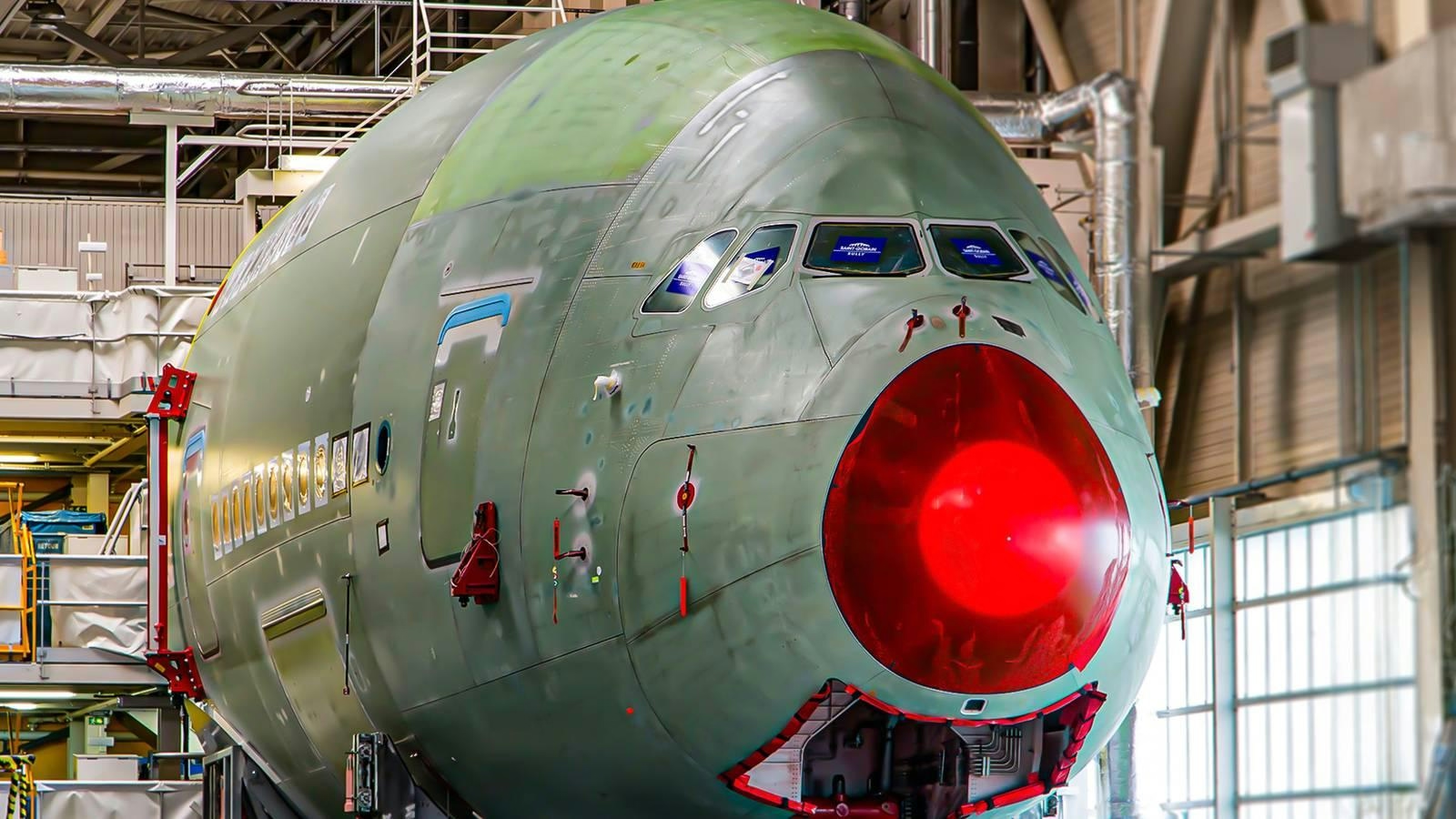
The Airbus A380, despite having ceased production several years ago, continues to hold its place as the world’s most instantly recognizable airliner. In an industry where many widebody jets often appear similar to the general public, the A380’s distinctive design and imposing presence set it apart. Its enormous size, full-length double-deck configuration, and unique silhouette have established a visual identity unmatched by any other commercial aircraft.
Design and Distinctiveness
Introduced in the early 2000s to address increasing congestion at major hub airports, the A380 was conceived with a singular, ambitious objective: to transport unprecedented numbers of passengers on a single flight. This goal influenced every element of its design. Unlike the Boeing 747, which features an upper deck limited to the front section of the fuselage, the A380’s second deck extends along the entire length of the aircraft. This design choice results in a taller, fuller, and more commanding profile—one that is immediately recognizable even to casual observers.
As the largest passenger airliner in the world and the only commercial jet with a full-length upper deck, the A380 is virtually impossible to mistake for any other aircraft. In typical multi-class configurations, it accommodates well over 500 passengers, with some all-economy layouts capable of seating more than 800. Its immense double-decked structure places it in a category of its own, distinguishing it even from the iconic Boeing 747.
Passenger Experience and Market Challenges
Beyond its striking appearance, the A380 quickly earned a reputation for delivering a quieter, more spacious, and distinctive onboard experience compared to most other jets. Airlines such as Emirates elevated the aircraft to flagship status for premium travel, and passengers came to associate the superjumbo with a unique style of flying—one that contrasted sharply with the more conventional twin-engine widebodies that followed.
However, the A380 has faced considerable challenges. While its size and capacity enable airlines to maximize passenger numbers on long-haul routes, these benefits come with high operational costs and the requirement for specialized airport infrastructure. The market’s response has been mixed: some carriers have retired their A380 fleets due to economic pressures, whereas others continue to operate them, leveraging their unique appeal and capacity. Meanwhile, competitors have concentrated on developing more fuel-efficient widebody aircraft to rival the A380’s range and seating, further influencing the evolution of long-haul aviation.
Continued Relevance
Despite production having ended, the A380 remains relevant in ways few anticipated. Its return to service following the pandemic, the absence of a direct one-for-one replacement, and its ongoing deployment on flagship routes have ensured it remains prominent in the public consciousness. The A380’s status as commercial aviation’s most recognizable aircraft endures, a testament to a design and presence that no other airliner has been able to replicate.

Etihad Airways Suspends Airbus A380 Flights on Key Route

Aditya Birla Group Seeks Approval for Aircraft Leasing in GIFT City

Qatar Airways Highlights Innovation and Connectivity at Arabian Travel Market 2026

Hong Kong's Five-Year Plan Includes Andrew Fan's Aircraft Parts Processing Hub Proposal

ACIA Aero Leasing Delivers ATR72-600 to Air Nostrum

RTX Appoints Jill Albertelli as Head of Pratt & Whitney

TAT Technologies Joins Beyond Aero Hydrogen Aircraft Program

AURAK Study Highlights Barriers to Air Taxi Adoption in Emerging Economies

Xiamen Air Selects Altitude for 787 Maintenance at Heathrow

Etihad and Swissport Extend Global Partnership
