
将人工智能洞察转化为可执行行动

热门趋势
Categories
Widebody Conversions Surpass Narrowbodies for First Time in Over 15 Years
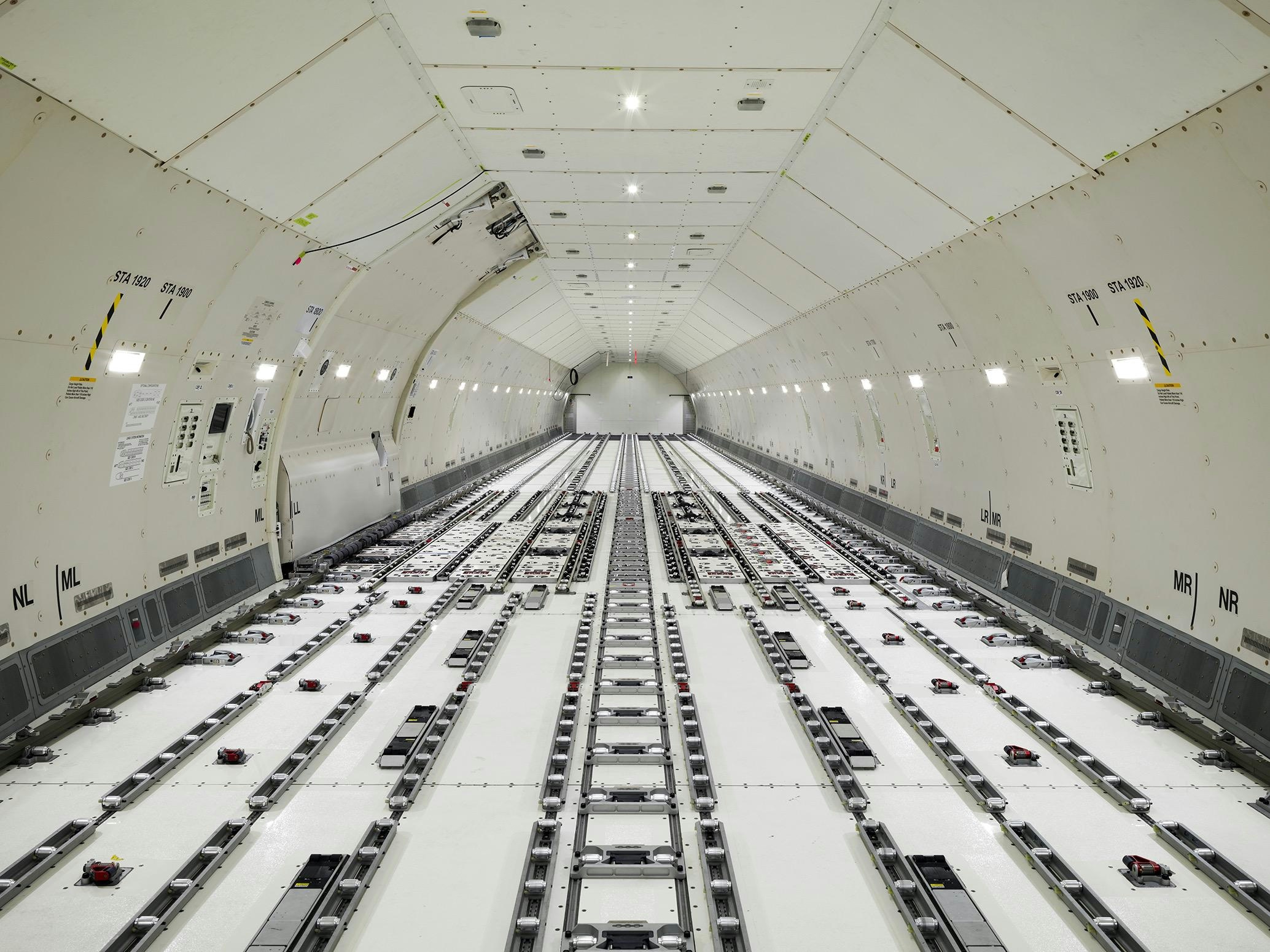
Widebody Freighter Conversions Outpace Narrowbodies for the First Time Since 2009
In a notable development within the air cargo sector, widebody freighter conversions surpassed narrowbody conversions in 2025, marking the first such occurrence since 2009. This shift, highlighted by aviation advisory firm IBA during its recent webinar, reflects changing dynamics in the cargo aircraft market, driven largely by a slowdown in narrowbody conversions amid an oversupplied market.
John Whaley, senior aviation analyst at IBA, emphasized the significance of this trend, noting that fewer than 20 narrowbody conversions were completed in 2025, a steep decline from approximately 70 in 2024. This downturn follows a post-pandemic surge when many aircraft owners converted idle passenger jets to freighters to meet heightened cargo demand. The resulting oversupply has since curtailed activity in the narrowbody segment.
Challenges and Market Dynamics in Widebody Conversions
Despite widebody conversions outnumbering narrowbodies, the widebody sector itself experienced a year-on-year decline, with 30 conversions completed in 2025 compared to 40 in 2024. Whaley attributed this to limited availability of suitable aircraft, as many widebodies remain in passenger service due to their high residual value. “Widebody capacity is limited and it seems to be getting worse, not better,” he remarked.
This evolving landscape is influencing broader industry strategies. Airlines such as Ethiopian Airlines are engaging with Airbus to acquire widebody models like the A350, signaling a strategic emphasis on expanding regional and long-haul operations. This trend is expected to heighten competition among carriers focusing on widebody fleets. Concurrently, robust engine maintenance activity reported by Safran, despite geopolitical tensions in the Middle East, underscores sustained demand for widebody engine services. GE Aerospace’s marked increase in Leap engine deliveries further illustrates the growing market for widebody aircraft engines, prompting manufacturers to consider scaling production and enhancing engine durability to maintain competitiveness.
Outlook and Emerging Trends in Freighter Conversions
Looking forward, IBA anticipates a gradual correction in the narrowbody oversupply, though not before 2028. Narrowbody conversions are projected to remain just above 20 in 2026, while widebody conversions are expected to rise slightly above 30. This growth is likely to be supported by new widebody conversion programs and improved feedstock availability as more aircraft retire from passenger service.
Whaley noted that while 2025 was a relatively quiet year following record passenger-to-freighter conversions in 2023, overall conversion activity is expected to increase modestly in 2026. IBA forecasts a pickup in both widebody and narrowbody conversions between 2028 and 2030.
The market is also witnessing the introduction of new conversion programs, particularly for the 777P2F. The operator base for this model is expanding, with recent deliveries including IAI’s first two 777-300ERSFs to Kalitta Air and the initial aircraft for Fly Meta. Additionally, Challenge Group added its first 777-300ERSF to its fleet in March, reflecting growing investment and interest in widebody freighter conversions as airlines and lessors adapt to shifting cargo and passenger market conditions.

Etihad Airways Suspends Airbus A380 Flights on Key Route

Aditya Birla Group Seeks Approval for Aircraft Leasing in GIFT City

Qatar Airways Highlights Innovation and Connectivity at Arabian Travel Market 2026

Hong Kong's Five-Year Plan Includes Andrew Fan's Aircraft Parts Processing Hub Proposal

ACIA Aero Leasing Delivers ATR72-600 to Air Nostrum

RTX Appoints Jill Albertelli as Head of Pratt & Whitney

TAT Technologies Joins Beyond Aero Hydrogen Aircraft Program

AURAK Study Highlights Barriers to Air Taxi Adoption in Emerging Economies

Xiamen Air Selects Altitude for 787 Maintenance at Heathrow

Etihad and Swissport Extend Global Partnership
