
将人工智能洞察转化为可执行行动

热门趋势
Categories
Wisk and Signature Aviation Collaborate on Autonomous Air Mobility Infrastructure
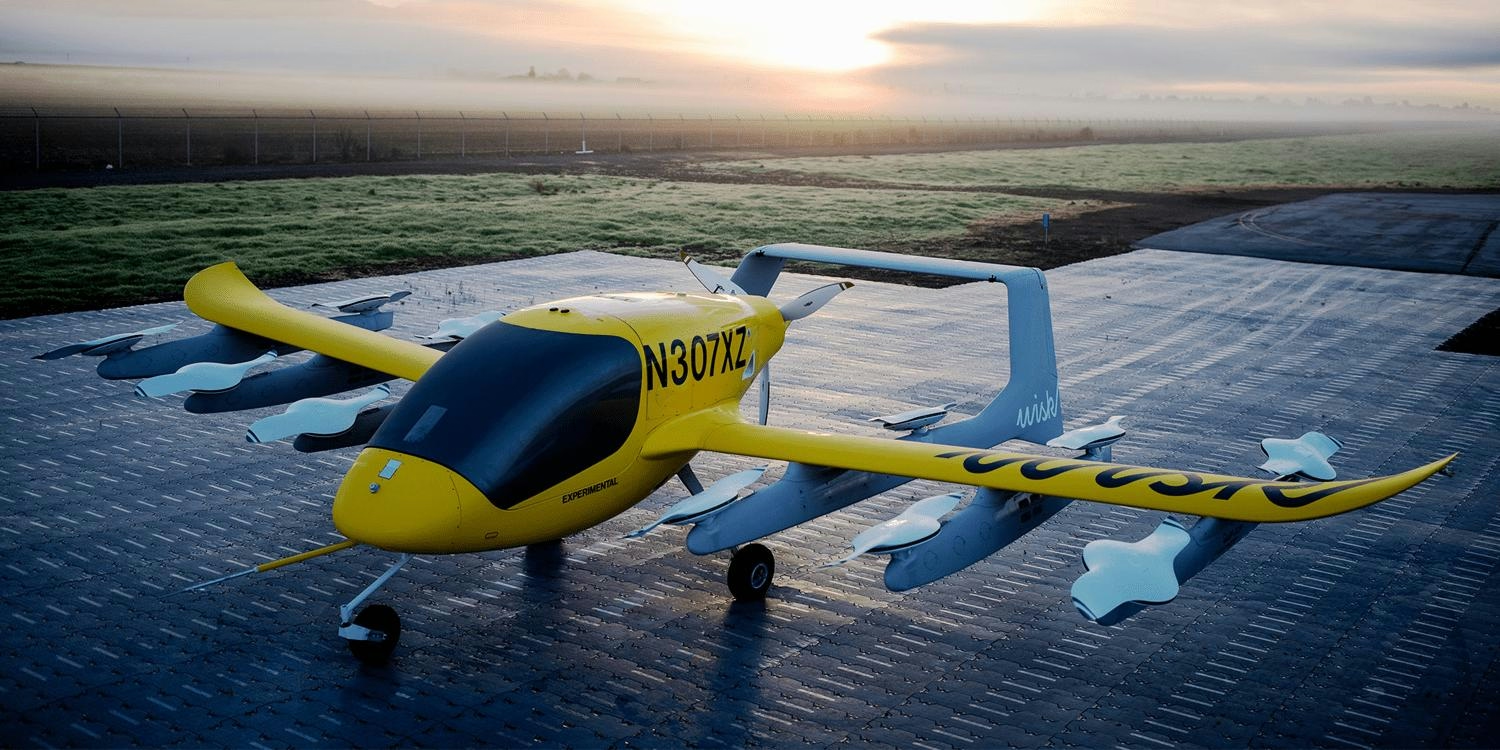
Wisk and Signature Aviation Collaborate to Develop Autonomous Air Mobility Infrastructure
Wisk Aero, a prominent developer of autonomous, all-electric vertical takeoff and landing (eVTOL) aircraft, has formalized a partnership with Signature Aviation, the world’s largest network of private aviation terminals. Through a Memorandum of Understanding (MOU), the two companies aim to jointly develop the infrastructure and operational frameworks necessary to integrate autonomous Advanced Air Mobility (AAM) services across Signature Aviation’s extensive global network. This initiative will initially focus on key U.S. markets including Houston, Los Angeles, and Miami.
Strategic Planning and Initial Implementation
The collaboration involves comprehensive strategic planning to identify and evaluate potential vertiport locations suitable for Wisk’s autonomous aircraft. This assessment will consider a range of factors including commercial viability, financial models, regulatory compliance, technical specifications, and operational requirements to support autonomous flight operations at select Signature Aviation sites.
A concrete example of this partnership’s progress is underway at Signature Aviation’s Ellington Airport (EFD) facility in Houston, Texas. Here, the companies are jointly developing vertiport concepts that encompass layout design, operational workflows, and infrastructure tailored specifically to Wisk’s Gen 6 aircraft and passenger experience. This project not only expands Wisk’s footprint in Texas but also builds upon its existing collaborations with the Houston Airport System and the City of Sugar Land.
Dan Dalton, Vice President of Global Partnerships at Wisk, highlighted the importance of the alliance, stating, “We are very excited to collaborate with Signature Aviation to pioneer the future of autonomous flight. Signature’s forward-leaning approach to aviation modernization aligns with our vision. Together, we’re building the robust infrastructure and integrated network essential for safe, scaled operations, starting with our focused efforts at Ellington.”
Derek DeCross, Chief Commercial Officer at Signature Aviation, emphasized the partnership’s role in innovation and sustainability, noting, “Our partnership with Wisk highlights another significant step in our continued innovation and dedicated sustainability leadership within aviation. Advanced air mobility represents a transformative opportunity to shape the future of our industry, and together with Wisk, we are proactively exploring the infrastructure and strategic planning necessary to expand our exceptional, forward-thinking guest experience across our network in the future.”
Challenges and Competitive Landscape
Despite the promising collaboration, several challenges remain. Regulatory frameworks for autonomous flight operations are still evolving, with authorities working to establish safety and certification standards for eVTOL aircraft. Additionally, integrating new autonomous systems with existing airport infrastructure presents technical complexities, particularly in ensuring seamless communication and operational compatibility.
The partnership also faces competition from other advanced air mobility companies such as Pyka, Archer, Lilium, and Joby, all of which are accelerating their own research, development, and strategic partnerships to secure positions in this emerging market. Market observers and investors are expected to closely monitor the progress of the Wisk-Signature collaboration, viewing autonomous air mobility infrastructure as a potential catalyst for future growth. Competitors may respond by intensifying their R&D efforts, forming new alliances, or acquiring technologies to maintain their competitive advantage.
This collaboration between Wisk and Signature Aviation reflects a shared commitment to establishing a safe, efficient, and commercially viable autonomous AAM ecosystem, with the potential to transform regional transportation and redefine the future of aviation.

Etihad Airways Suspends Airbus A380 Flights on Key Route

Aditya Birla Group Seeks Approval for Aircraft Leasing in GIFT City

Qatar Airways Highlights Innovation and Connectivity at Arabian Travel Market 2026

Hong Kong's Five-Year Plan Includes Andrew Fan's Aircraft Parts Processing Hub Proposal

ACIA Aero Leasing Delivers ATR72-600 to Air Nostrum

RTX Appoints Jill Albertelli as Head of Pratt & Whitney

TAT Technologies Joins Beyond Aero Hydrogen Aircraft Program

AURAK Study Highlights Barriers to Air Taxi Adoption in Emerging Economies

Xiamen Air Selects Altitude for 787 Maintenance at Heathrow

Etihad and Swissport Extend Global Partnership
