
حوّل رؤى الذكاء الاصطناعي إلى أفعال منسّقة

الرائج الآن
Categories
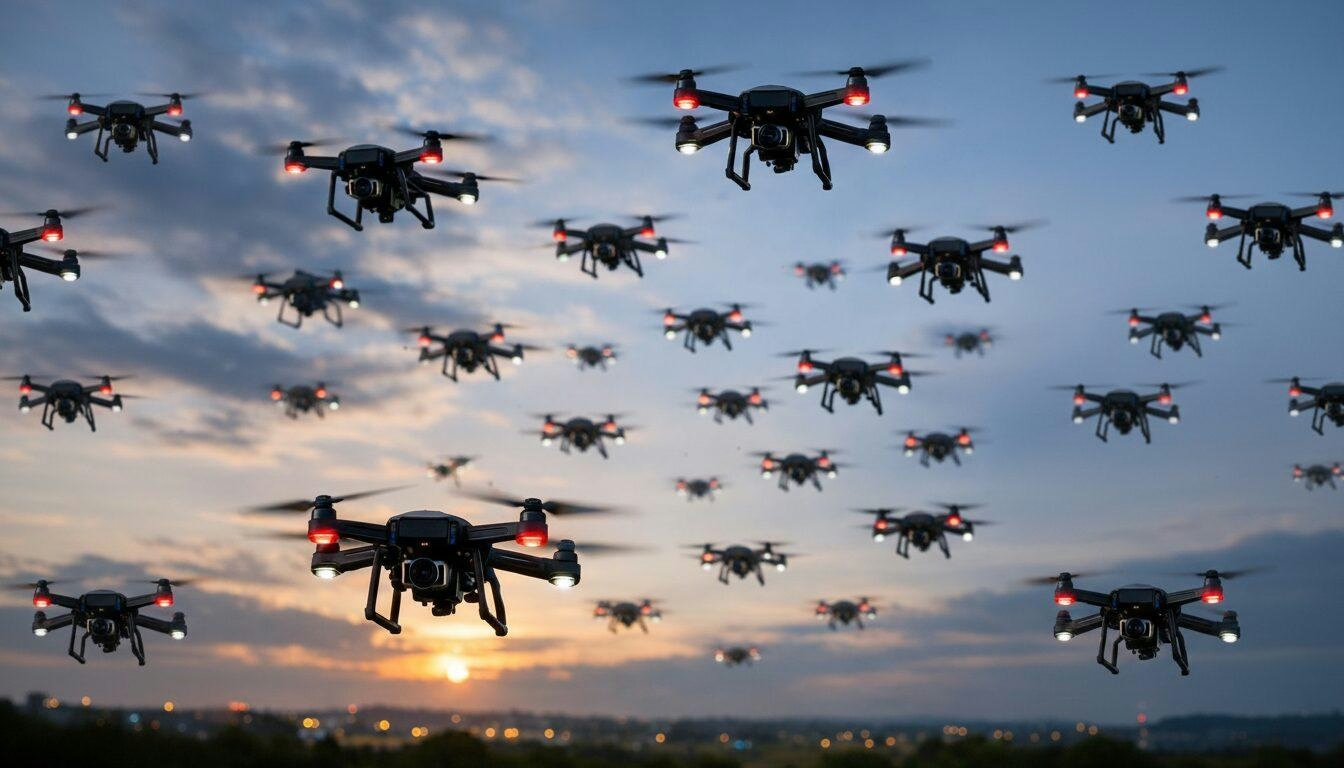
Advances in Swarm Technology Gain Momentum
Advances in Swarm Technology Gain Momentum
Swarm technology is rapidly reshaping multiple industries, including aviation maintenance, agriculture, and emergency response. Chan Woo Jung, senior vice president and head of the maintenance and engineering division at Korean Air, recently outlined the airline’s transition from manual aircraft inspections to AI-driven drone swarm operations. This shift exemplifies broader trends in automation and artificial intelligence, highlighting the growing role of swarm technology in enhancing operational efficiency and safety.
Overcoming Challenges in Traditional Aircraft Inspections
Conventional aircraft inspections are labor-intensive and time-consuming, often requiring technicians to use aerial platforms to manually examine every part of an aircraft. For large aircraft such as the Boeing 747 and Airbus A380, inspections can take more than 10 hours. This process not only exposes workers to safety risks associated with working at height but also introduces the potential for human fatigue and inconsistent inspection quality. While single-drone inspections have improved efficiency, they remain constrained by limited battery life and operational range, making it difficult to inspect large aircraft comprehensively.
Korean Air’s implementation of swarm-based drone inspections addresses these challenges by deploying multiple drones simultaneously. This approach has reduced imaging time for widebody aircraft to approximately 20 minutes. Additionally, the system incorporates ground-based swarm rovers to access difficult areas such as the underbelly and engine nacelles, ensuring thorough coverage without blind spots.
Integration of AI and Swarm Technology: Enhancing Efficiency and Accuracy
The combination of artificial intelligence with swarm technology offers significant advantages. Drone swarms dynamically adjust to the size of the aircraft, enabling full external inspections in about 20 minutes, a substantial improvement over the three hours required by single-drone operations. Thousands of high-resolution images captured during inspections are analyzed by AI algorithms, which reduce human error and improve consistency in defect detection. This automated image analysis allows technicians to concentrate on expert decision-making rather than repetitive review tasks. Safety is further enhanced through geofencing technology, which confines drone operations within designated boundaries and triggers automatic landings if deviations occur.
Jung emphasizes that while reduced downtime and improved data quality are important outcomes, the primary benefit lies in enhancing and standardizing safety—particularly flight safety, which depends on precise and reliable inspections.
Expanding Applications of Swarm Technology
The momentum behind swarm technology extends well beyond aviation. In agriculture, drone swarm crop sprayers are projected to reach a market value of USD 7.87 billion by 2033, driven by the need for efficient crop management, labor shortages, and the integration of AI and the Internet of Things (IoT). However, this growth faces regulatory challenges and the imperative for robust cybersecurity measures to protect against potential threats.
In response, industries are developing advanced counter-drone solutions. For instance, ThinKom Solutions has created a mobile high-power microwave system designed to defend against hostile drone swarms. Meanwhile, the potential of swarm technology in emergency response is being explored by companies such as SwiftAid Drone Swarm, which aims to provide real-time aerial data to first responders during natural disasters.
As AI-enabled swarm technologies continue to mature, their applications are expanding across sectors, promising improvements in efficiency, accuracy, and safety. Whether in aircraft inspection, agricultural management, or disaster response, swarm technology is emerging as a critical component of next-generation operational strategies.

Etihad Airways Suspends Airbus A380 Flights on Key Route

Aditya Birla Group Seeks Approval for Aircraft Leasing in GIFT City

Qatar Airways Highlights Innovation and Connectivity at Arabian Travel Market 2026

Hong Kong's Five-Year Plan Includes Andrew Fan's Aircraft Parts Processing Hub Proposal

ACIA Aero Leasing Delivers ATR72-600 to Air Nostrum

RTX Appoints Jill Albertelli as Head of Pratt & Whitney

TAT Technologies Joins Beyond Aero Hydrogen Aircraft Program

AURAK Study Highlights Barriers to Air Taxi Adoption in Emerging Economies

Xiamen Air Selects Altitude for 787 Maintenance at Heathrow

Etihad and Swissport Extend Global Partnership
