
حوّل رؤى الذكاء الاصطناعي إلى أفعال منسّقة

الرائج الآن
Categories
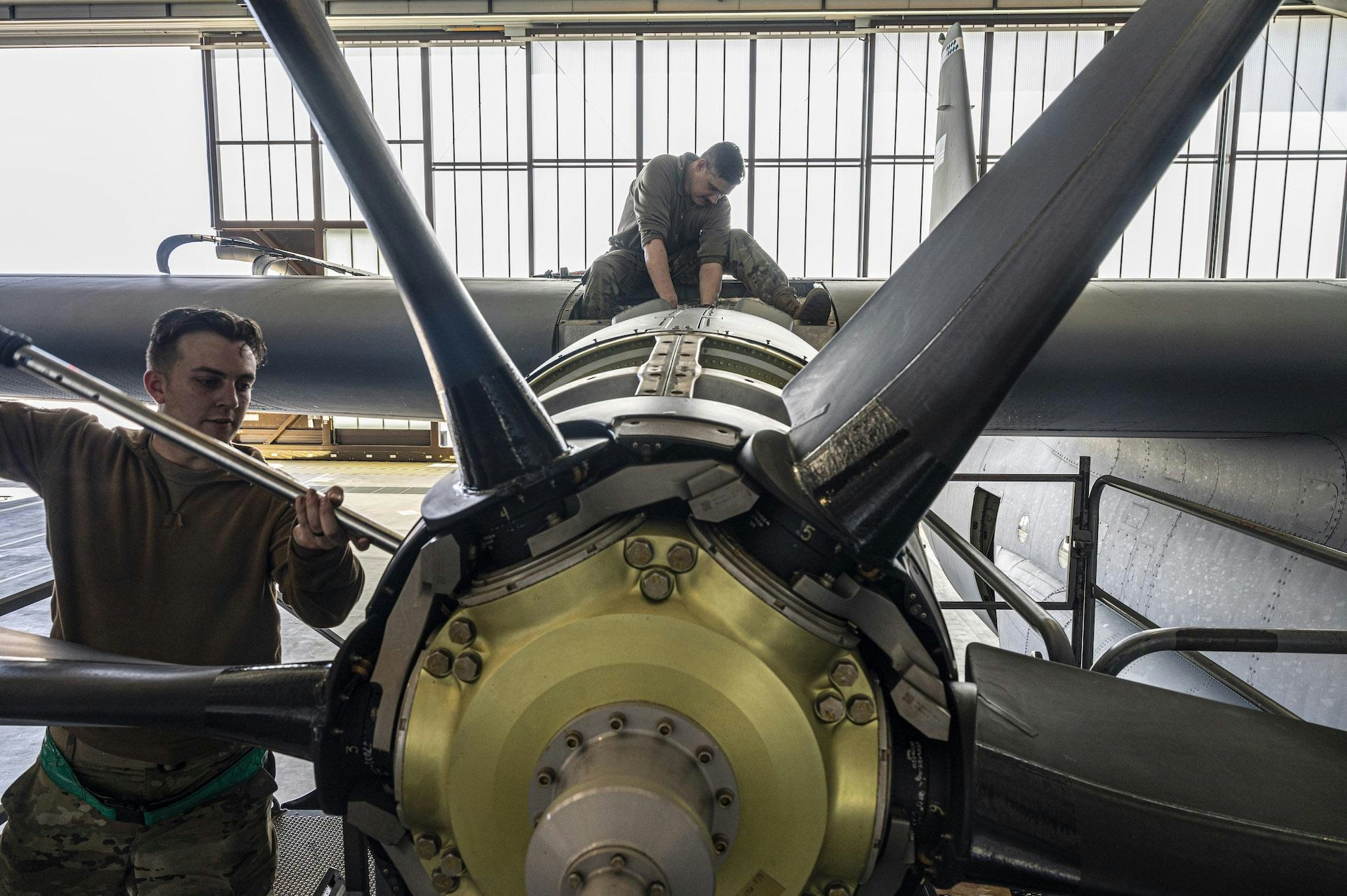
AI Advances Predict Aircraft Engine Failures
AI Advances Predict Aircraft Engine Failures
Transforming Maintenance Through Predictive Analytics
In contemporary airline operations control centers, predictive maintenance systems are revolutionizing the management of aircraft engine health. By harnessing real-time data streams, these AI-driven platforms can now identify early warning signs when an engine is projected to exceed its performance limits within a defined timeframe. This capability enables maintenance planners to proactively adjust flight schedules, coordinate the availability of spare parts, and schedule necessary shop visits. What was once a reactive process—often involving emergency responses or unscheduled groundings—has evolved into a planned, data-informed intervention. The outcome is a marked improvement in operational reliability, cost efficiency, and the preservation of stringent safety standards.
From Intuition to Data-Driven Precision
Fifteen years ago, aircraft maintenance was predominantly guided by scheduled inspections, technician experience, and routine checks based on flight hours or cycles. Subtle indicators of engine performance degradation, such as variations in exhaust gas temperature or vibration levels, were typically recorded manually and communicated through calls to technical operations. This often led to conservative decisions, including grounding aircraft or ferrying them to maintenance bases as a precaution. While this approach prioritized safety, it was inefficient, resulting in unnecessary maintenance visits, costly emergency interventions, and expensive logistics for parts replacement. Data remained fragmented, sensor outputs were noisy, and no comprehensive system existed to translate complex telemetry into actionable timelines, such as predicting when an engine would require servicing within a specific number of days.
The Emergence of Data Integration, Digital Twins, and AI
The paradigm shift began with enhanced instrumentation and data integration. Modern engines now provide richer telemetry encompassing temperature, pressure, and vibration metrics, alongside consistent logging of flight context and connections to maintenance histories and environmental conditions. Engine manufacturers and maintenance organizations have invested heavily in digital twins—virtual replicas of engines that run physics-based simulations in parallel with live data. These digital twins allow engineers to interpret sensor anomalies within a broader operational context and to conduct “what if” analyses without physical intervention. Industry leaders such as Rolls-Royce have pioneered these digital twin programs.
Building on this robust data infrastructure, airlines have started deploying AI models to forecast the remaining useful life (RUL) of engine components and, importantly, translate these predictions into actionable calendar timelines. Initial models were largely statistical and explainable but lacked flexibility. Today’s advanced prognostic systems combine physics-based constraints with deep learning architectures, including convolutional neural networks (CNN) and long short-term memory (LSTM) networks enhanced with attention mechanisms. These hybrid models excel at capturing long-range dependencies in noisy telemetry data while integrating maintenance and environmental variables. Recent academic studies have demonstrated that such approaches significantly improve the accuracy of RUL predictions for aeroengines.
Industry Challenges and Responses
Despite these technological advances, several challenges persist. Ensuring the reliability and accuracy of AI models remains paramount, alongside addressing concerns related to data privacy and cybersecurity. Resistance from traditional maintenance cultures can impede adoption, and the aviation sector’s inherently cautious stance—driven by rigorous regulatory scrutiny and the necessity for extensive validation and certification—means that widespread implementation may proceed gradually. In response, airlines and defense contractors are increasing investments in AI capabilities, while competitors develop proprietary solutions to secure strategic advantages.
Case Study: Air France–KLM’s AI Integration
Air France–KLM’s recent efforts to accelerate AI adoption across its operations exemplify the industry’s ongoing transformation. By embedding predictive AI into maintenance planning, the airline seeks to reduce operational disruptions, optimize resource allocation, and enhance safety outcomes. This initiative also highlights the complexities of navigating regulatory compliance and managing technological change within a highly regulated environment.
As artificial intelligence continues to advance, its role in predictive maintenance is set to reshape aviation, balancing innovation with the sector’s unwavering commitment to safety.

Etihad Airways Suspends Airbus A380 Flights on Key Route

Aditya Birla Group Seeks Approval for Aircraft Leasing in GIFT City

Qatar Airways Highlights Innovation and Connectivity at Arabian Travel Market 2026

Hong Kong's Five-Year Plan Includes Andrew Fan's Aircraft Parts Processing Hub Proposal

ACIA Aero Leasing Delivers ATR72-600 to Air Nostrum

RTX Appoints Jill Albertelli as Head of Pratt & Whitney

TAT Technologies Joins Beyond Aero Hydrogen Aircraft Program

AURAK Study Highlights Barriers to Air Taxi Adoption in Emerging Economies

Xiamen Air Selects Altitude for 787 Maintenance at Heathrow

Etihad and Swissport Extend Global Partnership
