
حوّل رؤى الذكاء الاصطناعي إلى أفعال منسّقة

الرائج الآن
Categories
AI-Driven Shape-Shifting Wing May Replace Aircraft Tails
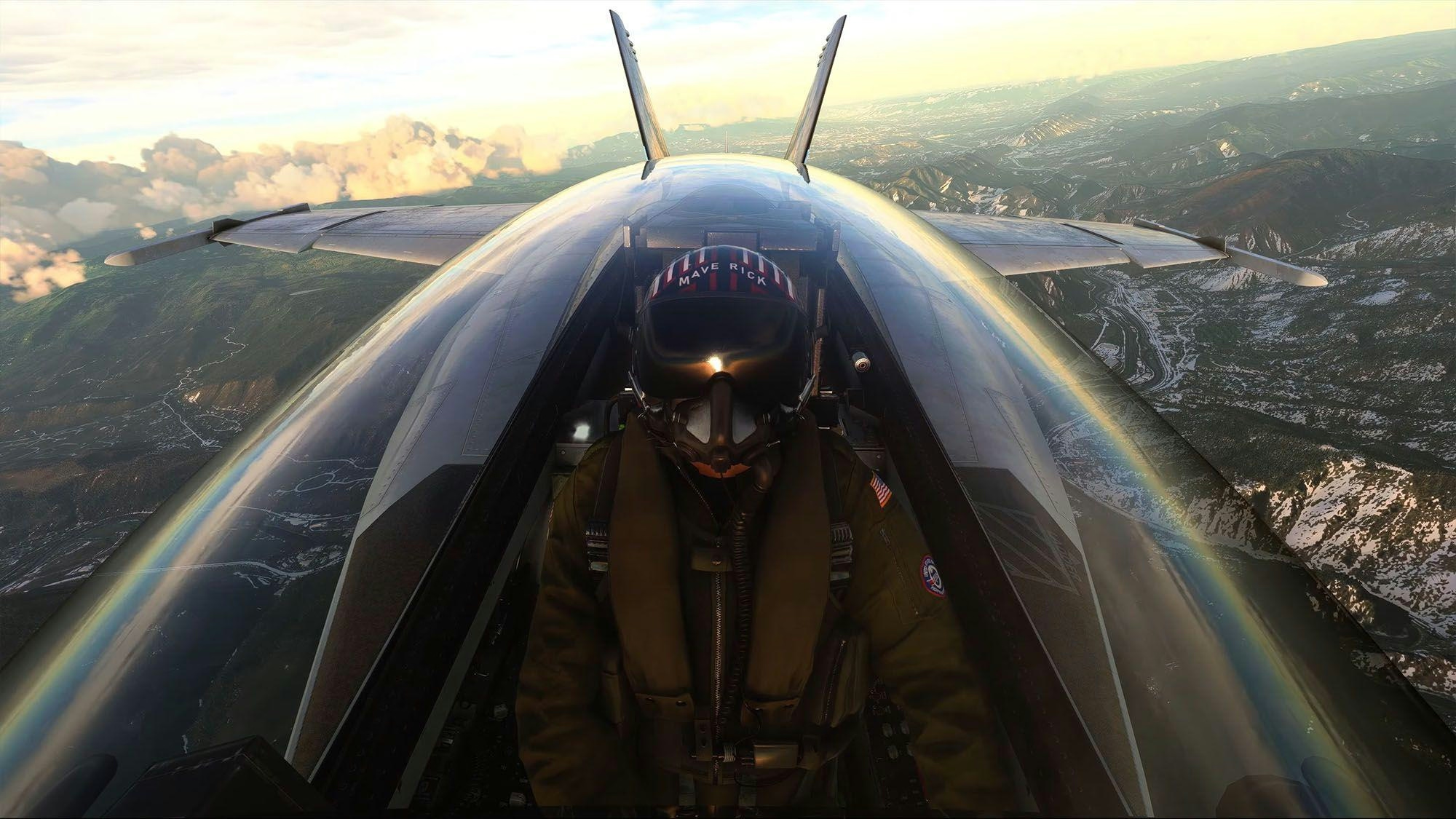
AI-Driven Shape-Shifting Wing May Replace Aircraft Tails
Innovation in Aircraft Design
Engineers at the German Aerospace Center (DLR) are spearheading a transformative development in aviation with the creation of a morphing wing that aims to reduce drag and potentially eliminate the need for traditional aircraft tails. This initiative, part of the Morphing Technologies and Artificial Intelligence Research (morphAIR) project, is supported by a budget of one million Euros and seeks to challenge conventional aircraft design paradigms.
The morphAIR team has successfully tested the technology on a 70-kilogram drone outfitted with a three-meter-wide morphing wing. Unlike conventional wings, which depend on fixed surfaces and separate control elements such as ailerons and flaps, this morphing wing features a smooth, continuous surface. Motorized actuators embedded within the wing enable it to alter its shape dynamically, adapting to varying flight conditions and managing pitch control—functions traditionally performed by the tailplane.
Martin Radestock, senior adaptive systems engineer at DLR, highlighted the inefficiencies inherent in current aircraft wings, noting that turbulent airflow results from the steps and gaps between control surfaces. He explained that the morphing wing’s seamless design, assembled without screws or rivets, effectively eliminates these disruptions, thereby enhancing aerodynamic efficiency.
Advancing Fuel Efficiency and Flight Control
Building on the promising results of initial trials, DLR has initiated a follow-up program named UAdapt (Unmanned Aircraft Wing Adaption). This project focuses on further reducing fuel consumption by minimizing drag and investigating the feasibility of removing the tail entirely. While the concept of variable-geometry wings is not unprecedented—historically exemplified by the “swing wing” designs of aircraft such as the F-111 Aardvark and the F-14 Tomcat—the morphAIR project distinguishes itself by integrating modern artificial intelligence and advanced materials to achieve superior adaptability and efficiency.
Challenges in Market Adoption
Despite the technical promise of AI-driven, shape-shifting wings, significant challenges remain beyond engineering hurdles. Recent surveys, including one from Hotel News Resource, reveal ongoing skepticism regarding AI’s reliability and transparency, factors that could undermine market confidence in adopting such revolutionary technology. Financial markets have also expressed caution about the substantial costs associated with AI integration, as reported by the BBC, which may affect funding availability and slow the pace of adoption.
Competitors within the aerospace industry are closely monitoring these advancements. Established manufacturers like Airbus are investing heavily in advanced engineering projects to sustain their competitive edge, as noted in a recent Aviation Week interview. However, broader economic pressures and constraints on IT budgets, also highlighted by the BBC, may influence the speed and extent to which these innovations are embraced across the sector.
As the morphAIR project progresses, its ultimate success will depend not only on overcoming technical challenges but also on addressing market skepticism and navigating the financial complexities of AI adoption in aviation. Should these obstacles be surmounted, the shape-shifting wing could represent a significant leap forward in aircraft design, efficiency, and performance.

Etihad and Swissport Extend Global Partnership

Sepehran Airlines B737 Returns to Mashhad After Tyre and Engine Issues

Etihad Deploys Widebody Fleet to Meet Strong Demand

Korean Air Finalizes $36.2 Billion Deal with Boeing

Australia’s RFDS Queensland Section Orders Six King Air 260Cs

Korean Air Finalizes Order for 103 Boeing Jets and Engines

Embraer E195-E2 Features Distinctive Engine Placement Among Regional Jets

What Passengers Can Expect on Boeing’s New 777X Jet

How Ethiopian Airlines Became Africa’s Leading Carrier Amid Gulf Competition

Joby Aviation Extends Autonomous Flight Capabilities with Cross-Country Tour
