
حوّل رؤى الذكاء الاصطناعي إلى أفعال منسّقة

الرائج الآن
Categories
AI-Piloted Flight Issues Mayday Call Due to Low Fuel in 2023
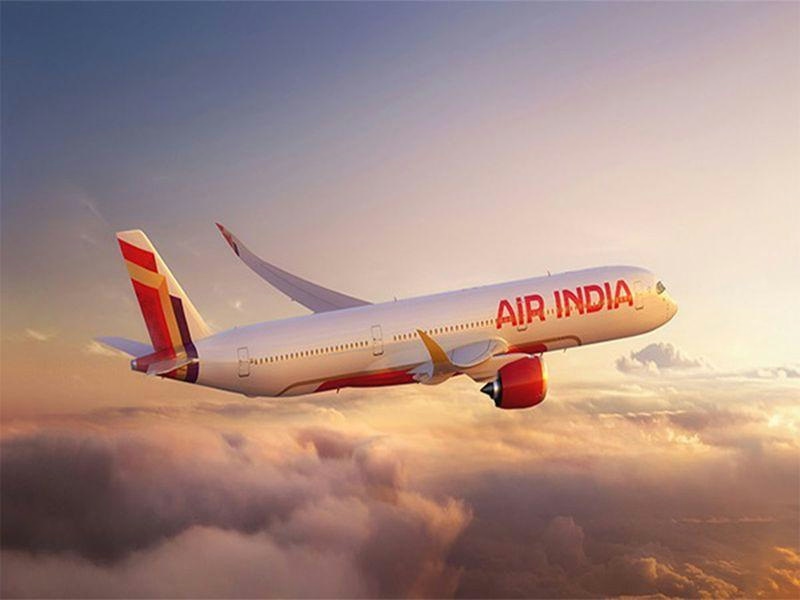
AI-Piloted Air India Flight Issues Mayday Call Following Fuel Emergency in 2023
An Air India flight operated with AI-assisted systems issued a critical “Mayday fuel” distress call after circling for over an hour amid deteriorating weather conditions, missing key warnings, and running dangerously low on fuel before executing an emergency landing. This incident, which occurred on May 25, 2023, has been the subject of a detailed government investigation.
Incident Overview and Investigation Findings
Air India flight AI-850, an Airbus A320 carrying 149 passengers from Pune to Delhi, was compelled to divert and land at Gwalior with fuel reserves nearly depleted. Upon landing, the aircraft had only 464 kilograms of fuel remaining, which further decreased to 348 kilograms after engine shutdown, leaving virtually no margin for delay or technical complications.
The investigation uncovered a series of operational shortcomings that contributed to the emergency. Despite forecasts predicting thunderstorms and strong winds over Delhi, Air India had cleared the flight with only one alternate airport—Jaipur—instead of the two mandated by aviation regulations. This decision significantly reduced the safety buffer from the outset. As the aircraft approached Delhi, severe weather conditions led air traffic control to suspend landings, instructing the flight to hold for over an hour. During this time, the aircraft consumed nearly 2.8 tonnes of fuel.
The decision to divert was delayed despite worsening conditions. When the crew finally opted to divert to Jaipur, they failed to consult updated weather reports, missing critical information about deteriorating conditions at the alternate airport. Thunderstorms and wind shear at Jaipur forced multiple aircraft, including AI-850, to abort landing attempts. By this point, fuel levels had dropped to approximately 1,600 kilograms, rendering Jaipur an unviable option.
With Delhi still closed and no planned safe landing alternatives, the pilots declared a full “Mayday fuel” emergency and diverted to Gwalior—an airport not included in the original flight plan. The aircraft executed a visual landing with fuel reserves just above exhaustion levels. The investigation concluded that the emergency was not caused by technical failure but stemmed from delayed decision-making, inadequate planning, and failure to verify updated weather conditions.
Industry Implications and Market Response
This incident has intensified existing concerns within the aviation industry regarding the reliability and safety of AI-piloted flights. Airbus, the manufacturer of the A320, has recently encountered market challenges linked to quality control issues, including a software recall and problems with metal panels. These difficulties have contributed to a notable decline in Airbus shares, while competitors such as Boeing have sought to leverage the situation by highlighting their own safety records.
Regulatory authorities are now increasing scrutiny of AI-assisted flight operations, with the potential for more stringent compliance requirements and operational delays. Initiatives by organizations like Eurocontrol to refine flight-by-flight fuel burn estimates are anticipated to influence safety protocols and operational efficiency across the sector.
The market’s reaction to such incidents will largely depend on how effectively airlines and manufacturers address these challenges and restore confidence in the safety and integrity of AI-piloted aviation operations.

Etihad Airways Suspends Airbus A380 Flights on Key Route

Aditya Birla Group Seeks Approval for Aircraft Leasing in GIFT City

Qatar Airways Highlights Innovation and Connectivity at Arabian Travel Market 2026

Hong Kong's Five-Year Plan Includes Andrew Fan's Aircraft Parts Processing Hub Proposal

ACIA Aero Leasing Delivers ATR72-600 to Air Nostrum

RTX Appoints Jill Albertelli as Head of Pratt & Whitney

TAT Technologies Joins Beyond Aero Hydrogen Aircraft Program

AURAK Study Highlights Barriers to Air Taxi Adoption in Emerging Economies

Xiamen Air Selects Altitude for 787 Maintenance at Heathrow

Etihad and Swissport Extend Global Partnership
