صورة

حوّل رؤى الذكاء الاصطناعي إلى أفعال منسّقة

انضم إلى قائمة الانتظار لـ AeroGenie اليوم!

الرائج الآن

Categories

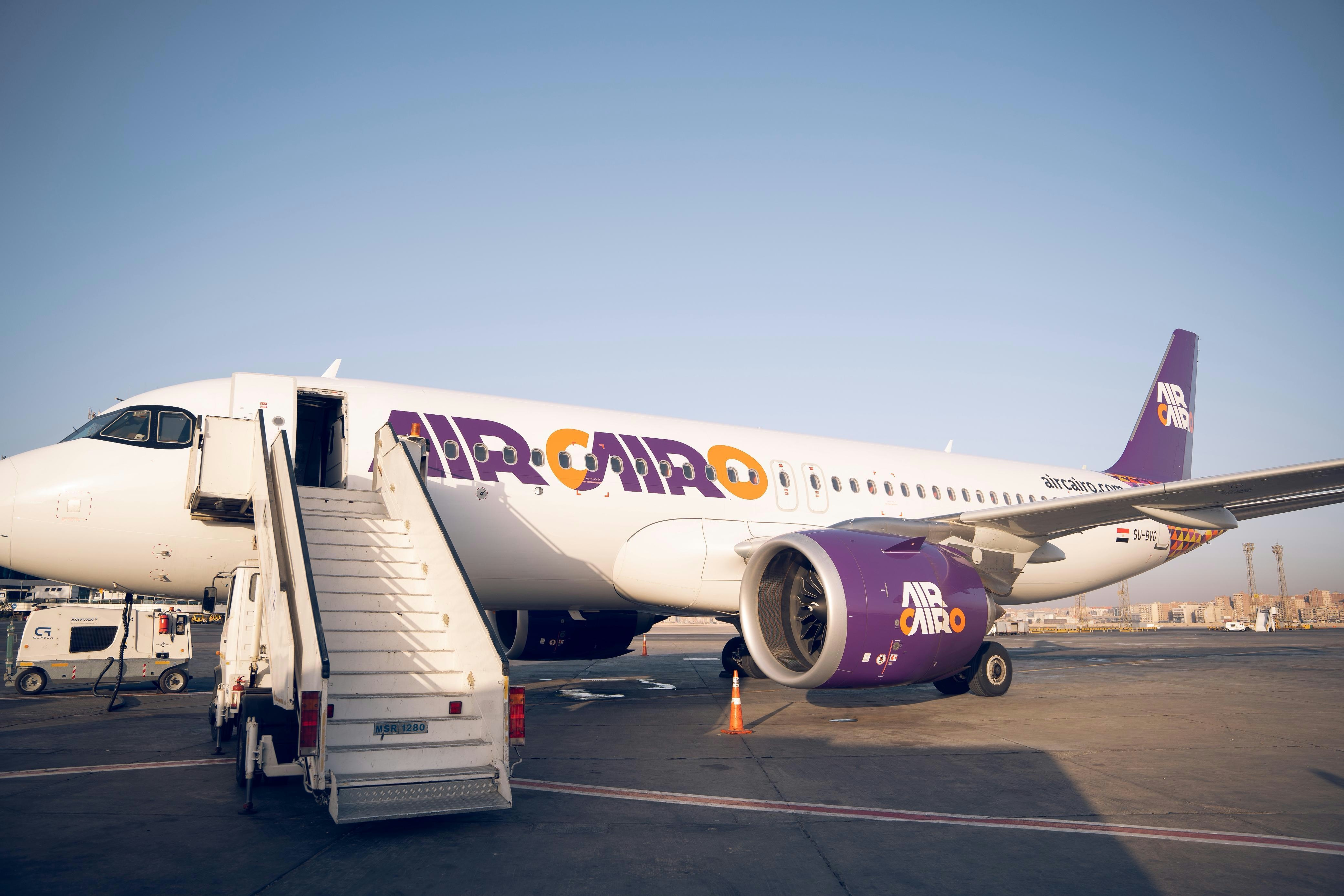
Air Cairo Purchases 15 A320neos for Its First Airbus Fleet
September 8, 2026By ePlane AI
Air Cairo Purchases 15 A320neos for Its First Airbus Fleet
0
0
Air Cairo
Airbus A320neo
Aircraft Fleet Expansion

Air Cairo Acquires 15 A320neos in Landmark Direct Airbus Purchase

Air Cairo has confirmed a firm order for 15 Airbus A320neo aircraft, marking the Egyptian carrier’s first direct purchase from Airbus. The announcement was made on September 8 during the El Alamein International Airshow in Egypt. Until now, Air Cairo’s A320-family jets have been obtained exclusively through leasing arrangements, making this order a significant milestone as the airline introduces company-owned Airbus aircraft into its fleet for the first time.

Fleet Expansion and Strategic Implications

Currently, Air Cairo operates a fleet comprising 20 A320neos and 12 earlier-generation A320ceos. The addition of 15 directly purchased A320neos will further consolidate the neo model’s predominance within the airline’s operations, as the older ceo variants are gradually being phased out. While the carrier has not disclosed a delivery timeline or specified whether the new aircraft will replace leased jets, support network expansion, or serve both functions, the move clearly signals a strategic shift towards greater control over its fleet composition and financing.

Air Cairo, majority-owned by EgyptAir, commenced operations in October 2003 with an Airbus A320. Over the past five years, the airline has experienced rapid growth, expanding from a modest fleet of seven aircraft to a diverse lineup now centered on the A320 family. The current fleet includes 12 A320ceos, 20 A320neos, six ATR 72-600 turboprops, and three Embraer E190 regional jets. The ATRs and Embraers provide operational flexibility on routes where the 180-seat A320 would be less efficient, with seating capacities of 70 and 109 passengers respectively. The airline reports a total fleet size exceeding 45 aircraft.

Notably, Air Cairo’s three Embraer E190s, delivered in December 2022 through Egyptian lessor CIAF Leasing, represent the final new aircraft of Embraer’s original E190 generation. These jets concluded production of the E190-E1 model as Embraer shifted focus to its newer E190-E2 and E195-E2 variants.

Market Position and Competitive Challenges

Air Cairo serves a broad network spanning Egypt, Europe, the Middle East, and Africa. It operates as a hybrid carrier, combining scheduled services with a substantial leisure operation that connects European markets to Egyptian tourist destinations. The airline has set ambitious growth targets, aiming to expand its fleet to more than 130 aircraft by 2034—more than tripling its current size. The decision to purchase aircraft directly from Airbus reflects a strategic intent to enhance financial flexibility and reduce dependence on leasing companies amid this expansion.

This fleet growth occurs against a backdrop of intensifying competition in the global aviation sector. Emerging carriers and established airlines alike may respond with aggressive pricing or accelerate the development of new aircraft models to maintain market share. The recent international introduction of China’s COMAC C919 exemplifies the evolving competitive landscape, potentially influencing regulatory frameworks and industry dynamics. As Air Cairo strengthens its fleet and market presence, it will navigate both significant growth opportunities and heightened competitive pressures.

More news
Rotax Mandates Turbo Part Replacement Before Next Flight

Rotax Mandates Turbo Part Replacement Before Next Flight

Rotax Orders Immediate Replacement of Turbocharger Valve Housing Rotax has issued a mandatory service bulletin requiring the replacement of the turbocharger valve housing on select 915 i and 916 i series engines prior to their next flight. Released on September 3, the directive targets engines and spare turbocharger assemblies identified by specific serial numbers, following the detection of oil leakage during end-of-line testing. Manufacturing Defects and Safety Risks An internal investigation by Rotax uncovered cracks and insufficient wall thickness in certain valve housings, attributing the defects to a supplier manufacturing issue. The company classified the flaw as unsafe, emphasizing that leaking oil could come into contact with hot exhaust components. This condition poses a risk of smoke generation and, in severe cases, could lead to an engine-compartment fire. The affected component is the valve housing, part number 956492. Additionally, some spare turbocharger assemblies bearing part number 893102 are impacted and must have the valve housing replaced before installation. Operational Impact and Industry Response The immediate replacement requirement is anticipated to increase operational costs for aircraft operators, as airlines and maintenance providers will need to adjust schedules and budgets to comply with the directive. The heightened maintenance demands may prompt a reassessment of maintenance strategies, potentially resulting in temporary disruptions or increased aircraft downtime. In the competitive landscape, engine manufacturers may seek to leverage this situation by offering alternative solutions or upgrades aimed at addressing similar reliability concerns, thereby intensifying competition within the engine maintenance and replacement market. Compliance Procedures and Maintenance Protocols To ensure compliance, owners and maintenance personnel must verify engine and turbocharger serial numbers against those listed in the service bulletin and consult engine logbooks to determine whether the valve housing has already been replaced. Stored engines and spare parts must be corrected before delivery, and uninstalled components must be addressed prior to installation. Rotax mandates that only authorized technicians, specifically those holding the iRMT heavy-maintenance qualification, perform the replacement work. The company will provide labor credit for qualifying replacements through authorized distributors or service centers, and all completed maintenance must be recorded in the engine logbook. Related Safety Directives This latest turbocharger service bulletin follows a recent airworthiness directive issued by the Federal Aviation Administration (FAA) on August 28. That directive required inspections of approximately 180 U.S.-registered aircraft equipped with certain 912- and 914-series engines after Rotax identified that some recently manufactured propeller gearboxes were assembled without an oil spray nozzle and screws securing the propeller shaft bearing. Gearboxes missing these components were mandated to be replaced before further flight. As Rotax and the wider aviation industry address these safety concerns, operators face the dual challenge of maintaining regulatory compliance while managing the operational and financial implications of urgent maintenance requirements.
Archer Aviation’s Air Taxi Ambitions Face Critical Test

Archer Aviation’s Air Taxi Ambitions Face Critical Test

Archer Aviation’s Air Taxi Ambitions Face Critical Test Transitioning from Concept to Reality Archer Aviation (NYSE: ACHR) is attracting renewed scrutiny as its Midnight electric air taxi advances from concept to operational demonstration. The company has launched a series of public flight showcases under its “No Roads” tour, aiming to introduce the Midnight aircraft to potential customers and communities beyond controlled test settings. These demonstrations highlight both the promise and the challenges inherent in electric vertical takeoff and landing (eVTOL) technology, as Archer seeks to bring urban air mobility closer to mainstream adoption. The Midnight aircraft embodies Archer’s vision to transform short-distance transportation by merging the flexibility of helicopters with the environmental benefits and potential cost efficiencies of electric propulsion. Designed for frequent, short urban and regional flights, the aircraft targets routes where conventional road travel is often slow or impractical. These public demonstrations serve a dual purpose: they are not only marketing efforts but also critical opportunities to collect data on aircraft performance, operational logistics, route planning, and passenger acceptance. By expanding flight activity across Northern California and other strategic regions, Archer aims to familiarize communities with the concept while gathering insights essential for future commercial deployment. For a business model that depends on persuading travelers to opt for air taxis over ground transport, demonstrating convenience, reliability, and safety is crucial. Competitive Landscape and Financial Challenges Archer’s ambitions unfold amid intense competition and significant financial pressures. The company recently acquired Boeing’s automated air taxi initiative, a strategic move that could provide a technological advantage over competitors such as Joby Aviation, which currently holds a market valuation exceeding $8.5 billion. This partnership with Boeing, which includes a minority stake and access to Wisk’s autonomous flight technology, is expected to bolster Archer’s position in the emerging air taxi market. The market responded positively to the Boeing acquisition, with Archer’s stock price rising sharply on the news. The deal is viewed as a potential catalyst, offering advanced automation capabilities that may accelerate Archer’s commercialization timeline. Nevertheless, the company’s financial statements reveal ongoing challenges. Despite a 213% increase in revenue, Archer reported a substantial net loss of $263.2 million in the second quarter of 2026. These significant losses continue to fuel debate over the company’s valuation and long-term sustainability. In contrast, Joby Aviation is pursuing a more measured growth strategy, leveraging established partnerships with firms such as Toyota and Blade. While Joby’s revenue growth has been more conservative, its reliance on experienced partners may provide a steadier, albeit slower, path to market entry. The Road Ahead for Urban Air Mobility As Archer moves the Midnight aircraft closer to public use and deepens its industry collaborations, the broader question remains whether eVTOL technology can transition from high-profile demonstrations to a commercially viable transportation network. The coming months will be pivotal as Archer and its competitors confront challenges related to certification, manufacturing readiness, infrastructure development, and, most critically, customer adoption. The outcome of these efforts will play a decisive role in determining whether urban air taxis can fundamentally reshape the future of short-distance travel.
Romania’s TAROM Receives First Boeing 737-8

Romania’s TAROM Receives First Boeing 737-8

Romania’s TAROM Receives First Boeing 737-8 Amid Fleet Renewal Romania’s national carrier, TAROM, has taken delivery of its first Boeing 737-8, marking a pivotal moment in the airline’s ongoing efforts to modernize its fleet. The aircraft, registered as YR-BGO (msn 60196), was handed over following its departure from Boeing’s Renton facility near Seattle on August 19. After a ferry flight from the U.S. West Coast to Reykjavik Keflavik on September 7, the jet is scheduled to arrive in Bucharest on the evening of September 8, 2026. This acquisition aligns with TAROM’s broader restructuring strategy under new management, which aims to address persistent financial challenges. Currently, the airline operates a mixed fleet comprising two ATR72-500s, four ATR72-600s, three Boeing 737-700s, and four Boeing 737-800s. The addition of the 737-8 represents a significant step toward fleet modernization, with a second Boeing 737-8, registered YR-BGN (msn 66425), expected to join the fleet shortly. In total, TAROM has placed orders for eight more Boeing 737-8 aircraft, signaling a long-term commitment to renewing its narrowbody fleet. Market Context and Competitive Dynamics The introduction of the Boeing 737-8, part of Boeing’s widely used MAX series, occurs amid notable shifts in the global aviation market. Deliveries of the 737 MAX series declined by 17% in July 2026 compared to the previous month, reflecting a potential slowdown in aircraft demand. The commercial aviation sector remains fiercely competitive, dominated by Boeing and Airbus, while China’s COMAC is actively seeking to challenge this duopoly with its C919 model. Additionally, Embraer has recently faced warnings from Airbus regarding plans to launch a new narrowbody jet, highlighting the intensity of competition within the industry. TAROM’s fleet renewal may provoke competitive responses from other carriers, particularly those operating Boeing or Airbus aircraft. As the airline advances its restructuring efforts and adapts to evolving market conditions, the arrival of the Boeing 737-8 stands as both a strategic investment and a test of TAROM’s resilience amid ongoing industry challenges.
Experts Convene at oneworld Loyalty Summit to Discuss Industry Trends

Experts Convene at oneworld Loyalty Summit to Discuss Industry Trends

Experts Convene at oneworld Loyalty Summit to Discuss Industry Trends Industry Leaders Gather to Explore the Future of Customer Loyalty FORT WORTH, Texas, Sept. 8, 2026 – The oneworld® Alliance, comprising 15 member airlines, convened the inaugural oneworld Loyalty Summit today, marking a significant milestone as the first event of its kind hosted by an airline alliance. The summit brought together prominent figures and innovators from the airline, travel, hospitality, financial services, and technology sectors to engage in dialogue on the rapidly evolving landscape of customer loyalty. Ole Orvér, CEO of oneworld, highlighted the growing strategic importance of loyalty programs within the travel industry. He noted that loyalty is increasingly driven by technological advancements, enhanced personalization, and new partnerships designed to meet shifting customer expectations. “Our member airlines are already leading globally, and this summit provides a forum for experts to share ideas, discuss trends, and drive conversations about the future of loyalty,” Orvér stated. Insights from Industry Experts and Innovative Start-ups The one-day summit featured contributions from a distinguished panel of industry leaders, including Nat Pieper, Chief Commercial Officer of American Airlines; Brian Kelly, Founder and CEO of The Points Guy; Sarah Moore, Senior Vice President and Head of Travel at Capital One; and executives from major airlines and hospitality groups such as The Indian Hotels Company Limited, International Airlines Group (IAG), Qantas, and Qatar Airways. Gilbert Ott, Director of Loyalty at oneworld, emphasized the alliance’s commitment to enhancing the loyalty experience through personalization and value creation. He explained that oneworld aims to integrate loyalty across customers’ daily interactions, spanning shopping, accommodation, and banking. Ott described the summit as an opportunity to explore cross-sector technological innovations, engage with start-ups, and envision a future where loyalty maximizes every customer interaction within the oneworld network and its partners. A distinctive feature of the summit was the live business investment pitches, where emerging start-ups presented innovative solutions directly to industry decision-makers. These “speed sessions” showcased technologies addressing critical challenges and opportunities in loyalty programs. Among the presenting companies were Reclaim Protocol, focusing on loyalty fraud prevention and digital verification; FrequentFan, which aims to broaden redemption options; WeatherPromise, offering trip assurance for ancillary services; SmartMedia Technologies, enhancing loyalty engagement; Rove, unlocking new loyalty revenue streams; and Bonafide, leveraging artificial intelligence to strengthen brand loyalty identity. Navigating a Transformative Era for Loyalty Programs The summit arrives at a pivotal moment for the travel and hospitality industries. According to Amadeus’ Travel Dreams 2026 Report, the rapid advancement of artificial intelligence presents both opportunities and challenges for loyalty programs. Key discussion points included the integration of AI technologies and the adaptation to evolving traveler preferences, particularly the increasing impact of guest-generated content on social media platforms. As competition intensifies, airlines and their partners are seeking to differentiate their loyalty offerings through unique features and strategic collaborations. The oneworld Loyalty Summit provided a timely platform for industry leaders to address these trends and collaboratively shape future strategies. About oneworld oneworld unites 15 world-class airlines—including Alaska Airlines/Hawaiian Airlines, American Airlines, British Airways, Cathay Pacific, Fiji Airways, Finnair, Iberia, Japan Airlines, Malaysia Airlines, Oman Air, Qantas, Qatar Airways, Royal Air Maroc, Royal Jordanian, and SriLankan Airlines—serving nearly 1,000 destinations worldwide. The alliance is dedicated to delivering a superior and consistent travel experience across its extensive network.
Thompson Aero Seating Launches Campaign Highlighting People, Heritage, and Innovation

Thompson Aero Seating Launches Campaign Highlighting People, Heritage, and Innovation

Thompson Aero Seating Launches Campaign Highlighting People, Heritage, and Innovation Thompson Aero Seating (TAS) has introduced a new film campaign that artfully links the serene landscapes of Northern Ireland with the comfort experienced by passengers in premium aircraft seating. The film offers an intimate look at the meticulous craftsmanship involved in creating each business-class seat, emphasizing detailed stitching, upholstery, and precision engineering. Central to the narrative is the expertise and dedication of TAS’s workforce, underscoring the human element behind the company’s products. Navigating Industry Challenges Amid Growing Demand This campaign emerges at a critical juncture for the premium seating sector, as airlines worldwide grapple with prolonged approval processes for new cabin products. The development and certification of innovative premium offerings often extend over several years, a challenge recently faced by major carriers including American Airlines, Lufthansa, Riyadh Air, and Singapore Airlines. These delays have intensified scrutiny on suppliers like TAS, as airlines strive to satisfy increasing passenger expectations for privacy, advanced connectivity, and enhanced inflight entertainment. Industry analysts observe that TAS’s focus on heritage and innovation is both timely and demanding. With air travel rebounding, passengers are placing greater emphasis on comfort and technological sophistication, compelling seating manufacturers to balance aesthetic appeal with cutting-edge functionality. By highlighting the skills and commitment of its staff, TAS aims to reassure clients of its unwavering dedication to quality and innovation. Evolving Competitive Landscape and Strategic Positioning The competitive environment within aerospace is also shifting, with companies such as DroneShield directing attention toward advanced security technologies, including drone detection and counter-drone systems. This emerging focus has the potential to divert industry resources and attention away from traditional seating innovations, presenting an additional challenge for firms like TAS to maintain their relevance. By intertwining its Northern Irish heritage with a forward-looking design philosophy, Thompson Aero Seating endeavors to solidify its position as a leader in the premium seating market. This approach seeks to navigate the complex regulatory, technological, and competitive pressures that currently shape the aviation industry.
QantasLink’s First E190 Aircraft Arrives in Perth

QantasLink’s First E190 Aircraft Arrives in Perth

QantasLink’s First Embraer E190 Arrives in Perth, Marking Fleet Renewal Milestone QantasLink has welcomed its first Embraer E190 aircraft, registered VH-E9A, to Perth, signifying a pivotal step in the airline’s fleet renewal program for its Western Australian resources charter operations. The 100-seat jet completed an extensive 20-hour journey from Norwich, UK, with stopovers in Bulgaria, Tajikistan, India, Malaysia, and Broome before arriving on September 7. This E190 is the initial delivery in a planned series of up to 14 mid-life aircraft intended to gradually replace QantasLink’s aging Fokker 100 fleet. The introduction of the E190 is anticipated to enhance operational reliability, improve fuel efficiency, and elevate passenger comfort across the airline’s regional services. Nonetheless, the transition to this new aircraft type presents operational challenges, including potential service disruptions during the changeover and the necessity for comprehensive training of local personnel. Fleet Upgrades and Operational Preparations Prior to entering service, each E190 will undergo an extensive cabin refurbishment. Upgrades will include the installation of Wi-Fi, allowing passengers to stream content through the enhanced Qantas Entertainment App. The aircraft will also feature redesigned, more spacious seating with adjustable headrests, USB-A and USB-C charging ports, and holders for personal devices. Additionally, QantasLink will introduce Economy Plus seating on the E190, offering passengers extra legroom, priority boarding, and priority access to overhead baggage compartments. The first E190 is slated to commence commercial operations in January 2027. In preparation, approximately 70 pilots, crew members, and engineers are undertaking a combined 18,000 hours of training to ensure proficient operation and maintenance of the new fleet. As the number of E190s increases, the training program is expected to expand, potentially involving over 600 staff members. Market observers anticipate that the E190’s enhanced fuel efficiency and quieter performance will improve customer satisfaction on regional charter routes. Its extended range may also enable QantasLink to explore new operational opportunities within Western Australia and beyond. This fleet renewal is likely to prompt competitors in the regional aviation sector to reassess their own strategies to maintain competitiveness as QantasLink consolidates its market position. In parallel with the E190 introduction, QantasLink is investing in upgrades to its Western Australian fleet of nineteen Perth-based Airbus A320s. These aircraft are being fitted with Wi-Fi and refreshed cabins, with the first enhancements expected to be completed by the end of October. As QantasLink undertakes this significant transformation, the airline is focused on delivering a modern, comfortable, and efficient travel experience while managing the complexities associated with integrating a new aircraft type into its network.
Trinity Receives First Boeing 737-8 in New Livery

Trinity Receives First Boeing 737-8 in New Livery

Trinity Airways Unveils New Boeing 737-8 in Distinctive Livery, Signaling Strategic Growth Aviation Capital Group (ACG), a prominent global aircraft asset manager, has delivered a Boeing 737-8 to Trinity Airways, formerly known as T’way Air. This aircraft is the first to feature Trinity’s refreshed brand identity, distinguished by a sleek gray and rose gold livery. The delivery, sourced from ACG’s orderbook, is a critical component of Trinity’s expansion strategy, aimed at enhancing connectivity between South Korea and the wider Asia-Pacific region through its hubs at Incheon and Gimpo International Airports in Seoul. Chris Kong, Senior Vice President and Procurement Director of Trinity Airways, emphasized the significance of this milestone, stating that the aircraft represents more than a fleet addition. It embodies the airline’s new brand mission, “Relaxed and Reliable,” and marks the beginning of a new chapter for the carrier. Trinity’s collaboration with ACG remains strong, with this being the third aircraft delivered under a seven-aircraft Boeing 737-8 agreement, with the remaining four scheduled for delivery by the end of 2026. Strategic Implications of Fleet Modernization and Rebranding The integration of the Boeing 737-8 into Trinity’s fleet presents both operational and branding challenges. The introduction of the new livery is central to the airline’s rebranding efforts, designed to reinforce its updated market positioning and corporate identity. Industry analysts are closely monitoring how the new aircraft will perform relative to competitors, particularly in terms of fuel efficiency, passenger comfort, and the incorporation of advanced onboard technologies. Market response will likely depend on the aircraft’s operational performance and the quality of the passenger experience. Should Trinity’s Boeing 737-8 demonstrate superior economics or innovative features, it may prompt rival airlines to reevaluate their fleet strategies or intensify marketing efforts to maintain competitiveness. Through this delivery, Trinity Airways underscores its commitment to modernization and growth, navigating the complexities of fleet integration and brand evolution within a highly competitive regional aviation landscape.
Willis Lease Finance CEO Introduces Willis Platform at Deutsche Bank Aviation Forum

Willis Lease Finance CEO Introduces Willis Platform at Deutsche Bank Aviation Forum

Willis Lease Finance CEO Introduces Integrated Aviation Platform at Deutsche Bank Aviation Forum Willis Lease Finance Corp. unveiled its new integrated aviation platform during a presentation at Deutsche Bank’s Aviation Forum, emphasizing the company’s management of $4.4 billion in assets. The platform represents a strategic effort to streamline operations and broaden service offerings within the aviation leasing industry, as outlined by the company’s CEO. Strategic Vision and Market Challenges The newly introduced platform aims to enhance operational efficiency and diversify revenue by combining engine leasing with maintenance, repair, and overhaul (MRO) services. This integrated approach is intended to position Willis Lease Finance more competitively in a sector marked by established players and evolving market demands. However, the company faces significant challenges, including intense competition from well-entrenched firms and regulatory complexities, particularly in emerging markets such as China. The successful adoption of advanced technologies will be essential to achieving the platform’s goals of operational streamlining and service enhancement. Furthermore, the company’s ability to adapt to shifting industry standards and regulatory frameworks will be a critical factor in the platform’s long-term viability. Market and Industry Response Reactions from investors have been varied. While some view the platform as a progressive step that could unlock new revenue streams and reinforce Willis Lease Finance’s market standing, others remain cautious about its immediate financial impact. Competitors are expected to monitor the platform’s rollout closely, potentially responding with strategic alliances or intensified marketing efforts to protect or grow their market share. The degree to which Willis Lease Finance can deliver unique advantages or cost efficiencies will likely influence the competitive landscape and the platform’s reception. Outlook As Willis Lease Finance moves forward with its integrated aviation platform, it must navigate a complex environment of industry competition, regulatory challenges, and technological integration. The platform’s performance in the upcoming quarters will be a focal point for investors and industry analysts. Additional information, including forward-looking statements and non-GAAP financial metrics referenced during the presentation, is available in the company’s recent SEC filing, which provides further context and disclosures.
Air Cairo Plans to Acquire Up to 30 New Airbus Narrowbody Jets

Air Cairo Plans to Acquire Up to 30 New Airbus Narrowbody Jets

Air Cairo Plans Major Expansion with New Airbus Narrowbody Jets Egyptian low-cost carrier Air Cairo is poised to significantly expand its fleet with the acquisition of up to 30 new Airbus A320 family aircraft, according to sources close to the negotiations. The agreement, which could be finalized imminently, is expected to include a firm order for approximately 15 jets, alongside options for an additional 15 units. This move marks a substantial investment in the airline’s growth strategy amid intensifying competition in the narrowbody aircraft market. Fleet Growth and Market Position Established over a decade ago, Air Cairo currently operates a fleet of around 30 Airbus A320s, complemented by a limited number of Embraer regional jets and ATR turboprops. The airline serves more than 60 destinations across the Middle East and Europe, positioning itself as a significant player in the region’s budget travel sector. The planned fleet expansion aims to strengthen Air Cairo’s market presence and capacity, enabling it to better meet rising passenger demand and enhance route offerings. The acquisition aligns with broader trends in the global narrowbody aircraft sector, which remains dominated by Airbus and Boeing. China’s COMAC is also emerging as a competitor, while other manufacturers such as Embraer are exploring new narrowbody designs but face considerable financial and competitive challenges in this crowded market. Regional and Industry Context Air Cairo’s expansion reflects wider developments among African carriers. Ethiopian Airlines, the continent’s largest airline, is reportedly nearing an agreement to acquire up to ten Boeing long-haul freighters, including both current 777 models and the forthcoming 777-8F. Although no official confirmation has been made by either party, the deal would reinforce Boeing’s longstanding partnership with Ethiopian Airlines and support the transition to next-generation cargo aircraft. Ethiopian Airlines has also engaged in discussions with Airbus regarding the A350F freighter, underscoring the ongoing rivalry between the two aerospace giants. Industry analysts observe that airlines worldwide are adapting to evolving market pressures through diverse strategies. For instance, American Airlines is investing in premium services and retrofitting existing aircraft to attract higher-yield passengers by expanding first-class and extra-legroom seating. These approaches highlight the increasing importance of fleet modernization and enhanced passenger experience in maintaining competitive advantage. The Airbus A320 Family and Market Dynamics The Airbus A320 family—including the A319, A320, A321, and their neo and XLR variants—continues to be a cornerstone of short- and medium-haul operations globally. These aircraft are prized for their fuel efficiency, passenger capacity, and low operating costs. As Air Cairo pursues its fleet expansion, it must navigate a complex environment shaped by shifting passenger preferences, aggressive manufacturer competition, and the potential entry of new players into the narrowbody segment. Boeing projects that Africa’s commercial aircraft fleet will more than double over the next two decades, driving demand for approximately 1,165 new planes and creating 75,000 additional aviation jobs. This growth is expected to generate a $140 billion market for aviation services, including maintenance, repairs, and digital solutions. As Air Cairo advances its Airbus acquisition plans, the airline stands at a critical juncture, balancing significant growth opportunities with the challenges of a rapidly evolving and highly competitive aviation landscape.
Willis Lease Details $4.4 Billion Global Jet Platform

Willis Lease Details $4.4 Billion Global Jet Platform

Willis Lease Details $4.4 Billion Global Jet Platform Amid Market Challenges Willis Lease Financial Corporation (WLFC) has announced a major expansion of its operations through the launch of a $4.4 billion global jet platform. This initiative encompasses the acquisition of 12 commercial aircraft and 13 aircraft engines, reflecting the company’s strategic intent to enhance its integrated leasing, asset management, and aftermarket services within the aviation sector. By broadening its asset base, WLFC aims to solidify its position in the competitive global aviation market. Navigating Economic and Industry Risks The announcement arrives against a backdrop of considerable economic uncertainty. WLFC faces multiple challenges, including fluctuating oil prices, rising inflation, and global market volatility, all of which contribute to an unpredictable operating environment. These macroeconomic factors, coupled with the inherent risks associated with owning and leasing commercial aircraft and engines, introduce significant complexity to the company’s growth trajectory. Investor response to the expansion has been measured, with WLFC’s stock declining by 0.96% on August 25, 2026, following the announcement. This reaction underscores market apprehension regarding the broader economic conditions and the risks tied to large-scale acquisitions. Although competitor reactions have not been publicly disclosed, WLFC’s comprehensive platform development could enhance its competitive edge by leveraging integrated capabilities to address evolving customer needs. Forward-Looking Considerations and Risk Factors In its forward-looking statements, WLFC outlines its business strategy and anticipated capital expenditures while acknowledging the uncertainties that may affect future performance. The company identifies several risk factors that could materially impact its results. These include geopolitical events such as war or terrorism, fluctuations in fuel prices, and operational disruptions stemming from weather, cybersecurity threats, or humanitarian crises. Additionally, shifts in airline industry trends, regulatory changes affecting operators and maintenance standards, and evolving accounting or tax policies present ongoing challenges. WLFC also highlights operational risks related to negotiating equipment transactions, managing costs, collecting payments, and repossessing assets under defaulted leases. The company cautions investors against placing undue reliance on forward-looking statements, noting that actual outcomes may differ significantly from projections. Further details on these risks and financial disclosures are available in WLFC’s most recent filings with the U.S. Securities and Exchange Commission. Despite these challenges, WLFC’s expansion signals a strong commitment to growth and innovation within a rapidly changing industry. Its integrated approach to leasing and asset management may provide strategic advantages as the company navigates the complexities of the global aviation market.
line










