
حوّل رؤى الذكاء الاصطناعي إلى أفعال منسّقة

الرائج الآن
Categories
Air India Expands Fleet and Maintenance Capabilities as Boeing Strengthens Aerospace Presence in India
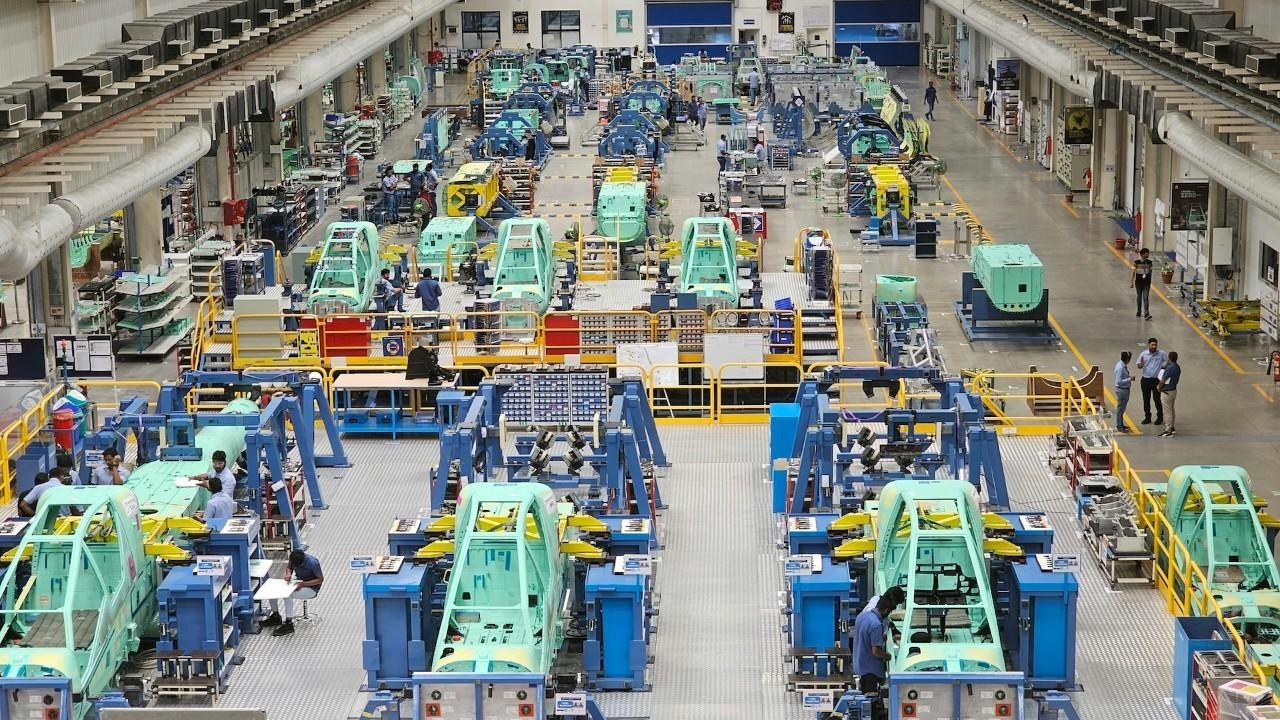
Air India Expands Fleet and Maintenance Capabilities Amid Boeing’s Growing Aerospace Commitment in India
Air India is undergoing a significant transformation, marked by an ambitious expansion of its fleet alongside substantial upgrades to its Maintenance, Repair, and Overhaul (MRO) capabilities. This development coincides with Boeing’s intensified engagement in India’s burgeoning aviation sector, a partnership poised to enhance service quality, connectivity, and operational efficiency across the country’s air travel network.
Strengthening Domestic Aerospace Infrastructure
Boeing, a long-established collaborator in India’s aerospace industry, is increasing its investments in local manufacturing, MRO infrastructure, and workforce development. Central to these efforts is the Boeing India Repair Development and Sustainment (BIRDS) program, which aims to reduce aircraft turnaround times and improve operational readiness for Air India’s growing fleet. These initiatives align closely with the Indian government’s Aatmanirbhar Bharat (Self-Reliant India) policy, which prioritizes the development of domestic capabilities in aerospace and defense manufacturing.
Air India’s recent completion of the A320neo retrofit program exemplifies the airline’s expanding MRO expertise, supported by government policies that encourage indigenous maintenance and repair operations. Nevertheless, the sector faces challenges, particularly as Air India Engineering Services Limited (AIESL), the airline’s former maintenance division, contends with uncertainties stemming from privatization delays and shifting dynamics with international MRO providers.
Navigating a Competitive and Complex Market
The competitive landscape within India’s aerospace sector is evolving rapidly. Hindustan Aeronautics Limited (HAL), the state-owned aerospace enterprise, has entered into a partnership with Russia to manufacture SJ-100 jets, signaling intensified competition for both Air India and Boeing. This strategic move has been met with positive investor sentiment, as reflected in HAL’s stock performance. Meanwhile, Boeing’s market position is influenced by a range of global factors, including the resolution of a recent defense strike, prospects for new aircraft orders at the Dubai Airshow, and setbacks such as a NATO surveillance contract loss. Boeing is also actively pursuing expansion of its F-15 Eagle fighter jet sales in the Middle East, a development that could heighten competition with HAL in that region.
Despite these complexities, Air India’s fleet expansion remains a cornerstone of its strategic vision. The airline plans to introduce hundreds of new aircraft, targeting both international and regional routes to accommodate the rising demand for air travel to and from India. Boeing’s continued support extends beyond aircraft supply to include talent development initiatives such as the Boeing University Innovation Leadership Development (BUILD) program and the Sukanya initiative, which promotes the participation of women in aviation. These programs underscore Boeing’s long-term commitment to nurturing India’s aerospace ecosystem.
As Air India and Boeing deepen their collaboration, passengers can anticipate more efficient travel experiences, characterized by reduced maintenance turnaround times and improved access to India’s diverse destinations. This evolving partnership not only bolsters India’s aviation infrastructure but also reinforces the country’s emerging role as a significant player in the global aerospace industry.

Etihad Airways Suspends Airbus A380 Flights on Key Route

Aditya Birla Group Seeks Approval for Aircraft Leasing in GIFT City

Qatar Airways Highlights Innovation and Connectivity at Arabian Travel Market 2026

Hong Kong's Five-Year Plan Includes Andrew Fan's Aircraft Parts Processing Hub Proposal

ACIA Aero Leasing Delivers ATR72-600 to Air Nostrum

RTX Appoints Jill Albertelli as Head of Pratt & Whitney

TAT Technologies Joins Beyond Aero Hydrogen Aircraft Program

AURAK Study Highlights Barriers to Air Taxi Adoption in Emerging Economies

Xiamen Air Selects Altitude for 787 Maintenance at Heathrow

Etihad and Swissport Extend Global Partnership
