
حوّل رؤى الذكاء الاصطناعي إلى أفعال منسّقة

الرائج الآن
Categories
AIR ONE Launches Personal Electric Aircraft
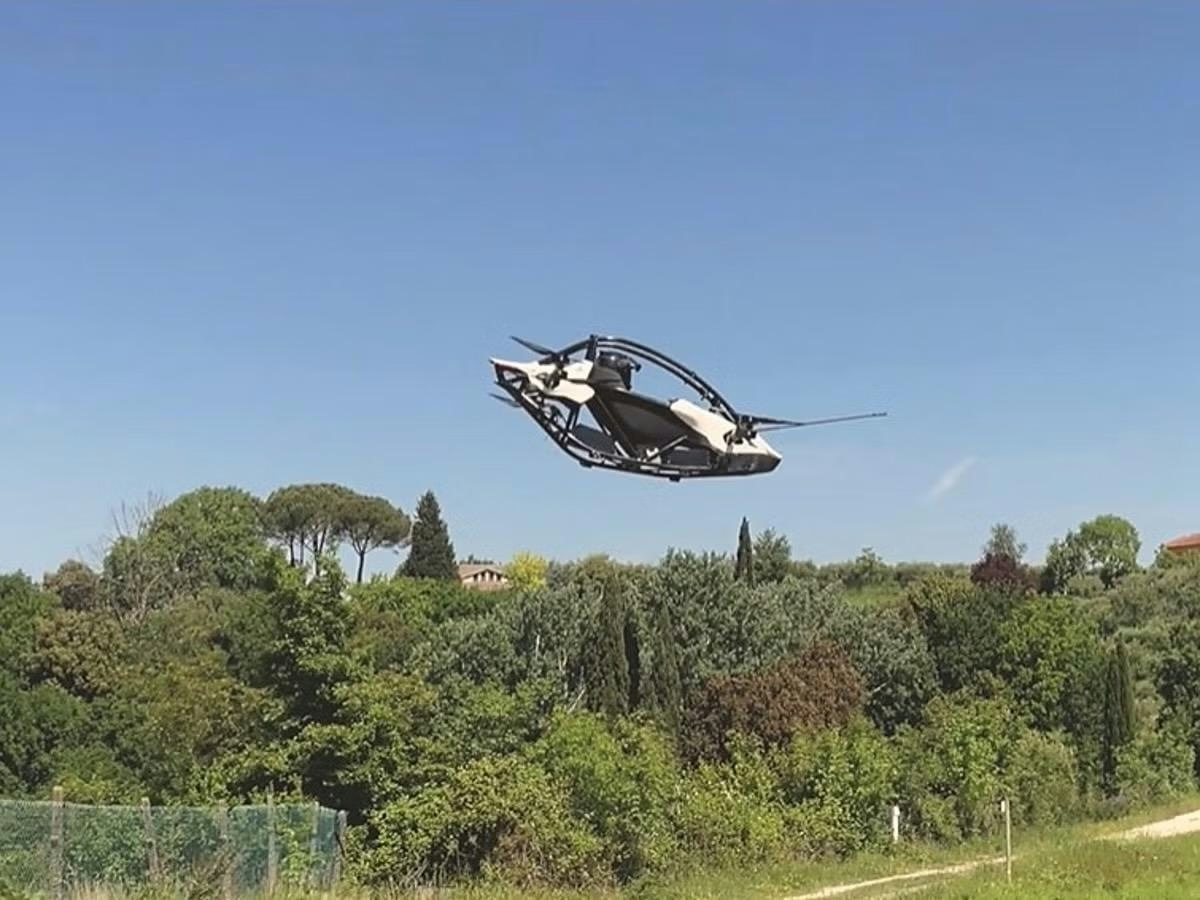
AIR ONE Launches Personal Electric Aircraft, Redefining Urban Air Mobility
The concept of urban air mobility is gradually transitioning from visionary aspirations to practical implementation, though progress has often been slower than anticipated. In this evolving landscape, AIR has introduced a distinctive strategy. At CES 2026, the company unveiled AIR ONE, a personal electric vertical takeoff and landing (eVTOL) aircraft, marking a deliberate shift away from the prevalent air taxi model embraced by many industry players.
Emphasizing Personal Ownership Over Shared Mobility
AIR’s strategy prioritizes personal ownership of eVTOL aircraft rather than the shared urban air taxi fleets that dominate much of the sector’s discourse. CEO Rani Plaut articulated this approach by drawing a parallel to commercial aviation’s origins: “People didn’t start with an Airbus A380; they started with something for the individual.” By focusing on individual users, AIR aims to reduce barriers to adoption, enabling early customers to accumulate flight hours and generate essential real-world safety data. This data is critical for building confidence among regulators and insurers, which is a prerequisite for broader market acceptance.
In contrast, shared mobility models introduce operational complexities such as fleet management, scheduling logistics, and the need for commercial certification, all of which can delay consumer access. AIR’s approach accelerates technology validation by capturing operational insights from everyday flights. This pragmatic focus on safety and reliability before scaling distinguishes AIR in a market where many competitors continue to grapple with regulatory and technical challenges.
Navigating a Competitive and Regulatory Landscape
The launch of AIR ONE occurs amid significant challenges facing the electric aviation sector. Regulatory approval remains a formidable obstacle, with authorities rigorously evaluating new aircraft designs to ensure safety and reliability. AIR also contends with competition from established aerospace leaders like Airbus and Boeing, both intensifying their electric aircraft development efforts. Additionally, advancements in hybrid propulsion and software-defined aircraft technologies by companies such as Elbit and Saab are rapidly transforming the competitive environment, raising the technological standards for new entrants.
Market responses to AIR’s announcement have been mixed. Traditional aviation stakeholders express skepticism regarding the practicality and safety of personal eVTOLs, while competitors may feel compelled to accelerate their own development programs in response to AIR’s consumer-centric model. The imperative to integrate advanced technologies while satisfying stringent certification requirements adds further complexity to the sector’s evolution.
A Measured Approach to Innovation and Execution
AIR’s innovation philosophy is characterized by cautious refinement rather than radical disruption. The company focuses on perfecting the aircraft itself, utilizing proven off-the-shelf components for motors and subsystems to mitigate risk and expedite certification processes. As Plaut observes, “Startups often sabotage themselves by trying to change everything at once.” By adopting an iterative development process and validating each improvement, AIR seeks to enhance safety and reliability incrementally, thereby fostering consumer trust with every successful flight.
Addressing the Constraints of Battery Technology
Despite its ambitions, AIR acknowledges the current limitations imposed by battery technology. The energy density of batteries remains a significant constraint for electric aircraft. Plaut highlights this challenge by noting, “For every pound of fuel, you need 30 pounds of battery,” underscoring the trade-off between range and payload capacity. AIR ONE is designed to serve trips ranging from 60 to 100 miles, targeting daily commutes and short regional flights. While hybrid propulsion systems could potentially extend range, substantial advancements in battery technology are still required to realize longer-distance electric flight.
By setting realistic goals and emphasizing incremental progress, AIR aims to avoid the pitfalls of overpromising. As the market continues to evolve and competitors respond, AIR’s disciplined, consumer-first strategy may provide a pragmatic pathway toward making personal air mobility a viable and practical reality.

Etihad Airways Suspends Airbus A380 Flights on Key Route

Aditya Birla Group Seeks Approval for Aircraft Leasing in GIFT City

Qatar Airways Highlights Innovation and Connectivity at Arabian Travel Market 2026

Hong Kong's Five-Year Plan Includes Andrew Fan's Aircraft Parts Processing Hub Proposal

ACIA Aero Leasing Delivers ATR72-600 to Air Nostrum

RTX Appoints Jill Albertelli as Head of Pratt & Whitney

TAT Technologies Joins Beyond Aero Hydrogen Aircraft Program

AURAK Study Highlights Barriers to Air Taxi Adoption in Emerging Economies

Xiamen Air Selects Altitude for 787 Maintenance at Heathrow

Etihad and Swissport Extend Global Partnership
