صورة

حوّل رؤى الذكاء الاصطناعي إلى أفعال منسّقة

انضم إلى قائمة الانتظار لـ AeroGenie اليوم!

الرائج الآن

Categories

Air Seychelles to Resume Widebody Flights After Eight-Year Hiatus
March 14, 2026By ePlane AI
Air Seychelles to Resume Widebody Flights After Eight-Year Hiatus
0
0
Air Seychelles
Boeing 787-9
Long-Haul Flights

Air Seychelles to Resume Widebody Flights After Eight-Year Hiatus

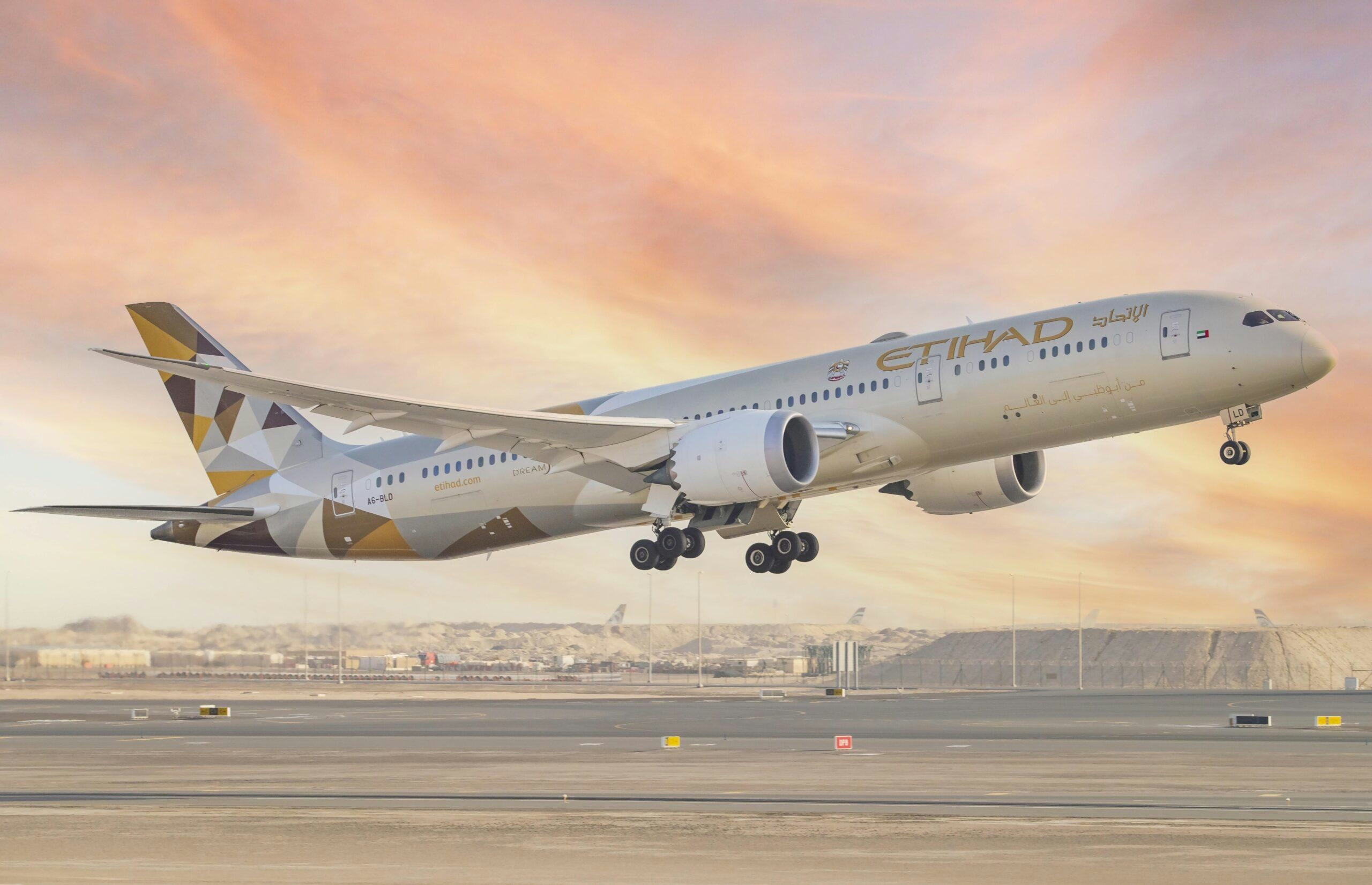
Air Seychelles is poised to re-enter the long-haul market after an eight-year absence, announcing the launch of non-stop flights between Seychelles and Paris Charles de Gaulle. Scheduled to commence on March 20, this service will operate for a one-month period using a Boeing 787-9 aircraft leased from former equity partner Etihad Airways. This marks the airline’s return to widebody operations since suspending them in 2018 amid a significant corporate restructuring.

Return to Long-Haul Operations and Fleet Details

Currently, Air Seychelles maintains a fleet tailored to short and medium-haul routes, with the Airbus A320neo as its largest aircraft. The new Paris service will initially operate three times weekly, with the possibility of increasing to four flights per week depending on demand and operational considerations. The leased Boeing 787-9 is configured with 290 seats, comprising 28 business class and 262 economy seats. Given the short-term nature of the lease, the aircraft is unlikely to be reconfigured to match Air Seychelles’ usual product offering.

CEO Sandy Benoiton emphasized the importance of resuming direct flights to Paris, describing it as a significant milestone for both the airline and Seychelles’ international connectivity. He noted that France has long been a vital market for the country, and the new service will provide a convenient and comfortable travel option for visitors and Seychellois travelers alike, while supporting the ongoing growth of the tourism sector.

Strategic Timing Amid Regional Disruptions and Industry Challenges

The timing of the Paris route launch is particularly noteworthy in light of recent disruptions in Gulf airspace caused by regional conflicts, which have led to the suspension or limitation of operations at major Gulf airports. Traditionally, travelers between Seychelles and Europe have relied on Gulf carriers such as Qatar Airways, Etihad Airways, and Emirates for connections. The introduction of a direct Paris service offers a reliable alternative for passengers seeking to avoid these disrupted hubs.

Nevertheless, Air Seychelles’ return to widebody operations occurs within a challenging global aviation environment. The International Air Transport Association (IATA) has highlighted ongoing supply chain issues affecting widebody aircraft manufacturing, which could influence the availability and leasing costs of such aircraft. The competitive landscape is also evolving, with airlines like Air Astana and Starlux Airlines pursuing strategic fleet expansions. Additionally, regional market dynamics continue to shift, with some markets such as Brazil remaining underdeveloped, according to industry leaders including the CEO of Azul. These factors may impact Air Seychelles’ market performance and shape competitive responses.

While the Paris route primarily targets traffic between Seychelles and Western Europe, the airline has indicated plans to offer “extensive onward connections” from Paris, though specific details have yet to be disclosed. On the Seychelles side, onward connections remain limited.

As Air Seychelles embarks on this temporary Paris service, it will serve as a test of both market demand and the airline’s capacity to adapt within a rapidly changing industry landscape.

More news
Hong Kong's Metrojet Adds Bombardier Global 8000 to Fleet

Hong Kong's Metrojet Adds Bombardier Global 8000 to Fleet

Hong Kong’s Metrojet Integrates Bombardier Global 8000 into Fleet Metrojet, a prominent business aviation company based in Hong Kong, has announced the addition of Asia’s first Bombardier Global 8000 to its managed fleet. This acquisition represents a significant advancement for the company, introducing a new standard of long-range private travel to the region. The Global 8000 is widely recognized for its superior performance capabilities and luxurious cabin environment, positioning Metrojet at the forefront of business aviation innovation. Operational Excellence and Industry Impact Dave Yip, CEO of Metrojet, described the milestone as a defining moment for the company. He emphasized that the arrival of the Global 8000 highlights Metrojet’s capacity to provide world-class management solutions for some of the most sophisticated aircraft in the industry. Yip noted a growing interest from other Bombardier owners, expressing confidence that Metrojet’s established Bombardier maintenance expertise will enable the company to deliver consistent excellence and assurance. Captain Stewart Borg, Director of Flight Operations at Metrojet, underscored the operational achievement involved in integrating the technologically advanced Global 8000 into the fleet. He praised the precision, collaboration, and expertise required to manage the aircraft, attributing the success to the professionalism of the Operations team. Borg affirmed that this integration reinforces Metrojet’s commitment to safety and operational excellence. Challenges and Competitive Landscape Despite the promising prospects, the introduction of the Global 8000 presents notable challenges. The aircraft’s cutting-edge technology and supersonic capabilities entail substantial operational and maintenance costs, representing a significant investment for Metrojet. As the business aviation sector in Asia continues to grow—fueled in part by increasing regional traffic from China—Metrojet’s strategic move is expected to intensify competition among regional operators. Industry analysts anticipate that competitors may respond with fleet upgrades or strategic partnerships to maintain market share and meet escalating client demands for performance and luxury. The addition of the Global 8000 not only expands Metrojet’s expertise in managing aircraft from leading manufacturers but also reinforces the company’s dedication to maintaining its leadership position in the region. Navigating the operational complexities and heightened competition will require Metrojet to continue delivering premium management and maintenance solutions to sustain its competitive edge.
CANAVIA Aviation Academy Orders New Tecnam Aircraft

CANAVIA Aviation Academy Orders New Tecnam Aircraft

CANAVIA Aviation Academy Expands Fleet with New Tecnam Aircraft Tecnam has confirmed a substantial fleet expansion for CANAVIA Aviation Academy, located in Spain’s Canary Islands. The academy has placed an order for a P2006T NG twin-engine (MEP) and a P2008JC NG single-engine (SEP) aircraft, both slated for delivery in 2027. These new additions will complement two previously ordered P2008JC NG aircraft expected by the end of 2026, increasing CANAVIA’s total fleet to 16 aircraft within the next 18 months. Modernizing Training Capabilities Mario Pons, CEO of CANAVIA Aviation Academy, emphasized the critical role of fleet modernization in meeting the demands of advanced airline pilot training. He stated, “We provide not only ATPL training to get the licenses and ratings, but also to prepare our students as future airline pilots, requiring top-tier technical skills to be developed.” Pons highlighted that the new Tecnam aircraft, equipped with fully integrated glass cockpits, will be central to achieving this objective. The expanded fleet will support the academy’s continuous growth since its inception 17 years ago, reinforcing its position in the pilot training sector. CANAVIA benefits from a strategic location, operating from a private aerodrome with consistently favorable weather conditions. This advantage, combined with Tecnam’s reputation for dispatch reliability, enables the academy to achieve over 1,000 flight hours per aircraft annually. The high utilization rate is further maintained by CANAVIA’s in-house Approved Maintenance Service Center, which ensures the fleet remains in optimal condition. Walter Da Costa, Tecnam’s Chief Sales Officer, praised CANAVIA as “a textbook example of a highly successful, high-volume flight academy,” noting the demanding operational environment. He remarked, “Flying an aircraft for over 1,000 hours a year demands incredible robustness and reliability. We are honored that Mario and his team continue to trust Tecnam’s Next Generation fleet—specifically the seamless transition between the P2008JC NG and the P2006T NG—to train their growing roster of 100 ATPL students.” Navigating a Competitive and Regulatory Landscape CANAVIA’s decision to expand its fleet with Tecnam aircraft comes amid intensifying competition in the training aircraft market. Manufacturers such as Aura Aero and Piaggio Aero are introducing innovative models that challenge Tecnam’s market position. This competitive environment may drive increased demand for Tecnam’s training aircraft but also invites potential pushback from rivals offering advanced features or more cost-effective alternatives. Industry analysts anticipate that competitors will respond with aggressive marketing and pricing strategies to maintain their market share. In addition to market competition, integrating new aircraft into CANAVIA’s training programs presents logistical and regulatory challenges. The academy must ensure a smooth incorporation of the new models while maintaining compliance with evolving aviation standards. Despite these challenges, CANAVIA’s investment in Tecnam’s Next Generation aircraft underscores its commitment to delivering high-quality pilot training and adapting to the evolving needs of the aviation industry.
Hitit Outlines AI Integration and Platform Expansion at 82nd IATA AGM

Hitit Outlines AI Integration and Platform Expansion at 82nd IATA AGM

Hitit Highlights AI Integration and Platform Expansion at 82nd IATA AGM At the 82nd Annual General Meeting of the International Air Transport Association (IATA), Hitit, a prominent travel technology firm, presented its latest advancements in artificial intelligence and commercial distribution. The company outlined significant progress in developing generative AI architectures alongside the migration of its payment systems to cloud-based platforms. These initiatives mark a notable advancement in the digital transformation of the aviation industry. Technological Advancements and Industry Implications Hitit’s leadership emphasized the broader implications of these technological upgrades, particularly in the context of rising operational costs and their impact on profit margins projected for 2026. As airlines and travel technology providers face increasing pressure to enhance efficiency, Hitit’s AI-driven solutions are designed to streamline operations and bolster commercial capabilities. The company’s focus on integrating artificial intelligence reflects a strategic response to the evolving demands of the sector. Challenges in AI Adoption and Competitive Landscape Despite the promising outlook, the integration of AI and platform expansion presents considerable challenges. Insights shared at the recent Skift Data + AI Summit highlighted critical obstacles such as the necessity for clear ownership of AI initiatives, the development of secure and resilient systems, and the importance of building trust among customers and employees. These organizational and operational complexities are pivotal factors that may influence the success and speed of Hitit’s transformation. Market analysts are also observing how competitors, including LATAM Airlines, are responding to the increasing adoption of AI within travel technology. While rival companies may pursue similar expansions, their emphasis on seamless operational integration and cultivating customer trust could serve as key differentiators in this rapidly evolving landscape. As the aviation industry advances toward greater digitalization, Hitit’s initiatives showcased at the IATA AGM underscore both the potential and the challenges of leveraging AI to drive future growth. The company’s ongoing efforts to navigate operational hurdles and foster stakeholder confidence are expected to be crucial in defining its competitive standing in the coming years.
Sky Aircraft Maintenance Authorized as Garmin Aviation Dealer

Sky Aircraft Maintenance Authorized as Garmin Aviation Dealer

Sky Aircraft Maintenance Authorized as Garmin Aviation Dealer **Lexington, NC, June 14, 2026** – Sky Aircraft Maintenance (SAM), an FAA-certified Part 145 Repair Station and member of the Atlantic Jet Partners group, has been officially designated as an authorized Garmin Aviation dealer. This new status enables SAM to provide factory-authorized sales, installation, integration, and ongoing support of Garmin avionics for private and business aircraft owners seeking advanced flight deck solutions. Navigating Industry Challenges with Advanced Technology The aviation maintenance sector currently faces significant challenges, including labor and material shortages, escalating operational costs, and persistent geopolitical uncertainties. In the United Kingdom, post-Brexit regulatory complexities have further complicated parts certification and maintenance approvals, intensifying pressures across the industry. Against this backdrop, Sky Aircraft Maintenance’s partnership with Garmin positions the company to capitalize on cutting-edge avionics technology, potentially strengthening its market presence during what industry analysts describe as an extended maintenance “super cycle.” Garmin is widely recognized as a leader in aviation avionics, offering sophisticated navigation systems, flight displays, digital autopilots, ADS-B solutions, and comprehensive flight deck modernization programs. As an authorized dealer, SAM is now equipped to deliver a broad spectrum of Garmin upgrades, ranging from targeted avionics enhancements to full cockpit transformations. Key Offerings and Benefits for Aircraft Operators Among the most prominent offerings is the Garmin G5000 integrated flight deck retrofit program, available for select aircraft models including the Beechjet 400A, Hawker 400XP, and Citation 560XL/Excel/XLS series. This retrofit replaces outdated avionics with a modern, touchscreen-controlled flight deck that features advanced navigation capabilities, digital autopilot integration, wireless cockpit technology, and enhanced situational awareness. For many operators, the G5000 retrofit extends the operational lifespan of proven airframes, addresses avionics obsolescence, and improves long-term supportability. Garmin’s wireless cockpit technologies further enhance pilot efficiency by enabling wireless flight plan transfers, avionics database management, mobile device integration, and connected aircraft capabilities that streamline operations before, during, and after flight. Christopher Arnett of Sky Aircraft Maintenance emphasized the value of these solutions, stating, “Aircraft owners and operators are looking for solutions that improve capability, reduce pilot workload, and help protect the long-term value of their aircraft. Garmin continues to lead the industry with products that accomplish those goals, and we’re excited to bring those solutions to our customers as an authorized Garmin dealer.” Comprehensive Avionics Services and Special Offer Sky Aircraft Maintenance now offers a wide range of Garmin avionics services, including G5000 integrated flight deck retrofits, GTN Xi navigator installations, TXi flight display upgrades, GI 275 electronic flight instrument retrofits, Garmin digital autopilot installations, ADS-B compliance solutions, wireless cockpit and connected aircraft technologies, as well as complete avionics modernization projects. As a full-service maintenance facility, SAM can coordinate Garmin avionics upgrades alongside scheduled inspections, routine maintenance, connectivity enhancements, and interior refurbishments. This integrated approach helps reduce aircraft downtime by allowing multiple projects to be completed during a single visit. To mark its new authorized dealer status, Sky Aircraft Maintenance is inviting aircraft owners and operators to explore current avionics upgrade opportunities. The company is offering a special promotion of 10% off scheduled maintenance when combined with a Garmin avionics upgrade. For further details on Garmin avionics solutions available through Sky Aircraft Maintenance, visit atlanticjetpartners.com/garmin-avionics-aircraft-upgrades.
COMAC: China’s Looming Threat to the Global Aviation Industry

COMAC: China’s Looming Threat to the Global Aviation Industry

COMAC: China’s Looming Threat to the Global Aviation Industry The Shifting Landscape of Global Aviation The commercial aviation industry, long dominated by the United States and Europe, has been shaped by pioneering companies such as Boeing, Douglas, and Lockheed. Iconic aircraft models like the Boeing 707, 737, 747, and 787 have symbolized American technological leadership and innovation. The U.S. aerospace sector has historically been a vital driver of advanced technology, high-tech employment, exports, and defense capabilities. However, this leadership is increasingly challenged as China intensifies its efforts to assert dominance in the global commercial aviation market. At the forefront of China’s ambitions is the state-owned Commercial Aircraft Corporation of China (COMAC). The company benefits from a suite of government-backed “innovation mercantilist” policies, including substantial subsidies, intellectual property appropriation, forced technology transfers, and preferential treatment for domestic enterprises. COMAC’s strategic objective is to evolve into a formidable global competitor, initially focusing on low- and middle-income countries where Western manufacturers have traditionally maintained strong market positions. China’s Strategic Approach and Its Implications COMAC’s rise reflects a broader pattern in China’s industrial policy, which has been replicated across various high-technology sectors such as artificial intelligence, biotechnology, electric vehicles, and semiconductors. By fostering a domestic champion, China aims to first displace international competitors within its own market before expanding aggressively into third-party economies. This approach threatens to erode the market share and revenues of established Western manufacturers like Boeing and Airbus, potentially undermining their capacity to invest in research and development and slowing innovation across the aviation industry. Entering the commercial aircraft sector is notoriously challenging due to the enormous costs associated with aircraft design, the development of a supporting aerospace ecosystem, and the need to achieve economies of scale. Historically, only sustained government support has enabled new entrants to compete globally, as seen with Airbus in Europe, Embraer in Brazil, and Bombardier in Canada. Unlike these companies, which now largely operate under market conditions, Chinese firms continue to benefit from significant non-market advantages. This allows them to undercut global competitors and survive in low-margin environments, raising concerns about fair competition. Challenges and Market Dynamics The global aviation industry currently faces several challenges that complicate the competitive landscape. The aviation maintenance sector is under pressure from material shortages and rising costs, straining supply chains for all manufacturers, including COMAC. Additionally, the aging of China’s commercial aircraft fleet, as noted by the International Air Transport Association (IATA), is altering market dynamics and may increase demand for new aircraft. This development could provide opportunities for COMAC but also intensify competition with established players. Recent corporate developments, such as the acquisition of Continental Aerospace Technologies by Arcline Investment Management, highlight the complex dynamics of ownership and control within the aerospace sector. These shifts have the potential to influence COMAC’s market strategies as well as the responses of its global competitors. As China continues to deploy a comprehensive array of industrial policies to bolster COMAC, the company represents a fundamental challenge to the global aviation industry. Policymakers in Europe and the United States are only beginning to fully grasp the implications of this emerging competition, which could reshape the future of global aviation.
As Flying Taxis and Delivery Drones Fill City Skies, What Are the Risks of Failure?

As Flying Taxis and Delivery Drones Fill City Skies, What Are the Risks of Failure?

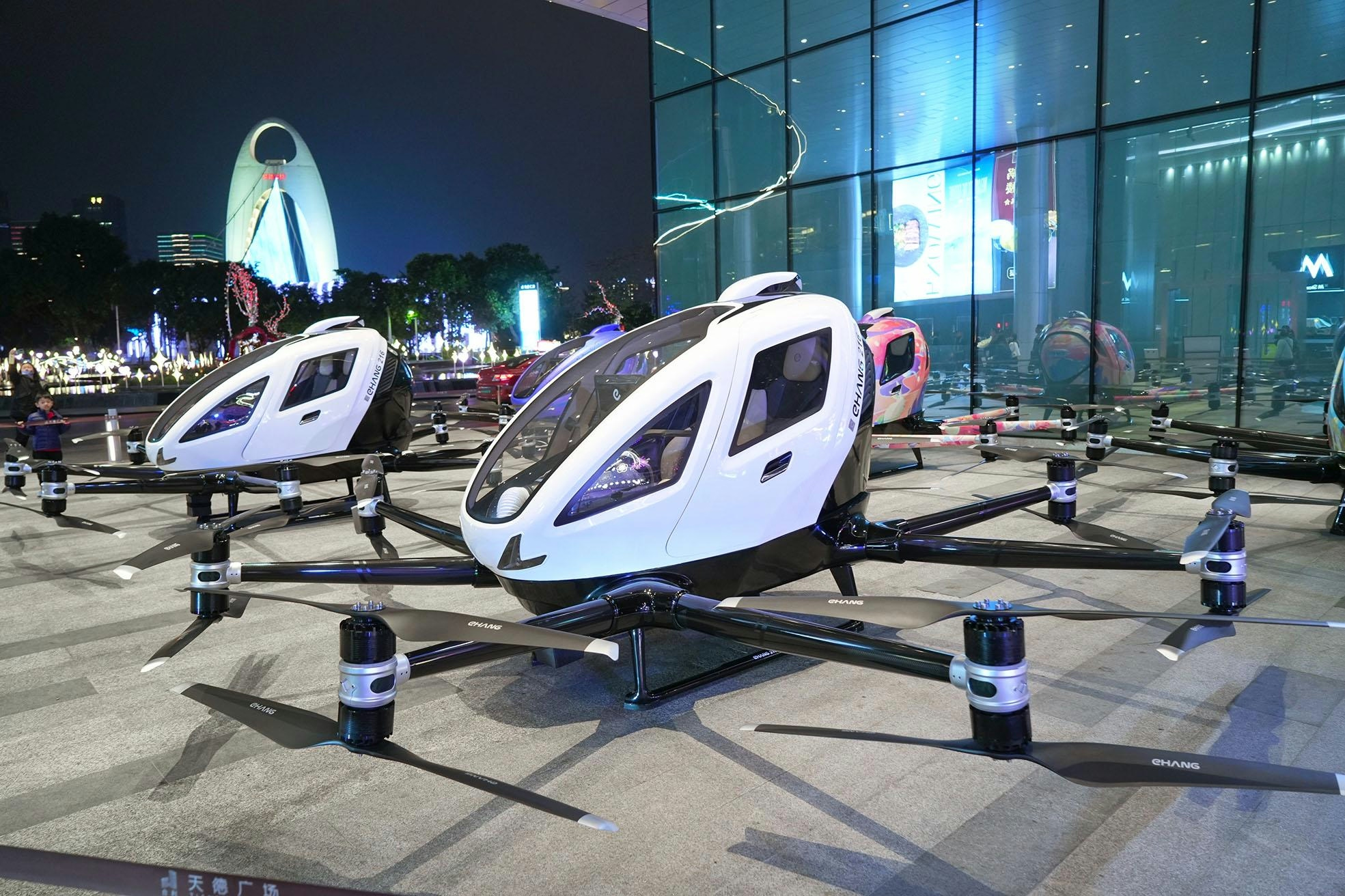
As Flying Taxis and Delivery Drones Fill City Skies, What Are the Risks of Failure? Last month, a significant incident occurred above Sydney’s Darling Harbour during the Vivid Sydney festival, when nearly 90 drones from a swarm of a thousand lost formation and crashed into the water. The failure, attributed to radio interference, resulted in no injuries but highlighted a critical concern: as autonomous aircraft become increasingly prevalent, what are the consequences when systems fail? This question is becoming more urgent as urban centers prepare for a future where autonomous air taxis transport passengers above congested streets and drones deliver packages across cityscapes. In the United States, drone delivery company Wing is expanding its partnership with Walmart to seven additional cities. Simultaneously, leading air taxi manufacturers such as Joby Aviation and Archer Aviation are accelerating efforts to bring electric vertical takeoff and landing (eVTOL) vehicles to market. These companies face significant legal disputes and regulatory challenges that threaten certification timelines and investor confidence. Reflecting this uncertainty, shares of major air taxi firms have declined this year, even as Joby secures Federal Aviation Administration (FAA) approval for flights in multiple states and Archer aims for a commercial launch by 2026. Other competitors, including Beta Technologies, remain several years away from entering commercial service. Despite varying timelines for adoption, the fundamental challenge remains unchanged: unlike ground vehicles, aircraft cannot simply pull over in the event of a malfunction. Ensuring safety depends not only on preventing failures but also on the ability of autonomous systems to respond effectively when failures occur. Built for Resilience, But Not Invincible Modern autonomous aircraft incorporate multiple layers of redundancy, including distributed propulsion systems, backup flight computers, and fault-tolerant software, designed to prevent a single failure from causing catastrophe. Nevertheless, even the most advanced systems are vulnerable to unexpected failures. Minor software glitches, faulty sensors, or sudden environmental changes can combine to create significant hazards, particularly in complex urban environments where shifting winds, signal interference, and crowded airspace complicate emergency responses. Traditionally, human pilots manage emergencies by relying on training and experience to assess situations and guide aircraft to safety. In autonomous aircraft, this responsibility shifts to onboard systems, which must rapidly detect malfunctions, evaluate possible responses, and make critical decisions—such as identifying the safest landing site that minimizes risk to people and property. Decision-Making in Real Time For autonomous aircraft to handle emergencies safely, they must quickly perceive their environment, identifying potential landing sites while accounting for people, vehicles, buildings, and other hazards, often with incomplete or rapidly changing information. They must then assess risks to determine which option minimizes harm, recognizing that the nearest landing site may not always be the safest. Finally, these systems must act decisively, executing emergency procedures in real time while balancing technical constraints with public safety considerations. These challenges extend beyond technical complexity; they involve decisions with profound real-world consequences. As urban airspace becomes increasingly crowded with flying taxis and delivery drones, robust emergency response capabilities will be essential—not merely as contingency plans but as fundamental requirements for safe autonomous flight. The path to widespread adoption of autonomous urban air mobility is fraught with technical, regulatory, and market obstacles. Recent incidents and ongoing industry competition underscore that ensuring autonomous aircraft can fail safely is as vital as preventing failures altogether.
American Singer and Argentine YouTuber Among Six Killed in Rio de Janeiro Helicopter Crash

American Singer and Argentine YouTuber Among Six Killed in Rio de Janeiro Helicopter Crash

American Singer Oliver Tree and Argentine YouTuber Gaspar Prim Among Six Killed in Rio de Janeiro Helicopter Collision A tragic midair helicopter collision over Rio de Janeiro claimed the lives of six individuals on the morning of June 14, 2026, including American singer Oliver Tree and Argentine YouTuber Gaspar Prim Díaz, widely known as Gaspi. The accident occurred in the western district of Recreio dos Bandeirantes, drawing significant international attention due to the prominence of the victims and the dramatic nature of the crash. Details of the Collision and Immediate Aftermath Brazilian authorities and local media reported that the collision took place at approximately 08:59 local time involving two helicopters: a Bell 206B JetRanger III (registration PP-MAC) and an Aérospatiale AS350B2 Écureuil (registration PR-DJJ). Both aircraft were completely destroyed, and all six occupants were pronounced dead at the scene. The victims included passengers Oliver Tree Nickel, Lucas Vignale, Gaspar Prim Díaz, and Lucas Brito Chaves, alongside pilots Alexandre Souza and Charles Marsillac. The impact of the crash was severe, with one helicopter plummeting into the parking lot of a nearby car dealership. The resulting fire destroyed around 20 vehicles, including several electric cars. Emergency services responded promptly, extinguishing the blaze and securing the area. Social media circulated images and videos depicting extensive fire damage and debris scattered across the site. Aircraft Information and Airspace Context Both helicopters were operating with valid documentation and airworthiness certificates as per the Brazilian aircraft registry. Neither was authorized for air taxi operations, though authorities have yet to confirm whether either was engaged in commercial activity at the time of the accident. The Bell 206B JetRanger III, manufactured in 1999, typically accommodates one pilot and four passengers. The AS350B2 Écureuil, locally known as the "Esquilo," was built in 2012 and can carry one pilot and up to five passengers. Both models are commonly used for private transport, aerial observation, and utility missions. The collision occurred within one of the world’s busiest helicopter corridors. Rio de Janeiro’s airspace is frequently congested due to high demand from business travelers, tourism operators, and private owners. The prevalence of helicopter traffic above the city adds complexity to air navigation in the region. Investigation and Public Reaction Brazil’s Aviation Accident Investigation and Prevention Center (CENIPA), alongside local police, has launched a comprehensive investigation into the cause of the collision. Investigators arrived at the scene shortly after the crash to collect evidence and secure the site. Authorities are working to determine the precise circumstances that led to the midair collision and to formally identify all victims. Oliver Tree, known internationally for hits such as "Life Goes On" and "Miss You," was in Brazil as part of his ongoing world tour. Gaspar Prim Díaz had amassed a substantial following on YouTube and other social media platforms. The deaths of both figures have elicited an outpouring of grief from fans worldwide as the investigation continues.
Engineer Projects Real-Time Airplane Flight Paths Onto Living Room Ceiling

Engineer Projects Real-Time Airplane Flight Paths Onto Living Room Ceiling

Engineer Projects Real-Time Airplane Flight Paths Onto Living Room Ceiling A Novel Flight Tracking System for Aviation Enthusiasts SAN BRUNO, California — A new open-source system called "Skylight" is captivating aviation enthusiasts and technology hobbyists by transforming an ordinary living room ceiling into a dynamic, real-time flight tracker. Developed by experienced software engineer Cameron Paczek, Skylight employs a compact Raspberry Pi microcomputer, a 1080p projector, and a specialized USB radio antenna to capture and display live flight data directly overhead. The system operates by intercepting public ADS-B (Automatic Dependent Surveillance–Broadcast) signals transmitted by aircraft transponders as planes approach Paczek’s home near San Francisco International Airport (SFO). The Raspberry Pi decodes these signals instantaneously, projecting smooth, animated icons onto the ceiling. Each icon provides detailed information including the aircraft’s flight identifier, model, trajectory, and destination. Additionally, color-coded altitude indicators—such as green for planes flying between 10,000 and 11,000 feet—offer an enhanced layer of visual detail. Skylight has quickly become a focal point of interest for visitors, who can observe digital representations of flights gliding across the ceiling, hear the engines rumbling outside, and then step outdoors to witness the actual aircraft overhead. Beyond flight tracking, the open-source software also functions as a digital planetarium, projecting the real-time positions of celestial bodies such as the sun, moon, constellations, and satellites including the International Space Station (ISS). Challenges and Market Response Despite its innovative appeal, Skylight faces several challenges. Ensuring the accuracy and reliability of real-time flight path data is paramount, particularly as the system depends on public ADS-B signals that may be vulnerable to interference or coverage gaps. Integrating such technology with existing air traffic control infrastructure presents further complexities, especially if the system sees broader adoption. Privacy concerns have also emerged, with some observers questioning the implications of mapping and displaying detailed flight paths within residential environments. Market reactions have been varied. While many hobbyists are enthusiastic about building their own Skylight setups using Paczek’s freely available instructions and source code on GitHub, some consumers and regulatory authorities remain cautious about the wider ramifications of this technology. Issues surrounding surveillance, data security, and potential misuse continue to provoke debate as the system’s popularity expands. Competitors within the aviation and technology sectors are closely monitoring Skylight’s progress, with some exploring the development of similar real-time mapping technologies or enhancing their existing air traffic management systems to maintain a competitive advantage. Future Developments and Accessibility Acknowledging that assembling the system from scratch may be beyond the technical reach of many interested users, Paczek is preparing to launch a Kickstarter campaign to offer pre-assembled, plug-and-play kits. As Skylight continues to blur the lines between indoor simulation and real-world aviation observation, it occupies a unique position at the crossroads of innovation, privacy considerations, and the evolving consumer technology landscape.
Air India Pauses Expansion Amid Delayed Aircraft Deliveries and Market Challenges

Air India Pauses Expansion Amid Delayed Aircraft Deliveries and Market Challenges

Air India Pauses Expansion Amid Delayed Aircraft Deliveries and Market Challenges India’s aviation sector is at a critical juncture as Air India announces a strategic pause in its ambitious expansion plans. The decision comes in response to delayed aircraft deliveries and mounting market pressures, signaling a significant shift for travelers, airline stakeholders, airport operators, and the wider tourism industry. Challenges in Fleet Modernization and Delivery Delays Central to Air India’s recovery and growth strategy was the modernization of its fleet through substantial orders of new-generation aircraft, including the Airbus A320neo and A350, as well as Boeing’s 737 MAX and 787 Dreamliner families. These additions were intended to enhance operational efficiency, elevate passenger experience, and strengthen the airline’s position in long-haul markets, ultimately aiming to establish Air India as a global aviation leader. However, recent industry reports indicate that hundreds of these planned aircraft deliveries are likely to be deferred. Compounding these delays, the engine trading market faces warnings of a potential sharp correction, further exacerbating supply chain challenges. Consequently, Air India’s capacity expansion is expected to slow, which may affect route availability and hinder the airline’s ambitions to increase its market share. Financial and Operational Pressures Reshape Strategy The airline’s outgoing CEO, Campbell Wilson, has openly acknowledged the difficulties encountered over the past year, highlighting geopolitical tensions, regulatory scrutiny, and persistent financial losses as key factors influencing the company’s current stance. These pressures have compelled Air India to prioritize operational stability over rapid growth, marking a departure from its earlier aggressive expansion approach. Despite these setbacks, Singapore Airlines, Air India’s strategic partner, continues to affirm its commitment to supporting the carrier’s transformation. While Air India remains in a loss-making position, Singapore Airlines regards its investment as a long-term endeavor, maintaining confidence in the airline’s future prospects amid ongoing turbulence. Broader Implications for India’s Aviation Market Air India’s recalibrated growth strategy is being closely monitored by industry analysts, as any slowdown in expansion could create opportunities for rival carriers and alter the competitive dynamics within India’s rapidly growing aviation market. For travelers, tourism authorities, and aviation partners, the airline’s pause may influence route options, fare structures, and connectivity for the foreseeable future. As one of the world’s fastest-expanding aviation markets, India faces a complex balancing act involving market demand, supply chain constraints, and financial sustainability. The coming months will be pivotal in determining how Air India and the broader sector adapt to these evolving challenges.
AirAsia’s Airbus Deal Reshapes Asian Travel as China Southern, Lufthansa, and Cathay Expand Fleets

AirAsia’s Airbus Deal Reshapes Asian Travel as China Southern, Lufthansa, and Cathay Expand Fleets

AirAsia’s Airbus Deal Reshapes Asian Travel as China Southern, Lufthansa, and Cathay Expand Fleets Airlines across Asia and Europe are accelerating their fleet expansion plans amid intensifying competition for future aircraft delivery slots. AirAsia’s unprecedented order of 150 Airbus A220 aircraft, alongside significant commitments from China Southern Airlines, Xiamen Airlines, Lufthansa, Cathay Cargo, and Air China Cargo, highlights how carriers are strategically positioning themselves for sustained growth in both passenger and cargo sectors. With manufacturers facing extensive production backlogs—particularly for popular narrowbody models such as the A320neo and A321neo—airlines are moving swiftly to secure delivery schedules that will support expansion well into the next decade. This surge in orders reflects a broader transformation in global travel, driven by rising passenger volumes, increased demand for connectivity to secondary cities, fleet modernization efforts, and stringent fuel-efficiency targets. Airlines Race to Secure Capacity Amid Strong Demand The aviation industry is currently experiencing one of its most active procurement phases in recent history. As passenger numbers rebound and exceed pre-pandemic levels in many regions, airlines are locking in future capacity ahead of further production constraints. New-generation aircraft are viewed as essential for reducing operating costs, enhancing fuel efficiency, and providing operational flexibility across diverse route networks. For travelers, these investments promise expanded route options, higher flight frequencies, and improved onboard experiences. The resurgence of tourism and the growth of emerging markets have made fleet expansion a strategic imperative. Airlines are making long-term decisions that will shape their networks for decades, particularly in the Asia-Pacific region, where population growth, urbanization, and rising middle-class incomes continue to drive aviation demand. AirAsia’s Landmark Airbus A220 Order Signals Regional Shift AirAsia’s announcement of the largest-ever Airbus A220 order, committing to 150 aircraft, stands out as a pivotal development. This strategic move aims to enhance connectivity between smaller cities and regional destinations across Asia. The A220’s blend of fuel efficiency, operational flexibility, and passenger comfort makes it well-suited for short- and medium-haul routes, supporting AirAsia’s ambition to tap into underserved markets and expand its regional footprint. Competitor Responses and Market Dynamics AirAsia’s bold commitment has prompted notable responses from competitors. Cathay Pacific, for example, has increased its firm order for Airbus A350 freighters to eight aircraft, signaling confidence in long-term cargo and passenger demand despite challenges such as elevated jet fuel prices and geopolitical uncertainties. Cathay Pacific’s CEO, Ronald Lam, remains optimistic about 2026 and is actively expanding the airline’s network, including plans to launch the first nonstop service between Hong Kong and Kazakhstan in early 2027. The competitive landscape is further influenced by evolving travel trends. The rise of “bleisure” travel—where business travelers extend their trips for leisure purposes—is reshaping the Asia-Pacific hotel and airline markets, prompting carriers and hospitality providers to adapt their strategies to capture this growing segment. Outlook As airlines across Asia and Europe compete to secure future aircraft capacity, the latest wave of orders underscores industry confidence in sustained travel demand. With delivery slots becoming increasingly scarce through the 2030s, carriers are making decisive moves to strengthen their networks, modernize fleets, and maintain competitiveness in a rapidly evolving market.
line