صورة

حوّل رؤى الذكاء الاصطناعي إلى أفعال منسّقة

انضم إلى قائمة الانتظار لـ AeroGenie اليوم!

الرائج الآن

Categories

Airbus Confirms Cancellation of AirAsia X Order for 15 A330-900 Jets
June 17, 2026By ePlane AI
Airbus Confirms Cancellation of AirAsia X Order for 15 A330-900 Jets
0
0
AirAsia X
Airbus A330-900
Order Cancellation

Airbus Confirms Cancellation of AirAsia X Order for 15 A330-900 Jets

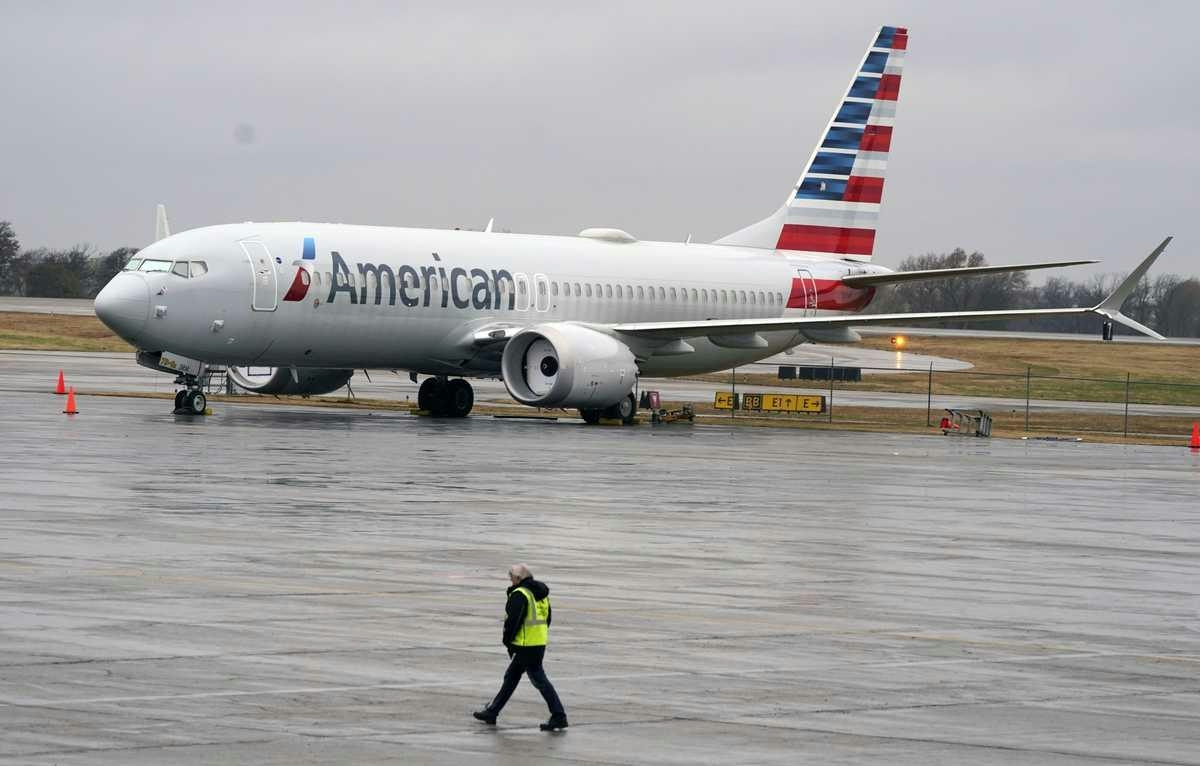
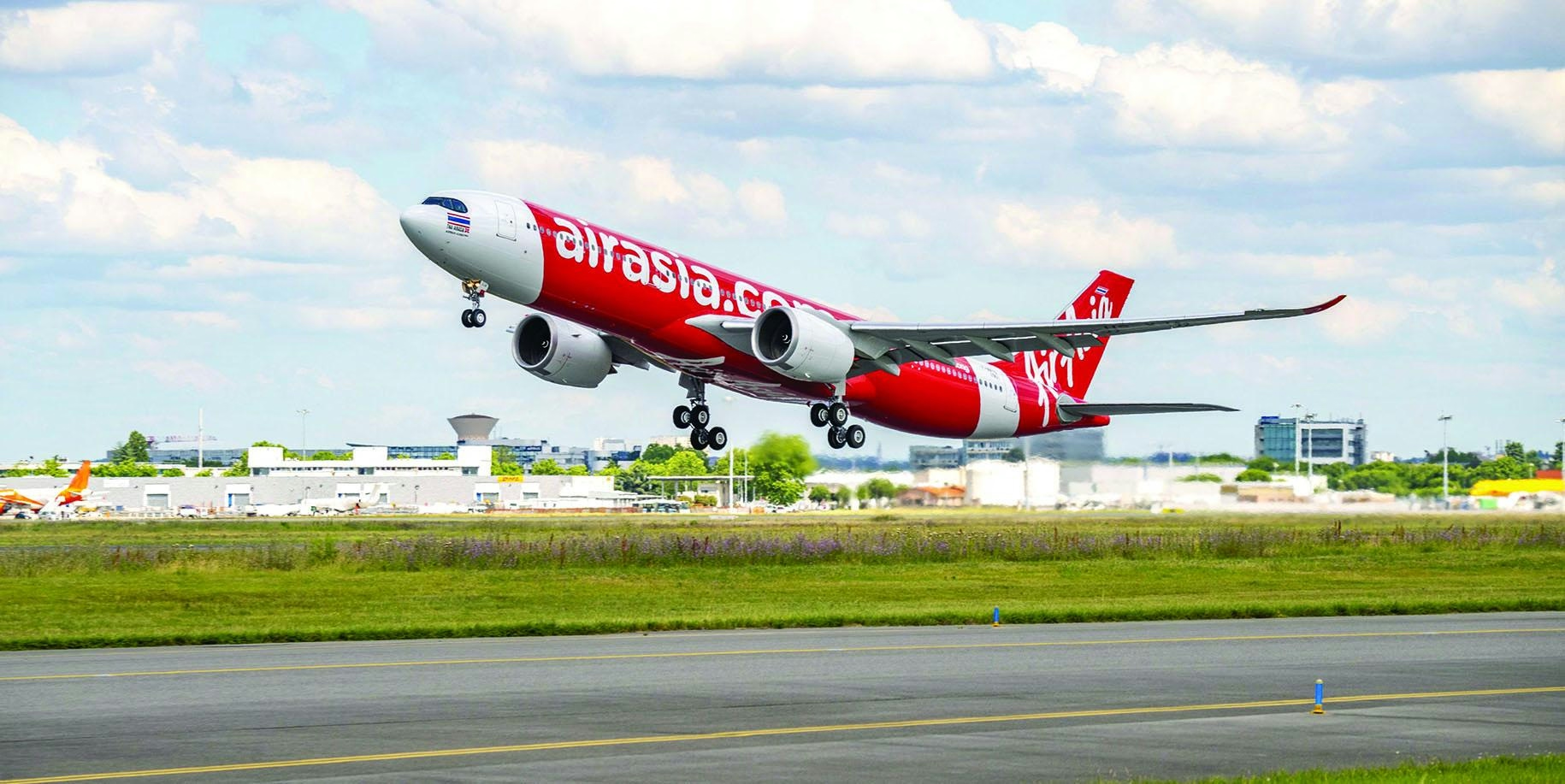
Airbus has officially confirmed the cancellation of AirAsia X’s order for 15 A330-900 aircraft, a decision reached through mutual agreement as the airline revises its fleet strategy. An Airbus spokesperson conveyed to Bernama that the cancellation was consensual, while AirAsia X has chosen not to comment on the matter.

Shift in AirAsia Group’s Fleet Strategy

The cancellation reflects a broader strategic shift within the AirAsia Group towards long-range narrowbody aircraft. Earlier this year, the group placed an order for 50 Airbus A321XLR jets, signaling a preference for more versatile and fuel-efficient models to support its network expansion. The A330-900, part of Airbus’s A330neo family, was originally intended to facilitate non-stop services to Europe, including routes between Kuala Lumpur and London. This change underscores the airline’s evolving operational priorities in response to market demands.

Market Context and Industry Challenges

This development occurs amid a complex market environment for Airbus. Despite the cancellation by AirAsia X, Airbus CEO Guillaume Faury has emphasized that there are no widespread signs of jet order cancellations, even as the industry contends with persistent fuel price pressures. Nonetheless, Airbus faces other significant challenges. The company’s shares recently declined following reports of delays in A350 aircraft deliveries. Additionally, supply chain disruptions have affected key customers such as Qantas, which has postponed plans for non-stop flights to London and New York.

While Airbus’s A320-family orders have surpassed 20,000 units, the loss of the AirAsia X order highlights the competitive pressures and shifting preferences within the aerospace sector. Airlines are increasingly favoring flexible, long-range narrowbody jets over larger widebody models, a trend that is influencing manufacturers’ order books and strategic planning.

The cancellation thus illustrates both the changing priorities of airlines in a dynamic aviation landscape and the ongoing challenges faced by aircraft manufacturers as they navigate evolving market conditions and supply chain constraints.
More news
ALMA Air Granted Provisional Permit for Colombia’s First Amphibious Airline Operations

ALMA Air Granted Provisional Permit for Colombia’s First Amphibious Airline Operations

ALMA Air Receives Provisional Permit to Launch Colombia’s First Amphibious Airline Services Colombia is poised to reintroduce seaplane operations following a landmark decision by the Civil Aviation Authority (Aerocivil), which has granted ALMA Air S.A.S. a Provisional Operating Permit as a non-scheduled public air carrier. This authorization represents a pivotal advancement for amphibious aviation in the country, allowing ALMA Air to move forward with plans to offer commercial passenger, cargo, and mail air taxi services. Advancing Amphibious Aviation in Colombia The permit comes after more than two years of rigorous technical preparation, operational testing, and close collaboration with Colombian regulatory bodies. ALMA Air’s amphibious model is designed to enhance connectivity for regions that lack access to conventional airports, thereby fostering new opportunities for tourism and regional development. The airline’s services are expected to be particularly impactful in remote and riverside communities, as well as popular tourist destinations where alternative transportation options could stimulate local economies. The announcement has been met with widespread enthusiasm, especially among stakeholders in Colombia’s Pacific region, where infrastructure limitations have long posed challenges. While reactions from competitors remain uncertain, industry observers regard the permit as a significant milestone not only for ALMA Air but also for the broader aviation sector in Colombia. Operational Testing and Regulatory Collaboration Eduardo Fairen Soria, a leading figure in the project, acknowledged the operational and logistical challenges that lie ahead in establishing sustainable amphibious airline services. Nevertheless, the initiative has garnered strong support as a means to expand Colombia’s air transport network with greater flexibility for regional travel. As part of the approval process, ALMA Air conducted an extensive operational testing program at locations including Ayapel, Mompox, and the Guatapé Reservoir. The company successfully completed over 75 water takeoffs and landings without any accidents, incidents, injuries, or damage to aircraft. These tests assessed flight procedures, risk management protocols, coordination with authorities, and the implementation of ALMA Air’s Safety Management System (SMS). Additionally, the exercises produced valuable technical data to facilitate coordination between aviation authorities and agencies responsible for inland waterways. The provisional permit is the culmination of a comprehensive development process involving private investment, aircraft testing, regulatory scrutiny, and cooperation with government entities. ALMA Air has expressed gratitude for the support received from Aerocivil, the Ministry of Transport, inspectors, technical teams, and other public officials who contributed to the project. With the provisional permit now secured, ALMA Air will proceed with the remaining operational requirements necessary to commence commercial services. The company’s progress signals the emergence of amphibious air transport as a promising new option within Colombia’s aviation landscape.
United Airlines Declines to Purchase Former Emirates 777X Aircraft

United Airlines Declines to Purchase Former Emirates 777X Aircraft

United Airlines Declines Acquisition of Former Emirates 777X Aircraft Chicago-based United Airlines has formally dismissed speculation regarding the potential acquisition of Boeing’s early-build 777X aircraft, specifically the 777-9 models originally ordered by Emirates. Industry rumors had suggested that United might consider purchasing up to 20 of these widebody jets, which Emirates rejected due to concerns over their age and the extensive upgrades required prior to delivery. Emirates’ chairman, Sir Tim Clark, notably described the early frames as “a can of baked beans,” highlighting that these aircraft—manufactured between 2019 and 2021—would effectively be halfway through their operational lifespan upon entering service. United’s Position on the Early-Build 777X Jets United has confirmed it has no intention of taking possession of these delayed 777X aircraft, which have been held in storage and would necessitate significant modifications, including software updates, before they could enter commercial service. A spokesperson for the airline emphasized that United remains committed to its existing Boeing 787 Dreamliner fleet alongside a longstanding order for the Airbus A350. Both aircraft types are central to the airline’s ongoing fleet renewal strategy, reflecting a preference for modern, efficient aircraft rather than older, heavily modified airframes. The notion that United might acquire the orphaned 777X jets emerged following Emirates’ decision to forgo the early builds. For Emirates, the prospect of introducing aircraft that had already spent several years in storage was deemed an unwise investment, particularly given the airline’s focus on maximizing the operational lifespan of its fleet. Implications for United’s Fleet Strategy and the 777X Program United’s rejection of the early-build 777X frames effectively ends any immediate plans for the airline to become the first U.S. operator of the type. Nevertheless, the carrier has not ruled out future interest in the 777X family once the program achieves full certification and enters regular commercial service. The airline has explicitly stated, however, that it will not purchase these specific early-build aircraft due to the challenges posed by their prolonged storage and the extensive rework required. Currently, United operates the Boeing 777-300ER and 777-200ER as key components of its widebody fleet. Yet, the airline’s fleet replacement program is increasingly focused on the Boeing 787, which offers next-generation efficiency and operational flexibility. This strategy has enabled United to launch new long-haul routes to destinations such as Adelaide and Sapporo. The airline’s commitment to the Dreamliner and the forthcoming Airbus A350 underscores its broader objective to modernize its fleet with the latest technology rather than acquiring older aircraft requiring substantial refurbishment. The future of the early-build 777X aircraft remains uncertain. With both Emirates and United declining to take these jets, it remains possible that another airline could express interest, provided the necessary modifications and certification are completed. For now, United has made clear its decision to forgo these particular aircraft, choosing instead to concentrate on its current fleet modernization initiatives.
Cincinnati Airport Announces New Transatlantic Partnership for Innovation

Cincinnati Airport Announces New Transatlantic Partnership for Innovation

Cincinnati Airport and Germany’s GATE Alliance Establish Transatlantic Innovation Partnership **Erlanger, Ky. (July 31, 2026)** – Cincinnati/Northern Kentucky International Airport (CVG) and Germany’s GATE Alliance have formalized a strategic transatlantic partnership designed to accelerate innovation in airport technology and broaden market access for aviation suppliers. The agreement, signed at the Farnborough International Airshow in the United Kingdom, sets a collaborative framework for technology testing, business introductions, and joint pilot projects between the United States and Germany. Expanding Innovation and Market Access This partnership builds upon a relationship initiated in 2023, with a Memorandum of Understanding that grants GATE Alliance members—comprising leading airport technology companies—access to CVG’s innovation resources and aviation ecosystem in the U.S. Conversely, CVG partners will benefit from connections to GATE’s extensive network within Germany, a key player in the global aviation market. Larry Krauter, CEO of CVG Airport, emphasized the importance of real-world testing and mutual learning in driving innovation. He stated, “This partnership creates a new transatlantic pathway for collaboration and strengthens connections between our region and one of the world’s leading aviation markets.” Jens Reinhard, managing director of GATE Alliance, echoed this sentiment, highlighting the enhanced opportunities for innovation, knowledge exchange, and market expansion on both sides of the Atlantic. Collaborative Focus and Challenges A joint working group will be established to oversee technology demonstrations, pilot programs, and investment opportunities. The partnership prioritizes sectors including aerospace and aviation, automated and electric mobility, advanced manufacturing, low-emissions fuels and energy infrastructure, agri-bioscience, and life sciences. Despite the promising prospects, both organizations recognize the inherent challenges of transatlantic collaboration. Regulatory complexities and logistical hurdles, particularly in integrating new technologies across diverse markets, will require careful navigation. Ensuring compliance with varying standards and facilitating successful technology adoption will be central to the working group’s efforts. Industry Implications and Future Engagements The partnership is expected to influence market dynamics by intensifying competition among airports and airlines, potentially leading to price adjustments and improved services for travelers. Competitors may respond by pursuing similar international collaborations or accelerating their own innovation initiatives to maintain competitiveness. CVG’s established reputation as a testing ground for emerging aviation technologies and innovative operational concepts positions it well to support companies seeking to validate technologies, gather operational feedback, and explore new market opportunities. CVG and GATE will continue their collaboration at GATE FUTURE 2026 in Hamburg on October 21-22, where CVG Chief Innovation Officer Brian Cobb will participate as a speaker. The tenth edition of GATE’s international airport innovation conference is anticipated to draw approximately 250 participants from the global airport technology sector.
IndiGo to End Norse Atlantic Lease by October 31, Shift Amsterdam Route to A321XLR

IndiGo to End Norse Atlantic Lease by October 31, Shift Amsterdam Route to A321XLR

IndiGo to End Norse Atlantic Lease by October 31, Shift Amsterdam Route to A321XLR InterGlobe Aviation Ltd. (IndiGo) has announced a significant restructuring of its long-haul international operations, with plans to terminate its wide-body Boeing 787-9 damp lease agreement with Norse Atlantic Airways by October 31, 2026. In a strategic pivot, the airline will transition its Mumbai-Amsterdam service to the narrow-body, fuel-efficient Airbus A321XLR starting October 25, 2026. Strategic Shift Amid Operational Challenges This decision comes against a backdrop of increasing geopolitical tensions and persistent airspace restrictions, which have complicated operations and escalated costs for Indian carriers. IndiGo has identified these factors as primary drivers behind its move away from wide-body aircraft and the winding down of its partnership with Norse Atlantic Airways. Since early 2025, IndiGo had operated six damp-leased Boeing 787-9s from Norse Atlantic on routes including Amsterdam, London, and Manchester. The transition will see Mumbai-Amsterdam flights operated by the Airbus A321XLR from late October 2026. Concurrently, IndiGo will fully exit the Norse Atlantic lease arrangement by the end of that month, returning all remaining aircraft. The airline will temporarily suspend its direct Mumbai-London Heathrow flights from October 25, 2026, until it takes delivery of its own Airbus A350-900s, anticipated in 2027. Additionally, flights to Manchester will be discontinued by August 31, 2026, with one leased 787-9 returned as early as June 2026. Financial and Operational Implications IndiGo’s recalibration reflects a tactical effort to safeguard operating margins amid a challenging environment. The use of damp-leased wide-body aircraft was initially a costly, interim strategy to establish a foothold on key long-haul routes and gain operational experience. By shifting to the single-aisle A321XLR, the airline is realigning with its core low-cost model, reducing lease expenses and mitigating the impact of expensive airspace detours, particularly those necessitated by restrictions over Middle Eastern airspace. Market responses to the announcement have been varied. Some analysts regard the move as a prudent realignment, concentrating on more profitable routes and aircraft types amid rising cost pressures. The transition is expected to substantially lower lease rental costs and enhance fuel efficiency, despite a temporary reduction in international capacity. The suspension of premium long-haul routes such as London Heathrow and Manchester signals a short-term contraction but is anticipated to improve yields on the remaining network. Competitors may adjust their international strategies to exploit potential market shifts resulting from IndiGo’s changes. The airline’s fleet investment plans, managed through its GIFT City entity, include a projected expenditure of USD 820 million for fiscal year 2026, with eight A321XLR aircraft expected to be delivered by the end of that year. Industry Outlook IndiGo’s withdrawal from expensive wet and damp leases underscores its commitment to cost discipline and operational efficiency. While the temporary suspension of certain long-haul routes highlights the limitations of not yet possessing long-range aircraft, the airline is positioning itself for renewed growth upon the arrival of its own A350-900s. Investors and industry observers will closely monitor whether this selective recalibration translates into improved profitability and yield in the medium term, as Indian aviation continues to navigate a complex and evolving international landscape.
Commercial Court Rules on Aircraft Leasing Indemnities in FW Aviation v. VietJet Trial

Commercial Court Rules on Aircraft Leasing Indemnities in FW Aviation v. VietJet Trial

Commercial Court Rules on Aircraft Leasing Indemnities in FW Aviation v. VietJet Trial Background and Case Overview The Commercial Court has issued a significant judgment in the ongoing dispute between FW Aviation and VietJet Aviation, clarifying key aspects of indemnity provisions within Japanese Operating Lease with Call Option (JOLCO) agreements. The litigation arises from the termination of leases for four Airbus A321 aircraft, a process complicated by the Covid-19 pandemic and resulting rental arrears. This latest ruling follows earlier decisions by Mr Justice Picken, which upheld the validity of VietJet’s lease terminations in 2021 and awarded FW Aviation over $180 million in termination sums and liquidated damages. Presided over by Mr Justice Birt, the current trial focused on FW Aviation’s additional claims for costs incurred after repossessing the aircraft. These claims encompassed expenses related to repairs, maintenance, export from Vietnam, lost rental income, and enforcement efforts following a protracted and contested repossession process. Notably, three of the four aircraft were returned in poor condition and remained in Vietnam for up to two years, further complicating the dispute. Legal Issues and Court Findings A central legal question concerned the interpretation of clauses 19 and 20 of the sub-leases, which impose strict "Return Condition" requirements for aircraft redelivery. VietJet contended that these clauses constituted an exclusive code, thereby precluding any additional recovery under the broader indemnity provision in clause 23.1. The court rejected this argument, determining that the sub-leases permitted overlapping and cumulative remedies. However, the judge clarified that where a specific clause provided for liquidated damages—such as enhanced rent payable between termination and redelivery—FW Aviation could not claim additional sums for the same loss under the general indemnity. The court also dismissed VietJet’s assertion that clause 23.1 was limited to third-party claims, ruling instead that its broad language extended to first-party costs directly incurred by the lessor. This interpretation aligns with the underlying intent to protect the financing structure from costs associated with aircraft return. Furthermore, the judge found that the indemnity did not require proof of proximate cause, allowing for a more flexible causal connection between the loss and the indemnified event. Limitations on FW Aviation’s Claims FW Aviation’s claims relating to the two older CEO-model aircraft were substantially limited. The court held that, due to the absence of certain contractual rights classified as "Excluded Property," FW Aviation could only claim as a successor to the original lender’s security interest—a status that ceased once the aircraft were sold. As a result, FW Aviation was precluded from recovering maintenance, storage, or lost rental costs for these aircraft, since those losses were incurred in its capacity as owner rather than as the lender’s successor. Regarding the newer NEO aircraft, the court ruled that FW Aviation could recover only those costs actually incurred to satisfy the contractual Return Condition. Hypothetical expenses for work the company elected not to perform—particularly after leasing the aircraft to Turkish Airlines in a non-compliant state—were disallowed. This decision significantly reduced a claim that initially exceeded $31 million. Implications for the Aviation Leasing Industry The Commercial Court’s detailed interpretation of indemnity clauses in this case is expected to influence future disputes in the aircraft leasing sector. Industry analysts suggest that the ruling may prompt challenges to similar indemnity provisions and could affect market behavior. Airlines engaged in comparable leasing arrangements, especially those operating popular models such as the A321neo, may experience fluctuations in stock prices as investors reassess potential financial exposure. Competitors, particularly low-cost carriers like VietJet, might respond by renegotiating lease terms or adjusting fleet strategies to mitigate risks and maintain cost competitiveness amid evolving legal standards.
Indonesia’s $10 Billion KAAN P1 Taxi Export Contract Requires US-Free Engines

Indonesia’s $10 Billion KAAN P1 Taxi Export Contract Requires US-Free Engines

Indonesia’s $10 Billion KAAN P1 Export Hinges on US-Free Engines Amid Strategic Challenges Turkey’s KAAN fifth-generation fighter program marked a significant milestone on Friday when Turkish Aerospace Industries (TUSAŞ) released footage of the P1 prototype completing its first powered taxi run at its Ankara facilities. This event represents a crucial phase for the production-representative aircraft, which is central to fulfilling the program’s export commitments, most notably a landmark $10 billion contract with Indonesia for 48 KAAN fighters. However, this technical achievement is overshadowed by a fundamental contradiction that will shape the program’s future. Just three weeks prior to the P1’s taxi run, the United States approved the export of approximately 80 GE F110 turbofan engines to Turkey, resolving a major propulsion bottleneck. Yet, Indonesia’s contract, signed five days before the P1’s rollout, explicitly requires that the production aircraft be delivered without any components subject to US export controls—most notably the GE F110 engines Turkey recently secured. This stipulation is not a minor detail but a central challenge that will define the KAAN program’s trajectory through at least 2032. P1: A New Phase for KAAN The P1 prototype represents a significant evolution from its predecessor, the P0. The P0, which completed KAAN’s first flight on February 21, 2024, served as an engineering demonstrator designed to validate basic aerodynamics and flight-control software. That initial flight lasted 13 minutes with the landing gear locked down, followed by a second sortie in May. Since then, development has shifted entirely to production-representative prototypes, with the P0 now grounded. Unveiled in February 2026 alongside a static ground-test airframe, the P1 incorporates the program’s most substantial structural revisions to date. The fuselage has been shortened by approximately one meter to 20.3 meters (66.6 feet), and the mid-section widened to increase internal volume. Most notably, the engine air intakes have been repositioned further aft, creating space in the forward fuselage for advanced self-defense sensors such as radar warning receivers and directional infrared countermeasures. This redesign also enables a deeper S-duct inlet, enhancing stealth capabilities. While this configuration sacrifices some aerodynamic efficiency, it is essential for reducing radar visibility—a non-negotiable requirement for fifth-generation fighters. Export, Support, and Strategic Implications Indonesia’s $10 billion order stands as the largest in Turkish military aviation history and represents a significant endorsement of Türkiye’s aerospace sector. However, the contract’s requirement for US-free components introduces considerable challenges. Turkey must not only ensure the success of ongoing powered taxi tests and the upcoming maiden flight of the KAAN P1 but also secure alternative propulsion solutions and establish a sustainable long-distance support infrastructure for Indonesian operators. Market reactions have already indicated increased interest in Türkiye’s expanding aerospace capabilities and its pursuit of strategic autonomy, particularly in the Indo-Pacific region. Meanwhile, competitors are expected to respond by emphasizing their own fifth-generation fighter offerings to counter the potential impact of the KAAN P1 in a region where airpower is becoming increasingly pivotal. As the KAAN program progresses, its ability to reconcile export ambitions with technological and regulatory realities will remain under close scrutiny both in Ankara and across the global defense market.
Norse Atlantic and IndiGo End 787 Lease Agreement Amid Long-Haul Route Issues

Norse Atlantic and IndiGo End 787 Lease Agreement Amid Long-Haul Route Issues

Norse Atlantic and IndiGo End 787 Lease Agreement Amid Long-Haul Route Challenges Norse Atlantic Airways and Indian low-cost carrier IndiGo have mutually agreed to terminate their damp-lease agreement involving six Boeing 787-9 aircraft. The partnership, set to conclude on November 1, represents a significant realignment in both airlines’ long-haul strategies amid mounting operational difficulties on IndiGo’s Europe routes. Operational and Geopolitical Pressures IndiGo had been operating six Norse 787-9s but had already returned one aircraft following the discontinuation of its Manchester service. The decision to end the lease agreement was heavily influenced by ongoing geopolitical tensions in the Middle East, which have resulted in elevated fuel prices, airspace restrictions, and extended flight paths. These factors have collectively undermined the commercial viability of India-Europe connections. Eivind Roald, CEO of Norse Atlantic, acknowledged the impact of these challenges, stating, “There is no doubt that the elevated fuel prices, airspace disruptions, and longer flight routes resulting from the Middle East conflict have affected the commercial viability of the arrangement for both parties.” He further noted that both airlines “jointly concluded that alternative deployment of the aircraft will be more commercially beneficial.” Strategic Shifts and Market Responses IndiGo’s decision to end its wide-body operations and terminate the Norse lease by October 31, 2026, signals a broader strategic pivot. The airline is transitioning its long-haul focus from wide-body Boeing 787-9s to more cost-efficient narrow-body Airbus A321XLRs. This shift aims to enhance route efficiency and profitability amid a challenging market environment shaped by geopolitical and economic headwinds. The move reflects a wider industry trend, as carriers reassess their long-haul strategies in response to evolving operational pressures. For Norse Atlantic, the termination of the IndiGo partnership represents a setback in its pursuit of profitability. The airline had utilized capacity leasing to mitigate seasonal fluctuations within its own network. However, Roald emphasized potential opportunities arising from the return of the six aircraft, stating, “Return of these six aircraft opens up strategic opportunities that were not available to us before. We are seeing strong demand for modern, fuel-efficient long-haul aircraft, and we also see attractive opportunities to deploy additional capacity within our own network.” Norse is currently engaged in discussions with several airlines regarding lease opportunities for up to five 787s. The carrier also plans to redeploy some of the returned aircraft to increase capacity on profitable routes such as New York and Orlando during the winter 2026-27 season. Leadership Changes and Future Prospects The lease termination coincides with a period of management transition at IndiGo, as chief executive-designate Willie Walsh prepares to assume leadership alongside a new chief financial officer. IndiGo’s senior vice-president for planning, Abhijit Dasgupta, expressed gratitude for Norse’s “valued partnership” during the collaboration. Meanwhile, Norse Atlantic is conducting a strategic review of its business, exploring options that may include a sale, merger, or new partnership. This reflects heightened interest in its modern long-haul fleet amid a volatile market environment. The dissolution of the Norse-IndiGo agreement underscores the volatility of the long-haul aviation market, as airlines continue to adapt to shifting geopolitical realities, rising operational costs, and evolving competitive dynamics.
Sling Unveils Details of Planned MOSAIC Light Twin Aircraft

Sling Unveils Details of Planned MOSAIC Light Twin Aircraft

Sling Unveils Details of Planned MOSAIC Light Twin Aircraft Sling Aircraft, the South African manufacturer known for its innovative light aircraft, has revealed initial technical details of its forthcoming twin-engine piston model designed to comply with the Federal Aviation Administration’s (FAA) new Modernization of Special Airworthiness Certification (MOSAIC) standards. This development marks a significant expansion of Sling’s product range, with plans to offer both a four-seat light-sport aircraft (LSA) variant and a six-seat Experimental Amateur-Built (EA-B) configuration. Design and Technical Specifications The new aircraft will be powered by a pair of turbocharged Rotax 916 iS engines, each capable of delivering 160 horsepower for takeoff and 137 horsepower during continuous operation. These engines, paired with constant-speed propellers, are designed to run on both 100LL avgas and unleaded automotive fuel, maintaining full takeoff power up to an altitude of 15,000 feet. The cockpit will be equipped with Garmin AXIS 11.6-inch displays, and the aircraft will incorporate a whole-airplane parachute system as a standard safety feature. Conceptual renderings released by Sling depict a conventional low-wing design featuring wing-mounted engines and retractable tricycle landing gear. The cabin extends behind the wing, suggesting a spacious interior layout. However, Sling has emphasized that these images are preliminary and may not fully represent the final production model. Critical details such as exact performance metrics, dimensions, pricing, and the timeline for the first flight and customer deliveries have yet to be disclosed. Context Within Sling’s Product Line and the MOSAIC Framework Sling’s current portfolio includes the two-seat Sling LSA and Sling 2, alongside the four-seat Sling TSi and Sling High Wing models, both of which already utilize the Rotax 916 iS engine. At the 2026 EAA AirVenture Oshkosh event, Sling also introduced the Sling 2M, a MOSAIC-compliant version of its two-seat trainer aircraft. The FAA’s MOSAIC rule change represents a pivotal shift in light-sport aircraft certification by removing the previous limitation that restricted LSAs to a single reciprocating engine. This regulatory update now permits manufacturers to develop multi-engine LSA models with up to four seats. The FAA specifically highlighted twin-engine airplanes equipped with feathering propellers as a configuration enabled by the new standards. Despite this, sport pilots will remain restricted to single-engine privileges and may carry only one passenger. Operating the Sling twin with more than one passenger will require a pilot to hold a multiengine rating and at least a private pilot certificate. Greg Blyth, Sling Aircraft’s representative for Business Development, Distribution, and Marketing, clarified that the initial announcement was intended to confirm ongoing development rather than provide comprehensive specifications. The company’s strategy involves offering the four-seat version under the LSA category while providing a six-seat option for EA-B builders. Challenges and Market Implications Adapting to the MOSAIC certification requirements presents notable challenges for Sling, particularly in managing production schedules to meet a targeted delivery date in August 2026. The MOSAIC Light Twin is anticipated to generate considerable interest among flight schools and training institutions, given the increased affordability and accessibility enabled by the new regulations. This development may prompt competitors to update their own product lines to maintain relevance in the evolving light-sport aircraft market. Sling has yet to specify whether the twin-engine model will employ the ASTM-compliant or separately certified version of the Rotax 916 iS engine. As the project advances, further information regarding performance, pricing, and availability is expected to be released.
Porter and Smart AMS Launch Heavy Maintenance Facility in Ottawa

Porter and Smart AMS Launch Heavy Maintenance Facility in Ottawa

Porter and Smart AMS Establish Heavy Maintenance Facility in Ottawa Canada’s Porter Airlines, in partnership with Smart Aviation Maintenance Solutions (AMS), has inaugurated a dedicated heavy aircraft maintenance facility at Ottawa International Airport. This strategic development aims to support Porter’s expanding fleet and enhance maintenance operations at one of its key hubs. Enhancing Maintenance Capabilities and Operational Efficiency Smart AMS will oversee the heavy maintenance program at Porter’s Ottawa site, initially generating approximately 20 skilled jobs, including licensed aircraft maintenance engineers, apprentices, stores personnel, and technical records specialists. The collaboration is intended to optimize Porter’s maintenance workflow by reducing aircraft ferry times, increasing scheduling flexibility, and providing greater control over spare parts, tooling, and inventory management. The facility’s on-site access to technical support, equipment, and components is expected to improve aircraft availability during both scheduled and unscheduled maintenance activities. Brad Warren, Porter Airlines’ vice president of maintenance and engineering, underscored the operational advantages of the partnership, stating, “This collaboration allows us to deepen our maintenance capabilities in Ottawa while working alongside a trusted partner. Having heavy maintenance capacity on site improves efficiency, minimizes downtime, and supports the continued reliability of our operations for passengers and crews alike.” Strategic Growth and Industry Implications The new maintenance centre also enables Smart AMS to redistribute workloads across its existing bases, thereby freeing capacity to accommodate additional third-party clients. Mark Rinaldi, president of Smart AMS, emphasized Ottawa’s strategic significance, noting, “Working closely with Porter allows us to grow responsibly, maintain our cost structure, and expand our skilled workforce while delivering high-quality maintenance support to one of Canada’s leading airlines.” Despite the anticipated operational benefits, both companies face challenges as the facility scales up. Key priorities include ensuring compliance with regulatory standards, integrating new maintenance processes, and maintaining operational efficiency during expansion. Industry analysts have responded positively to the initiative, recognizing that it provides Porter with a competitive advantage in fleet reliability and maintenance capacity. It is expected that rival airlines may respond by enhancing their own maintenance capabilities or pursuing similar partnerships to remain competitive. The establishment of the Ottawa heavy maintenance facility represents a significant milestone for Porter Airlines and Smart AMS, positioning both organisations to meet increasing demand while reinforcing their commitment to operational excellence and workforce development.
Axinom Celebrates 25 Years in Digital Technology

Axinom Celebrates 25 Years in Digital Technology

Axinom Celebrates 25 Years of Innovation in Digital Technology Axinom marks a significant milestone this year, celebrating 25 years since its founding as a small software startup in Germany in 2001. Over the past quarter-century, the company has transformed into a global digital technology enterprise with subsidiaries in Germany, Estonia, Sri Lanka, and the United States, employing approximately 100 people worldwide. Throughout this period of rapid technological change, Axinom has remained steadfast in its core mission: addressing complex challenges in content and software management, protection, and delivery. Ralph Wagner, Co-Founder and CEO of Axinom, reflected on the company’s journey, emphasizing the foundational principles that have guided its growth. “When we founded Axinom, we did not set out to build a company for one specific industry. We wanted to create strong software, stay close to our customers, and keep learning as technology evolved,” he said. This philosophy has enabled Axinom to expand its expertise from enterprise content management to global streaming platforms and connected aircraft. Wagner described reaching the 25-year mark as a proud moment and a tribute to the people, customers, and partners who have shaped the company’s success. Trusted by Global Brands and Early Innovators Axinom’s commitment to innovation was evident early in its history. In 2003, the company launched its first product, AxCMS.net, which quickly attracted major clients including Siemens, American Express, Nestlé, Staedtler, and Deutsche Telekom. By 2009, Axinom had cultivated a partner ecosystem of over 100 companies. The company also established itself as an early Microsoft Partner and played a pivotal role in Europe’s .NET developer community. Notably, Axinom built and managed CodeZone, Microsoft’s .NET developer-community portal, which grew to over 600,000 registered developers by 2006. The company’s international expansion began with the opening of an office in Estonia in 2004, followed by a U.S. subsidiary in 2008 and a branch in Sri Lanka in 2018. As the broadcasting industry transitioned to online platforms in the late 2000s, Axinom adapted swiftly, securing early broadcast and OTT clients such as ARTE, Perform Group, maxdome, Sky, and ZDF. In 2009, Axinom introduced Axinom CMS, a next-generation content management system designed specifically for digital media. That same year, the company launched its digital rights management (DRM) solution, becoming one of the first adopters of Microsoft PlayReady. Axinom’s expertise in content protection expanded to include multi-DRM support for PlayReady, Widevine, and FairPlay. In 2011, the company delivered the aviation industry’s first Hollywood studio-approved DRM service for personal devices, underscoring its leadership in secure content delivery. Navigating a Rapidly Evolving Digital Landscape As Axinom celebrates its 25th anniversary, it faces the ongoing challenge of sustaining innovation amid a rapidly evolving digital environment. The emergence of new technologies such as artificial intelligence, combined with intense competition from both established firms and emerging startups, demands continuous adaptation. Industry analysts suggest that this milestone may attract increased investor interest while also inviting closer scrutiny of Axinom’s long-term growth prospects. Competitors are expected to respond by intensifying their research and development efforts and expanding their market presence to counter Axinom’s achievements. Despite these challenges, Axinom’s quarter-century journey underscores its resilience and dedication to technological advancement, positioning the company to navigate the next phase of digital transformation.
line