صورة

حوّل رؤى الذكاء الاصطناعي إلى أفعال منسّقة

انضم إلى قائمة الانتظار لـ AeroGenie اليوم!

الرائج الآن

Categories

Airbus Q4 Profit Rises 7% as 2026 Deliveries Expected to Fall Short Due to Engine Shortage
February 19, 2026By ePlane AI
Airbus Q4 Profit Rises 7% as 2026 Deliveries Expected to Fall Short Due to Engine Shortage
0
0
Airbus
Engine Shortage
Aircraft Deliveries

Airbus Reports 7% Increase in Q4 Profit Amid Engine Supply Challenges

Airbus Group announced a 7% rise in its fourth-quarter profit, reporting earnings per share of €3.27 for the period ending December 31. This figure exceeded both the previous year’s results and analyst expectations, which had forecast €2.34 per share. The company’s revenue for the quarter increased by 5% to €25.98 billion, although this fell short of market estimates of €27.5 billion. Airbus’s consolidated order intake reached €123.3 billion by the end of 2025, contributing to a robust order book valued at €619 billion, underscoring strong global demand for its aircraft.

Delivery Outlook and Production Adjustments

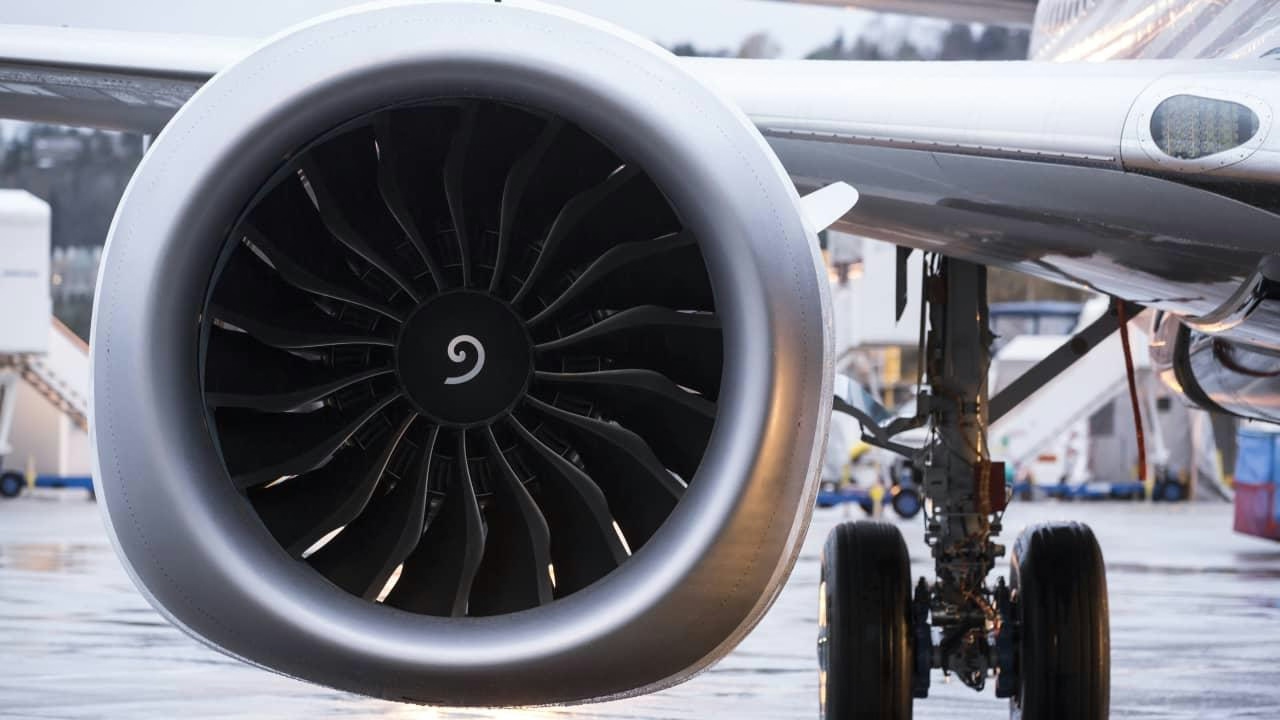
Despite these positive financial results, Airbus issued a cautious forecast for 2026, projecting commercial aircraft deliveries of 870 units—below Bloomberg’s estimate of approximately 896 planes. CEO Guillaume Faury attributed this shortfall primarily to significant shortages of Pratt & Whitney engines, produced by a unit of RTX Corp, which have constrained production capacity. These supply chain disruptions have compelled Airbus to revise its narrowbody aircraft production targets, now aiming for a monthly output of 70 to 75 units by the end of 2027, with a steady rate of 75 units per month thereafter. This adjustment represents a delay from the company’s earlier goal of achieving 75 units per month by 2027.

Faury emphasized that ongoing engine availability issues could continue to affect delivery schedules and potentially impact future profitability. The market’s response to these developments has been mixed, as investors remain attentive to how prolonged supply constraints might influence Airbus’s financial performance and its ability to satisfy strong customer demand.

Industry Competition and Strategic Implications

The aerospace sector remains highly competitive, with Boeing, Airbus’s principal rival, poised to leverage these challenges by intensifying efforts to regain market share in the narrowbody segment. Concurrently, Embraer is expected to focus on expanding sales of its E2 jets to strengthen its position within the market. The contrasting supply chain and production difficulties faced by Airbus and Boeing in 2026 highlight the evolving dynamics and persistent pressures shaping the global aerospace industry.

In response to its financial performance, Airbus has proposed a dividend of €3.20 per share for 2025. As the company contends with ongoing supply chain disruptions, industry analysts and stakeholders will be closely monitoring how Airbus and its competitors navigate these operational challenges and adapt to shifting market conditions.

More news
Bamboo Airways Parent Company Announces Major Fleet Expansion and Operational Shift

Bamboo Airways Parent Company Announces Major Fleet Expansion and Operational Shift

Bamboo Airways Parent Company Announces Major Fleet Expansion and Operational Shift Vietnam’s aviation industry is on the cusp of significant change as FLC Group, the parent company of Bamboo Airways, reveals an ambitious new aircraft leasing strategy. This initiative signals a substantial fleet expansion and a strategic realignment of operations, aimed at stabilizing the airline’s performance and supporting growth in one of Asia’s most dynamic travel markets. Strategic Shift: Establishment of FLC Aircraft Investment and Leasing JSC In February 2026, FLC Group launched FLC Aircraft Investment and Leasing JSC, a dedicated subsidiary focused on aircraft leasing and trading. Initially capitalized at approximately VND 1.5 trillion (USD 60 million), the company swiftly increased its capital to VND 6 trillion within a matter of weeks. Beyond leasing, the subsidiary’s remit includes aircraft sales, spare parts support, aviation services, and logistics, positioning it as a cornerstone for a comprehensive aviation ecosystem. This internal leasing arm is designed to reduce Bamboo Airways’ dependence on third-party lessors and external financing, which often entail high costs and limited operational flexibility. By gaining greater control over fleet availability and financial planning, the airline aims to better adapt to fluctuating demand across domestic and international routes. Navigating Industry Challenges and Competitive Pressures Despite the ambitious expansion, Bamboo Airways faces a complex operational environment. The airline must contend with regulatory challenges and infrastructure constraints similar to those experienced by global lessors such as TrueNoord in Africa. Additionally, managing rapid growth amid shifting demand patterns—an issue familiar to carriers like AirAsia—will be critical to avoid fleet overcapacity or underutilization. Financial pressures also present significant risks. Rising fuel prices and ongoing geopolitical tensions threaten to increase operating costs and affect route profitability. Maintaining operational efficiency and safety standards under these conditions will be essential for Bamboo Airways to realize its growth objectives. The announcement is expected to intensify competition within Vietnam’s aviation sector. Rival airlines may respond by revising their own fleet strategies or making strategic investments, akin to Singapore Airlines’ long-term support for Air India. Bamboo Airways’ challenge will be to leverage its new leasing capabilities to enhance flexibility, control costs, and uphold service quality amid heightened industry scrutiny. Bamboo Airways’ Evolution and Future Prospects Since its founding in 2017 as a hybrid carrier combining full-service and low-cost models, Bamboo Airways expanded rapidly, primarily utilizing leased Airbus A320 and A321 aircraft. However, the airline’s trajectory was disrupted by corporate scandals and restructuring, leading to changes in ownership and strategic direction. With the support of FLC Group’s new leasing subsidiary, Bamboo Airways is now positioning itself for a sustainable recovery. This integrated approach aims not only to strengthen the airline but also to bolster Vietnam’s broader travel and tourism sector, reinforcing the country’s ambitions as a regional aviation hub. As competition intensifies in Vietnam’s skies, Bamboo Airways’ fleet expansion and operational shift will be closely monitored by industry stakeholders and travelers worldwide.
Delta Air Lines Phases Out Boeing 777 Fleet

Delta Air Lines Phases Out Boeing 777 Fleet

Delta Air Lines Phases Out Boeing 777 Fleet Delta Air Lines, one of the largest carriers in the United States, has officially retired its Boeing 777 fleet, marking a significant transformation in its long-haul operations. The decision, announced in 2020, surprised many within the aviation community given the Boeing 777’s widespread popularity and proven reliability among global airlines. However, Delta’s move was a strategic response to shifting industry dynamics, evolving travel patterns, and the imperative for enhanced operational efficiency. The Boeing 777 Legacy at Delta Delta introduced the Boeing 777 in 1999, deploying both the 777-200ER and 777-200LR variants to expand its reach into ultra-long-haul markets. These aircraft enabled the airline to inaugurate ambitious routes to Asia and Australia, with the 777-200LR’s extended range facilitating non-stop flights such as Atlanta to Johannesburg and Los Angeles to Sydney. Over nearly two decades, the 777 became a cornerstone of Delta’s international strategy, valued for its reliability and capacity. The airline’s final Boeing 777 flight occurred on October 31, 2020, operating from New York JFK to Los Angeles. Reflecting on the aircraft’s contribution, Delta’s Chief Operating Officer Gil West remarked, “The 777 has been a reliable part of Delta’s success since it joined the fleet in 1999 and because of its unique operating characteristics, opened new non-stop, ultra-long-haul markets that only it could fly at that time.” Strategic Considerations Behind the Retirement Despite the Boeing 777’s strong reputation, it was not the most cost-effective aircraft within Delta’s fleet. The onset of the COVID-19 pandemic, which drastically curtailed global travel demand, presented an opportunity for the airline to streamline its operations. Older widebody aircraft like the 777 consumed more fuel and incurred higher maintenance costs compared to newer models such as the Airbus A330, which Delta had already begun integrating. By retiring all 18 of its 777s, Delta aimed to reduce operating expenses and better align capacity with uncertain long-haul demand. This decision also reflected broader industry trends, as rising fuel prices compelled airlines to reassess their route networks and fleet compositions. Operational Challenges and Market Pressures Delta’s transition away from the 777 has not been without difficulties. The airline has recently experienced operational disruptions, including flight cancellations linked to internal crew restrictions. These challenges have complicated the integration of newer aircraft and the adjustment to a more streamlined fleet. At the same time, competitors such as Alaska Airlines have intensified competition at key hubs, seeking to capitalize on Delta’s operational vulnerabilities. Persistently high fuel prices have further pressured airlines, including Delta, to cut routes and reevaluate their long-haul strategies. While Boeing continues to deliver new aircraft models, Delta’s current operational hurdles may affect its capacity to seamlessly incorporate these planes into service. Looking Ahead The retirement of the Boeing 777 marks the conclusion of a significant chapter for Delta Air Lines, while simultaneously signaling a shift toward a more cost-effective and flexible operational model. As the airline contends with ongoing operational challenges and a competitive market environment, its ability to adapt will be critical in shaping the future of its long-haul operations.
Aviation Minister Says AI-171 Crash Investigation Nears Completion

Aviation Minister Says AI-171 Crash Investigation Nears Completion

Aviation Minister Announces Near Completion of AI-171 Crash Investigation During a visit to Ranchi, Civil Aviation Minister Naidu revealed that the investigation into the Air India flight AI-171 crash near Ahmedabad is approaching its final stages, with the comprehensive report expected within a month. The inquiry, conducted in strict adherence to international aviation standards, remains transparent and open to scrutiny throughout the process. The tragic crash of the Air India Boeing 787-8 on June 12 last year, shortly after departing from Sardar Vallabhbhai Patel International Airport, resulted in the loss of 260 lives, including passengers, crew members, and individuals on the ground. This devastating event sent shockwaves across India and intensified scrutiny of Air India’s operational and safety protocols. While Minister Naidu refrained from disclosing specific findings of the investigation, he assured that every aspect is being meticulously examined before the final report is released. The incident has brought to light existing operational and safety challenges within Air India, with India’s aviation regulator identifying multiple safety violations in the aftermath. These difficulties have been exacerbated by the depreciation of the Indian rupee against the US dollar, which has increased operational costs for the airline. Broader Sector Challenges and Government Initiatives Beyond the investigation, the aviation sector in India faces considerable uncertainty. Minister Naidu highlighted the need for vigilance amid the escalating crisis in West Asia, although he noted that the current situation does not pose an immediate threat to Indian aviation. He emphasized the importance of developing short-, medium-, and long-term strategies to mitigate potential disruptions to passengers and the economy should the crisis intensify. Addressing concerns over rising airfares amid global volatility, the minister outlined government measures aimed at protecting domestic travelers from additional financial burdens. These include reductions in aviation turbine fuel prices and cuts to airport landing and parking charges, intended to stabilize fares and support the sector’s recovery. Naidu reported that approximately 500,000 passengers travel daily on domestic routes, and the government is actively monitoring fare trends. Plans to deploy additional flights and aircraft will be considered in response to increasing demand. In a bid to enhance regional connectivity, the minister announced the forthcoming launch of the revamped UDAN 2 scheme, backed by an estimated budget of Rs 29,000 crore. This initiative aims to develop 100 new airports and 200 helipads over the next decade, significantly strengthening air travel infrastructure across India. During his visit, Naidu also inaugurated the Udaan Yatri Cafe at Ranchi airport, a project designed to offer affordable food and beverages to travelers, following successful implementations at other airports. The AI-171 crash and its aftermath underscore the broader challenges confronting the aviation industry both in India and globally. The sector continues to grapple with complex issues, including Russia’s difficulties in reviving its civil aircraft manufacturing and ongoing privatization efforts at Pakistan International Airlines. While market reactions and competitor responses remain uncertain, the primary focus remains on ensuring safety, stability, and sustainable growth within India’s aviation landscape.
NTSB: Engine Detachment on UPS Plane Linked to Lax Inspection Schedule

NTSB: Engine Detachment on UPS Plane Linked to Lax Inspection Schedule

NTSB Links UPS Plane Engine Detachment to Inadequate Inspection Schedule A fatal crash involving a UPS cargo plane last year, which claimed 15 lives, might have been averted had a more stringent inspection regimen been enforced, according to testimony presented at a National Transportation Safety Board (NTSB) hearing on Wednesday. The investigation revealed that inspection intervals for vital engine mount components were extended following Boeing’s recommendation, a change subsequently approved by federal regulators. Investigation Reveals Flaws in Inspection Approval Process The NTSB disclosed that Boeing’s 2015 petition to lengthen inspection intervals relied on outdated data and neglected to consider seven prior occurrences of similar part failures within the same aircraft model. Despite these significant warning signs, the Federal Aviation Administration (FAA) granted approval after a cursory one-month review, without requesting further information or conducting a more thorough evaluation. Aviation safety expert Jeff Guzzetti emphasized the shared responsibility among airlines, manufacturers, and regulators in maintaining safety standards. He noted that the NTSB is working to delineate the specific roles and accountability of each party involved. The hearings further revealed a fundamental misunderstanding by Boeing and FAA officials regarding the risks posed by potential failure of a steel bearing and metal sheath located deep within the engine pylons. These components are challenging to inspect without engine removal. Fatigue or failure in these bearings can impose abnormal stress on the lugs securing the engines to the MD-11’s wings, increasing the risk of engine detachment. Consequences of Extended Inspection Intervals Boeing successfully extended the inspection interval from once every 19,900 takeoff and landing cycles to once every 29,260 cycles, justifying the change as a means to synchronize major maintenance tasks and reduce aircraft downtime. However, this request came despite reports of seven bearing defects occurring well before the original inspection threshold. In the years following the relaxation of the inspection schedule, three additional failures were identified prior to the crash. The UPS aircraft involved had completed 21,043 cycles, which would have triggered a comprehensive inspection under the original schedule. The engine detached while the plane was accelerating on the runway at Louisville’s Muhammad Ali International Airport, resulting in the deaths of all three crew members and 12 individuals on the ground, with 23 others sustaining injuries. The NTSB investigation underscored the critical importance of addressing bearing fatigue within engine pylons, as such failures can precipitate catastrophic engine separation. This incident represents only the second recorded case of an MD-11 losing an engine in a crash; the earlier event, occurring decades prior, was attributed to improper maintenance rather than a design defect. Greg Raiff, proprietor of multiple aviation maintenance firms, highlighted that operators are bound to adhere to federally approved maintenance schedules, underscoring the pivotal role of regulators in ensuring that safety standards remain rigorous and current.
Southwest Airlines Opens Global Innovation Center to Enhance Travel Experience

Southwest Airlines Opens Global Innovation Center to Enhance Travel Experience

Southwest Airlines Opens Global Innovation Center to Enhance Travel Experience Southwest Airlines has embarked on a transformative journey in modernizing air travel with the inauguration of its first Global Innovation Center outside the United States, located in Hyderabad, India. This strategic expansion underscores the Dallas-based carrier’s commitment to harnessing advanced technologies aimed at optimizing flight scheduling, enhancing passenger safety, and minimizing airport delays. A Strategic Leap in Aviation Technology In response to the surge in global air traffic and the growing demands of modern travelers, Southwest’s new facility at Sattva Knowledge City in Hyderabad is envisioned as a digital command center that will directly support the airline’s core operations in Texas. The center is projected to grow to accommodate up to 1,000 engineering and technology professionals specializing in artificial intelligence, machine learning, cybersecurity, and next-generation product development. This initiative places Southwest alongside other leading aviation and hospitality companies, such as American Airlines and Marriott International, which have also established significant technology operations in India. The overarching objective is to cultivate a robust innovation ecosystem that delivers a more stable and seamless travel experience for passengers worldwide. Navigating Opportunities and Challenges The choice of India for the Global Innovation Center was influenced by the region’s abundant engineering talent. Lauren Woods, Executive Vice President and Chief Information Officer at Southwest Airlines, emphasized that the Hyderabad team will be fully integrated into the company’s core software engineering and enterprise operations, distinguishing it from a conventional back-office support function. Despite the promising outlook, the expansion presents several challenges. Southwest must carefully navigate complex international regulations, ensure that the integration of advanced technologies does not disrupt existing operations, and manage the considerable costs associated with establishing and maintaining a global hub. These factors have elicited mixed reactions from investors, with some expressing concerns over the financial implications, while others regard the move as a forward-looking strategy to enhance customer experience and operational efficiency. Industry Impact and Competitive Response Southwest’s substantial investment in digital transformation is poised to influence the broader aviation industry. Competitors may respond by accelerating their own technology initiatives to preserve market competitiveness, whereas others might pursue cost-cutting measures to counterbalance the perceived threat posed by Southwest’s innovation efforts. Looking Ahead The Hyderabad Global Innovation Center represents a significant commitment by Southwest Airlines to future-proof its operations and improve the overall travel experience. As the airline expands its technology workforce and integrates cutting-edge solutions, the success of this endeavor will hinge on its ability to balance innovation with operational stability and financial prudence. For travelers, the anticipated benefits include fewer disruptions, enhanced reliability, and a more enjoyable journey from check-in to touchdown.
EVA Air Increases Kaohsiung Flights Using Wide-Body Jets

EVA Air Increases Kaohsiung Flights Using Wide-Body Jets

EVA Air Expands Kaohsiung Operations with Introduction of Wide-Body Aircraft EVA Air has commenced the deployment of larger aircraft on key routes from Kaohsiung, reflecting its strategic intent to capitalize on growing travel and business demand in southern Taiwan. Beginning Wednesday, the airline’s Airbus A330-300 jets, each accommodating 309 passengers, will service flights from Kaohsiung to Macau, Shanghai Pudong, and Tokyo Narita. This upgrade increases seat capacity on these routes by nearly 70%, according to the Central News Agency (CNA). This expansion forms part of EVA Air’s broader initiative to develop Kaohsiung as a secondary hub, thereby strengthening its network in southern Taiwan. EVA Air President Sun Chia-ming acknowledged the crucial support from the Ministry of Transportation and Communications and the Civil Aviation Administration, which facilitated the airline’s capacity enhancement at Kaohsiung International Airport. The launch of the upgraded service was celebrated with a traditional water salute and a boarding area designed to highlight the A330-300 aircraft. Passengers expressed enthusiasm for the change, with one traveler, identified as Lin, emphasizing that the introduction of wide-body jets would simplify access to larger aircraft for residents of southern Taiwan, eliminating the need to transit through northern airports. EVA Air emphasized the advantages of the A330-300, including its twin-aisle configuration, modernized entertainment systems, increased cabin space, and complimentary in-flight Wi-Fi. The airline’s Kaohsiung network now offers 56 weekly flights to destinations such as Seoul, Hong Kong, Fukuoka, Osaka, Macau, Shanghai Pudong, and Tokyo Narita. Industry Challenges and Competitive Landscape EVA Air’s expansion occurs amid a complex and challenging aviation environment. Rising fuel costs continue to exert pressure on Asia-Pacific carriers, compelling airlines to carefully balance competitive pricing with operational expenditures. The shift to wide-body jets also raises considerations regarding fuel efficiency and environmental impact, as the aviation industry faces heightened scrutiny over sustainability practices. The competitive landscape is further intensified by regional developments. Airlines such as Vietnam Airlines are broadening their route networks, while established carriers including Cathay Pacific, Singapore Airlines, and Malaysia Airlines are adjusting their flight frequencies to Europe in response to shifting demand patterns away from the Middle East. These dynamics may influence passenger preferences and heighten competition on critical routes. As EVA Air advances its strategy of deploying larger aircraft and expanding services from Kaohsiung, it must navigate fluctuating demand, cost pressures, and evolving expectations related to environmental sustainability. The effectiveness of this approach will depend on the airline’s capacity to adapt to market changes while addressing the needs of travelers in southern Taiwan.
The Development of the Jet Engine in America

The Development of the Jet Engine in America

The Development of the Jet Engine in America Early Vision and Innovation Sir Frank Whittle, a pioneering Royal Air Force officer, envisioned a transformative future for aviation, one in which aircraft would fly higher, faster, and more safely than those powered by conventional piston engines and propellers. His groundbreaking ideas emerged in the late 1920s, culminating in a graduation thesis that emphasized the necessity for aircraft to achieve altitudes and speeds beyond the capabilities of existing technology. In 1930, Whittle secured a patent for his initial jet engine design. However, the economic hardships of the Great Depression and the political uncertainties preceding World War II hindered early support for his concept. Despite these challenges, Whittle’s design remained technically sound and continued to evolve. Although a French inventor had previously filed a patent for a jet engine, the technology was not yet practical. Concurrently, German engineers were developing their own prototypes during the 1930s. Whittle, after gaining admission to Cambridge University, persisted in refining his engine despite financial difficulties. By 1939, as Europe approached war, British military leaders began to recognize the potential of his work, particularly in light of Germany’s rapid advancements in military technology. Transatlantic Collaboration and Wartime Advancements A pivotal moment occurred in October 1941, just two months before the attack on Pearl Harbor, when British officials discreetly introduced Whittle’s jet engine to American military representatives at a Boston airport. This event marked the beginning of significant U.S. involvement in jet engine development. American engineers, both civilian and military, swiftly engaged in refining the technology. During World War II, jet engines revolutionized aviation by enabling aircraft to reach unprecedented altitudes and speeds, fundamentally altering the nature of aerial combat and military strategy. Challenges and Industry Evolution The journey toward widespread adoption of jet engines in the United States was not without obstacles. Development efforts were periodically disrupted by fluctuations in government funding and shifting defense budget priorities, often influenced by broader economic instability and changes in legislation and regulation. The global economy also played a critical role; for instance, geopolitical tensions such as the Iran war impacted demand within the civil aviation engine market. As competition intensified within the aviation sector, companies adapted by revising their strategies, implementing cost-reduction measures, and embracing new technologies to maintain their competitive edge. Firms like Jet Aviation exemplified this drive for innovation by incorporating drones for aircraft inspections, reflecting the industry’s ongoing commitment to technological advancement. The development of the jet engine in America thus stands as a testament to international collaboration, technological perseverance, and adaptability amid evolving economic and political conditions. Beyond its transformative impact on military aviation during World War II, the jet engine laid the groundwork for the modern era of commercial flight, fundamentally reshaping global transportation of people and goods.
Qatar Airways Reports $1.94 Billion Profit Amid Order for 210 Boeing Widebodies

Qatar Airways Reports $1.94 Billion Profit Amid Order for 210 Boeing Widebodies

Qatar Airways Reports $1.94 Billion Profit Amid Record Boeing Order Strong Financial Performance Despite Regional Challenges Qatar Airways has announced a post-tax profit of $1.94 billion for the financial year ending March 31, 2026, highlighting its resilience and growth amid ongoing geopolitical tensions in the Middle East. The Doha-based flag carrier, a member of the oneworld alliance, recorded its highest-ever operating profit of $4.1 billion (QAR 15.2 billion), according to Group Chief Executive Officer Hamad Al-Khater. This robust financial performance underscores the airline’s ability to navigate a complex operating environment while maintaining strong demand. During the 2025/26 financial year, Qatar Airways transported 41.8 million passengers and moved over 1.43 million tons of cargo, solidifying its position as the world’s largest air freight carrier with a 12% share of the global market. The airline’s success was driven by sustained passenger demand, efficient cargo operations, and ongoing operational improvements, despite persistent economic uncertainty and regional conflicts. “It is not often that a single financial year asks an organisation to demonstrate both the best of what it can achieve and the depth of what it can withstand. The 2025/26 financial year did both, and the Qatar Airways Group rose to each in turn,” Al-Khater remarked, emphasizing the company’s resilience. Fleet Expansion and Strategic Growth Qatar Airways currently operates a fleet of approximately 270 aircraft, serving over 160 destinations worldwide. Its network is primarily supported by widebody aircraft, including the Airbus A350-900 and A350-1000, Boeing 777s, and 787 Dreamliners. Although its Airbus A380s remain grounded, the airline is preparing for significant expansion through a landmark order for up to 210 new Boeing widebody jets. This includes 130 Boeing 787s—the largest Dreamliner order ever placed—30 Boeing 777-9s, and options for an additional 50 aircraft. This transaction represents the largest widebody order in Boeing’s history and secures vital delivery slots amid strong demand for next-generation aircraft. This substantial investment aligns with Qatar Airways’ broader strategy to maintain a younger, more fuel-efficient fleet while supporting its ambitious growth objectives. The airline is also expanding its global reach, with new routes planned for Latin America, including Venezuela and Colombia, underscoring its commitment to international network development. Market Context and Outlook Qatar Airways’ financial achievements come amid a highly competitive aviation market. Rival carriers such as Ryanair have also reported strong results, partly due to effective fuel price hedging strategies. Boeing’s improved first-quarter deliveries and reduced losses have further bolstered confidence among major customers, likely influencing Qatar Airways’ recent fleet decisions. Despite the operational impacts of regional conflicts in the latter part of the financial year, Qatar Airways’ strong financial and operational results reflect the continued strength of its recovery and growth strategy. The carrier is well positioned for further success in the coming years, supported by its strategic investments and expanding global footprint.
ShieldAI to Demonstrate AI-Enabled One-Way Attack Munitions This Year

ShieldAI to Demonstrate AI-Enabled One-Way Attack Munitions This Year

ShieldAI to Demonstrate AI-Enabled One-Way Attack Munitions This Year ShieldAI is preparing to showcase its Hivemind autonomy software on the Pentagon’s Low-Cost One-Way Attack System (LUCAS) drones later this year, marking a pivotal advancement in AI-driven military technology. The upcoming demonstration will involve swarming operations with ten or more munitions, illustrating the potential for coordinated and adaptive drone strikes on the battlefield. Advancing Autonomous Swarming Capabilities The Pentagon has prioritized enhancing its one-way attack drones with artificial intelligence to enable sophisticated flight patterns and coordinated swarm tactics. ShieldAI, a startup specializing in autonomy solutions, has been selected to integrate its Hivemind system into the LUCAS drones. These drones are reverse-engineered from the Iranian HESA Shahed-136, a platform that pioneered the concept of low-cost, expendable UAVs for long-range strikes. Following Iran’s lead, Russia developed its own variant, the Geran-2, while the United States deployed its first LUCAS-equipped squadron in late 2025. This squadron has already seen combat during the now-paused US-Israeli air campaign against Iran. Currently, LUCAS drones, which are based on the SpektreWorks FLM 136 design, execute precision strikes but operate with relatively simple, pre-programmed flight profiles. The integration of Hivemind is expected to transform these capabilities by enabling multiple drones to coordinate in real time, adapt to dynamic battlefield conditions, and counter threats such as GPS or radio frequency jamming. Brandon Tseng, founder of ShieldAI, emphasized the operational advantages of AI pilots during the Special Operations Forces Week conference in Tampa, Florida. He noted that AI-enabled munitions reduce the cost per effect by increasing mission success rates. Unlike traditional unpiloted drones that follow fixed routes, AI-equipped systems can dynamically redirect to new targets if an initial strike is successful. Tseng illustrated this by explaining that if 20 one-way attack drones are launched at a single target and one succeeds in destroying it, the remaining 19 can autonomously seek alternative targets, thereby maximizing operational efficiency. Cost Efficiency and Broader Applications This adaptive functionality has the potential to further lower the already modest cost of one-way attack strikes. The Pentagon estimates that a basic LUCAS munition costs between $10,000 and $55,000, a fraction of the $1 to $2 million price tag associated with modern cruise missiles. Hivemind’s autonomy software has been tested across 28 platforms worldwide, ranging from small drones to large fighter aircraft such as the US Air Force’s X-62, a modified Lockheed Martin F-16 designed for autonomous air combat experimentation. ShieldAI also provides autonomy solutions for the Airbus Helicopters MQ-72, an uncrewed cargo variant of the UH-72B/H145. Regulatory and Ethical Challenges Despite these technological advances, ShieldAI’s developments occur amid increasing regulatory scrutiny and ethical debates surrounding AI-enabled one-way attack munitions. Market reactions have been mixed; some investors express concern over potential backlash and the moral implications of autonomous lethal systems, while others regard the technology as a significant leap forward in military capability. Competitors are anticipated to respond by developing similar AI-driven swarming technologies or enhancing existing drone platforms to counter ShieldAI’s innovations. As the Pentagon advances its AI integration efforts, the forthcoming demonstration will attract close attention from industry stakeholders and policymakers alike. This event underscores the rapidly evolving landscape of autonomous warfare and its far-reaching implications for future military operations.
Maxamation Introduces AI-Based Flight Management System for Airlines

Maxamation Introduces AI-Based Flight Management System for Airlines

Maxamation Launches AI-Powered Flight Management System to Enhance Airline Profitability Aviation technology company Maxamation has introduced RM Flight Management, an AI-driven, fully managed revenue optimization service aimed at helping airlines increase profitability without expanding their internal teams. By integrating advanced automation with continuous expert oversight, the system addresses the widespread shortage of skilled revenue management analysts in the aviation industry. This hybrid approach enables airlines to maximize yields, optimize seat inventory, and improve operational efficiency amid ongoing market challenges. Addressing Talent Shortages in Revenue Management The launch of RM Flight Management comes at a critical juncture for the aviation sector. As airlines rebuild their networks and capacity in the face of economic uncertainty, many are struggling to recruit and retain experienced revenue management professionals. This talent gap, exacerbated by the pandemic recovery, is especially pronounced among smaller and mid-sized carriers that find it difficult to compete with larger airlines on compensation packages. Maxamation warns that airlines lacking dedicated revenue optimization expertise risk leaving significant revenue opportunities unexploited. A Hybrid Model Combining AI and Expert Oversight At the heart of RM Flight Management lies Maxamation’s proprietary revenue optimization platform, which is complemented by a team of airline revenue specialists. These experts actively monitor and manage flight inventory, pricing strategies, and demand patterns in real time. Unlike traditional software-only solutions, RM Flight Management provides continuous operational support, with specialists working directly within an airline’s inventory systems to adjust pricing and availability dynamically. Maxamation estimates that this approach can yield revenue increases of up to 15% through more effective optimization and accelerated decision-making. The service offers several key advantages. It enables airlines to increase revenue per flight by continuously optimizing seat utilization across their networks. It also grants carriers direct access to experienced revenue management professionals without the need to recruit or train additional internal staff. Furthermore, the solution provides flexible resourcing options, allowing airlines to scale support in line with operational demands, seasonal fluctuations, or network expansions. Industry Challenges and Competitive Landscape While RM Flight Management presents clear benefits, Maxamation acknowledges several challenges that could affect its adoption. Integrating the AI-based system with existing airline infrastructure, ensuring compliance with regulatory requirements, and maintaining stringent data security standards are critical considerations. Additionally, some traditional industry players may exhibit skepticism toward AI-driven solutions, potentially slowing their acceptance. The competitive landscape is also evolving, with companies such as Salesforce and Intuit enhancing their AI offerings in response to innovations like Maxamation’s. Although current AI demand is concentrated among early adopters, industry analysts suggest that expanding adoption to mid-cap airlines could foster a more stable and sustainable growth trajectory for AI-driven aviation technologies. CEO Remarks on Operational Pressures Maxamation’s CEO highlighted the operational strain airlines face due to shortages of revenue management analysts. He noted, “We hadn’t previously appreciated how many airlines face either short- or long-term shortages of revenue management analysts. Airlines know they are leaving money on the table if these staffing gaps remain unresolved.” As the aviation industry continues to adapt to a rapidly changing environment, solutions such as RM Flight Management offer a pragmatic approach that combines the capabilities of artificial intelligence with the expertise of seasoned professionals to enhance profitability and operational efficiency.
line









