صورة

أيروجيني — مساعدك الذكي للطيران.

اسأل عن أي شيء. قم بتحليل كل شيء. تصرّف فورًا.

الرائج الآن

Categories

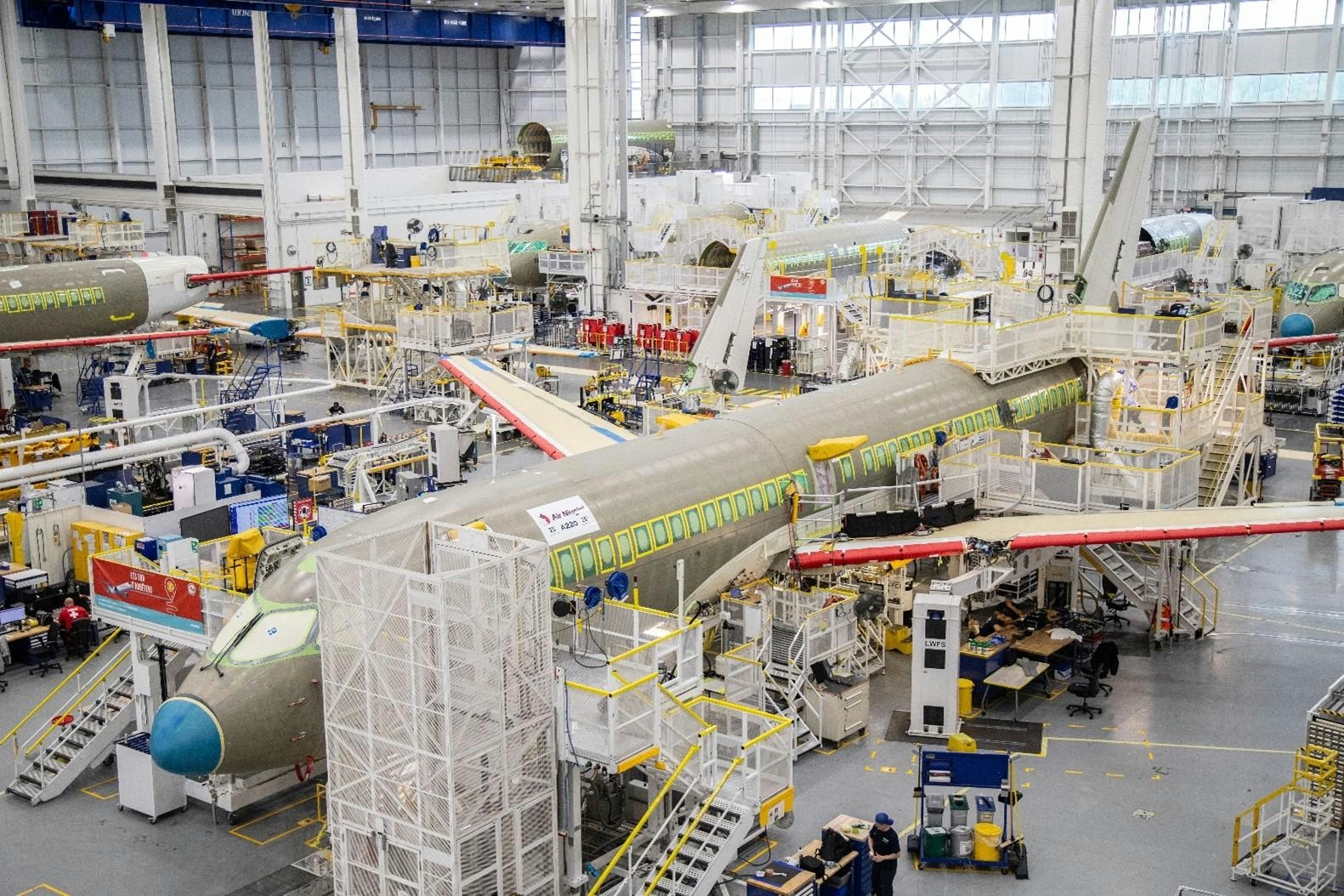
Airbus Reports Decline in Profits Amid Slower Jet Deliveries
April 28, 2026By ePlane AI
Airbus Reports Decline in Profits Amid Slower Jet Deliveries
0
0
Airbus
Jet Deliveries
Supply Chain Disruptions

Airbus Reports Sharp Decline in Profits Amid Supply Chain Challenges

Airbus has announced a significant decline in its first-quarter profits, primarily driven by slower jet deliveries and ongoing supply chain disruptions. The European aerospace leader’s quarterly earnings were halved compared to the same period last year, with persistent shortages of Pratt & Whitney engines cited as a major factor behind the downturn.

Financial Performance and Delivery Challenges

In the first quarter, Airbus reported sales of €12.65 billion ($14.82 billion), slightly exceeding analyst expectations of €12.58 billion. Earnings per share (EPS) also surpassed forecasts, coming in at €0.74 against an anticipated €0.44. Despite these figures, the company’s adjusted operating profit fell sharply by 52% to €300 million, down from €624 million a year earlier and below the €378 million predicted by analysts.

The commercial aircraft division experienced the most pronounced impact, with revenues declining 11% to €8.4 billion. Adjusted earnings for this segment plummeted 84% to just €81 million. Airbus attributed much of this decline to insufficient deliveries of Pratt & Whitney engines, which have constrained production of the popular A320neo family.

During the quarter, Airbus delivered 114 commercial aircraft, a decrease from 136 deliveries in the same period last year. The company reaffirmed its guidance to deliver 870 commercial aircraft in 2026, slightly below the approximately 880 deliveries anticipated by analysts. This forecast, maintained since mid-February, reflects ongoing supply chain challenges, particularly related to engine availability, and excludes potential further disruptions from global trade tensions, air traffic fluctuations, or logistics issues.

Outlook Amid Geopolitical and Industry Pressures

Chief Executive Guillaume Faury described the operating environment as “dynamic and complex,” emphasizing that Airbus is closely monitoring the potential impacts of geopolitical tensions, especially in the Middle East. The company’s cautious outlook comes as the broader aviation sector continues to contend with persistent supply chain difficulties. While rival Boeing has also faced delivery challenges, Airbus’s issues have been more pronounced.

Market reactions highlight growing concerns about the resilience of aerospace supply chains. Both manufacturers and airlines remain vigilant for further disruptions that could affect production schedules and aircraft deliveries in the coming months.

More news
New Drone Technology Enhances Aircraft Paint Maintenance

New Drone Technology Enhances Aircraft Paint Maintenance

New Drone Technology Enhances Aircraft Paint Maintenance AkzoNobel has introduced a significant advancement in aircraft paint maintenance through the latest iteration of its Aerofleet Coatings Management system. Building on the initial launch in 2023, the updated service now incorporates a second drone-based inspection tool, the Iris CMX, which offers unprecedented precision and predictability for airlines managing their fleets. Innovative Drone Inspection Tools Developed in collaboration with drone specialist Donecle, the Iris CMX is equipped with a three-in-one contact-based sensor capable of directly measuring dry film thickness, color, and gloss. This targeted measurement approach provides highly accurate and quantitative data, improving the consistency and repeatability of coating inspections. The Iris CMX complements the existing Iris GVI drone, which performs a full-surface visual analysis by capturing up to 600 high-definition images while flying a predetermined grid over the aircraft. These images are then processed by AkzoNobel’s coatings management software to detect any coating defects or signs of wear. By deploying both drones simultaneously, with trained teams operating on opposite sides of the aircraft, a comprehensive inspection of a narrowbody plane can be completed in approximately 30 minutes. This dual-drone system enables airlines to make repainting decisions based on precise data rather than relying solely on elapsed time or flight hours, potentially reducing unnecessary maintenance and associated costs. Patrick Bourguignon, Director of AkzoNobel’s Automotive and Specialty Coatings business, highlighted the advantages of the enhanced system: “Aerofleet Coatings Management has always been about giving airlines greater confidence in when and why they maintain or repaint their aircraft. The addition of the Iris CMX brings precise, consistent measurement into the process to strengthen the data that underpins our predictive models. It also allows us to support expert assessment with more objective, consistent and repeatable inspections, while improving the speed and efficiency of the inspection process.” Comprehensive Data Integration and Industry Impact The upgraded Aerofleet system now integrates three core data streams: flight and environmental data—including route profiles, UV exposure, and humidity—full-surface visual analysis from the Iris GVI drone, and targeted, high-precision measurements from the Iris CMX drone. This comprehensive approach is particularly beneficial for large fleets, typically comprising 100 or more aircraft, enabling airlines to optimize maintenance schedules, reduce downtime, and enhance operational efficiency. Over time, these improvements may also contribute to a reduced environmental footprint. Despite the clear benefits, the adoption of advanced drone technology presents challenges. Airlines must navigate regulatory hurdles, manage high initial investment costs, and integrate new systems with existing maintenance operations. Nevertheless, market response has been largely positive, with increasing adoption rates and the formation of new partnerships between airlines and technology providers. In turn, competitors are accelerating their research and development efforts and investing in similar drone technologies to maintain their market positions. With a longstanding reputation in paints and coatings and a presence in over 150 countries, AkzoNobel continues to drive innovation in sustainable solutions for the aviation industry. As the sector evolves, the integration of advanced digital tools such as Aerofleet is poised to redefine standards in aircraft maintenance and operational efficiency.
China Southern Places $21 Billion Order for Airbus Jets Amid Boeing Delays

China Southern Places $21 Billion Order for Airbus Jets Amid Boeing Delays

China Southern Places $21 Billion Order for Airbus Jets Amid Boeing Delays Major Order Strengthens Airbus Position in China Airbus has secured a significant order for 137 A320neo-family aircraft from Chinese carriers, reinforcing the European manufacturer’s presence in one of the world’s most competitive aviation markets. Announced on Wednesday by China Southern Airlines, the deal comes at a time when Boeing is grappling with delivery delays and uncertainty surrounding future contracts with Chinese customers. China Southern, headquartered in Guangzhou and one of China’s three principal state-owned airlines, will acquire 102 jets, while its subsidiary Xiamen Airlines will purchase 35. The combined order, valued at a list price of $21.37 billion, includes undisclosed discounts customary for transactions of this scale, according to a company statement. The agreement remains subject to approval by shareholders and relevant government authorities. Deliveries for China Southern are planned between 2028 and 2032, with Xiamen Airlines receiving aircraft from 2029 through 2032. The airline’s board emphasized that the new fleet would support key national initiatives such as the Greater Bay Area development and the Belt and Road Initiative, while simultaneously modernizing the fleet and enhancing the carriers’ competitive edge. Strategic Shift Amid Boeing Challenges and Geopolitical Tensions The timing of this order signals a strategic pivot by China Southern towards Airbus, influenced in part by Boeing’s ongoing delivery setbacks. Industry analysts highlight that persistent geopolitical tensions between the United States and China have complicated Boeing’s ability to secure new contracts in the region. This development may compel Boeing to reconsider its strategy in the Asian market, where Airbus is steadily expanding its footprint. Market responses indicate that Airbus is poised to benefit from increased orders and a growing market share in China, while Boeing’s position remains precarious. The deal also coincides with slow progress for China’s domestically produced C919 narrowbody airliner, which delivered only three units in the first quarter of 2026. China Southern’s preference for the established A320neo model could further challenge the competitiveness of China’s homegrown aircraft programs. Broader Industry Implications China Southern’s order follows similar commitments from other state-owned carriers. In March, China Eastern Airlines, based in Shanghai, placed an order for 101 A320neo jets. Last year, Airbus secured orders for 148 A320 aircraft from various Chinese airlines and a state-owned aircraft leasing company, including Beijing-based Air China. As China’s aviation sector continues its rapid expansion, this latest order highlights the evolving dynamics of the global aircraft market. Airbus is consolidating its leadership in China, while Boeing confronts mounting obstacles in maintaining its market share.
A More Efficient Method for Timing Piston Engines

A More Efficient Method for Timing Piston Engines

A More Efficient Method for Timing Piston Engines Innovative Solution for Magneto Timing The Aerosync Timer, a newly introduced tool, offers aircraft mechanics and owners a more precise and convenient method for timing magnetos on piston-powered aircraft. Traditionally, this process has involved securing timing instruments to the propeller using tape or adhesives, which often results in sticky residue and potential damage to the aircraft’s finish. The Aerosync Timer eliminates these issues with a custom-engineered, 3D-printed case that slides onto the propeller blade and fastens securely with a Velcro strap. After timing is completed, the device can be swiftly removed, leaving the aircraft’s surface unblemished. David Lowry, who developed the tool alongside his son Jason, explained the motivation behind the design: “We wanted to simplify the timing process while increasing the reliability of the results. By combining a high-quality digital inclinometer with a custom-fit housing, we’ve created a tool that stays exactly where you put it without the need for tape.” The device incorporates a digital angle finder within its proprietary casing, providing a precise and repeatable method for engine timing. Industry Context and Broader Implications The launch of the Aerosync Timer aligns with a wider industry trend focused on enhancing the efficiency and accuracy of piston engine maintenance. However, achieving substantial improvements in engine performance often demands significant technological innovation. For instance, recent advancements such as Geely’s hybrid powertrain, which achieves a thermal efficiency of 48.4 percent, exemplify the level of progress required to push the boundaries of piston engine capabilities. Market responses to such innovations can be varied. Established engine manufacturers may approach new tools and methodologies with caution, as these often require adjustments to long-standing production processes and technologies. In turn, competitors may respond by increasing investment in research and development or pursuing strategic partnerships to maintain their market position. These competitive dynamics are not confined to aviation; similar patterns are observable in other sectors, including maritime, where the adoption of dual-fuel engines has spurred calls for enhanced regulatory frameworks to encourage the use of cleaner fuels. Economic and regulatory challenges also significantly influence the adoption of new technologies. The maritime industry’s experience demonstrates that overcoming these barriers typically necessitates coordinated efforts among manufacturers, regulators, and industry stakeholders to ensure that innovations are both practical and sustainable. The Aerosync Timer is currently priced at $159 and is available for purchase on eBay. As the aviation sector continues to pursue more efficient and reliable engine maintenance solutions, tools like the Aerosync Timer may contribute to setting new industry standards, contingent upon the willingness of manufacturers and regulators to embrace evolving technologies. For more information, visit eBay.com.
NARTP and Digital Twin Consortium Partner to Develop Multi-Agent AI Digital Twins for Aviation

NARTP and Digital Twin Consortium Partner to Develop Multi-Agent AI Digital Twins for Aviation

NARTP and Digital Twin Consortium Collaborate to Develop Multi-Agent AI Digital Twins for Aviation The Digital Twin Consortium® (DTC) has announced a strategic partnership with the National Aerospace Research & Technology Park (NARTP) to design, develop, and validate multi-agent digital twin systems tailored for the aviation industry. This collaboration seeks to address the increasing complexity of air traffic management, cybersecurity challenges, and the integration of autonomous operations by harnessing advanced artificial intelligence (AI) and edge computing technologies. Advancing AI and Edge Computing in Aviation The initiative integrates AMD’s edge high-performance computing (HPC) capabilities, Rowan University’s DEHub, and DTC’s composability frameworks to enable AI intelligence directly at the edge. A central challenge lies in delivering AI inference with deterministic latency while preserving data sovereignty, all the while aggregating insights across enterprise and cloud environments without compromising security. To meet this challenge, the partnership proposes an architecture that deploys local large language model (LLM) inference on AMD Ryzen AI NPU/GPU hardware, facilitating secure coordination between edge and cloud agents. The backbone of this system is formed by DTC’s dual Digital Twin and Agent CPT frameworks, combined with DEHub’s Pythia HPC supercomputer, which supports physics-informed AI and component-level digital twin validation. This collaboration emerges amid a rapidly evolving aviation landscape, where traditional instrument flight rules (IFR) and visual flight rules (VFR) traffic converge with urban air mobility solutions such as electric vertical takeoff and landing vehicles (eVTOL), high-density unmanned aircraft systems (UAS), and integrated autonomous operations. Existing air traffic management (ATM) tools are increasingly inadequate to manage these complexities. Multi-agent digital twins offer a promising approach to optimize traffic flow, enhance airport resource management, and strengthen cybersecurity measures within aviation. The partnership will focus on defining performance metrics and identifying architectural frameworks to unlock these capabilities industry-wide. Leveraging Strategic Assets and Expertise NARTP’s proximity to the Federal Aviation Administration’s (FAA) William J. Hughes Technical Center, along with access to live aviation testbeds, provides a robust environment for operational validation. The NARTP Strategic Innovation Center serves as a conduit between FAA research, industry, and academia, offering structured access to testbed validation, technology integration, and data collection without requiring organizations to maintain their own infrastructure. The Digital Twin Consortium contributes its standards expertise and working group support, with aviation now a key focus within its Mobility and Transportation Working Group. Rowan University’s DEHub, through its Pythia supercomputer, bridges academic research and operational deployment, under the coordination of DTC Ambassador Dr. Antonios Kontsos. The technical stack supporting this initiative includes AMD Ryzen AI’s hybrid neural processing unit (NPU) and integrated GPU edge compute, enabling local deployment of large language models and specialized edge AI models. XMPro’s Multi-Agent Generative Systems (MAGS) orchestrate AI agents and digital twin workflows in real time, ensuring sensitive aviation data remains on-premise while allowing selective cloud scaling. Rowan University’s DEHub and Pythia supercomputer provide on-premise HPC resources with physics-informed AI, real-time sensor integration, and robotics testbeds for large-scale digital twin validation. Challenges and Industry Implications Despite the promising outlook, the partnership faces challenges including regulatory compliance, integration with legacy aviation systems, and the imperative to maintain robust data privacy and security. The market is expected to respond with increased interest from aviation companies eager to adopt digital twin technologies, while competitors may accelerate their own AI-driven innovations. Recent advancements in digital twin applications across sectors such as healthcare and retail highlight a broader industry trend toward leveraging these technologies for enhanced operational efficiency and improved decision-making. This collaboration positions NARTP and the Digital Twin Consortium at the forefront of next-generation aviation technology, with the potential to establish new standards for safety, efficiency, and innovation within the industry.
New commercial aircraft orders reach 13-year high in Q1 2026

New commercial aircraft orders reach 13-year high in Q1 2026

New Commercial Aircraft Orders Reach 13-Year High in Q1 2026 Orders for new commercial aircraft surged to their highest first-quarter level in 13 years, according to a recent report from the UK aerospace trade body ADS. This growth was primarily driven by a 25% year-on-year increase in single-aisle aircraft orders, reflecting strong demand for short-haul travel. In the first quarter of 2026, the world’s leading manufacturers—Airbus, Boeing, and COMAC—secured a combined total of 569 new commercial aircraft orders, representing a 9% increase compared to the same period last year. This marks the strongest first-quarter performance since 2013. The total order backlog has now reached a record 16,656 aircraft, a figure estimated to be worth up to £385 billion to the UK economy through participation in global aircraft programs. Single-Aisle Demand Drives Market Expansion Single-aisle jets dominated the new orders, accounting for 461 of the total, underscoring their sustained popularity among airlines aiming to expand or modernize their short-haul fleets. Significant transactions included China Eastern Airlines’ order for 101 Airbus A320neo family aircraft, with deliveries scheduled between 2028 and 2032. Other notable orders came from Air Astana, which placed an order for 25 A320neo-family aircraft, Atlas Air Worldwide with 20 A350F freighters, and AerCap, which added 100 additional A320neo-family jets to its portfolio. Boeing and Airbus Report Robust Order Books Amid Delivery Challenges Boeing reported 140 net commercial aircraft orders during the quarter, including major deals such as 30 Boeing 787-10s for Delta Air Lines and multiple 737 MAX orders from Aviation Capital Group and Air India. Despite a temporary halt in 737 MAX deliveries due to a wiring issue, Boeing delivered 143 aircraft in Q1, marking its highest first-quarter delivery total since 2019. The company’s quarterly results surpassed expectations, with revenue rising 14% year-over-year and improved jet deliveries contributing to a reduction in losses. Airbus secured net orders for 398 aircraft, outpacing Boeing by 258 planes and achieving a 2.8-fold increase over the previous year. However, Airbus faced a decline in A320neo deliveries as ongoing production issues that began in late 2025 continued to affect output into 2026. Delivery Rates Lag Behind Order Growth Despite the record order intake, aircraft deliveries did not keep pace. Only 261 aircraft were delivered in the first quarter, representing a 4% decrease from Q1 2025. Wide-body aircraft deliveries, however, rose 13% year-on-year, reaching their highest first-quarter level since 2020 and indicating improvements in the wide-body delivery pipeline. Both Airbus and Boeing continued to face production delays, particularly in the single-aisle segment, which constrained deliveries to customers. Geopolitical Risks Cast Uncertainty on Future Growth Looking ahead, geopolitical tensions—especially between the United States and China—pose significant risks to Boeing’s delivery schedule and long-term order book in the Asia-Pacific region. These frictions could impact future growth prospects, even as current demand remains robust. The first quarter of 2026 thus highlights a booming market for new commercial aircraft, led by single-aisle jets, while also underscoring ongoing challenges in production and delivery amid a complex global environment.
Awery Aviation Software Wins Fifth IATA ONE Record Hackathon

Awery Aviation Software Wins Fifth IATA ONE Record Hackathon

Awery Aviation Software Secures Fifth Consecutive Victory at IATA ONE Record Hackathon Awery Aviation Software has once again demonstrated its leadership in aviation technology by winning the International Air Transport Association (IATA) ONE Record Hackathon for the fifth consecutive time. The event, held in Hong Kong, challenged participants to develop innovative solutions within 48 hours, and Awery’s team delivered a fully operational air cargo monitoring tool named Voyager. Voyager: Enhancing Real-Time Cargo Visibility Voyager was engineered to integrate seamlessly with the ONE Record API, providing real-time tracking of shipment milestones. The tool addresses longstanding inefficiencies caused by fragmented data flows among airlines, ground handlers, and freight forwarders. By monitoring key acceptance processes and handling updates, Voyager offers enhanced visibility into cargo status, helping to mitigate delays that have traditionally plagued the industry. The solution employs QR-based acceptance checks to capture critical milestones such as Freight on Hand, Shipment Accepted for Carriage, and Ready for Carriage, aligning with Cargo iQ’s Exception Handling Code Protocol. Additionally, Voyager incorporates direct messaging alerts for forwarders, drivers, airlines, and shippers, ensuring timely communication across the supply chain. The integration of artificial intelligence, utilizing Open-Meteo forecasts, enables the prediction of temperature-related risks before they can affect sensitive cargo. Vitaly Smilianets, Founder and CEO of Awery Aviation Software, emphasized the significance of the achievement: “Winning the hackathon for the fifth time shows how quickly working solutions can be built when standards such as ONE Record are applied in practice. The industry does not lack data, but it still struggles to use it in real time, and Voyager demonstrates how that gap can be closed operationally.” Industry Collaboration and Future Developments The IATA ONE Record Hackathon convenes developers and industry stakeholders to foster innovation using the ONE Record data standard. The event is supported by key partners including CHAMP Cargosystems, Cargo iQ, and Jettainer. Awery’s Voyager project was honored with the CHAMP ONE Record Prize, underscoring its impact and potential within the air cargo sector. Looking forward, Awery plans to expand its contribution to the industry by developing an open-source PHP ONE Record server. This initiative aims to simplify integration processes for operators and technology providers, promoting wider adoption of standardized data exchange protocols. Navigating a Competitive and Evolving Market Despite its continued success, Awery faces the challenge of sustaining its competitive advantage amid rapid technological advancements and increasing interest from airlines in sophisticated digital solutions. The competitive landscape is intensifying as other software providers accelerate their development efforts to meet evolving market demands. Recent leadership changes within the aviation sector, such as the appointment of Willie Walsh as CEO of IndiGo, bring additional strategic shifts that may influence market dynamics. Walsh’s extensive industry experience could drive new competitive strategies, potentially reshaping the environment for aviation technology providers. Awery’s repeated triumph at the IATA ONE Record Hackathon highlights both the opportunities and complexities inherent in the air cargo industry’s ongoing digital transformation and the pursuit of real-time data integration.
Republic Airways Appoints Koscal as CEO in Planned Transition

Republic Airways Appoints Koscal as CEO in Planned Transition

Republic Airways Appoints Koscal as CEO in Planned Transition Republic Airways has announced the unanimous appointment of Matthew J. Koscal as its new President and Chief Executive Officer, effective June 15, 2026. Koscal, who has been with the airline since 2014 and has served as President and Chief Commercial Officer prior to the company’s merger with Mesa Air Group in November 2025, will succeed David Grizzle. Grizzle will step down from his CEO position on the same date and assume the role of non-executive Chair of the Board, in line with the company’s previously outlined succession strategy. Leadership Transition and Strategic Continuity This appointment concludes a leadership transition plan first revealed in December 2025, when the Board announced its intention for Koscal to take over as CEO during 2026. Grizzle, who assumed the CEO role in July 2025 following the retirement of Bryan Bedford, has collaborated closely with Koscal to steer Republic through its all-stock merger with Mesa Air Group. The merger has positioned Republic Airways as one of the largest publicly traded regional airlines in the United States and established it as the operator of the world’s largest Embraer jet fleet, thereby reinforcing its standing in the regional aviation market. As Republic Airways advances with this planned leadership change, it confronts challenges typical of the current airline industry environment. Industry analysts have noted a recent trend of high CEO turnover, which can introduce both opportunities and risks, including potential operational disruptions, identity challenges, and workforce reductions. Market responses to executive transitions are often unpredictable, and rival airlines may attempt to exploit any perceived instability to strengthen their own market positions, thereby intensifying competitive pressures on Republic. Challenges Ahead for New Leadership Ensuring operational stability and maintaining stakeholder confidence will be critical priorities for Koscal as he assumes the CEO role. Company leadership has emphasized that this transition is part of a deliberate and strategic plan aimed at preserving continuity and supporting sustained growth following the transformative merger with Mesa Air Group. The Board expressed strong confidence in Koscal’s leadership capabilities and experience, highlighting his instrumental role in the company’s recent expansion and integration efforts. As Republic Airways navigates this leadership change, industry observers will closely monitor how the airline manages both internal dynamics and external pressures within the rapidly evolving regional aviation sector.
National Aero Stands Highlights Engine Stand Logistics at MTB Aviation Asia Amid Market Growth

National Aero Stands Highlights Engine Stand Logistics at MTB Aviation Asia Amid Market Growth

National Aero Stands Highlights Engine Stand Logistics at MTB Aviation Asia Amid Market Growth Strategic Focus on Engine Stand Logistics in Asia-Pacific National Aero Stands (NAS) is set to emphasize the importance of strategic engine stand logistics at MTB Aviation Asia, taking place from May 6 to 9 in Osaka, Japan. This event brings together airline procurement leaders and aviation suppliers in a focused environment designed to strengthen supply chain partnerships. The timing is significant, as airlines across the Asia-Pacific region continue to expand their fleets and increase aircraft utilization, intensifying the demand for efficient engine transportation solutions. The movement of aircraft engines between operators, maintenance facilities, and leasing companies has become increasingly frequent and complex. In this context, the availability of certified engine transportation stands is a critical element of aviation logistics. NAS addresses this challenge through a globally distributed network of engine stands, providing rapid access to airlines, maintenance, repair, and overhaul (MRO) providers, and lessors managing engine transportation and storage. Gail Holguin, COO of National Aero Stands, noted, “Asia-Pacific remains one of the most dynamic aviation markets in the world. With engines moving regularly between airlines and major maintenance hubs, access to the correct stand at the right location can significantly reduce logistical delays and support faster turnaround times.” Meeting the Demands of a Growing and Complex Market Engine transportation stands are specialized equipment designed to safely support and secure aircraft engines during shipping and storage. Each engine model requires a specific stand type, making inventory diversity and strategic placement essential for operational efficiency. NAS maintains a broad inventory compatible with over 30 major engine types, enabling operators to manage the logistical demands associated with fleet growth, maintenance cycles, and unplanned aircraft-on-ground (AOG) events. The Asia-Pacific region’s expanding MRO ecosystem, anchored by major hubs in Singapore, Hong Kong, Japan, and mainland China, has heightened the need for reliable transportation infrastructure to support substantial cross-border engine movements. However, the sector continues to face challenges. Recent industry analyses, including the Aviation Week MRO Americas 2026 Wrap Program, highlight ongoing supply chain disruptions that can affect the timely availability of critical equipment such as engine stands. Competition is also intensifying, with companies like AerFin and DTX Aerospace expanding their services. For instance, DTX Aerospace recently partnered with Liebherr-Aerospace to service Embraer ERJ family aircraft, while AerFin continues to broaden its offerings in response to market growth. Despite these obstacles, the MRO sector in Asia-Pacific is experiencing sustained growth. Global supply chain issues and geopolitical tensions, including conflicts in the Middle East, add layers of complexity to logistics planning. NAS aims to address these challenges by engaging with airlines, MRO providers, and supply chain leaders at MTB Aviation Asia to explore how strategic stand positioning and shared access models can improve efficiency across the aviation supply chain. Commitment to Supporting Industry Growth As the aviation industry evolves, National Aero Stands remains committed to ensuring operators have timely access to the equipment necessary to keep engines moving and aircraft flying. With a fleet of more than 300 engine stands positioned in key global hubs—including Austin, Dubai, Miami, the Netherlands, Phoenix, and Singapore—NAS is well-positioned to support the industry’s growth while navigating an increasingly competitive and complex landscape. For further information, visit www.stands.aero.
City Withdraws Approval for TLH Airport Hotel and Vertiport Proposal

City Withdraws Approval for TLH Airport Hotel and Vertiport Proposal

City Withdraws Approval for TLH Airport Hotel and Vertiport Proposal The City of Tallahassee has rescinded its approval for a proposed $60 million hotel and vertiport development at the newly renamed Bobby Bowden Tallahassee International Airport. This reversal follows the receipt of only a single response to the city’s request for proposals (RFP), prompting officials to reassess their strategy amid evolving market conditions and regulatory uncertainties. Background and Initial Proposal Acumen Development Partners, a Utah-based real estate firm, was the sole respondent to the RFP, which was issued in September and closed in February. The proposal, developed in partnership with local architectural firm Fitzgerald Collaborative Group, initially secured preliminary approval in March. However, after further evaluation, city officials concluded that the submission failed to meet all necessary requirements and decided to reject it. A city purchasing agent announced on the municipal procurement portal on April 24 that all proposals were being rejected, with plans to reissue a competitive solicitation focused on hotel development at the airport. Aviation Director David Pollard elaborated on the decision, stating that the initial posting was intended to navigate the protest period, but subsequent reviews led to the choice to reject and retool the proposal before reissuing it. Vertiport Component and Market Considerations The original RFP called for a full-service hotel featuring meeting and conference facilities, alongside an optional vertiport designed to accommodate electric vertical take-off and landing aircraft (eVTOLs). This vertiport was envisioned as part of a statewide network to advance air mobility in Florida, positioning Tallahassee as a potential leader in air taxi services. Currently, the vertiport element is on hold pending further guidance from the Federal Aviation Administration (FAA) and the Florida Department of Transportation (FDOT). The forthcoming revised solicitation will concentrate exclusively on hotel development. The city’s decision reflects broader challenges in managing supply and demand within the local hotel market, a dynamic mirrored by the ongoing hotel construction surge in Europe. Heightened competition in central urban areas can destabilize pricing, and Tallahassee’s withdrawal may influence competitors to reconsider or delay their expansion plans. Similar trends have been observed in cities like Los Angeles, where hotel projects have been impacted by wage mandates. This move also suggests a strategic shift by city leaders to better align future developments with community input and changing market realities. For the foreseeable future, travelers and residents should not anticipate the arrival of a luxury hotel or air taxi services at Tallahassee International Airport. The city remains committed to enhancing airport amenities but is adopting a more cautious approach to ensure sustainable and successful development.
Ethiopia’s Air Passenger Demand Projected to Triple by 2044

Ethiopia’s Air Passenger Demand Projected to Triple by 2044

Ethiopia’s Air Passenger Demand Projected to Triple by 2044 Aviation’s Growing Economic Significance Addis Ababa is poised to become a major hub in Africa’s aviation landscape as the International Air Transport Association (IATA) projects that Ethiopia’s air passenger demand will triple over the next two decades. This anticipated surge underscores the critical need for sustained government focus on aviation infrastructure, workforce development, and environmental sustainability to fully harness the sector’s potential contribution to the country’s long-term economic growth. Aviation already constitutes a vital component of Ethiopia’s economy. According to IATA’s 2023 Value of Air Transport report, the sector supports approximately $2 billion in economic activity, representing 1.2% of the nation’s GDP. It also sustains over half a million jobs—527,000 in total—across aviation, supply chains, and tourism. Furthermore, the transport of 248,400 tonnes of air cargo annually plays a significant role in enhancing trade and connectivity within the region. Kamil Alawadhi, IATA’s Regional Vice-President for Africa and the Middle East, emphasized the sector’s importance, noting that “aviation is central to Ethiopia’s economic growth, thanks to deliberate government prioritization.” He highlighted the country’s youthful demographic, with 60% of the population under 25, as a unique opportunity to translate aviation growth into employment, skill development, and broader economic advancement. However, he cautioned that realizing this potential will require ongoing investment in cost-efficient infrastructure, training, and sustainability initiatives. These priorities are currently at the heart of discussions at IATA’s Focus Africa Conference in Addis Ababa, where industry leaders and government officials are collaborating on strategies to strengthen aviation across the continent. Strategic Priorities and Emerging Challenges IATA has identified three critical areas for Ethiopia to focus on in order to sustain aviation growth and maximize its economic impact. First, the development of cost-efficient infrastructure is paramount. As Ethiopia advances the construction of the new Bishoftu airport, IATA stresses the importance of meticulous planning and close coordination with airlines and other stakeholders, in alignment with International Civil Aviation Organization (ICAO) policies. Early engagement on Operational Readiness and Airport Transfer (ORAT) processes is deemed essential to ensure a seamless transition and to accommodate the anticipated rise in passenger and cargo volumes. Second, investment in training and capacity-building remains a cornerstone of Ethiopia’s aviation strategy. Institutions such as the Ethiopian Aviation University, an IATA Authorized Training Center, play a crucial role in cultivating a skilled workforce comprising pilots, engineers, cabin crew, and ground operations specialists. This focus on education and professional development is necessary to meet future demand and to optimize the sector’s economic benefits. Third, sustainability is a growing priority. Ethiopia stands to benefit from an estimated 16.1 million CORSIA-eligible emissions units in the near term, presenting an opportunity to engage with global carbon markets and support international aviation’s climate objectives. IATA encourages the Ethiopian government to expedite the issuance of Letters of Authorization, which would enable the use of these emissions units and align the country’s aviation growth with broader environmental goals. Despite these opportunities, Ethiopia faces significant challenges. Expanding infrastructure to handle increased passenger traffic will require substantial investment and careful management. Additionally, the country must address potential fuel supply risks, as Africa is projected to experience an 86 million tonne fuel deficit by 2040. This looming shortfall highlights the urgent need for enhanced refining and industrial infrastructure to prevent disruptions in fuel availability. Market dynamics are also expected to evolve, with intensified competition among airlines vying to capture Ethiopia’s expanding passenger base. This competitive environment may lead to increased routes and services, further transforming the aviation landscape. As Ethiopia’s aviation sector approaches a period of transformative growth, strategic planning and investment will be essential to ensure that the industry continues to drive economic development and regional connectivity for decades to come.
line










