
حوّل رؤى الذكاء الاصطناعي إلى أفعال منسّقة

الرائج الآن
Categories
Aircraft Battery Charger Market Projected to Reach $1.3 Billion by 2033
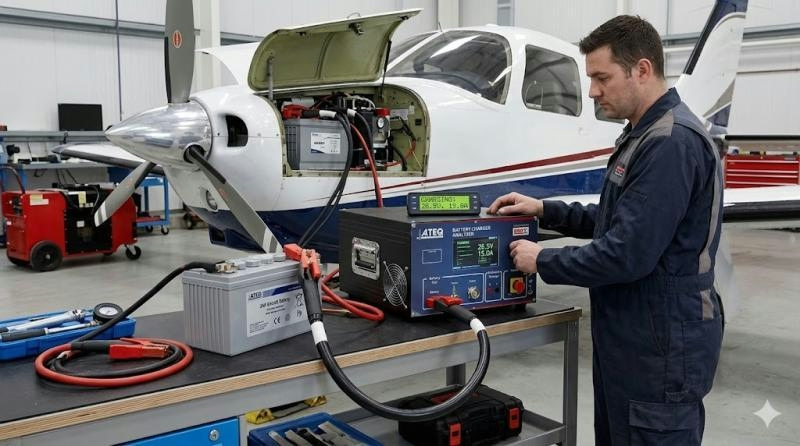
Aircraft Battery Charger Market Projected to Reach $1.3 Billion by 2033
The global aircraft battery charger market is expected to experience substantial growth over the coming decade, with forecasts estimating its value will rise to US$ 1.3 billion by 2033, up from US$ 717 million in 2025. This growth corresponds to a compound annual growth rate (CAGR) of 7.9% between 2026 and 2033. The expansion is largely driven by the aviation sector’s increasing adoption of electric and hybrid aircraft technologies, which aim to reduce carbon emissions and improve operational efficiency.
Growth Drivers: Electric Aviation and Smart Charging Technologies
The advancement of electric aviation, including electric vertical takeoff and landing (eVTOL) aircraft and more-electric aircraft platforms, is a primary catalyst for the rising demand for sophisticated battery charging systems. Critical applications such as propulsion, auxiliary power units, avionics, emergency systems, and cabin comfort are attracting significant investment as airlines and manufacturers modernize their fleets and emphasize reliable onboard power management.
The integration of lithium-ion and other advanced battery technologies, alongside the necessity for rapid, efficient, and intelligent charging solutions, is further accelerating market growth. Innovations in smart charging infrastructure, high-efficiency power conversion, predictive battery management, and integrated monitoring systems are enabling next-generation aviation platforms to operate with enhanced safety and reliability.
Government initiatives promoting sustainable aviation and zero-emission technologies, particularly in regions such as North America and Asia-Pacific, are also playing a pivotal role in encouraging the widespread adoption of aircraft battery chargers.
Competitive Landscape and Industry Innovation
The competitive landscape is shaped by key industry players including Eaton, Electro.Aero, Concorde Battery Corporation, True Blue Power, AeroVironment, Lamar Technologies, Pilot John International, Securaplane Technologies, and MGM COMPRO. These companies provide a diverse array of solutions ranging from smart and high-voltage chargers to portable units and integrated charging infrastructure. Their offerings focus on improving charging efficiency, safety, battery lifecycle management, and operational reliability for both electric and conventional aircraft.
Innovation remains a critical differentiator, with companies investing in high-efficiency charging systems, fast-charging technologies, intelligent battery management, digital monitoring integration, and stringent safety and regulatory compliance measures.
Market Challenges and Industry Response
Despite promising growth prospects, the aircraft battery charger market faces notable challenges. Safety concerns, particularly those related to lithium-ion battery fires, continue to attract regulatory scrutiny and drive demand for safer, more reliable charging solutions. Compliance with evolving regulations and the need for continuous technological advancement require substantial investment from market participants.
In response, industry players are intensifying efforts to develop technologies that enhance battery safety and efficiency. Strategic partnerships and acquisitions are increasingly common as companies seek to strengthen their market positions and address the complex regulatory and technological landscape.
Outlook
As the aviation industry advances toward electrification and sustainability, aircraft battery chargers are poised to become indispensable components of modern aviation infrastructure. Their critical role in ensuring safe, efficient, and reliable energy delivery, while supporting battery health monitoring and operational continuity, will be essential in enabling the next generation of electric and hybrid aircraft worldwide.

Bangladesh Launches Initiative to Become Regional Aviation Hub
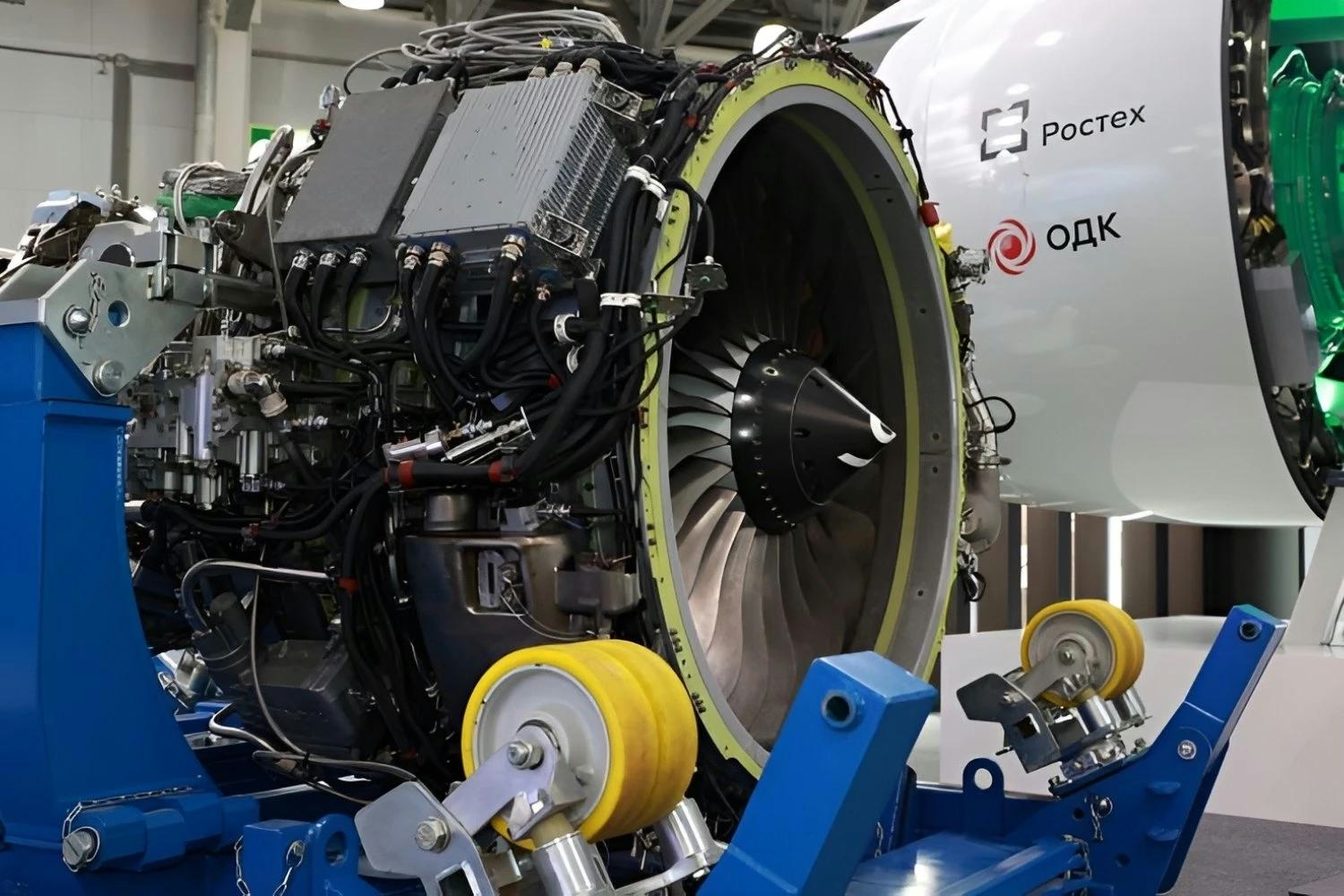
Russia Transports PD-8 Engine to India for International Certification

Kyrgyzstan to Adopt EMPIC GmbH Software for Flight Safety Oversight

Why Hawaiian Airlines Is Waiting Until 2028 To Add A Premium Economy Cabin To Its Airbus A330 Fleet

Engine Fault Causes Royal Navy Helicopter Crash Fatality

Joby Aviation Begins Texas Air Taxi Test Flights Amid Stock Decline

Iberia Receives Full Approval for Airbus A350 Heavy Maintenance

NetJets to Construct Terminal and Hangar at Dallas Love Field

Using AI in Aircraft Purchases

CIAM Unveils RPD-150T Engine to Replace Rotax 150 hp Model
