
حوّل رؤى الذكاء الاصطناعي إلى أفعال منسّقة

الرائج الآن
Categories
Alteon Raises $2.5 Million to Develop Long-Endurance Autonomous Aircraft
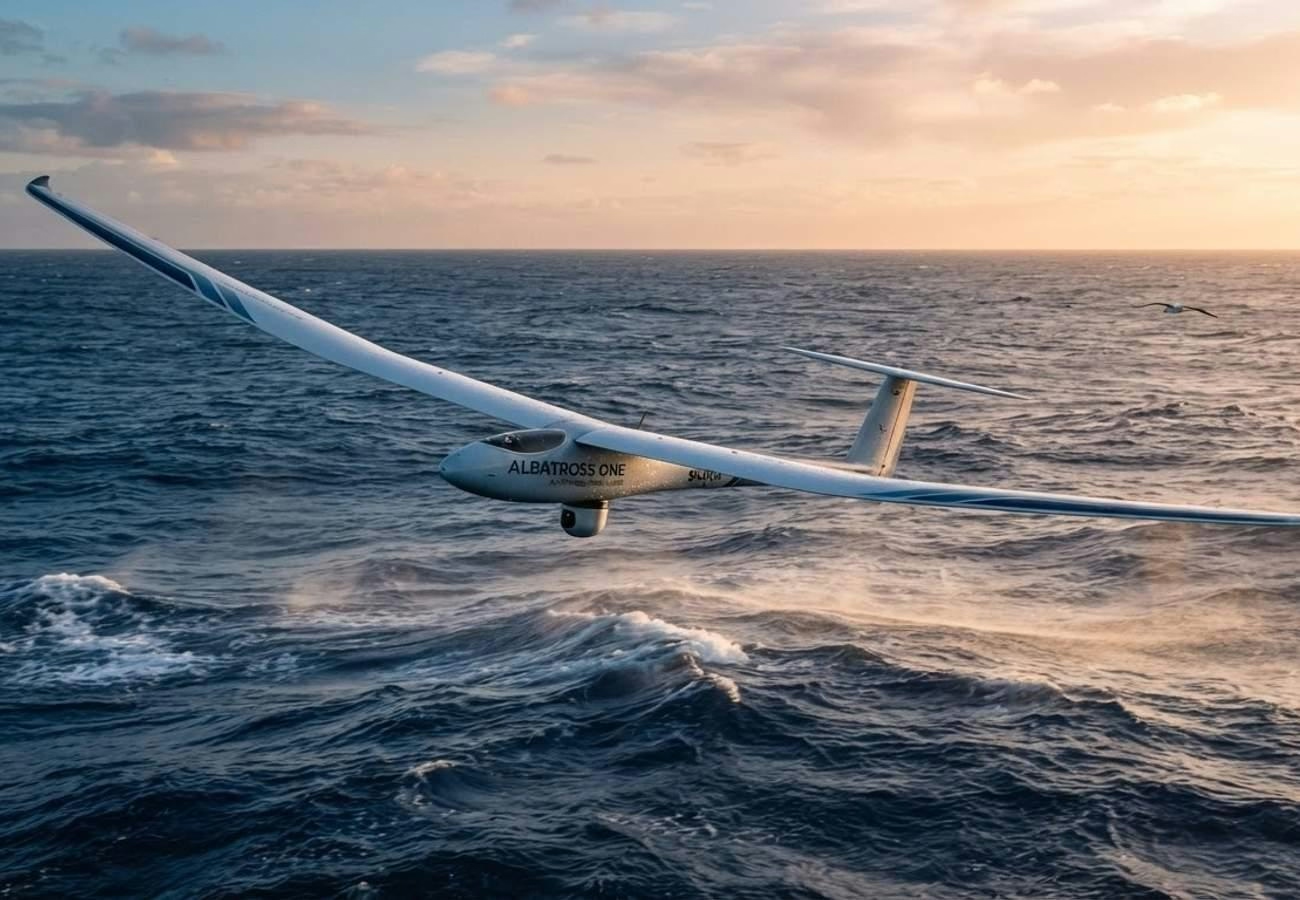
Alteon Secures $2.5 Million to Advance Long-Endurance Autonomous Aircraft
Bengaluru, September 2, 2026 — Alteon, a Bengaluru-based deep-tech aerospace startup, has successfully raised $2.5 million in pre-seed funding to develop autonomous aircraft capable of remaining airborne for extended periods, potentially lasting months. The funding round was led by Lachy Groom, with additional participation from Together Fund. This investment follows a notable achievement in August, when an Alteon prototype completed a flight test maintaining autonomous operation less than one metre above the ocean’s surface.
Innovating Flight Through Nature-Inspired Technology
Alteon’s technology addresses a fundamental limitation in aviation: the necessity to land for refueling and maintenance. Instead of conventional propulsion methods, the company’s aircraft utilize dynamic soaring, a technique inspired by the albatross. These seabirds sustain near-continuous flight by exploiting wind gradients just above the ocean surface, oscillating between varying wind speeds and directions within the ocean’s boundary layer. Replicating this natural phenomenon in an autonomous aircraft requires exceptional precision, as the vehicle must navigate within a metre of the moving ocean surface. Alteon’s recent test flights have demonstrated the feasibility of this approach, marking a significant milestone in the pursuit of ultra-long endurance flight.
From Early Experimentation to Aerospace Innovation
The genesis of Alteon is rooted in the unconventional journey of its founder, Samay Sanghvi, who began exploring dynamic soaring immediately after finishing high school in 2023, despite lacking formal engineering training. Through iterative hands-on experimentation involving numerous radio-controlled prototypes, Sanghvi refined the technology, eventually attracting support from Emergent Ventures and 1517. By 2025, the startup had expanded to a team of 20 members.
Sanghvi highlights that achieving flight durations measured in months demands not only efficiency but also unprecedented reliability. He states, “Ultra-high endurance is the result of ultra-high efficiency and precision,” emphasizing that each setback has been instrumental in advancing the company’s goal of developing aircraft capable of remaining aloft for over a year.
Overcoming Technical and Regulatory Challenges Amid Growing Competition
Despite promising progress, Alteon confronts significant challenges. Sustaining dynamic soaring at low altitudes over the ocean involves overcoming complex technological obstacles, including precise navigation in turbulent conditions and ensuring system reliability over prolonged periods. Additionally, regulatory approval for such long-duration autonomous flights remains uncertain, as authorities evaluate the safety and environmental implications of persistent aerial vehicles.
The market response has been mixed, with intrigue tempered by skepticism regarding the practicality of maintaining continuous flight for months without landing. Competition in this emerging sector is intensifying, exemplified by startups such as SiFly Aviation, which recently secured $20 million to advance its own long-endurance drone technology. This competitive landscape underscores a growing race to establish dominance in the field of persistent aerial platforms.
Envisioning Persistent Aerial Networks for Ocean Monitoring
Alteon’s ambitions extend beyond the development of a single aircraft. The company envisions deploying fleets of “parked” autonomous planes to create real-time intelligence networks over the world’s oceans—vast and largely unmonitored regions. Such networks could provide a cost-effective alternative to traditional ocean monitoring methods, which rely heavily on expensive ships, professional crews, and satellite systems.
As Alteon continues to push the boundaries of autonomous flight, its progress could transform the monitoring and understanding of some of the planet’s most remote environments, contingent on overcoming the technological, regulatory, and competitive challenges that lie ahead.

Etihad and Swissport Extend Global Partnership

Sepehran Airlines B737 Returns to Mashhad After Tyre and Engine Issues

Etihad Deploys Widebody Fleet to Meet Strong Demand

Korean Air Finalizes $36.2 Billion Deal with Boeing

Australia’s RFDS Queensland Section Orders Six King Air 260Cs

Korean Air Finalizes Order for 103 Boeing Jets and Engines

Embraer E195-E2 Features Distinctive Engine Placement Among Regional Jets

What Passengers Can Expect on Boeing’s New 777X Jet

How Ethiopian Airlines Became Africa’s Leading Carrier Amid Gulf Competition

Joby Aviation Extends Autonomous Flight Capabilities with Cross-Country Tour
