صورة

حوّل رؤى الذكاء الاصطناعي إلى أفعال منسّقة

انضم إلى قائمة الانتظار لـ AeroGenie اليوم!

الرائج الآن

Categories

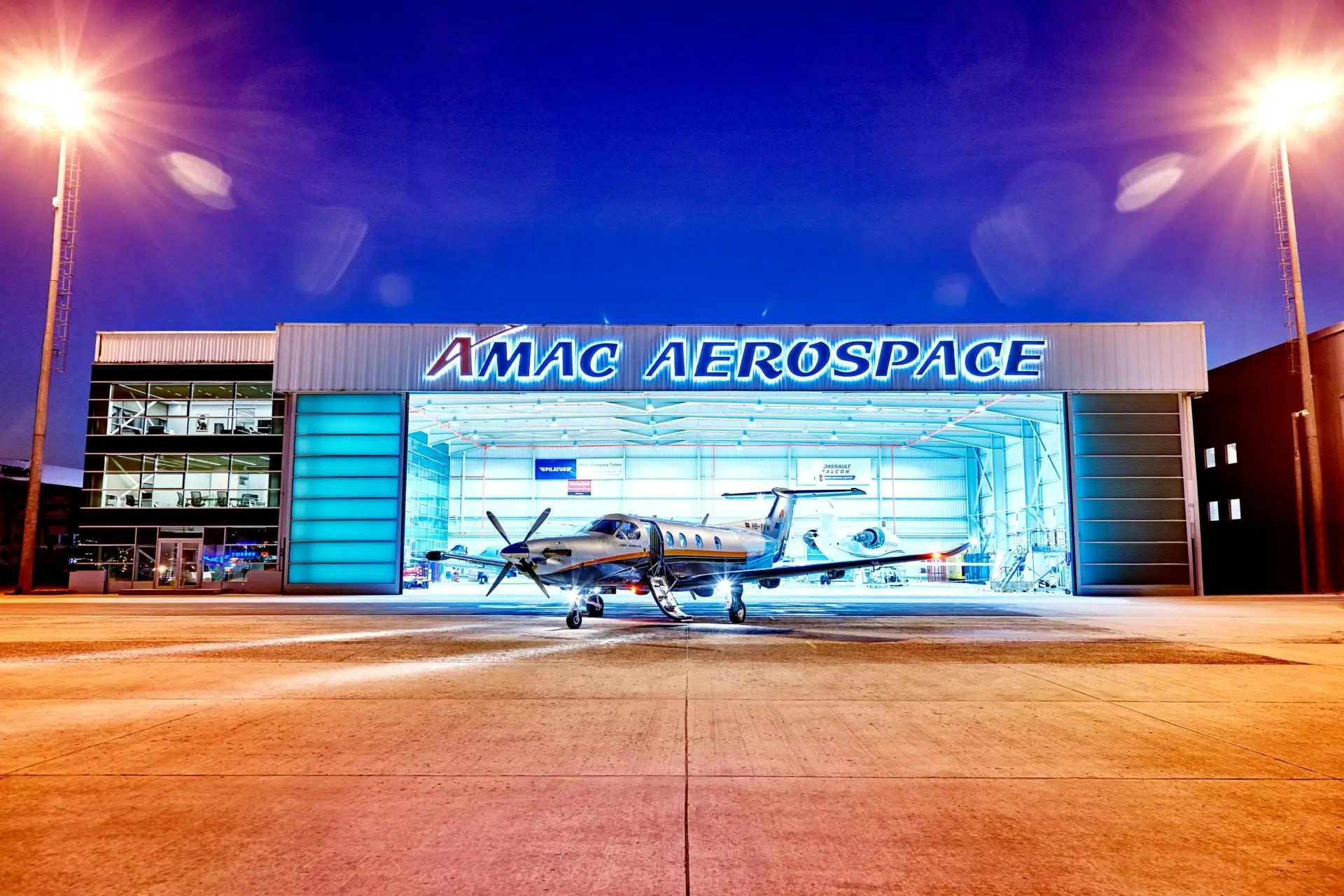
AMAC Aerospace Launches New Training Academy
July 10, 2026By ePlane AI
AMAC Aerospace Launches New Training Academy
0
0
AMAC Aerospace
Aircraft Maintenance Training
EASA Part-147

AMAC Aerospace Launches New Training Academy

AMAC Aerospace has unveiled AMAC Academy, a new aircraft maintenance training programme designed to cultivate highly skilled maintenance professionals through practical, industry-oriented instruction. Situated at EuroAirport Basel-Mulhouse-Freiburg, the academy is scheduled to welcome its first cohort in January 2027.

Curriculum and Training Environment

The academy operates within the facilities of AMAC Aerospace Switzerland AG and has been developed in strict compliance with EASA Part-147 and Swiss Federal Office of Civil Aviation (FOCA) standards. Its curriculum is tailored to prepare students for the EASA Part-66 Basic Licence, offering specialised pathways in Category B1.1, which covers mechanical systems and turbine engines, and Category B2, focusing on avionics. Training is conducted within AMAC Aerospace’s active operational environment, granting students direct access to aircraft, components, workshops, and seasoned aviation professionals.

Delivered full-time in English, the programme combines theoretical classroom instruction with hands-on, real-world experience. Graduates will receive a Certificate of Recognition, which facilitates their application for an EASA Aircraft Maintenance Licence (AML) with reduced practical experience requirements. Notably, those completing the EASA Part-147 programme will be eligible to apply for the EASA Part-66 licence after four years, a year earlier than the standard five-year requirement.

“Our training programmes are designed to fully meet all EASA Part-147 requirements and equip students and professionals with the knowledge, skills, and practical experience needed to succeed in today’s aviation industry,” stated Ruedi Kurz, Director of AMAC Academy, Training.

Industry Context and Challenges

The launch of AMAC Academy coincides with a rising demand for qualified aviation maintenance professionals. However, the academy enters a competitive landscape dominated by established training providers. To maintain its relevance, AMAC must ensure its curriculum evolves alongside rapid technological advancements in the aviation sector and attract a cadre of highly qualified instructors.

Market reception is anticipated to be favourable, with growing interest from aviation enthusiasts and professionals seeking to advance their skills and career opportunities. This development may prompt competitors to enhance their own training offerings, potentially through curriculum updates or partnerships with technology firms to deliver more sophisticated training solutions.

By integrating practical experience with rigorous academic standards, AMAC Academy aims to establish itself as a premier provider of aviation maintenance training in Europe, addressing both the needs of the industry and the evolving expectations of students and employers.

More news
Airbus Develops Engine Aiming to Eliminate Aircraft Emissions

Airbus Develops Engine Aiming to Eliminate Aircraft Emissions

Airbus Develops Engine Aiming to Eliminate Aircraft Emissions Advancing Hydrogen Fuel Cell Technology in Aviation The aviation industry, responsible for approximately 2.5% of global carbon dioxide (CO₂) emissions, faces increasing pressure to reduce its environmental impact. In response, Airbus has embarked on an ambitious project to develop a hydrogen fuel cell engine designed to eliminate in-flight CO₂ and nitrogen oxide emissions. This initiative represents a significant step toward transforming air travel into a more sustainable mode of transportation. In collaboration with MTU Aero Engines, Airbus aims to replace conventional fossil fuel-powered jet engines with hydrogen fuel cell technology. The partnership will oversee the design, testing, and certification phases, with work scheduled to commence in 2027. This project forms a critical component of Airbus’s broader strategy to promote hydrogen-powered flight and drive the aviation sector toward cleaner operations. Progress and Challenges in Hydrogen-Powered Flight The new engine development builds on momentum generated at the Airbus Summit last year, where the company updated its roadmap for the ZEROe program—Airbus’s long-term initiative to create its first hydrogen-powered commercial aircraft. Since the program’s launch in 2020, Airbus has completed multiple rounds of component testing and plans to begin ground testing in 2027. After evaluating various hydrogen propulsion concepts, the company selected fuel cells as the primary technology, following encouraging prototype results. Despite the promise of hydrogen propulsion, significant challenges remain. Key technological obstacles include efficient hydrogen storage and distribution systems, which are critical for practical implementation. Additionally, the high initial costs associated with developing and deploying hydrogen technology may impede rapid adoption. Regulatory hurdles also present complexities, as aviation authorities must rigorously certify the safety and reliability of hydrogen-powered engines before they can be integrated into commercial fleets. Industry and Market Responses Market reactions to Airbus’s hydrogen engine initiative have been mixed. Some investors express optimism about the long-term sustainability benefits and the potential for the aviation industry to substantially reduce its environmental footprint. Conversely, others voice concerns regarding the immediate economic feasibility of hydrogen technology and the difficulties involved in transitioning existing aircraft fleets. Competitors’ responses vary as well; some are exploring collaborative efforts to develop alternative green technologies, while others prioritize maintaining their current market positions. The success of the Airbus and MTU Aero Engines partnership will hinge on overcoming these technological and regulatory challenges, as well as securing market acceptance. As the ZEROe program advances, Airbus engineers continue to develop solutions that could usher in a new era of cleaner, hydrogen-powered flight.
The Kalinin K-7: Stalin’s Seven-Engine Giant

The Kalinin K-7: Stalin’s Seven-Engine Giant

The Kalinin K-7: Stalin’s Seven-Engine Giant A Monumental Vision Takes Flight In the autumn of 1933, a remarkable aircraft emerged from a hangar on a grass airfield near Kharkiv, Ukraine. The Kalinin K-7 was less an airplane and more a colossal flying structure, its wingspan stretching an impressive 53 meters—wide and thick enough for a man to walk inside and sit comfortably. Six engines were mounted along the leading edge of the wing, with a seventh positioned at the rear in a pusher configuration. Two elongated tail booms extended behind the aircraft, giving it the appearance of a mechanical leviathan. Known simply as “the giant” by Soviet workers, the K-7 briefly held the distinction of being one of the largest aircraft in the world. It was a product of Stalin-era ambition, constructed from domestically sourced chrome-molybdenum steel, and represented a bold experiment in aviation design. However, this grand vision was short-lived, as a fatal structural failure brought the project to a tragic end within months of its first flight. Design and Engineering: A Cathedral in the Sky Konstantin Kalinin, a World War I aviator and the aircraft’s designer, envisioned a future where the wing itself would serve as the primary structure of an airplane, eliminating the need for a conventional fuselage. The K-7 embodied this philosophy with a wing root thickness of 2.3 meters, hollowed out to accommodate up to 120 passengers. The airframe was welded from Soviet chrome-molybdenum steel, a strategic choice to avoid reliance on costly imported materials. The twin tail booms supported the aircraft’s tail assembly, while two large pods beneath the wing housed fixed landing gear and, in the bomber variant, gun turrets. Armed with cannons, machine guns, and capable of carrying a heavy bomb load, the K-7 was among the largest and most heavily armed aircraft constructed before the advent of the jet age. Power and Complexity: The Seven-Engine Configuration The K-7’s propulsion system was as ambitious as its size. It featured six Mikulin AM-34 V-12 engines mounted along the wing’s leading edge, each producing 750 horsepower, complemented by a seventh engine in a rear-facing pusher arrangement. This complex setup pushed the boundaries of 1930s aeronautical engineering, presenting significant technical challenges. The aircraft’s complexity resulted in high production costs and necessitated extensive testing and certification processes, obstacles that would challenge even contemporary aerospace projects. At the time, the aviation market responded with skepticism. Both airlines and military planners questioned the practicality and economic viability of operating such a massive and intricate machine. Competitors within the Soviet Union and internationally opted to focus on more manageable and cost-effective designs or pursued alternative concepts for large aircraft. The difficulties faced by the K-7 resonate with modern aerospace challenges, such as the recent delays and certification hurdles encountered by Boeing’s Starliner program, underscoring the enduring risks inherent in pioneering ambitious aviation projects. The Tragic End of a Giant The K-7’s promising trajectory was abruptly halted on 21 November 1933, when a structural failure in one of its tail booms caused the aircraft to disintegrate mid-flight, resulting in the deaths of 15 people—14 aboard and one on the ground. Only a single K-7 was ever completed, with two additional airframes under construction before the program was cancelled in 1935. The Kalinin K-7 remains a powerful symbol of the audacity and peril involved in pushing the limits of aviation technology—a steel giant whose extraordinary promise was ultimately undone by the very complexity that defined it.
Setna iO Acquires First A320neo for US Teardown

Setna iO Acquires First A320neo for US Teardown

Setna iO Acquires First A320neo for US Teardown Amid Market Shifts Setna iO has completed the acquisition of its first Airbus A320neo in the United States, a former Spirit Airlines aircraft, to initiate its next-generation narrow-body teardown program. The dismantling will take place at AerSale’s facility in Goodyear, Arizona, marking a significant expansion of Setna iO’s capabilities in the aerospace aftermarket. Expanding Teardown and Repair Capabilities The components recovered from the A320neo will be processed through Setna iO’s integrated repair network, which encompasses Zulu Global, Landing Gear Technologies (LGT), Setnix, SETNA Parts Lab, and a range of trusted maintenance, repair, and overhaul (MRO) partners. The refurbished and used serviceable material (USM) produced will be distributed globally to support operators, lessors, and MRO providers. Tom Boulcott, Partner and Chief Strategy Officer at Setna iO, emphasized the strategic importance of this acquisition. He noted that the project builds on the expertise gained from previous A321neo teardown programs and enhances the company’s ability to supply high-quality components and repaired parts. Boulcott also highlighted the broader benefits to the SETNA Group, as the recovered components will feed specialist repair operations across its subsidiaries. The recent integration of J&C Aero into the group further strengthens Setna iO’s offerings by enabling support for aircraft interiors, seats, and cabin components sourced directly from modern A320neo aircraft, thereby broadening its product portfolio. Navigating Market Challenges and Competitive Pressures The acquisition arrives amid a complex and evolving market environment. The condition of the ex-Spirit Airlines A320neo and the variable demand for teardown services present potential challenges for Setna iO. Market responses have been mixed; while some investors are optimistic about the prospects for refurbishing and reselling components, others remain cautious due to the complexities and costs inherent in the teardown process. This move may also trigger competitive responses from other MRO providers, who could seek to acquire similar A320neo aircraft to enhance their aftermarket parts and services. As Airbus continues to increase deliveries of new A320neo models, the supply and pricing dynamics of used serviceable material in the teardown market are likely to be affected, potentially intensifying competition within the sector. Setna iO’s acquisition underscores its ongoing commitment to investing in the global aerospace aftermarket while adapting to the shifting dynamics and competitive pressures of the narrow-body aircraft segment.
Pan Am Flight Academy Expands Operations in Brazil

Pan Am Flight Academy Expands Operations in Brazil

Pan Am Flight Academy Expands Operations in Brazil Pan Am Flight Academy has taken a significant step in its international growth by entering into a strategic cooperation and representation agreement with EPA Training Center, the largest regional aircraft simulator training provider in Latin America. This partnership establishes Pan Am Flight Academy’s commercial presence in Curitiba, Paraná, and aims to bolster its position within the rapidly expanding Latin American aviation sector. Strategic Partnership and Market Positioning Under the terms of the agreement, EPA Training Center will serve as Pan Am Flight Academy’s representative in Brazil, providing local commercial support, customer engagement, and business development services. By combining EPA’s extensive industry network with Pan Am’s global expertise in aviation training, the collaboration is expected to increase the Academy’s visibility and accessibility among Brazilian aviation professionals. With over five decades of experience, EPA Training Center is widely regarded as one of Brazil’s foremost aviation training institutions, playing a crucial role in the development of pilots and aviation personnel across the country. Challenges in a Competitive Landscape Pan Am Flight Academy’s expansion into Brazil occurs within a competitive and complex environment. The company may encounter regulatory challenges as aviation authorities maintain rigorous oversight of new entrants into the market. Furthermore, established local training institutions present formidable competition, and the Brazilian aviation training market may be nearing saturation. These factors could influence prospective students to favor well-established domestic academies. Industry analysts expect local competitors to respond with intensified marketing efforts, curriculum improvements, and new strategic alliances to protect their market share. Despite these obstacles, Pan Am Flight Academy’s alliance with EPA Training Center positions it to effectively navigate the evolving market conditions and address the increasing demand for high-quality aviation training in Brazil.
The Role of Aviation Software in Reducing Flight Delays

The Role of Aviation Software in Reducing Flight Delays

The Role of Aviation Software in Reducing Flight Delays Flight delays extend far beyond mere inconvenience at departure gates; they trigger cascading disruptions across connecting flights, inflate operational costs, create scheduling conflicts, and diminish passenger satisfaction. As airlines expand their fleets and airports face increasing traffic volumes, the complexity of maintaining punctual operations has intensified. Even minor disturbances can propagate through flight schedules, crew assignments, and destination logistics, amplifying the impact of initial delays. In response to these challenges, the aviation industry is increasingly adopting intelligent digital solutions that enhance operational visibility and enable faster, data-driven decision-making. Modern aviation software platforms empower airlines to monitor flights in real time, coordinate resources efficiently, anticipate potential risks, and respond promptly to unforeseen events. This proactive approach facilitates early identification and resolution of issues before they escalate into significant delays, thereby improving overall efficiency and reliability for travelers worldwide. Persistent Challenges Behind Flight Delays Flight delays rarely arise from a single cause; rather, they emerge from a complex interplay of operational factors involving airlines, airports, crews, and ground service providers. The growing volume of air traffic further complicates the management of these variables. Operational inefficiencies remain a significant contributor, as many airlines continue to rely on fragmented and disconnected systems for scheduling, dispatch, maintenance, and operations. This siloed infrastructure impedes timely information sharing and hampers rapid responses to changing conditions, increasing the likelihood of disruptions. Maintenance and fleet availability also play critical roles, with aircraft requiring regular inspections and compliance checks. Unexpected technical issues can ground planes without warning, forcing last-minute schedule adjustments that reverberate through subsequent flights. Airport and air traffic congestion present additional challenges. Rising passenger demand places considerable strain on airport infrastructure and airspace management. Limited runway capacity, crowded airspace, and gate shortages frequently result in departure queues and arrival delays, particularly during peak travel periods. Furthermore, communication gaps among airlines, airport authorities, ground handlers, maintenance crews, and air traffic controllers can exacerbate delays. Inefficiencies or inaccuracies in sharing operational updates slow decision-making processes and prolong disruptions. How Aviation Software Addresses These Issues Addressing flight delays requires more than reactive measures; it demands comprehensive operational visibility, intelligent automation, and precise forecasting capabilities. Aviation software development services are pivotal in this transformation, delivering customized solutions that integrate critical systems, streamline workflows, and support rapid, informed decision-making. Modern platforms provide real-time flight monitoring by aggregating live data from aircraft, airports, weather systems, and operational teams. This centralized visibility enables control centers to detect disruptions early, evaluate their potential impact, and minimize schedule alterations. Advanced predictive analytics employ sophisticated algorithms to forecast potential challenges such as adverse weather or maintenance requirements, allowing airlines to implement preventive strategies. Additionally, integrated systems enhance coordination among all stakeholders, reducing delays caused by communication breakdowns. Despite its advantages, the implementation of aviation software faces several obstacles. High initial investment costs, difficulties integrating with legacy systems, and the necessity for extensive staff training can impede widespread adoption. Some airlines remain cautious about the software’s efficacy and express concerns regarding data privacy. In response, industry competitors are exploring similar technologies to improve operational efficiency or developing proprietary solutions to secure competitive advantages. Data consistently underscores the disruptive and costly nature of flight delays, highlighting the urgent need for effective digital interventions. While challenges persist, the aviation sector’s gradual shift toward technology-driven operations is fostering more reliable and efficient travel experiences for passengers around the globe.
United Airlines Grounds 14 Boeing 777-200s Amid Pratt & Whitney Engine Issues

United Airlines Grounds 14 Boeing 777-200s Amid Pratt & Whitney Engine Issues

United Airlines Grounds 14 Boeing 777-200s Amid Pratt & Whitney Engine Challenges United Airlines has moved 14 of its Boeing 777-200 aircraft into long-term storage at Victorville, California, as it grapples with persistent issues related to the Pratt & Whitney PW4000 engines that power these jets. This decision follows the recent extension by the US Federal Aviation Administration (FAA) of the deadline for a comprehensive engine nacelle modification program, now set for March 2033. The extended timeline reflects the complexity and scale of the engineering upgrades required to address critical safety concerns. Engineering Complexities and Maintenance Constraints The FAA’s extension comes after years of technical difficulties, supply chain disruptions, and maintenance challenges that have affected both Boeing and Pratt & Whitney since a high-profile engine failure on United flight 328 in February 2021. That incident revealed significant vulnerabilities in the engine nacelle, fan cowl, and inlet structures, prompting regulators to mandate a full redesign rather than incremental repairs. Boeing is tasked with completing the new nacelle design by March 2029, after which airlines will have several years to retrofit their fleets accordingly. The engineering work involved in redesigning the nacelle structures is notably demanding. The components must be robust enough to contain rare but catastrophic failures while remaining lightweight for commercial operation. Each element, including latches, hinges, and containment systems, requires extensive testing and certification, prolonging the development process. Even once the redesign is finalized, airlines face a global shortage of maintenance capacity. Heavy maintenance facilities are operating at full stretch as carriers extend the service life of aging aircraft, and the scarcity of skilled technicians and replacement parts has led to significant delays in routine overhauls. The PW4000 modifications add further complexity, often needing to be coordinated with scheduled heavy maintenance and engine shop visits. Supply chain constraints, particularly for reinforced components and certified nacelle assemblies, continue to exacerbate these challenges. Broader Industry Impact and Market Implications United’s difficulties are indicative of wider industry struggles. Willie Walsh, Director General of the International Air Transport Association (IATA), reported that airlines worldwide incurred over $11 billion in additional costs last year due to supply chain failures, much of which stemmed from engine availability and maintenance delays. Other carriers, including Air New Zealand, have initiated strategic overhauls to restore profitability amid ongoing engine-related disruptions. Cyprus Airways’ CEO recently highlighted that engine availability has become a critical factor in fleet planning, underscoring the operational impact of these challenges. United’s operational issues extend beyond the 777 fleet. The airline has also grounded its new premium 787-9 Dreamliner due to problems with its Traffic Collision Avoidance System (TCAS), further complicating network planning and capacity management. With the compliance deadline now stretching into the next decade, United’s decision to park a substantial portion of its 777-200 fleet signals a gradual phase-out of one of the last major groups of Pratt & Whitney-powered 777s. This development underscores how intertwined technical, regulatory, and supply chain challenges are reshaping airline strategies and the broader global aviation landscape.
Patria Advances Innovation in Global F-35 Program

Patria Advances Innovation in Global F-35 Program

Patria Advances Innovation in Global F-35 Program Milestone in Finnish Defense Industry Cooperation Finnish defense company Patria has officially commenced the assembly of forward fuselages and engines for the F-35 fighter jet, alongside the production of critical structural components. This development marks a significant milestone in Finland’s involvement in the global F-35 program, with the project progressing according to schedule. Since Finland initiated its multirole fighter acquisition, Patria has been a pivotal participant in the industrial cooperation framework established with the United States. Petri Hepola, Patria’s Executive Vice President of Sales & Marketing and Chief Program Officer for the F-35, emphasized that after an extensive preparatory phase, production activities are now fully underway. Finland has placed an order for 64 F-35A fighters from Lockheed Martin, with Patria tasked with assembling the forward fuselages and manufacturing landing gear doors at its modernized Halli facility in Jämsä. Production of forward fuselages began in early March, while manufacturing of landing gear doors is scheduled to commence in spring 2026. Notably, Patria is the first partner outside the United States to produce forward fuselages for Lockheed Martin’s fighter aircraft, which are then shipped to the final assembly line in Fort Worth, Texas. “This represents a significant step in defense industry cooperation between Finland and the United States,” Hepola stated. Beyond supporting Finland’s own fleet, Patria will contribute to Lockheed Martin’s global F-35 supply chain. Under the current framework agreement, the company is set to produce 400 forward fuselages and landing gear door sets for F-35 fighters between 2026 and 2042. Expanding Capabilities and Strategic Challenges In addition to fuselage assembly, Patria is responsible for assembling F135 engines for the F-35. To facilitate this, new production facilities have been completed at Linnavuori, Nokia, designed to meet stringent U.S. Government and Pratt & Whitney security standards. The first engines are expected to be delivered in 2026. These facilities will also serve as centers for maintenance and overhaul of Finland’s F135 engines, with Patria overseeing lifecycle maintenance for the Finnish F-35 fleet well into the 2060s. Patria’s progress in the global F-35 program unfolds amid a complex and evolving international defense environment. Navigating procurement dynamics remains challenging, as demonstrated by Finland and Sweden’s collaboration on the Patria TRACKX armored vehicle. The competitive landscape is intensifying, highlighted by recent developments such as the U.S. decision to permit Turkey’s purchase of F-35s despite regional tensions, and Germany’s entry into global combat air programs, which may influence timelines and delivery schedules. Europe’s broader defense build-up strategy depends heavily on successful partnerships, which could both support and complicate Patria’s role within the F-35 program. As the defense sector continues to evolve, Patria’s capacity for innovation and international collaboration will be essential to maintaining its position as a key contributor to the global supply chain.
Airbus Adapts A220 for Extended Transatlantic Flights

Airbus Adapts A220 for Extended Transatlantic Flights

Airbus Adapts A220 for Extended Transatlantic Flights Strategic Partnership Enhances Cabin Comfort On June 23, 2026, Airbus and 3M announced a long-term agreement to supply advanced thermal and acoustic insulation for the Airbus A220. While initially appearing as a routine supplier contract, this partnership reflects a broader strategic initiative by Airbus to adapt the A220 for longer, more demanding missions, including transatlantic flights lasting up to eight hours. As airlines increasingly deploy the A220 on extended routes, Airbus is investing in technologies aimed at enhancing passenger comfort by reducing noise, improving temperature stability, and minimizing fatigue—attributes traditionally associated with larger widebody aircraft. Expanding the A220’s Operational Role Originally developed as the Bombardier CSeries, the A220 was designed to replace aging regional jets on short-haul flights of two to four hours, emphasizing lower fuel consumption and operating costs. Since Airbus’s acquisition of the program in 2018, the aircraft’s role has expanded significantly. Airlines have identified the A220’s potential for “long-thin” routes that connect secondary cities and underserved markets where demand does not justify larger aircraft. This approach enables carriers to open nonstop routes that bypass major hubs, thereby reducing travel times and increasing fleet flexibility. Several airlines have embraced this strategy. JetBlue Airways has incorporated the A220 alongside its A321LR and A321XLR models to support network expansion. Delta Air Lines continues to grow its A220 fleet for both domestic and international operations. Breeze Airways has built its business model around connecting underserved city pairs with efficient, smaller aircraft, while airBaltic operates an all-A220 fleet across Europe, including longer sectors as market conditions permit. These carriers share a common objective: aligning aircraft capacity more closely with actual demand rather than relying on larger jets that may be difficult to fill consistently. Challenges and Competitive Pressures Adapting the A220 for extended transatlantic service presents significant challenges. The aircraft requires substantial modifications to meet the demands of longer routes, which could increase costs and potentially delay deliveries. Some airlines remain cautious, favoring established long-haul aircraft over a narrowbody like the A220 for transatlantic operations. Meanwhile, competitors such as Boeing and Embraer may accelerate development of their own long-range narrowbody models in response to Airbus’s initiative, intensifying competition in this emerging market segment. Further complicating Airbus’s strategy is CEO Guillaume Faury’s reluctance to prioritize short-term new product development, which may delay decisions on launching the anticipated A220-500 variant. This hesitation could provide an opportunity for rivals to capture market share in the extended transatlantic sector before Airbus fully commits to expanding the A220 family. Despite these obstacles, Airbus’s latest insulation agreement with 3M underscores its commitment to positioning the A220 as a compelling option for longer flights. As the aircraft’s role continues to evolve, Airbus is betting that a quieter, more comfortable cabin will distinguish the A220—not merely as another narrowbody crossing the Atlantic, but as a transatlantic specialist redefining expectations for single-aisle travel.
American, Delta, Southwest, and United Airlines Drive Major Changes in U.S. Aviation

American, Delta, Southwest, and United Airlines Drive Major Changes in U.S. Aviation

American, Delta, Southwest, and United Airlines Drive Major Changes in U.S. Aviation The U.S. airline industry is experiencing a significant transformation as American Airlines, Delta Air Lines, Southwest Airlines, and United Airlines undertake extensive fleet expansions, aircraft modernizations, and record investments in maintenance. This period marks a pivotal shift in North American air travel, promising more efficient aircraft, enhanced route networks, and improved operational reliability for passengers. Fleet Expansion and Modernization Efforts Despite persistent delays in aircraft deliveries, these leading carriers are advancing ambitious growth strategies. United Airlines is spearheading the largest fleet expansion in the country, placing substantial orders for Airbus A321neo, A321XLR, Boeing 737 MAX, and future Airbus A350 aircraft. American Airlines is simultaneously renewing its fleet with Airbus A321XLRs, Boeing 787 Dreamliners, and upgraded narrowbody jets. Delta is expanding its widebody fleet with additional Airbus and Boeing aircraft, including a recent order for Boeing 787-10s. Meanwhile, Southwest Airlines continues its transition to an all-Boeing 737 MAX fleet, systematically replacing its older 737-700 models. These developments are driving unprecedented demand for maintenance, repair, and overhaul (MRO) services. United, with a fleet exceeding 1,090 aircraft, faces the highest maintenance requirements due to its size and the aging profile of some jets. American Airlines, operating over 1,000 aircraft, remains one of the world’s largest MRO users, supported by four major maintenance bases. Delta’s relatively older fleet generates significant engine and airframe maintenance needs, while Southwest’s ongoing transition to the 737 MAX is fueling increased narrowbody MRO demand. Other carriers are also pursuing modernization. SkyWest is updating its regional fleet, Alaska Airlines is expanding its Boeing 737 MAX fleet following its integration with Hawaiian Airlines, and JetBlue is renewing its aircraft with Airbus A220s and A321neos. Additionally, Allegiant and Frontier are replacing older planes with newer, more fuel-efficient models, further intensifying MRO activity across the sector. Regulatory and Operational Challenges This industry transformation is not without challenges. The expansion and strategic moves of these major airlines have attracted antitrust scrutiny, notably during a June 2026 House antitrust subcommittee hearing focused on competition and regulation within the U.S. airline industry. As these carriers increasingly target premium passengers, the disparity between premium and economy classes is widening, prompting market reactions and raising concerns about accessibility and competitive balance. In response to these pressures, American Airlines is reportedly considering new widebody aircraft orders from Boeing or Airbus to maintain parity with Delta and United’s recent acquisitions. Operational difficulties have also persisted. Severe weather events in the Midwest and Southeast have compelled airlines to issue travel waivers, accommodating affected passengers and testing the resilience of their expanded networks. As the United States prepares for its largest fleet renewal in decades, the investments and strategic shifts undertaken by American, Delta, Southwest, and United are reshaping competition and connectivity across the continent. These developments position the airlines for sustained growth while subjecting them to increased regulatory scrutiny amid a rapidly evolving market. Passengers can anticipate a new era of air travel characterized by modern fleets, enhanced service, and ongoing industry transformation.
Delta Ends Near-Free Upgrades to Increase Premium Revenue

Delta Ends Near-Free Upgrades to Increase Premium Revenue

Delta Ends Near-Free Upgrades to Boost Premium Revenue Changing Dynamics in Premium Air Travel Over recent years, demand for premium airline seating has steadily increased, with passengers showing a growing willingness to pay for additional space, comfort, and enhanced onboard amenities. This evolving consumer preference has prompted airlines to expand their premium offerings beyond traditional long-haul international routes to include domestic flights as well. From lie-flat business class cabins to upgraded economy experiences, premium products have become a vital revenue stream for major carriers, fundamentally altering how seat inventory is marketed and sold. Delta Air Lines is among the carriers capitalizing on this shift. In 2024, the Atlanta-based airline made it clear that it no longer views upgrades as complimentary rewards but as valuable revenue opportunities. At its 2024 Investor Day, Delta outlined a strategy focused on reducing free upgrades, increasing options for customers to purchase premium seats, and implementing dynamic pricing tailored to each passenger’s willingness to pay. The airline is also testing new fare structures aimed at converting more travelers into paying premium customers. From Complimentary Upgrades to Revenue Generation Historically, Delta routinely provided complimentary upgrades to frequent flyers, particularly on domestic routes. Medallion members often enjoyed automatic moves to first class at no extra cost, with upgrades allocated based on loyalty tier and seat availability. This system rewarded miles flown rather than money spent, allowing travelers to earn elite status through volume—even on discounted tickets—and still receive premium perks. For many business travelers and status seekers, these upgrades became a dependable benefit, especially on short- and medium-haul flights during off-peak times. This approach fostered loyalty among frequent flyers who chose Delta for the chance of a better seat, even when cheaper alternatives were available. However, the model presented long-term challenges. A significant portion of premium cabin seats frequently went unsold, filled instead by passengers who had not paid for the product. This practice diminished the potential value of premium seating and constrained the airline’s ability to maximize revenue from one of its most sought-after offerings. Recognizing these inefficiencies, Delta’s leadership began to reconsider the upgrade system. Viewing it as outdated and financially unsustainable, the airline decided to implement strategic changes to better align premium seating with revenue goals. Premium Seating as a Core Business Focus At the 2024 Investor Day, Delta Air Lines President Glen Hauenstein emphasized that the era of routinely handing out premium seats was over. He described premium cabins as the airline’s “biggest loss leader” in previous years, acknowledging that “we didn’t sell them, we gave them away.” This candid assessment underscored the need to reposition premium seats as high-value products with consistent revenue potential. Hauenstein explained that Delta previously charged significantly higher fares for first class but often undermined this pricing by distributing upgrades freely. The airline’s new approach aims to treat premium seating as a strategic asset, focusing on monetization rather than complimentary distribution. By reducing free upgrades and offering more opportunities for passengers to purchase premium seats, Delta seeks to enhance profitability while meeting growing customer demand for premium travel experiences.
line









