
حوّل رؤى الذكاء الاصطناعي إلى أفعال منسّقة

الرائج الآن
Categories
American Airlines Negotiates with Airbus and Boeing to Replace Aging 777-200ER Fleet
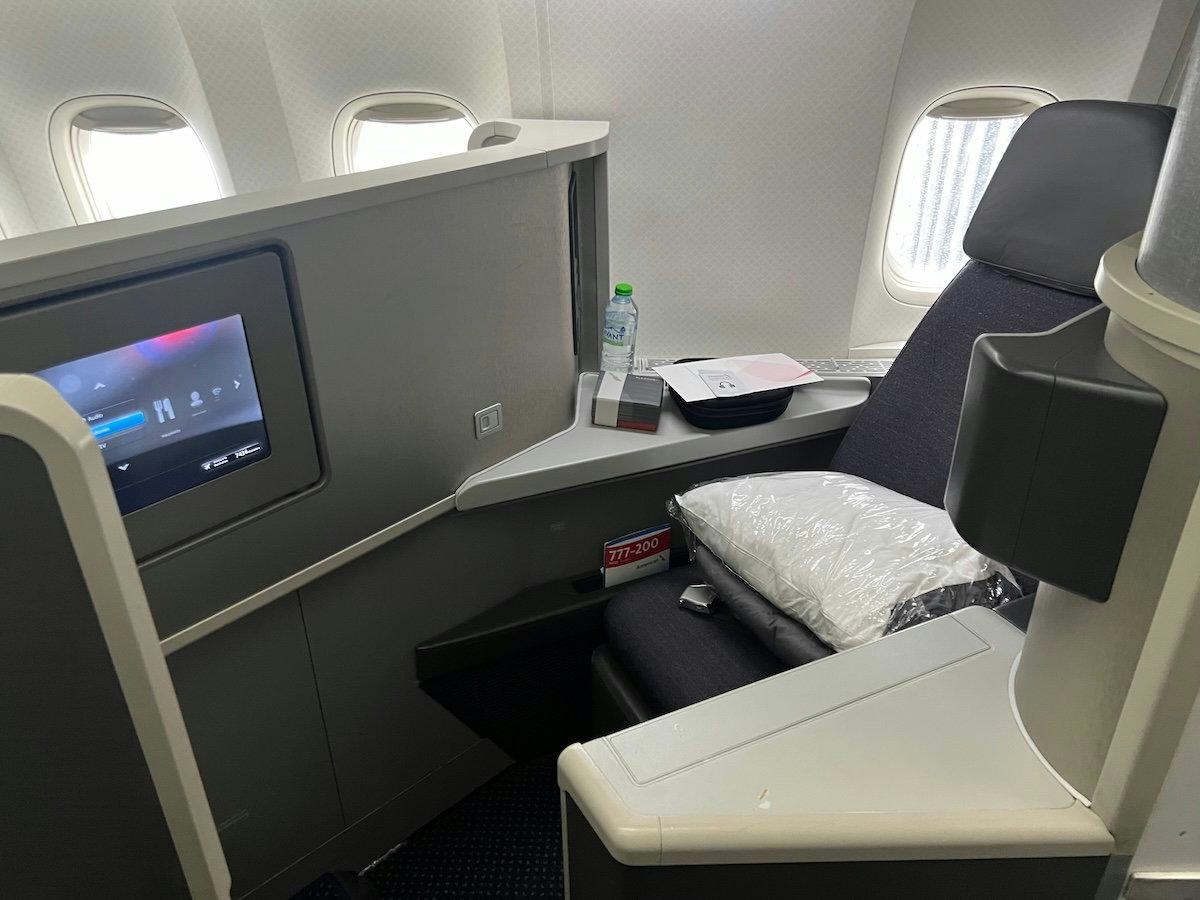
American Airlines Engages Airbus and Boeing to Replace Aging 777-200ER Fleet
American Airlines has commenced negotiations with both Boeing and Airbus as part of a strategic initiative to replace its aging fleet of Boeing 777-200ER aircraft. This move aims to reinforce the airline’s international network and sustain its competitive position against major rivals such as Delta Air Lines and United Airlines. At the company’s shareholders’ meeting on June 10, CEO Robert Isom confirmed that requests for proposals have been issued to both manufacturers. The objective is to prepare for the eventual retirement of 47 long-haul jets, many of which are approaching 25 years in service.
Fleet Modernization and Strategic Considerations
The Boeing 777-200ER has long served as a cornerstone of American’s long-haul operations. However, with new aircraft deliveries often subject to extended lead times, the airline is proactively planning its next phase of fleet modernization. Isom underscored the importance of defining this strategy now, anticipating the 777s’ retirement in the 2030s. In the meantime, the existing fleet will undergo a final series of upgrades to ensure continued operational reliability until their phase-out.
American’s decision aligns with a broader industry trend toward fleet renewal, as competitors like Delta and United are also expected to accelerate modernization efforts to maintain market share. The airline is currently evaluating options that include the Boeing 787 Dreamliner—of which it already operates 70 aircraft—and the Airbus A350 Xtra Wide Body. Although American inherited an A350 order through its 2013 merger with US Airways, that order was canceled in 2018 amid increasing Dreamliner deliveries. The 787-9 model, with a seating capacity of approximately 280, closely matches the 777-200ER’s 273 seats, while larger variants such as the 787-10 and A350-900 would provide a capacity increase exceeding 10 percent. Larger aircraft like the A350-1000 and Boeing 777X are considered less likely candidates due to their significantly higher seating capacities.
Operational Efficiency and Challenges Ahead
A notable advantage of expanding the Dreamliner fleet lies in operational commonality. Pilots benefit from easier transitions between 787 variants, while maintenance and ground operations gain efficiencies through overlapping training programs and streamlined supply chains. Recent enhancements to the 787, including increased maximum takeoff weight options, have improved its payload and range capabilities, further strengthening its appeal for American’s future requirements.
Nonetheless, the transition presents several challenges. The substantial cost of acquiring new aircraft, the need for significant investment in retrofitting and maintenance infrastructure, and potential supply chain disruptions represent considerable risks. Market responses to American’s fleet renewal strategy may be mixed; some investors may regard it as a prudent, forward-looking initiative, while others could express concern over the considerable capital expenditures involved.
The competitive environment is also evolving, with reports indicating that Singapore Airlines is in discussions to order at least 50 large jets. This development could influence manufacturer strategies and reshape market dynamics. As American Airlines advances its fleet renewal plans, its decisions are poised to have a significant impact on the trajectory of long-haul air travel over the coming decade.

Etihad Airways Suspends Airbus A380 Flights on Key Route

Aditya Birla Group Seeks Approval for Aircraft Leasing in GIFT City

Qatar Airways Highlights Innovation and Connectivity at Arabian Travel Market 2026

Hong Kong's Five-Year Plan Includes Andrew Fan's Aircraft Parts Processing Hub Proposal

ACIA Aero Leasing Delivers ATR72-600 to Air Nostrum

RTX Appoints Jill Albertelli as Head of Pratt & Whitney

TAT Technologies Joins Beyond Aero Hydrogen Aircraft Program

AURAK Study Highlights Barriers to Air Taxi Adoption in Emerging Economies

Xiamen Air Selects Altitude for 787 Maintenance at Heathrow

Etihad and Swissport Extend Global Partnership
