
حوّل رؤى الذكاء الاصطناعي إلى أفعال منسّقة

الرائج الآن
Categories
American Airlines Restricts Boeing 737 MAX 8 Flights on Transatlantic and Transpacific Routes
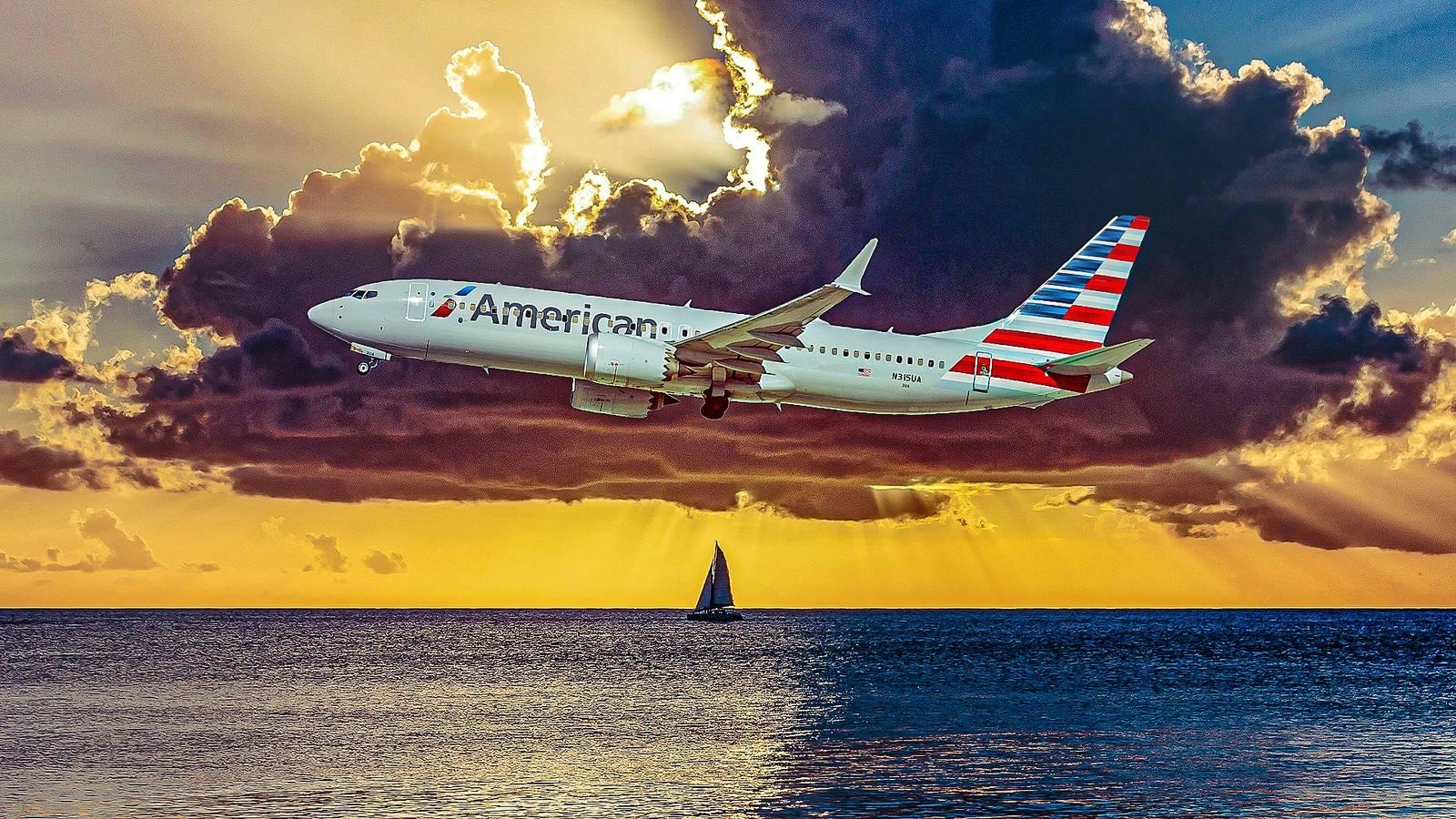
American Airlines Restricts Boeing 737 MAX 8 Flights on Transatlantic and Transpacific Routes
American Airlines, which operates one of the world’s largest narrowbody fleets, continues to limit the deployment of its Boeing 737 MAX 8 aircraft to domestic and North American overland routes. Despite the aircraft’s technical capability to serve longer-haul flights, the airline has chosen to exclude the 737 MAX 8 from transatlantic and transpacific services. This strategic decision underscores American Airlines’ approach to fleet optimization and raises questions about its competitive positioning as other carriers adjust their international strategies.
Fleet Capabilities and Strategic Limitations
The Boeing 737 MAX 8 ranks as the fourth-largest aircraft type within American Airlines’ fleet of over 1,000 planes, following the 737-800, Airbus A321, and A319. With seating capacity ranging from 160 to 190 passengers and a maximum range exceeding 3,500 nautical miles, the 737 MAX 8 is technically capable of reaching European destinations and extended Pacific routes. Its advanced fuel efficiency and payload capacity further support the feasibility of international operations.
Nevertheless, American Airlines has deliberately confined the 737 MAX 8 to high-frequency domestic routes and overland flights within North America. This limitation is influenced by factors beyond the aircraft’s raw specifications, including operational economics, crew scheduling complexities, and maintenance protocols. The airline’s decision reflects a broader strategic calculus rather than a mere technical constraint.
Operational and Regulatory Considerations
Operating long-haul international routes involves more than sufficient range. Such flights require aircraft certified for extended over-water operations, specialized crew training, and enhanced maintenance standards. American Airlines relies on its widebody fleet—comprising Boeing 777s, Boeing 787 Dreamliners, and soon Airbus A350s—to service transatlantic and transpacific routes. These widebody aircraft provide greater passenger comfort, premium cabin amenities, and increased cargo capacity, aligning with the expectations of international travelers and the economic demands of long-haul operations.
Regulatory requirements also influence fleet deployment. The Federal Aviation Administration (FAA) and international aviation authorities mandate Enhanced Over-Water Operations (EOWS) certifications for single-aisle aircraft undertaking extended international flights. Implementing these protocols across a large narrowbody fleet would necessitate significant investments in crew training, equipment upgrades, and operational adjustments. Currently, American Airlines prioritizes these resources for its widebody operations, reinforcing the decision to restrict the 737 MAX 8 to shorter routes.
Competitive Pressures and Market Dynamics
American Airlines’ conservative use of the 737 MAX 8 contrasts with the evolving strategies of its competitors in the transatlantic and transpacific markets. United Airlines, for instance, is upgrading its 737 MAX fleet at its Guam hub, potentially enhancing its presence in the transpacific region. Air Canada is concentrating on Latin American and transatlantic routes, which may divert demand from American’s network. Meanwhile, Air Algérie is expanding its fleet with new 737 MAX 8 jets, and GOL Linhas Aéreas is launching its first transatlantic services with Airbus A330 aircraft. These developments signal intensifying competition and shifting dynamics in key international markets.
The changing landscape highlights the importance of fleet flexibility and strategic deployment. While American Airlines currently prioritizes operational efficiency and revenue optimization on domestic routes, ongoing competitor initiatives may prompt a future reassessment of how the 737 MAX 8 fleet is utilized.
Looking Ahead
As global airlines continue to adapt to evolving market conditions and passenger expectations, American Airlines’ decision to restrict the 737 MAX 8 from long-haul international routes reflects a careful balance of operational, regulatory, and competitive considerations. For the time being, the 737 MAX 8 remains a central component of American’s domestic network, with any potential changes to this strategy contingent on future industry developments.

Etihad Airways Suspends Airbus A380 Flights on Key Route

Aditya Birla Group Seeks Approval for Aircraft Leasing in GIFT City

Qatar Airways Highlights Innovation and Connectivity at Arabian Travel Market 2026

Hong Kong's Five-Year Plan Includes Andrew Fan's Aircraft Parts Processing Hub Proposal

ACIA Aero Leasing Delivers ATR72-600 to Air Nostrum

RTX Appoints Jill Albertelli as Head of Pratt & Whitney

TAT Technologies Joins Beyond Aero Hydrogen Aircraft Program

AURAK Study Highlights Barriers to Air Taxi Adoption in Emerging Economies

Xiamen Air Selects Altitude for 787 Maintenance at Heathrow

Etihad and Swissport Extend Global Partnership
