
حوّل رؤى الذكاء الاصطناعي إلى أفعال منسّقة

الرائج الآن
Categories
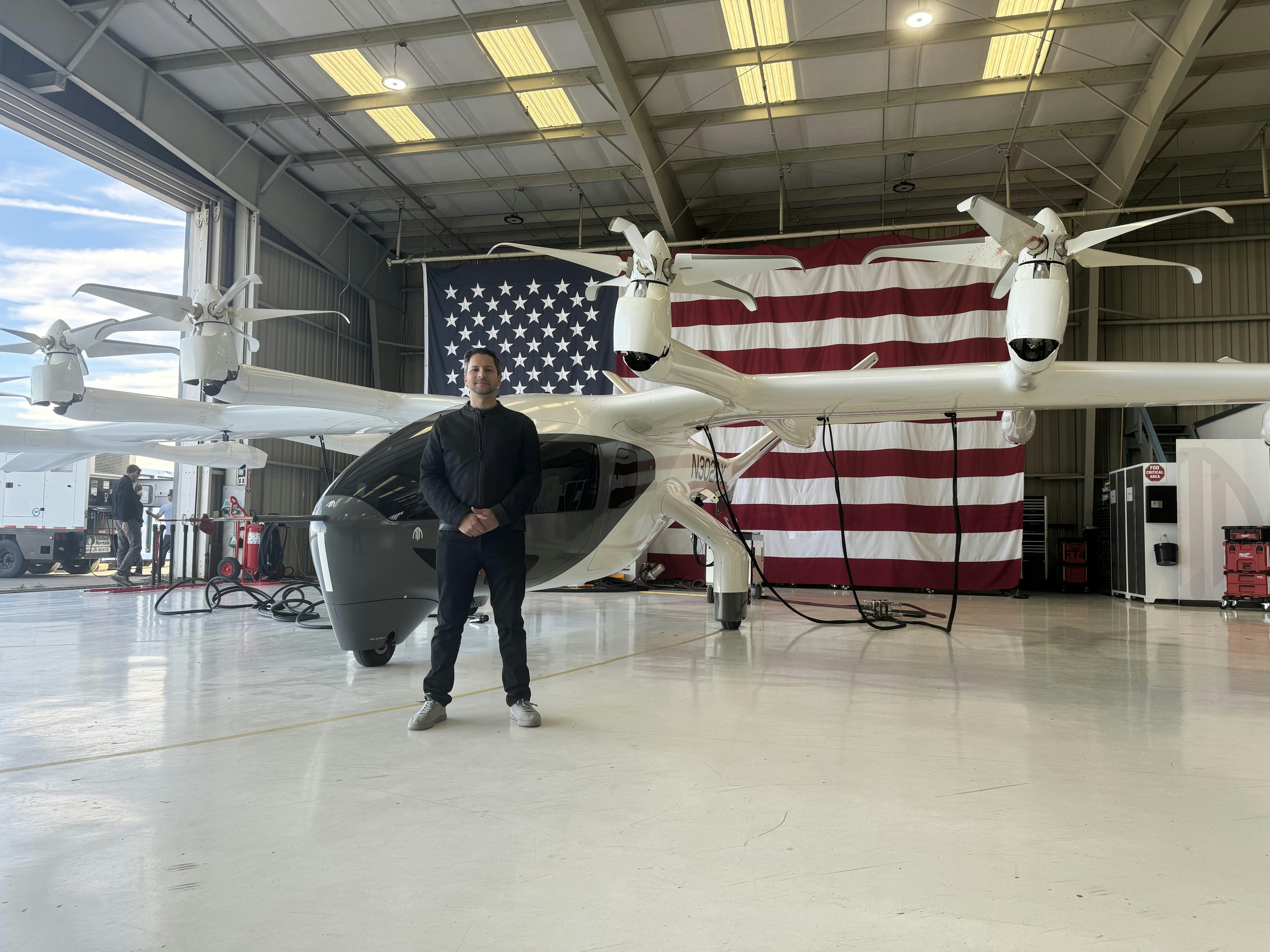
Archer CEO Highlights Air Taxis, Defense, and AI in Growth Strategy
Archer CEO Highlights Air Taxis, Defense, and AI in Growth Strategy
Archer Aviation Inc. (ACHR) is actively reshaping its corporate identity beyond the confines of a traditional air taxi manufacturer. In its recent Form 8-K filing, CEO Adam Goldstein characterized Archer as a “multi-threat company,” underscoring the convergence of its Midnight electric vertical takeoff and landing (eVTOL) aircraft, defense sector initiatives, and artificial intelligence (AI) technologies into a cohesive growth framework. This strategic repositioning emerges amid the company’s ongoing financial challenges, including minimal revenue generation, escalating losses, and substantial cash burn reported in the first quarter.
Expanding Horizons: Air Taxis and Regulatory Milestones
Goldstein outlined a roadmap that includes initiating air taxi operations in select U.S. cities, securing phased government contracts, and deploying AI-driven solutions within the current year. The immediate priority remains the commercial launch of the Midnight aircraft, with U.S. operations slated to commence in 2024 under the auspices of the White House’s eVTOL Integration Pilot Program. Preparations are also underway for deployment during the LA28 Olympic Games. Notably, Archer has become the first eVTOL company to complete Phase 3 of the Federal Aviation Administration’s (FAA) four-phase Type Certification process, marking a significant regulatory achievement that keeps the company at the forefront of industry compliance and safety standards.
Diversification into Defense and Advanced Technologies
Beyond urban air mobility, Archer is pursuing defense applications through a partnership with Anduril Industries to develop a dual-use, hybrid autonomous aircraft designed specifically for military purposes. Goldstein emphasized that the defense market requires solutions driven by stringent performance and cost criteria, rather than mere adaptations of existing air taxi platforms. While defense contracts could potentially offer new revenue streams and sustained demand, these prospects remain uncertain as Archer has yet to secure any major government awards.
Simultaneously, Archer is advancing its AI capabilities as a central pillar of its growth strategy. The company is integrating Nvidia’s onboard computing technology to enable autonomy-ready flight systems, utilizing Starlink’s low-latency satellite connectivity to enhance aircraft communication, and collaborating with Palantir Technologies on FAA air traffic control initiatives linked to the Department of Transportation’s $20 billion modernization plan. By positioning itself as both an aircraft manufacturer and a provider of cutting-edge aviation technology, Archer aims to diversify its market appeal and capture value beyond the traditional urban air mobility sector.
Financial and Competitive Challenges
Despite these strategic initiatives, Archer faces significant operational and financial headwinds. The company closed the first quarter with approximately $1.8 billion in liquidity but recorded a cash burn of $149.1 million in core operations. Its net loss widened to $217.7 million, with an adjusted EBITDA loss forecasted between $170 million and $200 million for the second quarter. Investor confidence may hinge on whether increased expenditures translate into measurable progress in manufacturing scale-up and air taxi deployment.
Compounding these challenges, Archer is embroiled in a legal dispute with rival Joby Aviation, involving allegations of patent infringement and tariff evasion. The competitive landscape is further complicated by concerns raised by Delta Air Lines, a key Joby partner, regarding an ongoing U.S. Trade Commission investigation into Joby’s trade practices. This scrutiny could have broader implications for Joby’s partnerships and the wider eVTOL industry.
As Archer endeavors to persuade investors to prioritize its long-term platform potential over immediate profitability, the company confronts a complex array of operational, financial, and competitive obstacles. The forthcoming months will be critical in determining whether Archer’s multifaceted strategy can achieve the breakthroughs necessary to substantiate its ambitious vision.

Etihad Airways Suspends Airbus A380 Flights on Key Route

Aditya Birla Group Seeks Approval for Aircraft Leasing in GIFT City

Qatar Airways Highlights Innovation and Connectivity at Arabian Travel Market 2026

Hong Kong's Five-Year Plan Includes Andrew Fan's Aircraft Parts Processing Hub Proposal

ACIA Aero Leasing Delivers ATR72-600 to Air Nostrum

RTX Appoints Jill Albertelli as Head of Pratt & Whitney

TAT Technologies Joins Beyond Aero Hydrogen Aircraft Program

AURAK Study Highlights Barriers to Air Taxi Adoption in Emerging Economies

Xiamen Air Selects Altitude for 787 Maintenance at Heathrow

Etihad and Swissport Extend Global Partnership
