
حوّل رؤى الذكاء الاصطناعي إلى أفعال منسّقة

الرائج الآن
Categories
Ariana Afghan Airlines buys two aircraft engines for $4.7 million
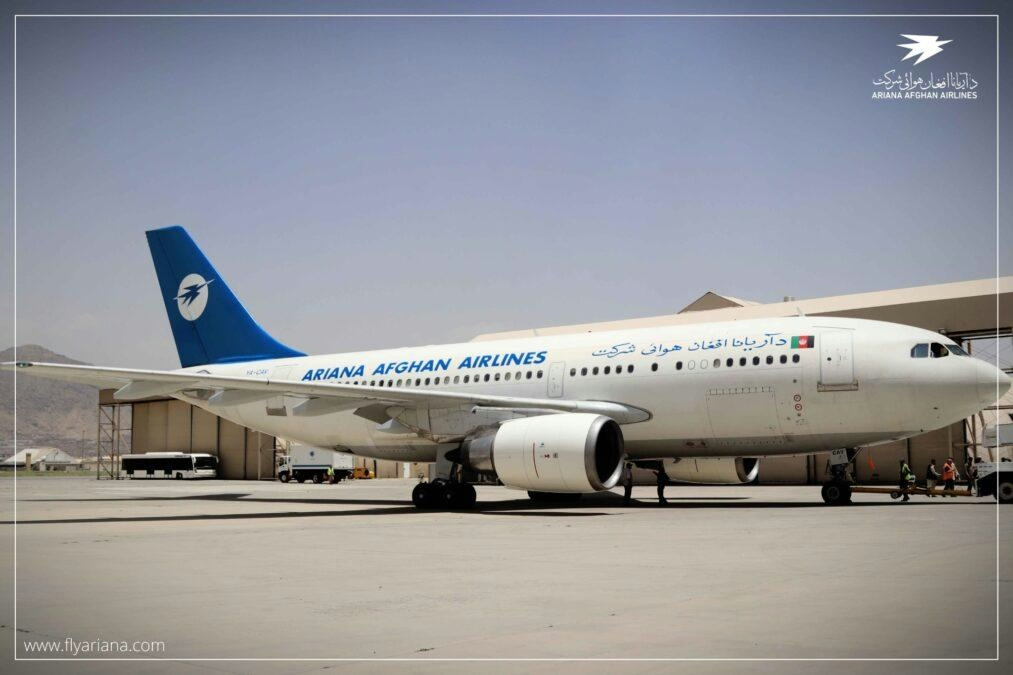
Ariana Afghan Airlines Purchases Two Aircraft Engines for $4.7 Million Amid Operational Challenges
Afghanistan’s state-owned carrier, Ariana Afghan Airlines, has acquired two aircraft engines from suppliers in Turkey and Serbia for $4.7 million. The engines arrived in Kabul on a cargo flight Tuesday and are intended for installation on the airline’s Boeing 737 and Airbus A310 aircraft, according to an official company statement. This acquisition aims to enhance the airline’s fleet capacity and support both domestic and limited international flight operations.
Financial and Operational Context
The investment comes at a time when Ariana Afghan Airlines is grappling with significant financial pressures. The $4.7 million expenditure raises concerns about the airline’s budgetary constraints and its ability to sustain long-term operations. Aviation experts highlight that Ariana’s aging fleet faces stringent international regulatory restrictions, which limit the airline’s access to long-haul routes. Since the Taliban’s return to power in 2021, the airline has encountered considerable difficulties in sourcing aircraft parts and equipment due to international sanctions and regulatory barriers.
These challenges have compelled Ariana to concentrate primarily on domestic flights and limited regional routes, as it remains barred from operating flights to Europe and the United States. The recent engine purchase may be perceived by competitors and market observers in varying ways—either as a sign of financial vulnerability or as a determined effort to maintain operational continuity despite adverse conditions.
Broader Industry Implications
The difficulties faced by Ariana Afghan Airlines underscore the critical importance of supply chain integration within the aviation sector. This is further illustrated by recent industry developments, such as Boeing’s $4.7 billion acquisition of Spirit AeroSystems, which highlights the advantage of having secure access to essential components. In contrast, Ariana’s efforts to independently procure vital aircraft parts reflect the broader challenges confronting airlines operating under international sanctions and without major global partnerships.
Despite these obstacles, Ariana Afghan Airlines continues to operate, seeking avenues to sustain and potentially expand its services within a complex and restrictive environment.

Etihad Airways Suspends Airbus A380 Flights on Key Route

Aditya Birla Group Seeks Approval for Aircraft Leasing in GIFT City

Qatar Airways Highlights Innovation and Connectivity at Arabian Travel Market 2026

Hong Kong's Five-Year Plan Includes Andrew Fan's Aircraft Parts Processing Hub Proposal

ACIA Aero Leasing Delivers ATR72-600 to Air Nostrum

RTX Appoints Jill Albertelli as Head of Pratt & Whitney

TAT Technologies Joins Beyond Aero Hydrogen Aircraft Program

AURAK Study Highlights Barriers to Air Taxi Adoption in Emerging Economies

Xiamen Air Selects Altitude for 787 Maintenance at Heathrow

Etihad and Swissport Extend Global Partnership
