
حوّل رؤى الذكاء الاصطناعي إلى أفعال منسّقة

الرائج الآن
Categories
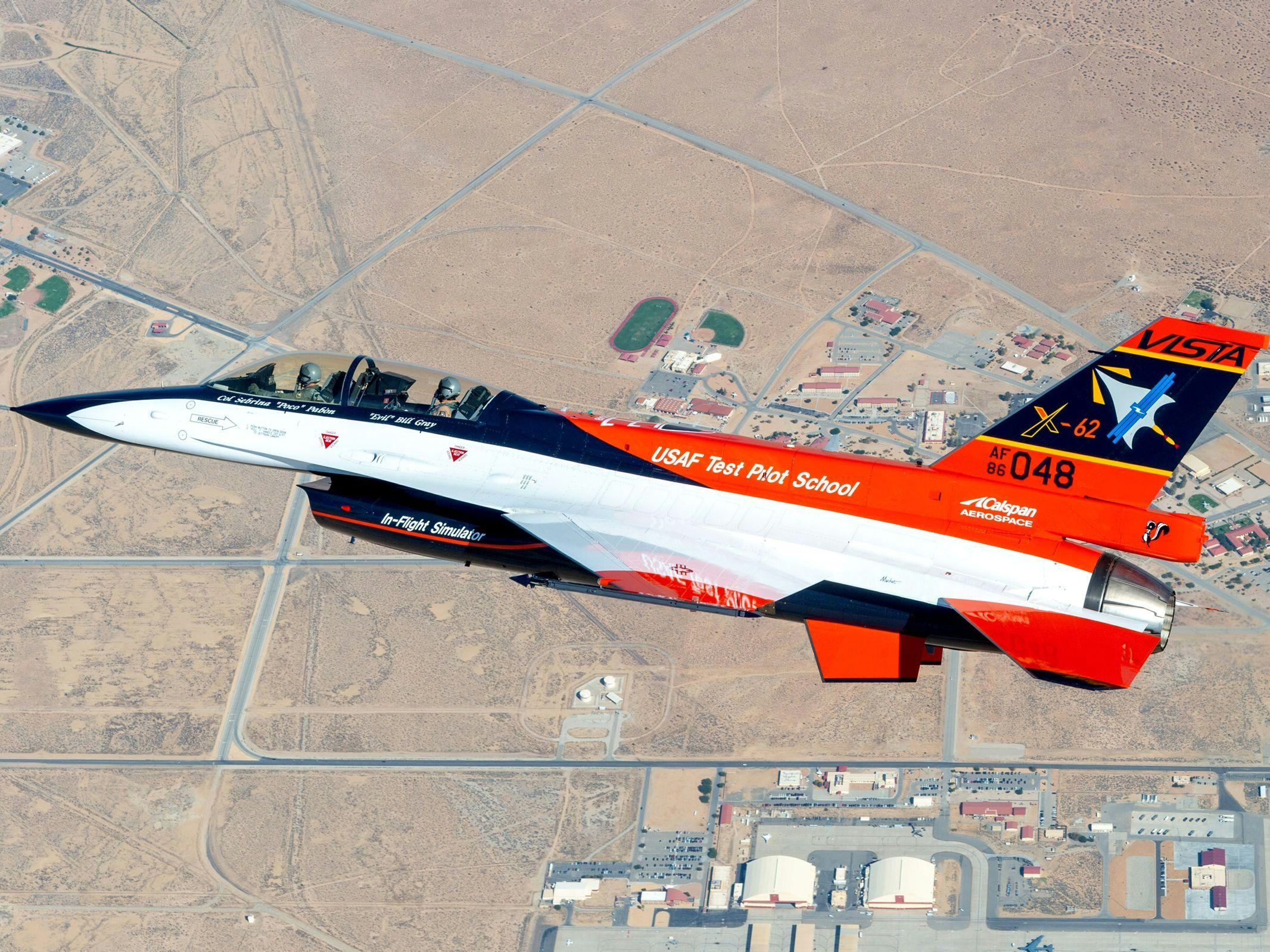
Artificial Intelligence Shapes the Future of Trainer Aircraft
Artificial Intelligence Shapes the Future of Trainer Aircraft
The trainer aircraft market is experiencing a significant transformation as artificial intelligence (AI) reshapes the methods by which military and civil aviation organizations prepare the next generation of pilots. Historically, trainer aircraft have served as a critical link between theoretical instruction and operational flying, evolving from simple flight trainers to sophisticated platforms that replicate the complexities of modern combat aircraft. Today, AI is accelerating this progression, enabling pilot training to become more intelligent, personalized, and operationally relevant.
Addressing Modern Challenges in Pilot Training
Contemporary air forces confront numerous challenges, including pilot shortages, escalating operational costs, and the imperative to ready aviators for advanced aircraft equipped with cutting-edge avionics, sensor fusion, and network-centric warfare capabilities. AI offers solutions across all phases of pilot development. From adaptive classroom instruction and simulator-based training to autonomous flight assistance and predictive performance evaluation, AI serves to augment rather than replace human instructors. By processing extensive flight data, AI systems can identify individual trainee strengths and weaknesses, tailor customized learning pathways, and provide objective assessments of performance. Machine learning algorithms continuously refine training curricula based on historical data, instructor input, and evolving mission demands, fostering a dynamic and individualized learning environment.
Between 2025 and 2032, AI is anticipated to revolutionize the trainer aircraft sector through innovations such as intelligent flight control systems, immersive simulation technologies, predictive maintenance, smart cockpit assistance, and autonomous mission planning. These advancements promise not only to enhance the quality of training but also to better equip pilots for increasingly automated and data-driven combat operations.
Challenges and Industry Response
The integration of AI into trainer aircraft, however, presents significant challenges. The development and implementation of AI systems entail substantial costs, alongside the necessity for rigorous testing and validation to ensure safety and reliability. Furthermore, resistance from traditional defense contractors to rapid technological adoption may impede the pace of innovation. Despite these obstacles, the market is witnessing heightened competition as defense firms compete for contracts involving AI-enhanced military systems. This competitive environment has spurred accelerated research and development efforts and fostered new partnerships with technology companies specializing in AI.
The global defense AI market is expanding swiftly, with leading entities such as Palantir Technologies, Anduril Industries, Lockheed Martin, and Northrop Grumman at the forefront of innovation. Their initiatives are driving deeper integration of AI into military applications, including trainer aircraft, thereby reshaping the competitive landscape.
Preparing Pilots for the Future of Aviation
Trainer aircraft have historically mirrored the technological demands of their time. Today’s pilots must master integrated sensors, networked communications, electronic warfare, and multi-domain operations. AI represents the next pivotal advancement in this continuum. Rather than merely instructing pilots on how to fly, AI-enabled trainers are designed to teach them how to think critically, adapt swiftly, and make informed decisions in complex and rapidly evolving environments. As global defense modernization efforts continue, the incorporation of AI into trainer aircraft will be central to preparing pilots for the future of aviation.

Etihad Airways Suspends Airbus A380 Flights on Key Route

Aditya Birla Group Seeks Approval for Aircraft Leasing in GIFT City

Qatar Airways Highlights Innovation and Connectivity at Arabian Travel Market 2026

Hong Kong's Five-Year Plan Includes Andrew Fan's Aircraft Parts Processing Hub Proposal

ACIA Aero Leasing Delivers ATR72-600 to Air Nostrum

RTX Appoints Jill Albertelli as Head of Pratt & Whitney

TAT Technologies Joins Beyond Aero Hydrogen Aircraft Program

AURAK Study Highlights Barriers to Air Taxi Adoption in Emerging Economies

Xiamen Air Selects Altitude for 787 Maintenance at Heathrow

Etihad and Swissport Extend Global Partnership
