صورة

أيروجيني — مساعدك الذكي للطيران.

اسأل عن أي شيء. قم بتحليل كل شيء. تصرف فورًا.

الرائج الآن

Categories

Avia Solutions Group Receives MRO Approval for 737 Max
May 7, 2025By ePlane AI
Avia Solutions Group Receives MRO Approval for 737 Max
0
0
Avia Solutions
737 Max
MRO Approval

Avia Solutions Group Secures EASA Approval for 737 Max Heavy Maintenance

Avia Solutions Group, a prominent wet-lease operator, has achieved a significant milestone with the European Union Aviation Safety Agency (EASA) granting approval for heavy maintenance on Boeing 737 Max aircraft. This certification, awarded to its FL Technics division under EASA Part-145, authorizes the company to conduct comprehensive servicing of 737 Max 8 and 9 models at its facilities in Vilnius and Kaunas, Lithuania.

Strategic Expansion and Market Positioning

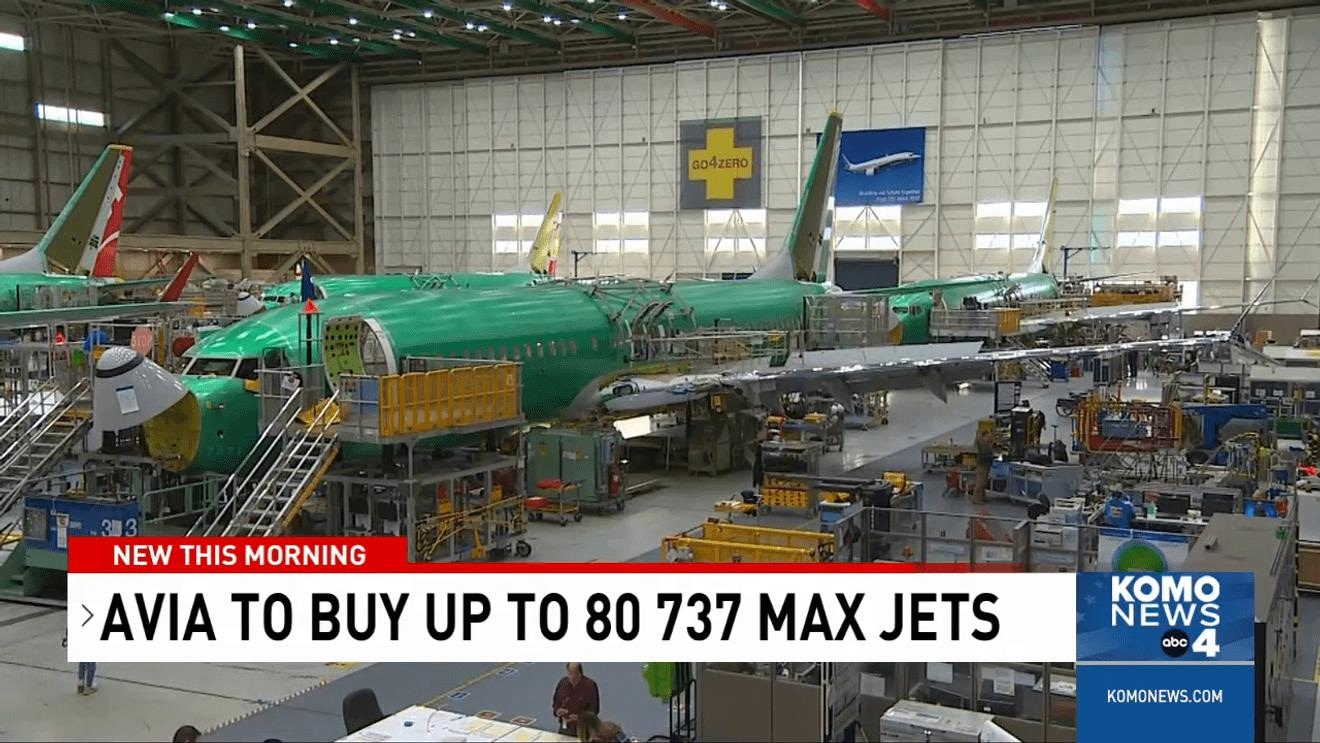
Zilvinas Lapinskas, chief executive of FL Technics, described the approval as a “natural step” in the company’s ongoing expansion efforts. Avia Solutions Group currently operates a fleet exceeding 220 aircraft across its wet-lease operators and recently placed orders for up to 80 Boeing 737 Max jets, including 40 firm commitments. The new certification is expected to support maintenance needs not only for the company’s own fleet but also for third-party operators, aligning with the broader industry shift toward newer and more sustainable aircraft.

Juozas Lapeika, FL Technics deputy chief for base maintenance, emphasized that the EASA approval positions Avia Solutions Group at the forefront of fleet evolution. He noted that the certification enhances the company’s role as a key maintenance provider, particularly for operators seeking to upgrade or maintain their fleets with the latest aviation technologies. Lapeika further highlighted that the expanded service capabilities will strengthen the company’s competitiveness in the international market and align with its strategic focus on innovation and comprehensive aviation solutions.

Responding to Growing Demand in the MRO Sector

The approval arrives amid increasing demand for heavy maintenance, repair, and overhaul (MRO) services for the 737 Max, as airlines worldwide continue to modernize their fleets. Industry analysts have responded positively, recognizing that Avia Solutions Group’s enhanced capabilities position it to capture a larger share of the expanding MRO market. Nevertheless, the company is expected to encounter heightened competition, as other MRO providers may accelerate efforts to upgrade their own service offerings in response to the surge in demand.

By securing EASA certification for 737 Max heavy maintenance, Avia Solutions Group not only consolidates its market presence but also lays the groundwork for further growth in a competitive and rapidly evolving aviation landscape.

More news
DAE and Blackstone Announce $1.6 Billion Global Aviation Leasing Investment

DAE and Blackstone Announce $1.6 Billion Global Aviation Leasing Investment

DAE and Blackstone Announce $1.6 Billion Global Aviation Leasing Investment Dubai Aerospace Enterprise (DAE) Ltd has partnered with Blackstone to launch “Equator,” a new long-term global investment program targeting approximately $1.6 billion in annual investments in commercial aircraft leasing. The initiative seeks to establish a diversified portfolio of aircraft leased to leading airlines worldwide. Under this program, DAE will source assets from third parties, while its Aircraft Investor Services (AIS) group will manage Equator’s holdings. Strategic Partnership and Industry Expertise Firoz Tarapore, CEO of DAE, emphasized the strategic benefits of the collaboration, noting that Blackstone’s substantial and flexible capital base provides a strong foundation to expand DAE’s third-party fleet management franchise. He highlighted DAE’s extensive fleet size, global customer reach, and dedicated client support team as key factors positioning the company to ensure Equator’s long-term success. Tarapore also underscored the complementary nature of DAE’s operational expertise and Blackstone Credit & Insurance (BXCI)’s investment capabilities. Aneek Mamik, Senior Managing Director and Head of Financial Services for Asset Based Finance at BXCI, expressed enthusiasm about expanding aviation capabilities alongside DAE, a leading aircraft lessor with deep technical knowledge and longstanding relationships with airlines and original equipment manufacturers (OEMs). Mamik described the program as a reflection of BXCI’s commitment to deploying flexible capital into high-quality investments backed by tangible assets. BXCI intends to provide a comprehensive range of capital to support Equator, with additional participation from funds managed by ITE Management, L.P., a strategic partner. Market Context and Industry Dynamics DAE currently manages a fleet of approximately 700 aircraft, including over 100 valued at more than $4 billion as of December 31, 2025, making it one of the world’s largest aircraft lessors. The company serves as a servicer in seventeen management agreements for institutional and financial investors, leveraging its extensive aircraft management expertise. Meanwhile, BXCI’s Infrastructure and Asset Based Credit Group oversees assets exceeding $100 billion, with a team of more than 90 investment professionals specializing in credit and structured investments across sectors such as infrastructure, commercial finance, and real estate lending. The launch of Equator occurs amid evolving dynamics in the global aviation leasing market. Blackstone’s expansion into credit markets has attracted regulatory scrutiny, reflecting broader oversight as the firm transforms into a diversified financial powerhouse. This strategic evolution positions Blackstone to capitalize on high valuations from mature investments, potentially generating significant performance fees. Concurrently, the competitive landscape is shifting, exemplified by SMBC Aviation Capital’s recent acquisition of Air Lease, signaling further consolidation among major lessors. Structural challenges in emerging markets, such as those highlighted by Azul’s CEO regarding Brazil, continue to influence growth prospects for aviation leasing in these regions. As DAE and Blackstone advance with the Equator program, industry observers will closely monitor how the partnership addresses regulatory challenges, navigates competitive pressures, and adapts to the changing conditions of the global aviation sector.
Horizon Aircraft Collaborates with MHIRJ on Cavorite X7 Development

Horizon Aircraft Collaborates with MHIRJ on Cavorite X7 Development

Horizon Aircraft and MHIRJ Collaborate on Cavorite X7 Hybrid-Electric VTOL Development Horizon Aircraft has formalized a strategic partnership with MHIRJ Aviation Group (MHIRJ), a subsidiary of Mitsubishi Heavy Industries, to advance the development of its hybrid-electric vertical take-off and landing (VTOL) aircraft, the Cavorite X7. This collaboration aims to accelerate the project’s progress by leveraging MHIRJ’s specialized engineering expertise, particularly in the design and development of flight test instrumentation. These systems are essential for collecting critical data during the Cavorite X7’s planned flight test program, which is scheduled to commence in early 2027. Beyond instrumentation, MHIRJ will provide comprehensive engineering support, drawing on its extensive experience in regional aviation to bolster the aircraft’s development. Elio Ruggi, Senior Vice-President, Chief Engineer, and Head of Aircraft Development, Quality & Flight Operations at MHIRJ, emphasized the significance of the partnership. He stated that the collaboration offers an opportunity to apply MHIRJ’s engineering capabilities to a pioneering hybrid-electric VTOL project. Ruggi highlighted the potential for business growth and the commitment to advancing sustainable technology within regional aviation, underscoring the strategic value of the alliance for both companies. Market Context and Challenges Despite the promising technological collaboration, the partnership faces challenges rooted in the evolving dynamics of regional aviation markets, particularly in Brazil. The country’s aviation sector remains underdeveloped, a factor noted by Azul Airlines CEO John Rodgerson, who pointed to a disproportionate share of global passenger lawsuits as a symptom of broader systemic issues. Nevertheless, Rodgerson also identified significant growth potential within Brazil’s regional aviation landscape, which could influence the trajectory of the Cavorite X7 program. Azul, serving 130 cities across Brazil, exemplifies the expanding network strategies that may shape competitive responses to emerging hybrid-electric VTOL technologies. The introduction of such advanced aircraft has the potential to redefine regional connectivity and passenger expectations, prompting established players to adapt their strategies. Additionally, shifts in technology adoption beyond aviation—illustrated by Meta’s recent decision to reverse its discontinuation of VR support for Horizon Worlds—may indirectly affect Horizon Aircraft’s market positioning. As consumer preferences evolve alongside technological advancements in both aviation and digital experiences, Horizon Aircraft will need to maintain agility to navigate these changing demands. The collaboration between Horizon Aircraft and MHIRJ thus highlights both the opportunities and complexities inherent in pioneering sustainable aviation solutions within a rapidly transforming global market.
JetBlue Named Launch Customer of FL Technics’ New Punta Cana Aviation Hub

JetBlue Named Launch Customer of FL Technics’ New Punta Cana Aviation Hub

JetBlue Named Launch Customer of FL Technics’ New Punta Cana Aviation Hub Global aviation maintenance provider FL Technics has announced JetBlue as the inaugural client for its forthcoming maintenance, repair, and overhaul (MRO) facility in Punta Cana. This development marks a significant milestone for both companies within the expanding aviation sector of the Dominican Republic. A Strategic Investment in Regional Aviation The $70 million MRO hub, developed in partnership with Grupo Puntacana, is nearing completion and is projected to initially generate approximately 300 skilled technical and support jobs. Plans are in place to expand the workforce to as many as 2,000 employees over the coming years. Designed to serve both airlines and aircraft leasing companies, the facility aims to establish Punta Cana as a pivotal regional center for heavy aircraft maintenance, reducing reliance on distant service locations. Žilvinas Lapinskas, CEO of FL Technics Group, emphasized the significance of JetBlue’s role as the first client, stating, “For every new MRO, the first client is truly special. It will always be remembered as the first airline that trusted us with its most valuable assets — its aircraft.” He further highlighted the shared values and promising future between the two companies, describing JetBlue as a “quality-driven, innovative, and highly effective partner” and one of the most trusted airlines in the region. Navigating Challenges Amid Expansion The establishment of a comprehensive maintenance hub adjacent to one of the Caribbean’s busiest airports is expected to streamline operations by minimizing the need for airlines to send aircraft outside the region for servicing, thereby saving time and resources. However, JetBlue’s role as the launch customer unfolds within a dynamic and competitive MRO landscape. The partnership may encounter challenges related to regulatory approvals and intensified competition from other maintenance providers in the Caribbean. Industry analysts suggest that FL Technics’ expansion could trigger strategic responses from competitors, potentially leading to increased price competition and shifts in service offerings. Complicating the scenario further is JetBlue’s ongoing consideration of a potential sale to a rival carrier, as reported by Semafor and Reuters. The outcome of these negotiations may have significant implications for JetBlue’s long-term maintenance strategies and its collaboration with FL Technics. As the Punta Cana facility prepares to commence operations, both FL Technics and JetBlue are positioning themselves to leverage the region’s growing aviation market while carefully managing the evolving regulatory and competitive environment.
Daher Secures New Safran Logistics and MRO Contracts

Daher Secures New Safran Logistics and MRO Contracts

Daher Expands Partnership with Safran Through New Logistics and MRO Contracts Daher has secured two significant logistics contracts with Safran, marking an expansion of its operations in Germany and France, with activities scheduled to begin in April 2026. The agreements involve managing a warehouse for Safran Nacelles in Hamburg and establishing a dedicated maintenance, repair, and overhaul (MRO) and aircraft-on-ground (AOG) logistics platform for Safran Electronics & Defense in the Île-de-France region. Strengthening Operations in Germany and France In Hamburg, Daher will oversee logistics related to the integration of engines and nacelles for the Airbus A320neo final assembly line. This operation will be supported by a team of 20 employees and will encompass receiving, storage, parts preparation, handling, and shipping. The contract follows a transition from a previous provider and enhances Daher’s production logistics capabilities, reinforcing its presence in Germany where it currently employs approximately 1,100 people. In France, Daher plans to open a new 3,000 square meter facility in Tremblay-en-France, near Paris Charles de Gaulle Airport, to support MRO and AOG operations for Safran Electronics & Defense. This site will manage thousands of shipments annually and provide rapid-response AOG services, critical for minimizing aircraft downtime. The facility will be equipped with Daher’s warehouse management system, ensuring full traceability and real-time operational control. Advancing Automation and Addressing Industry Challenges Both companies are collaborating on automation initiatives across their logistics operations, including the deployment of automated guided vehicles (AGVs), automated storage systems, and enhanced control technologies. The Tremblay-en-France contract also represents a key development in Daher’s AOG Desk offering, which focuses on rapid-response spare parts support for grounded aircraft—a vital service in the competitive aerospace sector. Despite the opportunities, these new contracts present challenges for Daher, such as managing increased operational demands, ensuring timely delivery of parts, and maintaining rigorous quality standards. The elevated profile of these agreements may intensify competition among suppliers, prompting rivals to pursue strategic partnerships, invest in logistics and maintenance capabilities, or adjust pricing to secure similar contracts with major aerospace companies like Safran. Context Within Safran’s Broader Supply Chain Strategy Safran’s recent acquisition of fuel system component supplier MCA reflects a broader strategy to strengthen and consolidate its supply chain. This trend could influence Daher’s market position as Safran continues to optimize its network of suppliers. The demand for MRO and AOG services is growing steadily, driven by the expanding global aircraft fleet and a robust MRO market currently valued at over $90 billion, with projections to exceed $150 billion by 2035. “Safran is a strategic partner for the Daher Group,” said Aymeric Daher, Deputy CEO of Daher and CEO of Daher Logistics. “We have been working together for many years with Safran Helicopter Engines, and these new projects with Safran Nacelles and Safran Electronics & Defense mark an important milestone. We are now involved in both industrial operations and spare parts flows in France and Germany. This is the result of teamwork and a shared commitment to move forward together.”
APOC Aviation to Support USM Stock Through A320-200 Teardown

APOC Aviation to Support USM Stock Through A320-200 Teardown

APOC Aviation to Support USM Stock Through A320-200 Teardown Strategic Expansion Amid Market Competition APOC Aviation, a specialist in aircraft, engine, and landing gear trading, leasing, and part-out, has announced the acquisition of a 15-year-old Airbus A320-200 from FTAI for teardown. The aircraft, previously operated by Jetstar Pacific Airlines, is slated for disassembly this May at the Tarmac Aerosave Toulouse-Francazal facility in France. This move forms part of APOC’s broader strategy to diversify and strengthen its inventory of used serviceable material (USM) amid intensifying competition in the aviation aftermarket. Craig Skilton, vice president of components at APOC Aviation, emphasized the company’s intent to expand its portfolio to serve a wide range of customers. He explained that APOC is increasing its stock of both mature and newer assets to cater to top-tier carriers as well as operators seeking parts for legacy equipment. Skilton also highlighted the launch of a new exchange service this month, which will incorporate comprehensive inventory from recent A319 teardown activities in the UK. The addition of components from the latest A320-200 teardown, following repair and re-certification, will further enhance APOC’s offerings. Market Dynamics and Competitive Pressures APOC’s core customer base remains focused on the narrowbody sector, where demand for USM continues to be robust. The company also provides a range of widebody and narrowbody landing gear, alongside CFM56-3/5A/5B/7B and V2500-A5 engines, available for exchange, lease, and parts services. However, this expansion occurs against a backdrop of heightened competition within the USM market. Industry participants such as AerSale have expressed concerns over a hypercompetitive feedstock environment, marked by increased scrutiny and pressure on pricing as more companies enter the teardown sector. Competitors are responding with ambitious growth strategies. For instance, EirTrade Aviation recently announced plans to increase the size of its teardown facility fivefold, signaling a concerted effort to capture a larger share of the market. This intensifying rivalry underscores the challenges faced by companies like APOC as they seek to scale operations and maintain competitive advantage. Commitment to Growth and Operational Excellence Karolis Jurkevičius, vice president of landing gear and major assets at APOC Aviation, reaffirmed the company’s dedication to expanding its disassembly programme. He noted that APOC is making significant investments supported by strong financial backing, enabling a transformative enhancement of its market offering. Jurkevičius also pointed to the growing team of aviation specialists at APOC, who are prepared to address emerging challenges with energy and collaboration. As APOC Aviation accelerates its teardown and USM initiatives, it navigates a rapidly evolving and increasingly competitive market landscape, balancing opportunities for growth with the demands of a dynamic industry environment.
Duncan Aviation Automates Cabin Refurbishment Workflow

Duncan Aviation Automates Cabin Refurbishment Workflow

Duncan Aviation Automates Cabin Refurbishment Workflow Duncan Aviation has partnered with Razorleaf to automate its product lifecycle management (PLM) workflow, achieving a 75% reduction in project-scoping time and significantly improving data accessibility across departments involved in business jet interior refurbishment. As the largest privately owned business aircraft maintenance, repair, and overhaul (MRO) provider in the United States, Duncan Aviation operates major facilities in Michigan, Nebraska, and Utah, alongside regional shops and mobile teams. The company delivers comprehensive nose-to-tail services for private and commercial business jets from leading manufacturers including Embraer, Gulfstream, Textron, Dassault, and Learjet. Streamlining Engineering and Certification Processes Aaron Lane, alterations planning team and certification coordinator at Duncan Aviation’s Lincoln, Nebraska facility, emphasizes the company’s broad capabilities: “We do everything but build planes from scratch. Duncan Aviation is an innovative company, always embracing new technologies and new ways of thinking about business.” The engineering and certification group manages customer-driven modifications ranging from upgrading analog cockpit displays to glass touchscreen controls, as well as modernizing cabin lighting, sound systems, and connectivity solutions such as Starlink and Gogo. A recent collaboration with product-development firm BorromeodeSilva on a Gulfstream V refurbishment exemplifies the company’s design innovation. The project featured a yacht-inspired interior with porthole windows, deck-grade wood flooring, and custom seating. The design process advanced from digital renderings to 3D CAD and ERP software, generating the technical data necessary for production and Federal Aviation Administration (FAA) certification. Lane highlights the critical importance of regulatory compliance: “There are very stringent rules for safety of the aircraft. It’s our job in Engineering and Certification to understand those rules, design to them, inspect the product regularly, and guarantee that design and outcome match.” Integrating Systems for Enhanced Efficiency Customer projects initiate within Duncan Aviation’s enterprise resource planning (ERP) system, where sales teams generate quotes accessible through a customer portal. These quotes are shared with engineering and certification teams and form the foundation for projects established in the Aras Innovator PLM platform, with application programming interfaces (APIs) linking both systems. Lane explains, “The official work scope generated by our ERP system is the document that everyone in Duncan Aviation then uses. We take that information and translate it into engineering tasks. The departments meet around it and nail down the interrelated factors that arise from the choices made by the customer.” A pivotal element of the workflow is the project data list (PDL), which consolidates all parts, documents, design data, analyses, and reports derived from the ERP sales and project-scoping process. These components are compiled into a master data list (MDL), forming the technical data package (TDP) delivered to customers and regulatory agencies. Previously, the creation of a PDL was a manual and time-intensive task. To address this, Aras recommended Razorleaf, a specialist in PLM implementation and middleware development, to automate the workflow through templated pathways. Challenges and Industry Impact While automation promises enhanced efficiency and improved service delivery, Duncan Aviation faces challenges in integrating new technology with existing processes, maintaining compliance with stringent aviation industry standards, and managing the transition to prevent service disruptions. Nevertheless, the initiative has sparked increased interest from clients seeking faster and more efficient refurbishment solutions. Competitors may respond by advancing their own automation capabilities or enhancing service offerings. Recent milestones, including Duncan Aviation’s completion of its first key Falcon 8X check and technician training for PW308 engines, further demonstrate the company’s commitment to innovation and continuous improvement. These developments strengthen its market position and reinforce client confidence in its technical expertise and service quality.
Digital Supply Chains Reshape Aviation Parts Procurement

Digital Supply Chains Reshape Aviation Parts Procurement

Digital Supply Chains Reshape Aviation Parts Procurement The aviation industry relies heavily on precision, efficiency, and reliability, with each aircraft requiring thousands of components to operate safely. Historically, managing the availability of these parts has been a complex endeavor, often dependent on manual processes, paper documentation, and fragmented communication among suppliers, distributors, and maintenance teams. However, the emergence of digital supply chains is fundamentally transforming how aviation organizations procure and manage their inventory, introducing new levels of efficiency and transparency. The Digital Supply Chain Advantage Digital supply chains integrate advanced technologies such as cloud computing, real-time data analytics, artificial intelligence, and automated inventory systems to streamline procurement processes. Unlike traditional methods that depend on disconnected systems and manual communication, digital platforms enable manufacturers, suppliers, and maintenance teams to share information instantaneously. This real-time transparency offers comprehensive visibility into inventory levels, supplier availability, shipment tracking, and delivery schedules, allowing organizations to make faster and more informed sourcing decisions. By linking procurement platforms with inventory management systems, aviation companies can automate many tasks that were previously manual, thereby reducing administrative burdens and enhancing accuracy. Automation facilitates the management of purchase orders, shipment tracking, supplier certification verification, and delivery timeline monitoring with minimal human intervention. Additionally, digital marketplaces provide instant access to verified suppliers, enabling quick comparisons of pricing, availability, and lead times, which further streamlines the procurement process. Navigating Ongoing Supply Chain Challenges Despite these technological advancements, the aviation sector continues to confront significant supply chain disruptions. The industry is still recovering from the impacts of the COVID-19 pandemic, with manufacturers—particularly those involved in widebody freighter production—facing capacity constraints, extended lead times, and more stringent supply commitments. Frequent supplier adjustments and shifts in geographic sourcing illustrate a supply chain that remains dynamic and adaptive, though this flexibility can sometimes delay innovation and discourage investment. These challenges have heightened demand for maintenance, repair, and operations (MRO) parts. In response, companies such as Boeing Global Services are investing in artificial intelligence, used serviceable materials (USM), and advanced inventory management systems to mitigate ongoing constraints. Competitors are similarly expanding their networks and developing innovative solutions to ensure the timely delivery of parts and to meet evolving customer requirements. Enhancing Visibility and Predictive Procurement One of the most significant benefits of digital supply chains is the enhanced visibility they provide across the procurement network. Real-time tracking and monitoring capabilities allow procurement teams to oversee shipments from suppliers to distribution centers and maintenance facilities, enabling swift responses to any disruptions. Improved data sharing fosters stronger collaboration between aviation organizations and their suppliers, reducing misunderstandings and boosting operational efficiency. Moreover, data analytics plays a transformative role by collecting and analyzing vast amounts of information. Predictive tools enable organizations to anticipate demand, optimize inventory levels, and make proactive sourcing decisions—advantages that are particularly critical as the industry continues to adapt to post-pandemic realities. As the aviation sector evolves, digital supply chains are becoming indispensable for managing complexity, mitigating risks, and ensuring the reliable delivery of essential aircraft components.
Indonesia to Receive First KF-21 Fighter Jet from South Korea

Indonesia to Receive First KF-21 Fighter Jet from South Korea

Indonesia to Receive First KF-21 Fighter Jet from South Korea Milestone in Joint Fighter Development Program South Korea and Indonesia have reached a significant milestone in their collaborative fighter jet development program with the impending transfer of Indonesia’s first KF-21 Boramae prototype. This handover, contingent upon Indonesia completing its outstanding payment, marks a critical transition from the development phase to production. It underscores the commitment of both nations to modernize their air forces and enhance their defense capabilities. The aircraft designated for transfer is the fifth single-seat KF-21 prototype, which has successfully passed essential verification tests, including aerial refueling, confirming its readiness for operational use. Indonesian officials will receive a flight-tested platform, facilitating further training, evaluation, and eventual integration into the Indonesian Air Force. Financial and Diplomatic Challenges The agreement, finalized during working-level talks in February and confirmed by South Korea’s Defense Acquisition Program Administration (DAPA), reflects a revised financial arrangement. Indonesia has paid 536 billion won of its 600 billion won commitment, with the remaining balance due by June, coinciding with the scheduled conclusion of the KF-21 development phase. This adjustment reduces Indonesia’s financial share while covering the aircraft, development costs, and technical documentation. Despite this progress, the program has encountered significant challenges. Disputes over development costs and allegations of stolen data have strained relations between Jakarta and Seoul at various points, resulting in protracted negotiations and modifications to financial obligations and technology transfer expectations. Nonetheless, both countries have maintained momentum, demonstrating a shared interest in advancing the project. Strategic and Market Implications Launched by South Korea in 2015, the KF-21 Boramae program aims to develop a supersonic multirole fighter to replace aging F-4 and F-5 fleets and to strengthen the domestic aerospace industry. Indonesia joined as a development partner under a cost-sharing agreement, seeking to bolster its own defense capabilities. The progress of the KF-21 has attracted increased international attention to South Korea’s aerospace sector, reflecting the country’s growing ambitions as a global defense exporter. However, Indonesia continues to explore contracts with other suppliers, including Dassault Aviation and Turkish Aerospace, potentially diversifying its future fighter fleet. Looking ahead, discussions are underway for Indonesia to purchase 16 production KF-21 fighters, which could constitute the first export order for the Boramae. Officials from both countries remain optimistic about finalizing a production contract that would enhance Indonesia’s air force with advanced avionics, twin engines, and multirole capabilities. The transfer of the KF-21 prototype not only advances Indonesia’s military modernization but also highlights the strategic importance of industrial and defense partnerships in the Indo-Pacific region. As the KF-21 moves toward mass production, South Korea’s position in the global aerospace market is poised to strengthen, even as both partners navigate ongoing challenges and competitive pressures.
Western Australia Supports Freight Efficiency Amid Rising Fuel Costs

Western Australia Supports Freight Efficiency Amid Rising Fuel Costs

Western Australia Supports Freight Efficiency Amid Rising Fuel Costs Government Initiatives to Address Transport and Aviation Challenges The Western Australian Government has introduced a comprehensive set of measures aimed at strengthening the State’s transport and aviation sectors in response to escalating fuel prices and persistent global supply chain disruptions. Developed in collaboration with industry leaders through the Industry Support Working Group, these initiatives seek to reduce operational expenses and enhance the resilience of supply chains throughout Western Australia. A key element of the package is the ongoing support for the Regional Airfare Zone Cap (RAZC) scheme. This program offsets rising jet fuel costs to keep regional airfares stable, thereby protecting passengers from fare increases. The Government will also provide additional assistance to airlines operating critical intra-regional routes in northern and remote areas, ensuring the continuity of essential air services for isolated communities. Enhancing Freight Efficiency on Key Transport Corridors On the freight front, the Government has launched a three-month trial permitting 53.5-metre triple-trailer road trains to travel further south along the Great Northern Highway, between Wubin and Muchea. This initiative is designed to improve freight efficiency by enabling larger loads to reach Perth without the need for reconfiguration. The expected benefits include a reduction in truck movements, increased productivity, and lower fuel consumption along vital corridors connecting Perth with the Wheatbelt, Pilbara, and Kimberley regions. This trial builds upon earlier reforms that allowed certain road trains to carry additional fuel and fertiliser, further supporting supply chains in priority areas. Navigating a Complex and Volatile Global Environment Western Australia’s efforts to enhance freight efficiency occur against a backdrop of global volatility. Industry experts highlight the unpredictability of diesel prices, underscoring the importance of strategic investments in fuel-saving technologies to protect operator margins. Regulatory compliance and rising labor costs add further challenges for fleet operators, complicating operational management. Market dynamics are also evolving, with major logistics companies such as Amazon, UPS, FedEx, and the US Postal Service considering fuel surcharges that could increase the cost of goods, particularly those with narrow profit margins. In response, competitors are increasingly adopting data-driven efficiency measures and investing in technologies like idle-reduction systems and alternative-fuel vehicles to maintain competitiveness. Additionally, geopolitical tensions continue to influence global energy and freight costs, further complicating the operational landscape for Western Australian freight operators. Premier Roger Cook reaffirmed the Government’s commitment to alleviating cost pressures while safeguarding essential supply chains. “We will continue to work with the transport industry to support their operations and help maintain WA’s supply chain resilience,” he stated. Transport Minister Rita Saffioti emphasized the Government’s focus on ongoing collaboration with industry to identify further efficiencies. “We’ve listened to freight industry leaders and acted quickly to roll out practical changes that improve productivity and fuel efficiency across our State’s supply chain,” she said. Looking forward, the Government remains engaged in discussions with industry stakeholders on long-term strategies, including the adoption of electric trucks and additional operational improvements, as Western Australia adapts to the challenges of a rapidly changing global freight environment.
Basil David Anthony Addresses Aviation Leaders at African MRO Conference 2026

Basil David Anthony Addresses Aviation Leaders at African MRO Conference 2026

Basil David Anthony Addresses Aviation Leaders at African MRO Conference 2026 Ghanaian entrepreneur and CEO of Ticket Ghana Ltd., Basil David Anthony, played a significant role at the inaugural African MRO Conference 2026, held at the Skylight Hotel in Addis Ababa, Ethiopia. The event, themed “Building Africa’s Sustainable MRO Ecosystem,” brought together over 300 aviation leaders, regulators, and global service providers to deliberate on the future of Maintenance, Repair, and Overhaul (MRO) capabilities across the continent. Advancing Africa’s MRO Infrastructure Organised by the African Airlines Association (AFRAA) in collaboration with Ethiopian Airlines MRO, Kenya Airways MRO, and South African Airways Technical, the conference emphasized the urgent need for substantial investment in MRO infrastructure. This investment is critical to enhancing the competitiveness of African airlines on the global stage. Delegates addressed persistent structural challenges within the sector, including regional supply chain disruptions and the necessity of establishing a robust network of MRO service providers throughout Africa. On the sidelines of the conference, Basil David Anthony underscored the importance of cultivating a sustainable and self-reliant aviation ecosystem. He highlighted the imperative for stronger collaboration among operators, technical partners, and policymakers. Anthony remarked, “Africa’s aviation future depends not only on connectivity, but also on our ability to build strong technical and operational foundations within the continent. Events like this create the platform to align stakeholders and drive that vision forward.” Collaboration and Innovation in Focus Throughout the conference, Anthony engaged in high-level business-to-business meetings with airlines, MRO providers, and other key aviation stakeholders. These discussions centered on opportunities for collaboration, knowledge exchange, and the development of structured service contracts—an area identified by market observers as vital for establishing a self-reliant aftermarket ecosystem in Africa. Industry panels and technical sessions explored emerging technologies, workforce development, and supply chain resilience. Participants were given the opportunity to tour Ethiopian MRO facilities, gaining firsthand insight into best practices and innovation within the sector. A notable topic of discussion was the anticipated MRO bottleneck in the rapidly evolving electric vertical takeoff and landing (EVTOL) industry, prompting dialogue on maintenance and repair strategies tailored to these new aviation technologies. As Africa positions itself for enhanced global connectivity, the conference highlighted both the opportunities and challenges that lie ahead. The ongoing structural crisis and the pressing need for a coordinated network of MRO providers to mitigate regional disruptions were recurrent themes. Basil David Anthony’s active involvement reflected a growing commitment among African entrepreneurs to contribute to thought leadership, foster collaboration, and support the long-term development of the continent’s aviation industry.
line










