
حوّل رؤى الذكاء الاصطناعي إلى أفعال منسّقة

الرائج الآن
Categories
Aviation Maintenance, Repair, and Overhaul Sector Set for Growth
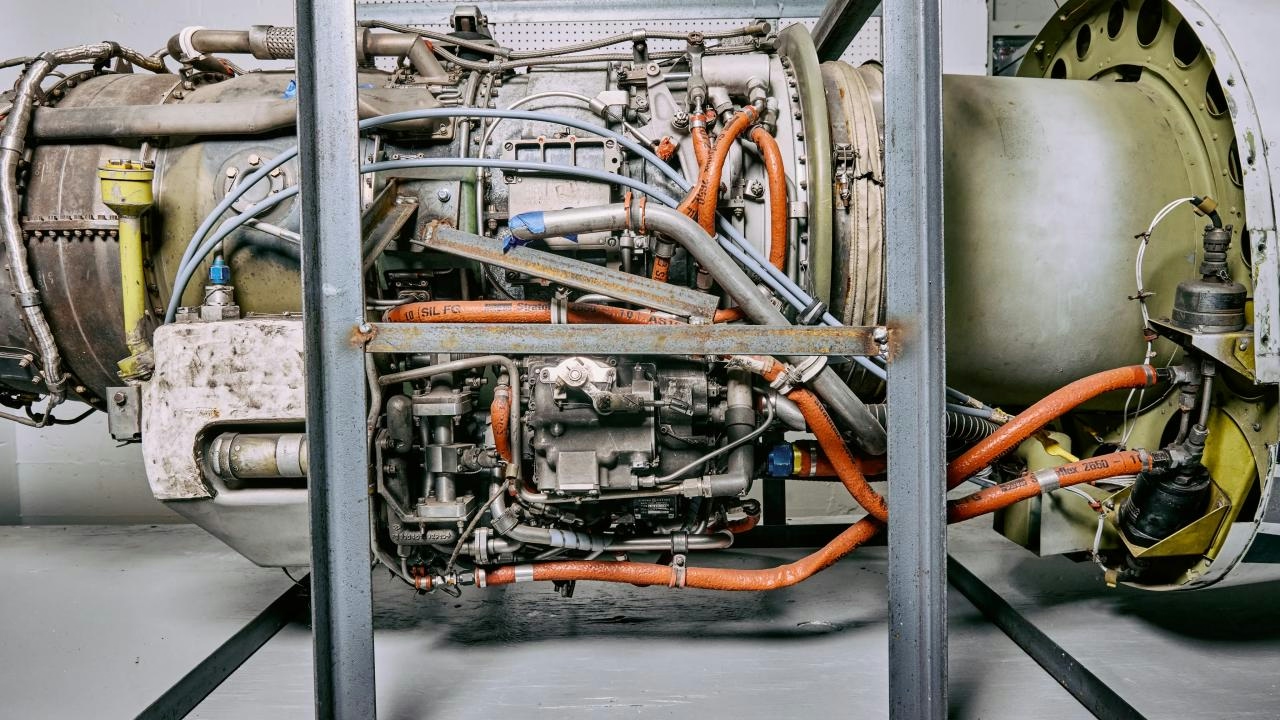
Aviation Maintenance, Repair, and Overhaul Sector Set for Growth
The aviation maintenance, repair, and overhaul (MRO) sector is positioned for steady expansion over the coming decade, driven primarily by sustained demand amid challenges faced by aerospace manufacturers in meeting new aircraft production targets. Airlines are increasingly compelled to extend the operational life of aging fleets, thereby intensifying the need for comprehensive MRO services. This dynamic presents both significant opportunities and complex challenges for industry stakeholders.
Aging Fleets and Market Demand
In North America, the average age of commercial aircraft operated by major carriers such as United, Delta, and American Airlines stands at just under 16 years, according to data from Planespotters.net. Globally, the average fleet age is slightly over 13 years. Considering that typical airframes have a service life ranging from 25 to 35 years, there remains considerable operational longevity within the current fleet. This extended usage underpins a robust demand for maintenance and overhaul activities essential to ensuring continued airworthiness and safety.
Industry analysts report that the global MRO market generated approximately $114 billion in revenue in 2024, reflecting a 7% increase compared to its pre-pandemic peak in 2019. Forecasts indicate the sector will sustain an annual growth rate of 2.7% through 2035, potentially reaching $156 billion in revenue. Despite this positive outlook, the sector faces notable headwinds, including the impact of tariffs on demand for large, technologically advanced aircraft. Such trade barriers may elevate costs and disrupt supply chains, creating uneven effects across the industry. In response, companies are intensifying efforts to optimize supply chain operations, explore alternative markets, and integrate innovative technologies to maintain competitive advantage.
Technological Advancements and Operational Efficiency
To harness growth prospects, MRO providers are increasingly adopting Industry 4.0 technologies, utilizing connectivity, big data analytics, and artificial intelligence to improve operational efficiency and cost management. The integration of advanced precision cutting tools, sophisticated toolholders, and automated tool cribs has become critical for processing high-performance aircraft components. The aerospace sector’s stringent requirements for close-tolerance parts manufactured from challenging materials necessitate the highest standards of machining accuracy and reliability.
The selection of toolholding systems plays a pivotal role in achieving these standards. Traditional hydraulic and heat-based toolholders, while common, present limitations such as temperature sensitivity, potential leakage, and safety concerns for operators. Consequently, there is a growing shift toward mechanical-based toolholding systems that offer enhanced ease of use, safety, and precision. These systems employ press-fit technology, enabling tool changes in under ten seconds and providing superior vibration damping and reduced runout. Such characteristics are particularly advantageous for aerospace applications involving significant tool and part overhangs, resulting in improved surface finishes on difficult-to-machine materials.
Regulatory Compliance and Industry Standards
Regulatory compliance and safety considerations remain central to the sector’s ongoing development. Recent regulatory approvals, including the Federal Aviation Administration’s authorization of Chromalloy’s CFM56 turbine blade, highlight the industry’s commitment to meeting rigorous safety standards. These regulatory milestones are expected to influence market dynamics and competitive positioning, as companies strive to align innovation efforts with evolving compliance requirements.
As the MRO sector advances, its capacity to adapt through technological innovation, supply chain refinement, and adherence to regulatory frameworks will be critical to sustaining growth within an increasingly complex and evolving aviation environment.

Etihad Airways Suspends Airbus A380 Flights on Key Route

Aditya Birla Group Seeks Approval for Aircraft Leasing in GIFT City

Qatar Airways Highlights Innovation and Connectivity at Arabian Travel Market 2026

Hong Kong's Five-Year Plan Includes Andrew Fan's Aircraft Parts Processing Hub Proposal

ACIA Aero Leasing Delivers ATR72-600 to Air Nostrum

RTX Appoints Jill Albertelli as Head of Pratt & Whitney

TAT Technologies Joins Beyond Aero Hydrogen Aircraft Program

AURAK Study Highlights Barriers to Air Taxi Adoption in Emerging Economies

Xiamen Air Selects Altitude for 787 Maintenance at Heathrow

Etihad and Swissport Extend Global Partnership
