
حوّل رؤى الذكاء الاصطناعي إلى أفعال منسّقة

الرائج الآن
Categories
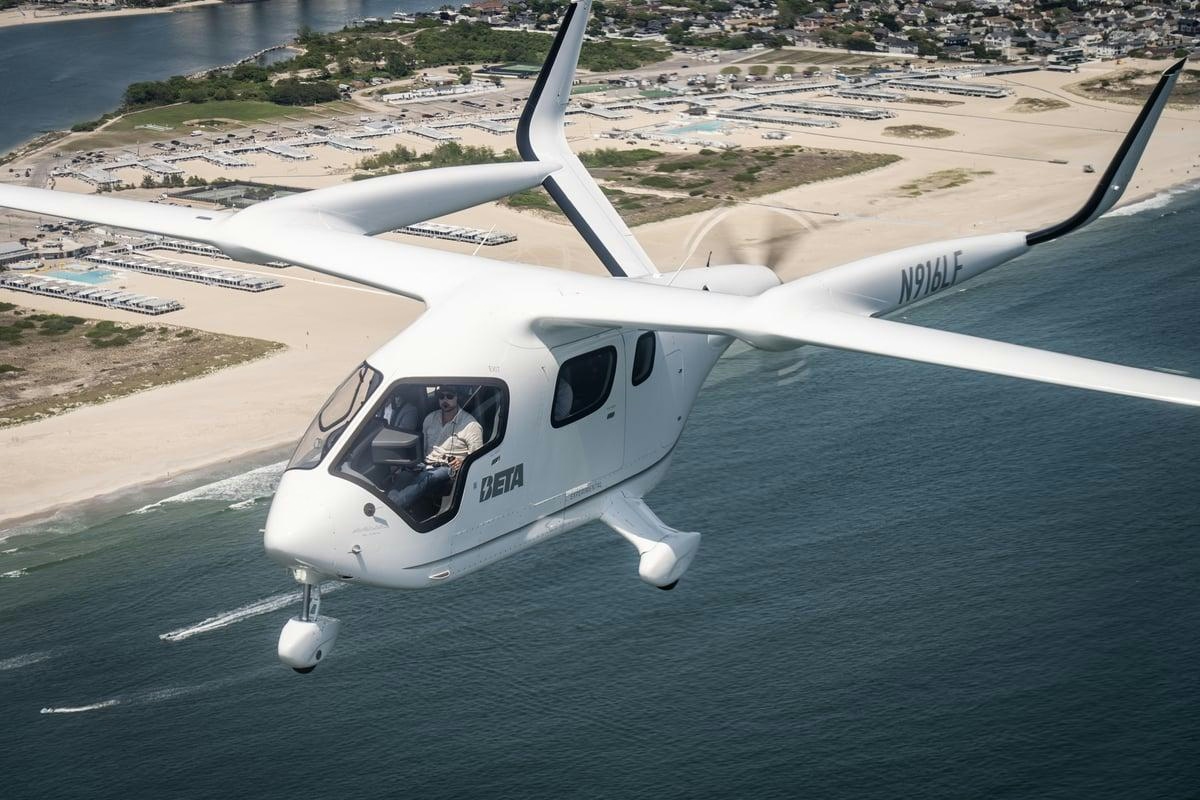
BETA and Surf Air Mobility Launch Electric Aircraft Trials in Hawaiʻi
BETA and Surf Air Mobility Launch Electric Aircraft Trials in Hawaiʻi
BETA Technologies and Surf Air Mobility have initiated a six to eight-week demonstration program in Hawaiʻi to evaluate the viability of electric aircraft for regional passenger and cargo services. Supported by Hawaiian Airlines, the initiative features BETA’s ALIA CTOL (conventional take-off and landing) electric aircraft conducting demonstration flights across the islands. The program aims to assess the operational, economic, and infrastructure requirements necessary for future commercial deployment.
Collaborative Efforts and Operational Focus
The trial leverages BETA’s advanced aircraft technology in conjunction with Surf Air Mobility’s expertise in regional airline operations. Utilizing Mokulele Airlines’ existing airport infrastructure and the SurfOS software platform, the program benefits from an integrated approach to electric aviation. Hawaiian Airlines contributes operational insights on inter-island passenger and cargo routes, participates in feasibility studies, and engages with local stakeholders and communities to ensure comprehensive evaluation.
Throughout the campaign, the partners will gather extensive data on aircraft performance amid Hawaiʻi’s diverse weather conditions and route network. Key metrics under review include direct operating costs, battery efficiency, energy consumption, maintenance demands, and servicing requirements. The trials will also examine critical factors such as crew training, ground handling procedures, safety protocols, and the development of charging infrastructure—elements essential for scaling electric aircraft operations on a commercial level.
Strategic Importance and Industry Context
Hawaiʻi’s short inter-island routes and robust demand for regional air travel present an ideal environment for testing electric aviation technologies. BETA aims to demonstrate the economic and operational potential of the ALIA aircraft while generating valuable insights to support future high-frequency, low-emission passenger and cargo services.
Despite the promising outlook, the trials face challenges including regulatory approval, market acceptance, and competition from other electric aviation companies. Industry observers anticipate increased interest from sectors such as cargo and medical transport, which stand to benefit from the operational efficiencies and reduced emissions offered by electric aircraft. In contrast to companies like Eve Air Mobility, which focus on urban air mobility solutions, BETA emphasizes CTOL variants tailored for cargo and medical transport applications.
Following expected FAA certification, Surf Air Mobility plans to integrate BETA aircraft into its Hawaiʻi operations. The company is also preparing to establish a factory-authorized maintenance, repair, and overhaul (MRO) facility within the state. This facility will support long-term electric aircraft operations and contribute to building the technical infrastructure necessary for commercial-scale electric aviation.
As the demonstration program progresses, its findings are poised to influence the future of regional air travel in Hawaiʻi and inform broader adoption of electric aviation technologies worldwide.

Etihad and Swissport Extend Global Partnership

Sepehran Airlines B737 Returns to Mashhad After Tyre and Engine Issues

Etihad Deploys Widebody Fleet to Meet Strong Demand

Korean Air Finalizes $36.2 Billion Deal with Boeing

Australia’s RFDS Queensland Section Orders Six King Air 260Cs

Korean Air Finalizes Order for 103 Boeing Jets and Engines

Embraer E195-E2 Features Distinctive Engine Placement Among Regional Jets

What Passengers Can Expect on Boeing’s New 777X Jet

How Ethiopian Airlines Became Africa’s Leading Carrier Amid Gulf Competition

Joby Aviation Extends Autonomous Flight Capabilities with Cross-Country Tour
