
حوّل رؤى الذكاء الاصطناعي إلى أفعال منسّقة

الرائج الآن
Categories
BOC Aviation Predicts Aircraft Supply Shortage Until End of Decade
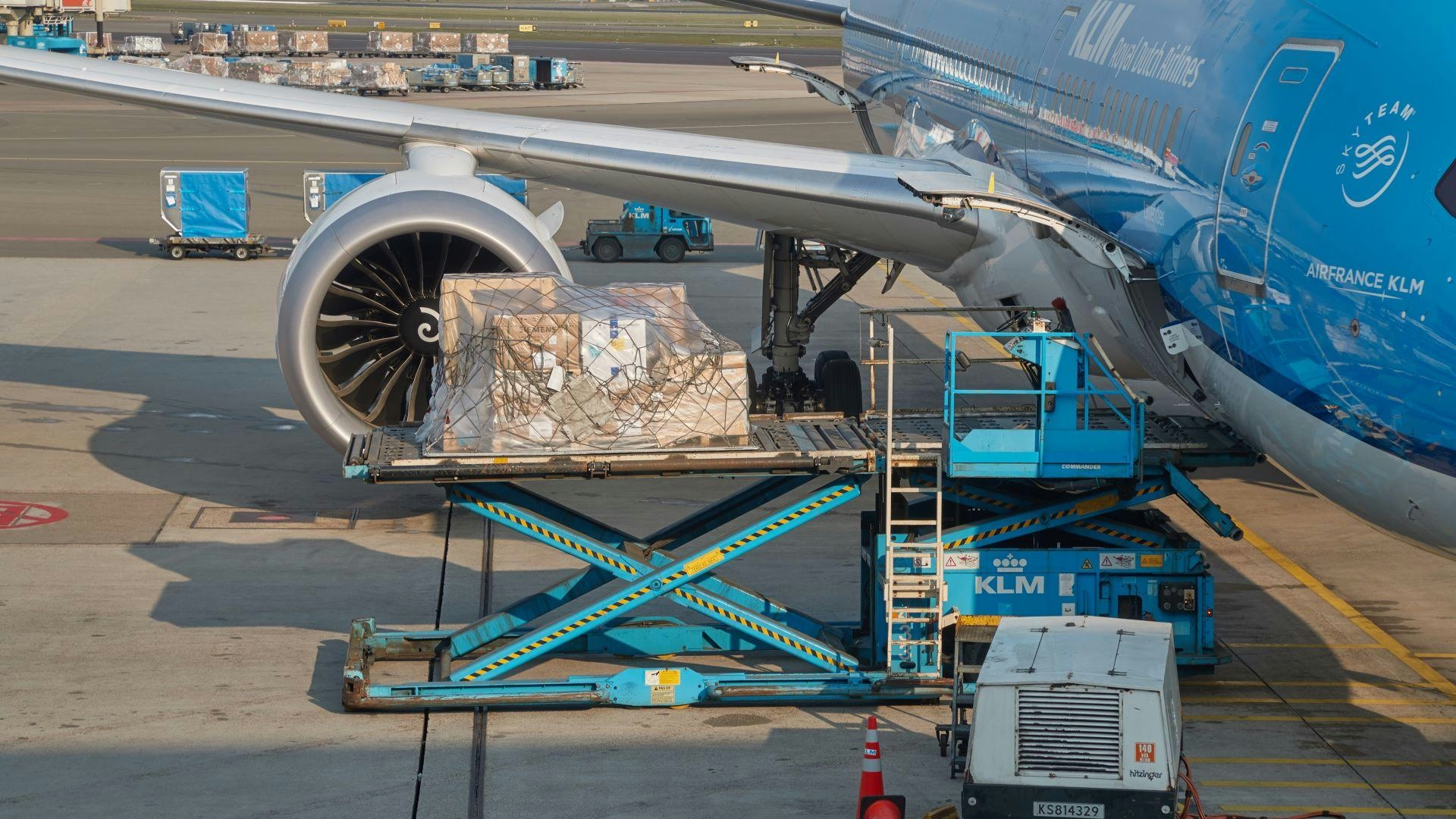
BOC Aviation Predicts Aircraft Supply Shortage Until End of Decade
Persistent Supply-Demand Imbalance in Aviation
BOC Aviation Ltd. has warned that the global aviation industry will continue to face a significant shortage of aircraft until at least 2030. Steven Townend, the company’s Chief Executive Officer, highlighted in a recent Bloomberg TV interview that the shortage stems largely from years of delayed deliveries. While production of narrowbody aircraft is expected to stabilize by the end of the decade as Airbus SE and Boeing Co. increase output, widebody aircraft deliveries remain substantially below 2018 levels, with no immediate recovery anticipated.
This prolonged supply crunch coincides with a series of broader economic challenges affecting the aviation sector. Airlines are contending with a difficult labor market, property crises, declining exports, and sluggish economic growth in key regions. These pressures are exacerbated by rising jet fuel prices, partly driven by ongoing conflicts in the Middle East. The resulting cost increases have compelled major carriers such as IAG SA, owner of British Airways, and Lufthansa to abandon their growth plans for the year. Similarly, Air France-KLM has reduced its capacity outlook for 2026, while Cathay Pacific Airways Ltd. remains committed to a 10% growth target.
Regional Variations and Strategic Responses
The ability of airlines to pass on higher operating costs to consumers varies significantly across regions. North American carriers have successfully raised fares without dampening demand, and European airlines have benefited from effective fuel hedging strategies. In contrast, the pricing environment in Asia is more challenging, particularly in China, where high-speed rail offers a competitive alternative to air travel. Townend emphasized that Southeast Asian airlines are experiencing especially acute difficulties under these conditions.
In response to these pressures, airlines are increasingly relying on lessors to provide liquidity and operational flexibility. This trend includes financing a larger share of new aircraft deliveries, engaging in sale-leaseback transactions for unencumbered planes, and securing funding for pre-delivery payments. The ongoing shortage of aircraft is expected to drive up prices for new planes and increase demand for alternative leasing solutions.
Competitors within the leasing sector are adapting by modernizing their fleets to better navigate the constrained market. Magma Aviation, for example, has announced plans to retire older Boeing 737-800 models and operate a fleet of 55 modernized 737 MAX aircraft by 2030. This move reflects a broader industry trend toward greater efficiency and sustainability.
With persistent supply constraints, economic headwinds, and evolving market strategies, the global aviation industry faces a complex and challenging path as it seeks to balance growth ambitions with operational realities through the remainder of the decade.

Etihad Airways Suspends Airbus A380 Flights on Key Route

Aditya Birla Group Seeks Approval for Aircraft Leasing in GIFT City

Qatar Airways Highlights Innovation and Connectivity at Arabian Travel Market 2026

Hong Kong's Five-Year Plan Includes Andrew Fan's Aircraft Parts Processing Hub Proposal

ACIA Aero Leasing Delivers ATR72-600 to Air Nostrum

RTX Appoints Jill Albertelli as Head of Pratt & Whitney

TAT Technologies Joins Beyond Aero Hydrogen Aircraft Program

AURAK Study Highlights Barriers to Air Taxi Adoption in Emerging Economies

Xiamen Air Selects Altitude for 787 Maintenance at Heathrow

Etihad and Swissport Extend Global Partnership
