
حوّل رؤى الذكاء الاصطناعي إلى أفعال منسّقة

الرائج الآن
Categories
Boeing 737-800 Leasing Trends and Asset Values for Aviation Investors
Boeing 737-800 Leasing Trends and Asset Values for Aviation Investors
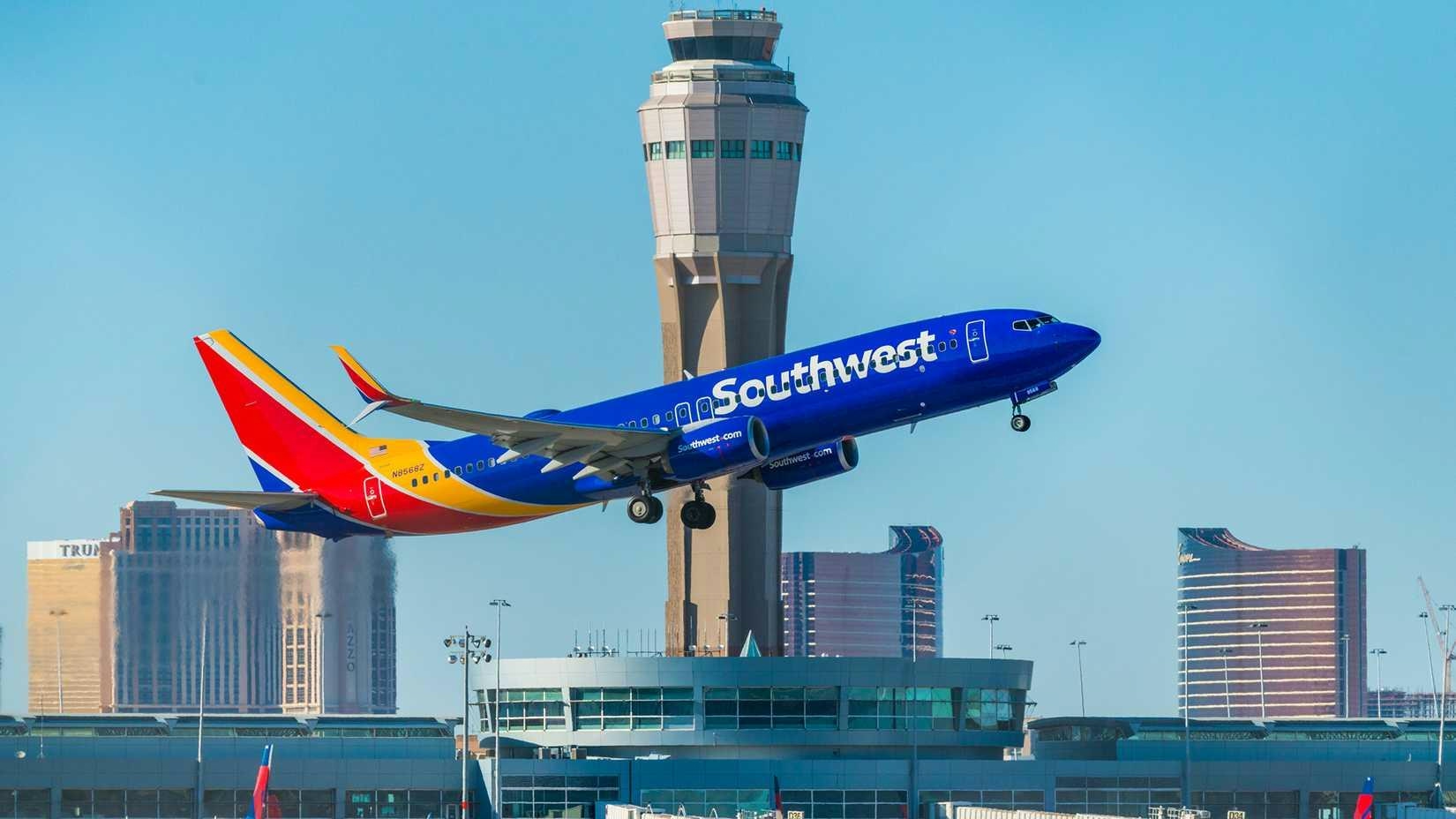
The Boeing 737-800 platform is experiencing a renewed phase of strategic significance as leasing activity, asset trading, and secondary market demand intensify among global carriers. For UK-based investors and aviation financiers, the 737-800 continues to demonstrate resilience as a mid-life narrowbody asset, effectively balancing operational efficiency with strong lease placement potential.
Evolving Leasing Strategies and Market Dynamics
Recent transactions involving Boeing 737-800 aircraft reveal a deliberate shift in leasing strategies among global lessors. Supply chain disruptions have delayed new aircraft deliveries, prompting firms to focus increasingly on mid-life narrowbodies with proven operational records. Significant deals, including the acquisition of multiple 737-800 units for Eastar Jet and asset transfers to emerging operators, exemplify this trend. Leasing companies are prioritising liquidity and placement flexibility, ensuring these assets can be rapidly deployed across diverse markets. This approach aligns with insights from the International Air Transport Association, which highlight sustained demand for narrowbody aircraft within short-haul and regional networks.
The 737-800 has solidified its position as a cornerstone of the secondary aircraft market. Unlike newer models that face delivery bottlenecks and pricing volatility, the 737-800 benefits from a well-understood cost structure and an established maintenance ecosystem. For UK investors and aviation funds, this translates into predictable cash flows. Lease rates have stabilised following the fluctuations experienced during the pandemic, while demand from low-cost carriers and start-up airlines continues to absorb available inventory. The aircraft’s global compatibility—supported by widespread pilot familiarity and existing infrastructure—reduces onboarding friction for new operators.
Regional Growth and Geopolitical Challenges
The Asia-Pacific region remains a key growth engine for Boeing 737 deployments, with airlines in South Korea, Southeast Asia, and emerging markets expanding their fleets primarily through leasing rather than direct purchases. This capital discipline enables carriers to scale operations without significant upfront investment and to adapt swiftly to fluctuating passenger demand. However, ongoing geopolitical tensions, particularly between the United States and China, present challenges that affect delivery schedules and long-term order books in the region. Market responses to these uncertainties are evident in recent consolidation moves, such as the acquisition of Air Lease by SMBC Aviation Capital and its partners. This transaction positions SMBC as a competitive and well-capitalised leasing platform. Broader sector consolidation and strategic investments, including Vertical Aerospace’s funding for eVTOL development, further underscore a rapidly evolving competitive landscape.
Investor Positioning and Strategic Fleet Planning
From a financial perspective, the Boeing 737-800 offers a compelling balance between yield and risk. While newer aircraft models promise higher efficiency, they also entail higher capital costs and exposure to delivery uncertainties. Mid-life 737 assets provide stable returns with manageable maintenance forecasting. Nonetheless, investors must remain vigilant regarding residual value risks as environmental regulations tighten and airlines gradually transition to more fuel-efficient models. Portfolio diversification remains critical, with many lessors blending 737-800 holdings alongside newer generation aircraft to hedge against long-term depreciation.
Strategically, the Boeing 737-800 increasingly serves as a bridge aircraft amid delays affecting next-generation deliveries. Airlines are extending leases and acquiring additional mid-life units to maintain capacity, a practice particularly relevant for European carriers, including those operating from the UK. As travel demand stabilises and grows, maintaining fleet availability becomes a priority—even if it necessitates reliance on older but dependable aircraft. In this context, the 737-800 remains a vital asset for investors and operators navigating a complex and shifting aviation landscape.

Etihad Airways Suspends Airbus A380 Flights on Key Route

Aditya Birla Group Seeks Approval for Aircraft Leasing in GIFT City

Qatar Airways Highlights Innovation and Connectivity at Arabian Travel Market 2026

Hong Kong's Five-Year Plan Includes Andrew Fan's Aircraft Parts Processing Hub Proposal

ACIA Aero Leasing Delivers ATR72-600 to Air Nostrum

RTX Appoints Jill Albertelli as Head of Pratt & Whitney

TAT Technologies Joins Beyond Aero Hydrogen Aircraft Program

AURAK Study Highlights Barriers to Air Taxi Adoption in Emerging Economies

Xiamen Air Selects Altitude for 787 Maintenance at Heathrow

Etihad and Swissport Extend Global Partnership
