
حوّل رؤى الذكاء الاصطناعي إلى أفعال منسّقة

الرائج الآن
Categories
Boeing 787-9 Flight Required Fuel Stop After 30-Minute Detour
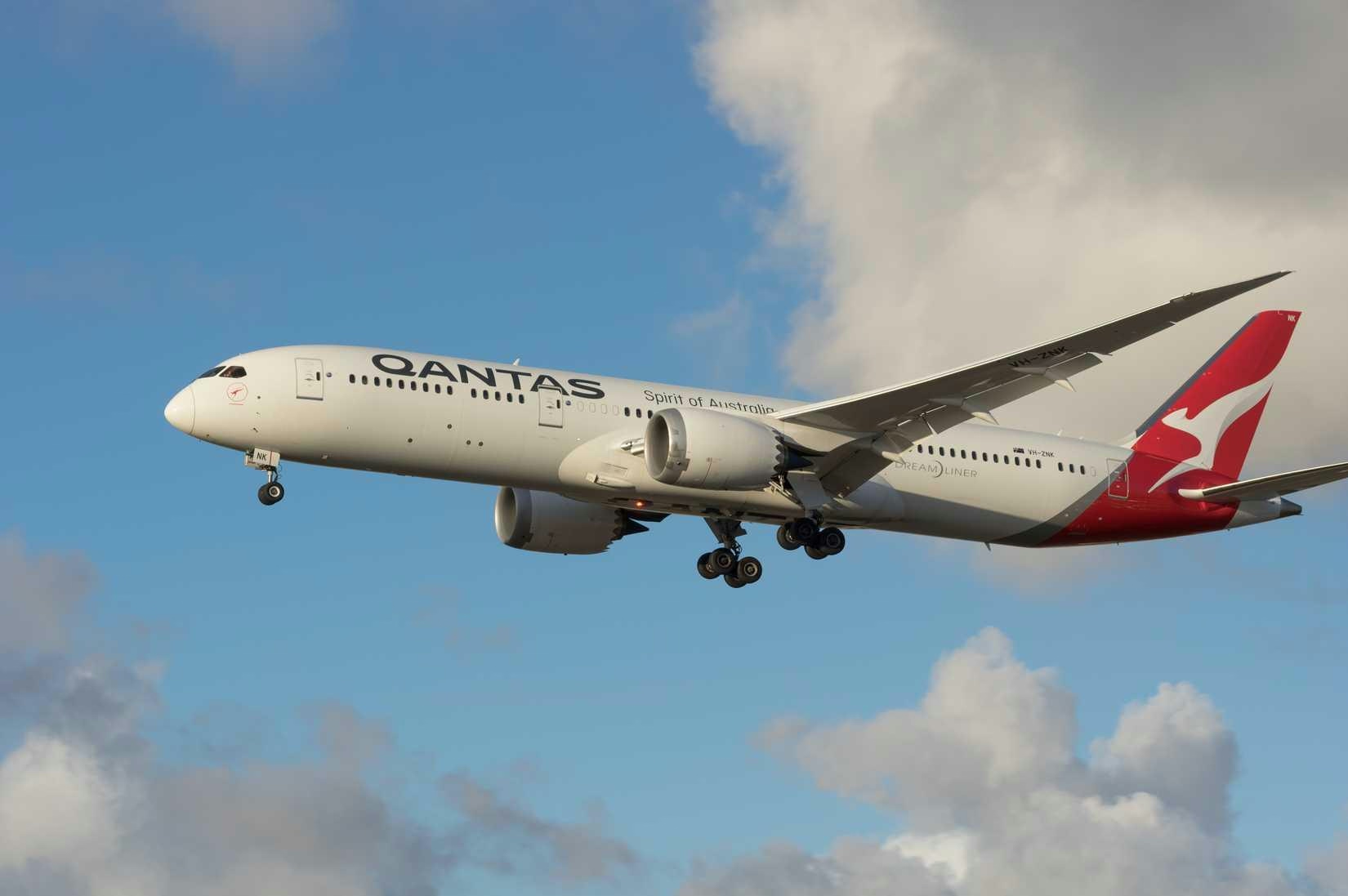
Boeing 787-9 Flight on Perth–London Route Requires Fuel Stop After Detour
The Boeing 787-9 Dreamliner, widely celebrated for its ultra-long-haul capabilities, encountered operational challenges on Qantas’ flagship Perth–London route, highlighting the complexities of pushing commercial aviation to its limits. The route, spanning 9,009 miles (14,499 km) with a scheduled block time of 17 hours and 45 minutes, was designed to operate nonstop at the edge of the aircraft’s maximum advertised range. However, a 30- to 45-minute detour necessitated by geopolitical restrictions over Middle Eastern airspace forced Qantas to introduce a mandatory refueling stop in Singapore, disrupting the nonstop service.
Operational Constraints and Fuel Limitations
The 787-9’s maximum fuel capacity stands at 33,380 gallons (126,370 liters), theoretically sufficient for such extensive flights. Under standard conditions of 59°F (15°C), this volume corresponds to approximately 112 US tons (101.6 metric tons) of jet fuel. However, elevated temperatures common in Australia cause jet fuel to expand and reduce in density. At 86°F (30°C), the same tank volume holds only about 110.3 US tons (100.1 metric tons), representing a loss of nearly two tons of fuel mass. This reduction, though seemingly minor, significantly impacts flight planning for maximum-range missions, as the aircraft cannot carry additional fuel mass beyond its tank volume.
Given the fixed empty weight of the airframe, airlines must adjust passenger payload to maintain safety margins and statutory fuel reserves. This often results in limiting ticket sales to compensate for the reduced fuel density. When unforeseen factors such as detours increase fuel consumption, the nonstop segment becomes operationally unfeasible, as demonstrated by Qantas’ decision to add a refueling stop.
Broader Context and Industry Implications
The challenges faced by the 787-9 on this route come amid wider scrutiny of the aircraft’s reliability. Recent technical issues, including United Airlines’ grounding of several Dreamliners due to recurring Traffic Alert and Collision Avoidance System (TCAS) malfunctions, have raised concerns within the industry. These setbacks have the potential to affect Boeing’s market reputation and sales, even as some operators, such as Riyadh Air, continue to expand their 787-9 fleets, signaling confidence in the aircraft despite isolated problems.
Additionally, the dominance of General Electric engines over Rolls-Royce in powering the 787 fleet is influencing Boeing’s supply chain and partnership dynamics, adding complexity to the aircraft’s operational environment.
The suspension of Qantas’ nonstop Perth–London service underscores the delicate balance required in ultra-long-haul aviation. While the 787-9 remains a significant technological achievement, its real-world performance is subject to a range of unpredictable factors including weather conditions, geopolitical developments, and technical reliability, illustrating the inherent limitations even in the most advanced commercial aircraft.

Etihad Airways Suspends Airbus A380 Flights on Key Route

Aditya Birla Group Seeks Approval for Aircraft Leasing in GIFT City

Qatar Airways Highlights Innovation and Connectivity at Arabian Travel Market 2026

Hong Kong's Five-Year Plan Includes Andrew Fan's Aircraft Parts Processing Hub Proposal

ACIA Aero Leasing Delivers ATR72-600 to Air Nostrum

RTX Appoints Jill Albertelli as Head of Pratt & Whitney

TAT Technologies Joins Beyond Aero Hydrogen Aircraft Program

AURAK Study Highlights Barriers to Air Taxi Adoption in Emerging Economies

Xiamen Air Selects Altitude for 787 Maintenance at Heathrow

Etihad and Swissport Extend Global Partnership
