صورة

أيروجيني — مساعدك الذكي للطيران.

اسأل عن أي شيء. قم بتحليل كل شيء. تصرف فورًا.

الرائج الآن

Categories

Boeing and SEKISUI Collaborate on New Aircraft Galley Design
April 15, 2026By ePlane AI
Boeing and SEKISUI Collaborate on New Aircraft Galley Design
0
0
Boeing
Aircraft Cabin Interiors
Galley Design

Boeing and SEKISUI Introduce Innovative Social Galley Concept for Wide-Body Aircraft

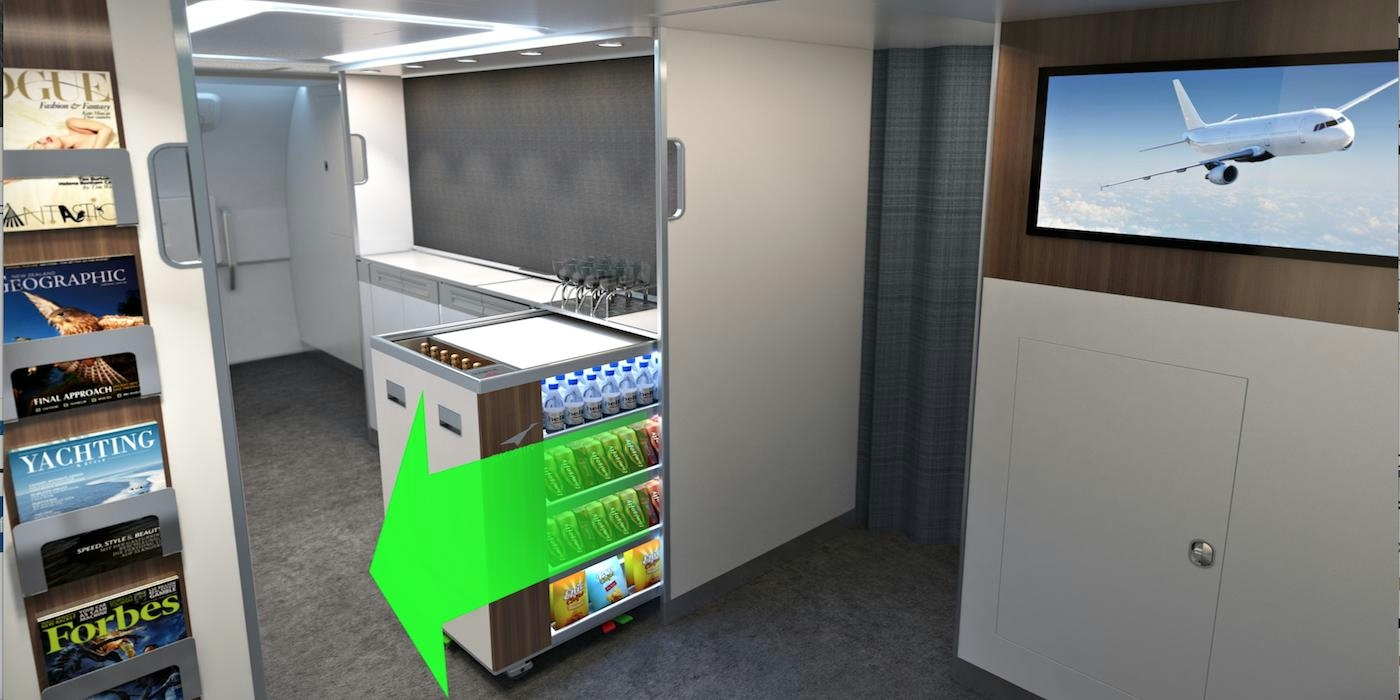
At the forthcoming 2026 Aircraft Interiors Expo (AIX) in Hamburg, Germany, SEKISUI KYDEX will unveil a pioneering wide-body aircraft interior concept developed in collaboration with Boeing subsidiary EnCore. Named the Parlor, this concept redefines the traditional aircraft galley by transforming it into a premium, customer-facing social space designed to enhance the passenger experience. By integrating advanced materials, industrial design, and manufacturing expertise, the Parlor aims to create a welcoming environment that blends functionality with a residential-inspired aesthetic.

A New Destination Within the Cabin

The Parlor is conceived as a destination within the aircraft cabin, offering premium-class passengers the opportunity to serve themselves beverages and snacks in an open and inviting setting. The installation, which will be displayed at SEKISUI KYDEX’s stand 5D40, showcases the potential of high-performance thermoplastics in customer-facing applications. Materials such as KYDEX® Thermoplastics, Infused Imaging™ technology, KYDEX® 7115 Lumina™, and Kleerdex™ custom translucents are employed throughout the design to add depth, visual interest, and brand expression. Integrated lighting elements further demonstrate how these materials interact with onboard illumination, providing airlines and designers with new possibilities for future cabin interiors.

EnCore’s contribution to the project included design direction and manufacturing expertise, ensuring that the Parlor meets the practical requirements of airlines and original equipment manufacturers (OEMs). Tom Eaton, Chief Designer for Cabin and Interiors at Boeing, emphasized the innovative approach to materiality and passenger experience, stating, “While the idea of a pantry is not new, the way we’re exploring how materiality shapes the passenger experience is. The Parlor is designed to evoke a more residential, hospitality-inspired aesthetic to create a destination within the aircraft where passengers feel genuinely welcomed and leave with a lasting impression.”

For SEKISUI KYDEX, the Parlor represents a significant shift from conceptual displays to fully realized interior elements that reflect actual manufacturing constraints and opportunities. Kellie Walter, Aviation Market Business Manager at SEKISUI KYDEX, noted, “We wanted to move beyond samples and renderings and show a built concept that designers, airlines, and OEMs could experience.” The project was completed on an accelerated timeline, illustrating the potential of collaborative problem-solving between partners.

Industry Context and Future Prospects

The launch of the Parlor concept occurs amid ongoing challenges within the aerospace industry. Geopolitical tensions, particularly between the United States and China, pose potential risks to Boeing’s delivery schedules and order book in the Asia-Pacific region, a critical market for wide-body aircraft. Although Boeing reported strong delivery performance in the first quarter of 2026, concerns remain regarding delayed profitability in its commercial airplane division. Meanwhile, Airbus, which experienced a year-over-year decline in first-quarter deliveries, may seek to leverage any difficulties faced by Boeing.

Despite these headwinds, Boeing and SEKISUI envision the Parlor as more than a static concept. They plan to maintain it as a dynamic platform for ongoing collaboration, with intentions to refresh materials, finishes, and aesthetics in future iterations. This approach aims to ensure the concept evolves in line with shifting passenger expectations, airline brand identities, and emerging design trends.

Attendees at AIX 2026 will have the opportunity to experience the Parlor firsthand and explore how collaborative design and material innovation are shaping the future of aircraft interiors.

More news
Honeywell Discusses Sustainable Aviation Fuel and Low-Carbon Energy

Honeywell Discusses Sustainable Aviation Fuel and Low-Carbon Energy

Honeywell Advances Sustainable Aviation Fuel and Low-Carbon Energy Solutions Honeywell is reinforcing its leadership in sustainable aviation fuel (SAF) and low-carbon energy by harnessing advanced technologies and digital platforms to tackle pressing global sustainability challenges. The company’s initiatives span multiple sectors, including aerospace, industrial automation, building automation, and process technology, all supported by its Honeywell Accelerator operating system and Honeywell Forge platform. Pioneering Renewable Fuels and Scaling SAF Production In a recent discussion with ChemAnalyst, Barry Glickman, Vice President of Low Carbon Energy at Honeywell, outlined the company’s decade-long commitment to renewable fuels and its strategic approach to expanding SAF production. Honeywell first introduced commercial SAF production in 2016 through its Ecofining™ process technology. Since then, the company has broadened its portfolio to address both immediate and long-term objectives for reducing aviation emissions. Glickman identified two primary industry challenges: the high cost of SAF and the limited availability of feedstocks. He explained that Honeywell is addressing these issues by enhancing process efficiency, enabling modular deployment, and diversifying feedstock sources to include materials such as used cooking oil and captured carbon dioxide. These innovations aim to provide scalable solutions that meet the demands of global markets. Innovations and Market Challenges Among Honeywell’s recent technological advancements is the eFining™ process, which facilitates the production of electro-sustainable aviation fuel (eSAF) from methanol derived from captured CO₂ and renewable hydrogen. This development holds particular significance for regions like the European Union, where regulatory frameworks such as ReFuelEU are driving increased demand for SAF produced from varied and abundant feedstocks. Despite growing demand, the SAF market faces significant challenges. The scarcity of key feedstocks like used cooking oil has led to rising prices, raising concerns about the cost competitiveness of cleaner fuels. Additionally, the potential for fraud within SAF supply chains is an emerging issue as market pressures intensify. Honeywell also contends with heightened competition from other aerospace and energy companies investing heavily in low-carbon technologies, which accelerates innovation but also intensifies the race to deliver reliable and affordable solutions. Navigating Regulatory and Market Dynamics Regulatory pressures and evolving market mandates present both opportunities and challenges for Honeywell. While government policies aimed at reducing carbon emissions are expected to stimulate demand for low-carbon technologies, they also compel companies to rapidly adapt to new compliance standards and reporting requirements. Glickman emphasized the critical role of strategic collaborations, strong policy frameworks, and the integration of carbon capture technologies in accelerating global SAF adoption. Looking forward, Honeywell plans to expand its portfolio of innovative fuel technologies, explore a wider array of feedstock pathways, and improve process efficiencies to support the aviation sector’s transition toward sustainability. By combining technological innovation, strategic partnerships, and digital capabilities, Honeywell continues to establish itself as a pivotal player in the evolving low-carbon fuels ecosystem, while adeptly managing the complex challenges of supply constraints, cost pressures, competitive dynamics, and regulatory demands.
2026 Crystal Cabin Awards Winners Announced

2026 Crystal Cabin Awards Winners Announced

2026 Crystal Cabin Awards Winners Announced The aviation industry convened in Hamburg to celebrate the 2026 Crystal Cabin Awards, recognizing the most significant advancements in aircraft cabin design. This year’s winners, chosen across eight categories, underscore a heightened focus on efficiency, accessibility, and the evolving demands of contemporary travelers. Amid increasing pressure on airlines to provide more sustainable, connected, and personalized experiences, the awards highlight how innovation is transforming the passenger journey and establishing new standards within the sector. Innovations in Accessibility and Cabin Concepts Diehl Aviation received the Accessibility award for its Adaptive User Routing System (AURS), an inclusive cabin concept designed to make aircraft lavatories accessible to blind and deaf passengers. By integrating an accessible layout with a digital interface tailored to individual needs—including visual safety announcements and tactile wayfinding aids—AURS sets a new benchmark for universal design. The jury lauded the system as “a highly innovative and practical approach to aircraft lavatory accessibility,” emphasizing its adaptability and intuitive user experience that preserves passenger dignity. In the Cabin Concepts category, All Nippon Airways and Acumen Design Associates were honored for THE Room FX, a premium seating innovation that merges two seats into a single compact unit. This design reduces both weight and spatial requirements by maintaining a fixed seatback while allowing only the legrest to move, thereby creating a continuous lie-flat surface. The jury praised the concept for “delivering a spacious passenger experience within a highly constrained footprint,” optimizing comfort and functionality without compromising airline operational needs, even on smaller aircraft. Enhancing Passenger Comfort and Safety Technologies Collins Aerospace’s SkyNook won the Passenger Comfort award for its creative use of previously underutilized space in the aft section of widebody aircraft. SkyNook offers semi-private retreat zones that provide privacy and rest for families, passengers with special needs, and travelers accompanied by pets or bulky luggage. The jury recognized the innovation for “turning underutilized economy-class zones into flexible, value-generating areas,” thereby enhancing passenger comfort while also presenting new revenue opportunities for airlines. In the Cabin Technologies category, AviusULD and Eloc8 were awarded for the AviusULD SmartULD Fire Tag, a device designed to address the increasing safety risks associated with lithium-ion batteries. The Fire Tag detects early thermal runaway conditions up to two hours before a fire can occur and is suitable for use in both overhead bins and cargo hold containers. The jury commended the device’s “elegant approach to a highly relevant safety issue,” highlighting its potential to significantly improve safety in both passenger and cargo operations. A Pivotal Moment for Cabin Innovation The 2026 Crystal Cabin Awards arrive at a critical juncture for the aviation industry, as airlines and suppliers strive to keep pace with rapidly advancing materials, technologies, and passenger expectations. The winning innovations not only demonstrate progress in accessibility and comfort but also emphasize the growing importance of sustainability, inflight entertainment, and connectivity. These areas are increasingly central to the future of air travel, and as market responses develop, the focus on passenger wellbeing and innovative design is poised to shape the next generation of aircraft cabin experiences.
US Special Operations Command Awards $50 Million AI Aviation Contract to Beacon AI

US Special Operations Command Awards $50 Million AI Aviation Contract to Beacon AI

US Special Operations Command Awards $50 Million AI Aviation Contract to Beacon AI Enhancing Military Aviation with Artificial Intelligence The U.S. Special Operations Command (SOCOM) has awarded a $50 million contract to Beacon AI to integrate advanced artificial intelligence tools into military aviation systems. This four-year agreement aims to improve pilot decision-making and safety by leveraging AI to analyze real-time aircraft data, including weather conditions, flight routes, and pilot inputs. The technology is designed to support faster, more informed decisions while reducing pilot workload during high-stress and complex flight operations. Beacon AI is developing this technology in close collaboration with special operations aviators who regularly operate in challenging and unpredictable environments. The initial focus will be on long-haul aircraft such as tankers and cargo planes. The contract also includes provisions for accelerated production should the technology demonstrate strong operational performance. Challenges and Industry Context Integrating AI into existing military aviation platforms presents significant technical challenges, particularly in ensuring compatibility and reliability under mission-critical conditions. The contract comes amid heightened competition within the defense technology sector, where companies like Shield AI and Anduril are actively pursuing AI-driven aviation solutions. SOCOM’s decision to award Beacon AI this contract is expected to intensify efforts among competitors to secure similar opportunities and accelerate their technological advancements. Market reactions have been mixed, with some scrutiny over the contract’s value and questions regarding the readiness of Beacon AI’s technology for immediate operational deployment. Defense analysts and industry stakeholders will closely monitor the system’s effectiveness and its integration into military workflows as the project advances. Civilian-Military Collaboration Beacon AI’s backing by JetBlue Technology Ventures, the venture capital arm of JetBlue Airways, underscores the growing convergence between commercial aviation innovation and military applications of artificial intelligence. This partnership highlights the expanding role of civilian technology firms in supporting defense modernization efforts. This story remains under development and will be updated as further details emerge.
Boeing Surpasses Airbus in Deliveries for First Time Since MAX Crisis

Boeing Surpasses Airbus in Deliveries for First Time Since MAX Crisis

Boeing Surpasses Airbus in Deliveries for First Time Since MAX Crisis Boeing has reached a notable milestone by surpassing Airbus in quarterly commercial aircraft deliveries for the first time since the 737 MAX crisis began in 2018. In the first quarter of 2026, the American manufacturer delivered 143 aircraft, outstripping Airbus’s 114 deliveries. This achievement represents Boeing’s highest first-quarter delivery volume since 2019 and reflects a 10% year-over-year increase, in stark contrast to Airbus’s 16% decline over the same period. Recovery Driven by 737 MAX Amidst Airbus Supply Challenges Boeing’s delivery lead is largely attributable to the robust performance of its 737 MAX program, which accounted for 114 of the total deliveries—nearly 80% of Boeing’s output in the quarter. This marks the company’s strongest first quarter for narrowbody aircraft since 2018, signaling a significant recovery of its core program following years of setbacks, including the 2024 Alaska Airlines door plug incident and subsequent Federal Aviation Administration (FAA) production restrictions. Despite a late-quarter disruption caused by wiring repairs on approximately 25 undelivered 737 MAX jets, which deferred around ten deliveries into the second quarter, Boeing maintained its delivery momentum, according to Chief Financial Officer Jay Malave. Conversely, Airbus faced considerable challenges, particularly with its A320neo family. The European manufacturer’s narrowbody deliveries declined sharply, with 25 fewer aircraft delivered compared to the previous year. Persistent supply-chain disruptions, especially delays in Pratt & Whitney (P&W) geared turbofan (GTF) engine deliveries, have hindered Airbus’s production ramp-up. The company has publicly acknowledged “very, very late” engine arrivals, which have led to production slowdowns and strained relations with suppliers. Reuters reports that the scarcity of GTF engines remains the core issue limiting Airbus’s ability to meet its delivery targets. Geopolitical and Market Pressures Shape Competitive Landscape Beyond supply-chain difficulties, the competitive environment is further complicated by ongoing geopolitical tensions, notably between the United States and China. These frictions pose risks to Boeing’s delivery schedules and order book in the Asia-Pacific region, a critical market for both manufacturers. Additionally, shifts in market dynamics are emerging. Atlas Air Worldwide Holdings Inc., a significant operator of Boeing 747 freighters, recently placed its first order for Airbus freighters, signaling potential shifts in customer loyalty that could challenge Boeing’s dominance in the cargo sector. While Boeing’s quarterly delivery lead marks a significant recovery, it may prove temporary as Airbus continues efforts to resolve its engine supply constraints. The first quarter of 2026 underscores both Boeing’s resurgence in narrowbody deliveries and the fragility of global supply chains. As both companies navigate operational challenges and geopolitical headwinds, the competition for market leadership remains intensely contested.
magniX Unveils Electric Engine for General Aviation

magniX Unveils Electric Engine for General Aviation

magniX Unveils Electric Engine for General Aviation Introduction of the magniAIR Electric Engine In April 2026, magniX, a prominent innovator in electric aviation technology, announced the launch of its latest product, the magniAIR electric engine, designed specifically for the general aviation sector. The company is currently exhibiting the magniAIR integrated into a Van’s Aircraft RV-10 kit plane at the SUN ‘n FUN Aerospace Expo in Lakeland, Florida. The RV-10, equipped with the new electric powertrain, is slated for its maiden flight later this year, with commercial availability of the magniAIR engine expected in 2027. The magniAIR engine boasts a class-leading power-to-weight ratio, delivering 175 kW while weighing only 55 kilograms. It is engineered for seamless integration into a variety of aircraft categories, including experimental, light sport, and electric flight training planes. magniX’s comprehensive powertrain solution combines electric motors, advanced power electronics, and the Samson battery system, aiming to significantly reduce operational expenses and maintenance demands compared to conventional piston engines. Expanding Access to Electric Flight magniX is targeting kit plane builders, aviation enthusiasts, and flight training institutions with the magniAIR engine. The company anticipates that the Federal Aviation Administration’s forthcoming Modernization of Special Airworthiness Certification (MOSAIC) regulations, effective from July, will broaden the definition of light sport aircraft (LSA). This regulatory shift is expected to create new opportunities for electric propulsion within general aviation, particularly benefiting flight training operators who are grappling with rising fuel and maintenance costs amid a persistent pilot shortage. Reed Macdonald, CEO of magniX, emphasized the versatility of the magniAIR engine, stating that it can replace any application currently powered by a 120-175 kW piston engine. He highlighted the simplicity and cost-effectiveness of integrating magniX’s full powertrain, which is designed to bring electric flight within reach of kit plane builders and aviation enthusiasts. Ben Loxton, Vice President of New Product Development at magniX, further noted that escalating fuel prices and maintenance expenses are driving up the cost of flight training, while the industry simultaneously faces a critical shortage of pilots. He suggested that magniAIR could help alleviate these challenges by reducing the overall cost of flight training and other small aircraft operations. Navigating Regulatory and Competitive Challenges Despite the promising outlook for electric propulsion in general aviation, magniX faces potential hurdles as new FAA airworthiness regulations come into effect. Regulatory scrutiny across the sector is intensifying, exemplified by the ongoing investigation by the US International Trade Commission into Joby Aviation for alleged import violations. This heightened oversight may influence the pace of innovation and the market introduction of new electric aviation technologies. The competitive environment is also becoming more dynamic, with companies such as ZeroAvia and Collins Aerospace accelerating the development of their own electric and hybrid-electric propulsion systems. As the industry adapts to regulatory changes and increasing demand for cost-efficient, sustainable flight training solutions, magniX’s magniAIR engine is positioned to play a pivotal role in shaping the future landscape of general aviation.
Coltala Aerospace Appoints New President to Lead North Texas Expansion

Coltala Aerospace Appoints New President to Lead North Texas Expansion

Coltala Aerospace Appoints New President to Lead North Texas Expansion Coltala Aerospace, a Texas-based aviation maintenance, repair, and overhaul (MRO) group supported by Fort Worth’s Coltala Holdings, has named industry veteran Phil Bathurst as its new president. With over three decades of aerospace experience, Bathurst will spearhead the company’s efforts to broaden its mission-critical services for both commercial and defense aviation across North Texas. Strategic Leadership Amid Industry Growth Bathurst emphasized the significance of the current growth phase in the aviation aftermarket, noting that airlines are extending aircraft service life while systems grow increasingly complex. “The industry requires organizations capable of delivering reliable, high-quality maintenance and engineering capabilities,” he stated. Industry data from Grand View Research projects the global aircraft MRO market to expand from $90.85 billion in 2024 to $120.96 billion by 2030, underscoring the sector’s robust potential. Prior to joining Coltala Aerospace, Bathurst served as CEO of Aspire MRO, a Fort Worth-based company backed by Fortress Investment Group, where he managed rapid expansion from 30 to over 500 employees within three years. His career trajectory began with avionics installation on small aircraft and evolved to leading large technical teams and complex maintenance operations. Bathurst expressed his attraction to Coltala Aerospace’s commitment to operational excellence and its strong organizational culture. Expansion Plans and Competitive Landscape Ralph Manning, co-founder and co-CEO of Coltala Holdings, described Bathurst as an ideal leader for the company’s next growth phase, highlighting his ability to scale aerospace operations while preserving industry discipline and culture. Edward Crawford, co-founder of both Coltala Holdings and Coltala Aerospace, added that Bathurst’s comprehensive experience—from shop floor to boardroom—distinguished him as the right choice. Bathurst will work closely with leaders across Coltala Aerospace’s portfolio, including Nick McDonald of Evans Composites and Michael Campbell of AeroParts Machining and ACD Consulting, all based in the Dallas-Fort Worth area. The company aims to capitalize on the region’s status as an aerospace hub, supported by a highly skilled workforce and a network of specialized support shops. Crawford noted the strategic importance of Fort Worth, referencing Governor Greg Abbott’s designation of the city as the aviation and defense capital of Texas. Despite these opportunities, Coltala Aerospace faces intensifying competition within the MRO sector. Competitors such as Acrisure have recently expanded their aviation divisions, increasing pressure for market share in North Texas. While some investors remain optimistic about Coltala’s prospects for organic growth and acquisitions, others express caution regarding the competitive environment and the company’s ability to secure new contracts. Additionally, broader economic conditions and evolving aerospace regulatory requirements may pose further challenges. Looking forward, Coltala Aerospace intends to pursue acquisitions, particularly targeting founder-led companies seeking exit strategies or growth partnerships. Crawford described this approach as a “perfect fit” for the company’s expansion strategy. As Coltala navigates a complex market landscape, Bathurst’s leadership will be pivotal in driving the company’s growth ambitions in the dynamic North Texas aerospace sector.
Q1 Results: MAX Sales Rise as Airbus Growth Slows

Q1 Results: MAX Sales Rise as Airbus Growth Slows

Q1 Results: MAX Sales Rise as Airbus Growth Slows The first quarter of 2026 has revealed a notable shift in the competitive landscape between Boeing and Airbus, as Boeing reported its highest commercial aircraft deliveries in a first quarter since 2019. This growth was largely driven by strong sales of the 737 MAX series, despite a temporary suspension of MAX deliveries due to a wiring issue. Meanwhile, Airbus experienced a marked deceleration in its growth trajectory during the same period. Boeing’s Strong Start Amid Regulatory Constraints Boeing’s performance in early 2026 was buoyed primarily by the success of its MAX program. Deliveries of the MAX 8 model have already reached 22% of the total delivered in 2025, while the MAX 9 has achieved an impressive 61% of last year’s volume, bolstered by substantial orders from United Airlines. However, the company’s 787 program has not kept pace with this momentum, with deliveries lagging behind expectations. Despite this strong start, Boeing faces production limitations imposed by the Federal Aviation Administration (FAA). The company is approaching these regulatory caps, which could restrict its ability to maintain the current delivery rates as the year progresses. These constraints underscore the challenges Boeing must navigate to sustain its recent gains. Airbus Encounters Growth Challenges In contrast to Boeing’s robust performance, Airbus recorded its slowest first quarter since the onset of the pandemic, with deliveries declining year-over-year. The A220-300 was a relative bright spot, contributing 18 deliveries, approximately 20% of the total delivered in 2025. However, the A320 program appears to be losing momentum as customer demand shifts increasingly toward the larger A321 model. The A321 itself has struggled to match last year’s delivery pace, achieving only 14% of 2025’s volume so far. Additionally, Airbus’s widebody programs, including the A330 and A350, experienced sluggish delivery rates during the quarter. Unlike Boeing, Airbus is not constrained by regulatory production limits and is steadily progressing toward its goal of producing 75 aircraft per month. Nevertheless, the current delivery figures highlight the challenges Airbus faces in regaining its pre-pandemic growth trajectory. Orders and Market Dynamics Order activity remained strong for both manufacturers in the first quarter. Airbus secured significant orders for the A321, while Boeing’s new business peaked in January, marking its strongest month for orders this year. As the year advances, both companies will increasingly depend on fresh orders to sustain production levels, given that much of last year’s backlog is being fulfilled. Single-aisle aircraft continue to form the backbone of production for both Boeing and Airbus, with the typical transition from first flight to delivery taking approximately 30 days. This tight production cycle means that any bottlenecks can have immediate and widespread effects, emphasizing the critical importance of efficient manufacturing processes. Broader Industry Context The mixed performance in the aviation sector reflects broader trends across the global economy. For instance, Tesla’s first quarter sales increased by 6.3% but fell short of market expectations, while Rivian posted a 20% gain and reaffirmed its forecast for 2026. In the luxury goods sector, Gucci experienced an 8% decline in sales during the first quarter, with its parent company Kering reporting flat revenue growth of €3.57 billion. Outlook As Boeing and Airbus continue to recover from the disruptions caused by the pandemic, Boeing’s resurgence in MAX deliveries stands in contrast to Airbus’s slower start to the year. With ongoing regulatory and production challenges, the coming quarters will be pivotal in determining whether these trends endure or evolve as both manufacturers adjust to shifting market demands.
Air Canada Expands Long-Haul Network Amid Rising Fuel Costs and Geopolitical Tensions

Air Canada Expands Long-Haul Network Amid Rising Fuel Costs and Geopolitical Tensions

Air Canada Expands Long-Haul Network Amid Rising Fuel Costs and Geopolitical Tensions Air Canada is joining a cohort of major North American carriers—including Air Transat, Delta, United, American Airlines, and WestJet—in expanding its wide-body fleet on long-haul routes. This strategic move comes despite significant challenges facing the aviation industry, notably surging fuel prices and escalating geopolitical tensions. Industry Challenges and Strategic Responses The airline sector is contending with a 14% increase in fuel costs, largely driven by ongoing conflicts in the Middle East involving the United States, Israel, and Iran. These geopolitical tensions have caused operational disruptions such as flight cancellations and rerouted journeys, placing additional strain on airline budgets. In response, carriers are adjusting their route networks and pricing strategies to sustain profitability amid these pressures. Air Canada’s approach reflects a broader industry trend characterized by simultaneous expansion and contraction of route networks. While major airlines are aggressively adding transatlantic services to capitalize on strong leisure and premium demand between North America and Europe, they are also scaling back on less profitable routes. This is particularly evident in cross-border flights between the United States and Canada, where passenger demand has softened and operational costs have increased. This dual strategy is a calculated response to uneven demand and volatile market conditions. Airlines are reallocating aircraft to high-yield routes while withdrawing from markets that no longer meet profitability thresholds. The emphasis has shifted from pure growth to operational efficiency, with a particular focus on premium travel segments as carriers seek to maximize returns. Air Canada’s Focus on Long-Haul Markets In line with this strategy, Air Canada has chosen to avoid launching new routes to the United States amid ongoing transborder tensions and cost pressures. Instead, the airline is prioritizing expansion into long-haul markets where demand remains robust and yields are higher. This approach mirrors similar moves by international competitors such as Air France-KLM and Thai Airways, both of which have responded to rising fuel expenses by increasing long-haul ticket prices. For passengers, these adjustments translate into higher airfares and fewer options on certain routes, as airlines pass on increased costs and streamline their operations. The rapid adaptation within the industry underscores the scale of the current transformation: while some routes are being strengthened and new services introduced, others are being eliminated to enhance efficiency and profitability. As the global aviation sector navigates one of its most significant transformations in decades, the strategies adopted by Air Canada and its peers highlight the delicate balance between expansion and retrenchment. With fuel price inflation and geopolitical instability expected to persist, airlines are likely to continue refining their networks, focusing on resilience and sustainable growth in an increasingly unpredictable environment.
Government and Industry Efforts Advance Sustainable Aviation in US Air Travel

Government and Industry Efforts Advance Sustainable Aviation in US Air Travel

Government and Industry Efforts Advance Sustainable Aviation in US Air Travel As the aviation sector undergoes significant transformation, the United States is making concerted efforts to promote sustainable air travel through a combination of government initiatives and industry innovation. Central to this evolution is the rise of Advanced Air Mobility (AAM), particularly electric vertical take-off and landing (eVTOL) aircraft, which promise to revolutionize domestic travel by offering cleaner and more efficient alternatives to traditional aviation. Government Framework for Advanced Air Mobility The U.S. Department of Transportation (DOT) has identified AAM as a critical component of the future transportation landscape. Its Advanced Air Mobility National Strategy, unveiled in 2025, sets forth a comprehensive vision for integrating emerging aviation technologies such as eVTOLs and autonomous systems into the National Airspace System (NAS). This strategy underscores the importance of fostering public-private partnerships to drive innovation, investing in essential infrastructure including vertiports and charging stations, and establishing clear regulatory frameworks to safeguard both safety and environmental standards. The approach relies on close collaboration among federal agencies, local governments, and private sector stakeholders to develop a secure, efficient, and sustainable airspace capable of accommodating next-generation aircraft. FAA’s Role and Safety Oversight The Federal Aviation Administration (FAA) plays a central role in the safe incorporation of AAM technologies into the national airspace. Through initiatives like the eVTOL and AAM Integration Pilot Program (eIPP), the FAA collaborates with industry leaders to conduct rigorous testing of advanced aircraft, formulate operational procedures, and implement robust safety protocols. The agency is actively streamlining certification processes and engaging with manufacturers to expedite the deployment of these innovative technologies, all while upholding stringent safety and risk management standards essential to public confidence and operational integrity. Industry Challenges and Competitive Pressures Despite the promising outlook, the journey toward sustainable aviation is confronted by significant challenges. Regulatory scrutiny has intensified, exemplified by the recent investigation by the U.S. International Trade Commission into Joby Aviation over potential import violations. Additionally, legal disputes between major industry players such as Joby Aviation and Archer Aviation concerning trade secrets and business practices highlight the competitive tensions shaping the sector. These conflicts not only affect investor sentiment but also have the potential to influence the pace and trajectory of technological advancement within the industry. Operational and Market Realities The drive toward sustainable aviation is unfolding amid record-high passenger volumes and growing demand for air travel, which present considerable logistical challenges. These include the risk of flight delays and the complexities involved in scaling environmentally friendly practices across a heavily trafficked national airspace. Striking a balance between rapid technological innovation, operational reliability, and environmental objectives remains a formidable task for regulators and industry participants alike. Looking Ahead The combined efforts of government agencies and private companies are laying the groundwork for a transformative era in U.S. aviation—one that emphasizes safety, sustainability, and innovation. Nonetheless, ongoing regulatory, legal, and operational challenges will necessitate continued collaboration and adaptability as the industry advances toward a greener future.
Air India Chooses Panasonic Avionics for IFE Maintenance, Debuts Retrofitted Boeing 787-8

Air India Chooses Panasonic Avionics for IFE Maintenance, Debuts Retrofitted Boeing 787-8

Air India Partners with Panasonic Avionics for IFE Maintenance Tata Group-owned Air India has entered into a strategic agreement with Panasonic Technical Services (PTS) to maintain in-flight entertainment (IFE) systems across its fleet of 74 aircraft. The partnership involves Panasonic’s Total Care Package, which will support IFE systems on Boeing 787-9, Airbus A350-1000, Airbus A350-900, and Airbus A321neo aircraft. This comprehensive maintenance program covers both Astrova and X Series platforms, including linefit and retrofit configurations, underscoring Air India’s commitment to fleet modernization and enhancing passenger experience. The collaboration arrives amid intensifying competition in the long-haul aviation market, where carriers such as Air Premia, Korean Air, and Lufthansa Technik are expanding their Boeing 787 fleets and associated services. Additionally, recent developments, including ANA’s decision to convert Boeing 787 orders, reflect shifting market dynamics that may influence Air India’s future fleet and maintenance strategies. Panasonic’s Total Care Package offers end-to-end maintenance and support designed to optimize system performance, reduce operational downtime, and provide predictable maintenance costs across both widebody and narrowbody aircraft. As part of this initiative, Panasonic Avionics is investing in India’s aviation infrastructure by establishing two new line maintenance stations in Mumbai and New Delhi. These facilities will facilitate real-time fleet monitoring and on-aircraft maintenance, thereby enhancing Air India’s operational efficiency and reliability. The agreement encompasses full lifecycle support for Air India’s IFE systems, including proactive monitoring, spares management, global field engineering, and round-the-clock technical assistance. This comprehensive approach aims to minimize service disruptions, maximize aircraft availability, and ensure a consistent passenger experience—critical factors as Air India seeks to distinguish itself amid increased scrutiny of its maintenance partnerships and operational performance. Tom Eskola, Vice President of Panasonic Technical Services, highlighted that Air India’s adoption of the Total Care Package reflects the airline’s focus on innovation and operational excellence during its ongoing fleet renewal. Jeremy Yew, Air India’s Senior Vice President of Engineering and Maintenance, emphasized that Panasonic’s expanded presence in India will strengthen the airline’s capacity to reduce IFE-related disruptions. Debut of Retrofitted Boeing 787-8 Dreamliner In conjunction with its enhanced maintenance strategy, Air India has introduced its first retrofitted Boeing 787-8 Dreamliner, registered VT-ANT, at Delhi’s Indira Gandhi International Airport. The aircraft arrived on April 13, 2026, following a non-stop ferry flight from California. This Dreamliner is the first of 26 scheduled to undergo a comprehensive interior upgrade valued at USD 400 million. The retrofit, conducted at Boeing’s Modification Center in Victorville and followed by a new livery application in San Bernardino, features a modern three-class cabin configuration. This upgrade aligns with Air India’s broader efforts to elevate passenger comfort and service quality as it seeks to strengthen its position in the competitive long-haul market. As Air India implements these maintenance and cabin enhancements, the airline aims to improve operational reliability and passenger satisfaction. However, with competitors likely to respond by advancing their own Boeing 787 services, Air India’s ability to integrate these changes effectively will remain under close observation by industry stakeholders and travelers alike.
line










