
حوّل رؤى الذكاء الاصطناعي إلى أفعال منسّقة

الرائج الآن
Categories
Boeing Confirms Initial Order of 200 Aircraft in China Deal Supported by Trump
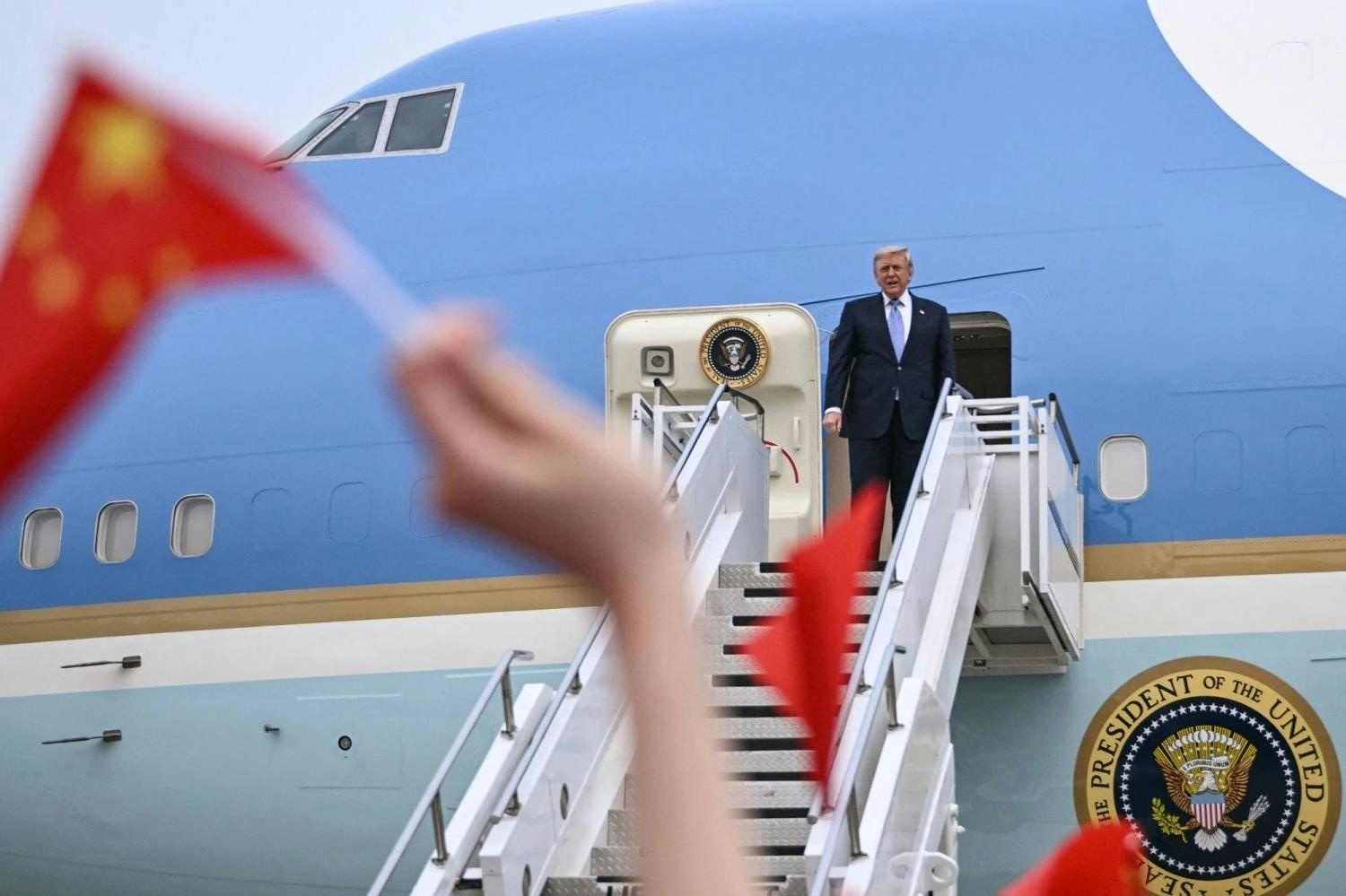
Boeing Secures Initial Commitment for 200 Aircraft in China Amid Renewed Trade Engagement
Boeing confirmed on Friday that China has committed to purchasing 200 aircraft, marking the first significant order from the U.S. aerospace manufacturer in nearly a decade. The announcement came during President Donald Trump’s recent visit to Beijing and is seen as a potential easing of tensions in U.S.-China aviation relations after years of trade disputes that had largely excluded Boeing from the Chinese market.
In an official statement, Boeing described the trip as “very successful,” highlighting the reopening of the Chinese market to new aircraft orders. Boeing CEO Kelly Ortberg, who accompanied the U.S. delegation, emphasized that the initial commitment for 200 planes represents only the beginning, with expectations of further orders to follow. The company also expressed gratitude to the Trump administration for facilitating this milestone.
Details and Implications of the Deal
Although the order is significant, it falls short of earlier projections. Analysts had anticipated a deal involving as many as 500 aircraft, while President Trump suggested the total could eventually reach 750 planes. Speaking to Fox News, Trump underscored the economic benefits, stating, “That’s a lot of jobs.” Onboard Air Force One, he described the agreement as “a promise of 750 planes, which will be by far the largest order ever, if they do a good job with the 200.”
China’s previous major order from Boeing occurred in 2017, also during a Trump visit, when the country purchased 300 single-aisle and wide-body aircraft in a deal valued at $37 billion. The current commitment includes a mix of 737 MAX jets alongside larger 787 Dreamliners and 777s. Aviation intelligence firm IBA estimates the 200-aircraft order to be worth between $17 billion and $19 billion, assuming that 80% of the order consists of MAX jets. This valuation could increase to $25 billion if a greater proportion of wide-body aircraft is included.
For China, the deal secures additional capacity to support its rapidly expanding aviation market, particularly as domestic production of the COMAC C919 narrow-body jet continues to lag behind expectations. For Boeing, the agreement offers an opportunity to close the gap with European rival Airbus, which has made significant inroads in China in recent years.
Market Reactions and Future Prospects
While the initial order is smaller than some had hoped, it represents a critical victory for Boeing and may signal a turning point in U.S.-China trade relations. Industry experts note that if the deal expands to the numbers suggested by President Trump, it could become the largest aircraft order in history, surpassing IndiGo’s 500-plane agreement with Airbus. Any future orders are expected to be distributed among China’s three major state-owned carriers.
Following Trump’s remarks about the potential size of the order, Boeing’s shares declined nearly 4% on Thursday, reflecting investor disappointment over the smaller-than-anticipated initial commitment. Nevertheless, the agreement is poised to influence global market dynamics and prompt strategic responses from competitors within the aviation sector.

Etihad Airways Suspends Airbus A380 Flights on Key Route

Aditya Birla Group Seeks Approval for Aircraft Leasing in GIFT City

Qatar Airways Highlights Innovation and Connectivity at Arabian Travel Market 2026

Hong Kong's Five-Year Plan Includes Andrew Fan's Aircraft Parts Processing Hub Proposal

ACIA Aero Leasing Delivers ATR72-600 to Air Nostrum

RTX Appoints Jill Albertelli as Head of Pratt & Whitney

TAT Technologies Joins Beyond Aero Hydrogen Aircraft Program

AURAK Study Highlights Barriers to Air Taxi Adoption in Emerging Economies

Xiamen Air Selects Altitude for 787 Maintenance at Heathrow

Etihad and Swissport Extend Global Partnership
